Blue Carbon9 min read
The Life of a Blue Carbon Credit: From Feasibility to Issuance
Follow a blue carbon credit through its full project cycle — feasibility, design, validation, monitoring, verification, issuance and retirement.
Priya Raman ·
Blue carbon projects rarely run on carbon credits alone. A practical guide to grants, offtakes, equity, debt and blended finance for coastal restoration.
A hectare of restored mangrove or salt marsh does not pay for itself in year one — and this is the fact around which the entire architecture of blue carbon finance is built. Restoration capital is needed up front: for engineering, seedlings, vessels, nurseries, permits and people. The revenue — verified carbon credits, biodiversity co-benefits, harvests, fees — arrives years later, trickling in as the ecosystem matures and its performance is measured. Bridging the gap between money needed now and income delivered later is the defining financial problem of the sector.
This article maps the actual structures that solve it: who provides the first dollars, how offtake agreements convert future credits into present capital, what blended finance really means in practice, and what an investor should ask before wiring money to a beautiful coastline.
A credible blue carbon project looks, from a finance desk, like a strange hybrid: part infrastructure project (long build-out, long life), part agricultural one (living assets, weather risk), part commodities venture (its output is credits subject to a volatile market). The cash flow curve is J-shaped: heavy negative outflows for three to seven years of establishment, then a long tail of positive flows as habitat matures, verification cycles run, and credits or products sell.
Few single financiers like that shape. Philanthropic capital is happy to fund early science but cannot scale; project finance likes long life but hates unproven counterparties; voluntary-carbon buyers want to buy credits, not underwrite vessel charters. The art of blue carbon finance is layering these appetites so that each tranche of capital takes the risk it is priced to bear. This stacking is what "blended finance" means when you get past the buzzword.
Think of a project's money as geology: distinct strata, each with different risk, return and patience.
Grants from governments, multilateral funds and philanthropies fund the riskiest, least bankable work: feasibility studies, baseline science, early engineering, community agreements, FPIC processes with Indigenous sea-country custodians. This money is catalytic — it does not seek a return, but without it nothing else happens. It also de-risks everything above it: a project with a solid feasibility study and community consent in hand is a fundamentally different proposition for later investors.
Project equity takes first loss and, in exchange, the upside. Developers' own capital, impact funds, and strategic corporate equity sit here. Equity absorbs construction overruns, methodology delays, bad weather years. In return it captures whatever margin the whole project earns. In early-stage blue carbon, equity is often effectively concessional — priced more for mission than return — because the asset class is young.
An offtake agreement is a forward contract: a corporate buyer commits to purchase a defined volume of future credits at a defined price, often paying part of the money up front. It is arguably the single most important financial instrument in blue carbon. For the developer, it converts an uncertain future revenue stream into bankable cash today, and provides the price certainty needed to raise debt. For the buyer, it secures high-quality supply — scarce in a market where demand for verifiable tonnes outstrips issuance — at a locked-in price.
Offtakes have teeth. They specify delivery schedules, standards, verification requirements and remedies for under-delivery. A developer that sells too much of its future issuance forward at low prices can cap its upside for a decade, so structuring matters: partial offtakes covering just enough volume to service debt, with the remainder retained for spot sales, are common. The buyer's side of this is covered in our guide to the voluntary carbon market.
Senior debt only appears once there is enough certainty below it: offtakes in place, permits secured, operations proven. Development-finance institutions are often the first lenders, accepting longer tenors and patience commercial banks will not. Debt is the cheapest capital, but it demands predictable repayment — which is why it sits at the top of the stack, protected by everything beneath it.
Blended finance is the deliberate mixing of concessional and commercial capital so that the whole becomes bankable when neither part alone would be. A typical blue carbon blend might look like: grant funding the first two years of science; equity funding construction, buffered by a guarantee from a development bank that covers political or reversal risk; an offtake from a corporate buyer anchoring revenue; and DFI debt completing the construction capital once the offtake is signed.
Each tranche's risk is reduced because the others exist. The grant makes feasibility investable; the equity makes the debt safe; the offtake gives the debt a repayment source; the guarantee makes the offtake counter-party risk tolerable. Removing any layer tends to collapse the stack. Our coverage of the blue carbon markets that create the demand and the project life cycle that stages the build shows where each financial decision falls in time.
Sophisticated projects do not rely on a single income stream. The revenue stack usually includes:
Diversification is not a bonus; it is a survival trait. A methodology delay that freezes carbon issuance can sink a single-revenue project; one with harvest income and service contracts survives to issue later.
Whether you are considering equity in a project, lending to one, or simply signing an offtake as a corporate buyer, the diligence questions converge:
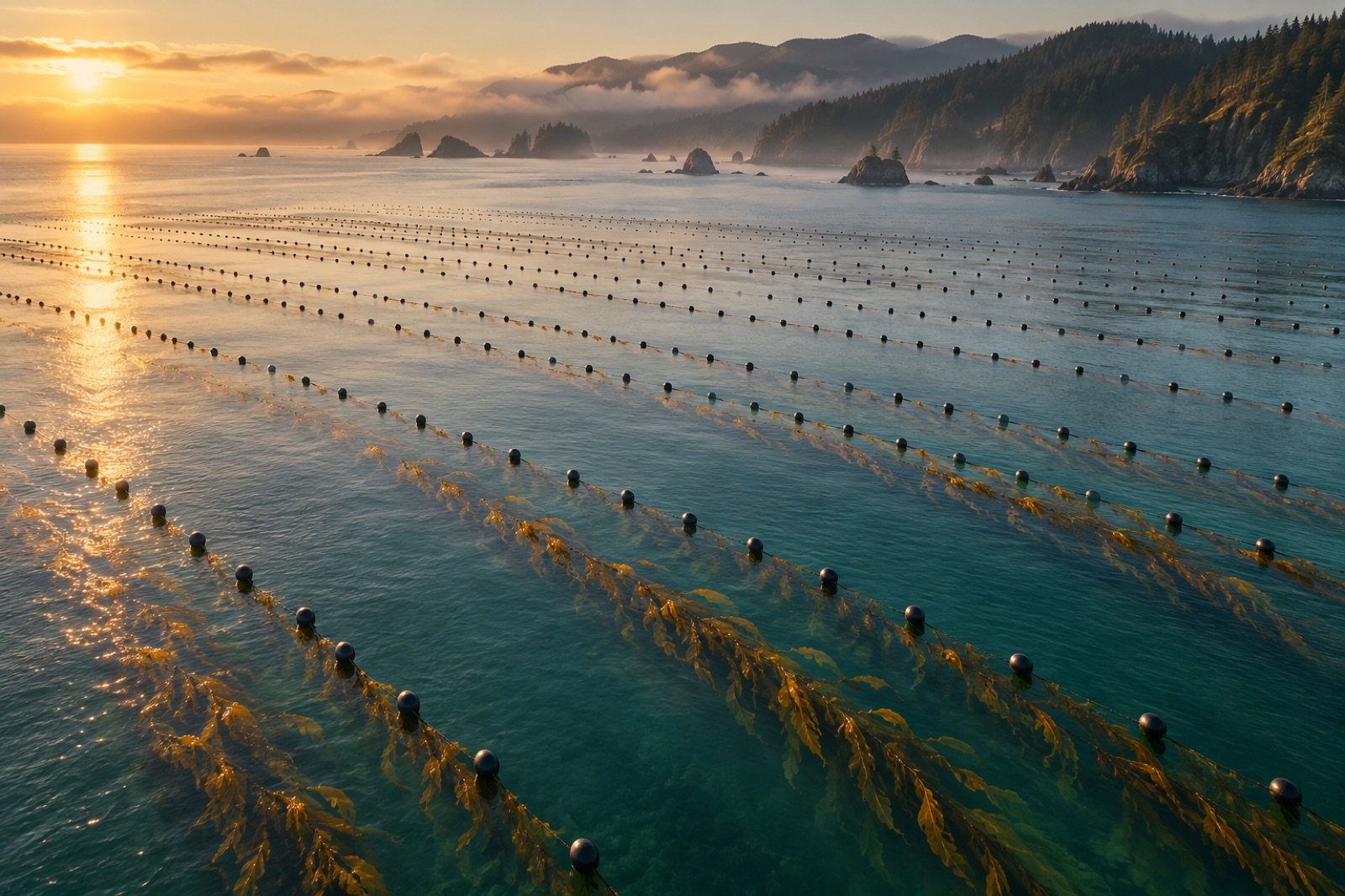
Tidewright's model is deliberately hybrid. Restoration projects are financed through blended stacks — public and philanthropic grants fund early science, while offtake agreements from corporate carbon buyers anchor project finance. On top of that, the Harvest business generates near-term product revenue from restoration-adjacent kelp farms, smoothing cash flow while restored forests mature, and Canopy Ledger monitoring contracts deliver service income independent of credit issuance. For sustainability-minded capital allocators, our investors page presents the illustrative structure; for buyers, the carbon-buyers solution page explains the offtake mechanics. As everywhere on this site, Tidewright is a fictional demonstration — but the blend of offtake + product revenue + service income it embodies is how real blue carbon companies increasingly work.
A forward contract in which a buyer commits to purchase a set volume of future carbon credits at an agreed price, often paying part up front. It is how developers convert unverified future performance into cash usable today.
Because no single funder likes the whole risk profile. Philanthropy funds early uncertainty; equity absorbs construction and performance risk; offtakes provide price certainty; debt completes capital once others de-risk it. Removing one layer generally makes the rest impossible.
Only partly. It has infrastructure-like longevity, but the "asset" is a living ecosystem with weather, reversal and methodology risk no power plant faces. It demands hybrid diligence — part engineering, part ecology, part commodity market.
Increasingly stacked onto the same hectares: some projects earn biodiversity or nature credits alongside carbon, where the ecological performance supports both under credible standards. It adds revenue but also accounting complexity.
Treating the base case as the downside case — assuming full issuance, no deductions, no reversals, no delays. Good projects show you the pessimistic scenario and still survive it.
Follow a blue carbon credit through its full project cycle — feasibility, design, validation, monitoring, verification, issuance and retirement.
Priya Raman ·
Blue carbon credits fund coastal restoration at scale — when they're done right. Who buys them, who sells them, how the market works, and where kelp fits.
Priya Raman ·
Blue carbon credits range from a few dollars to far more. What actually sets the price: costs, quality, co-benefits, forwards and policy demand.
Priya Raman ·