Field Notes8 min read
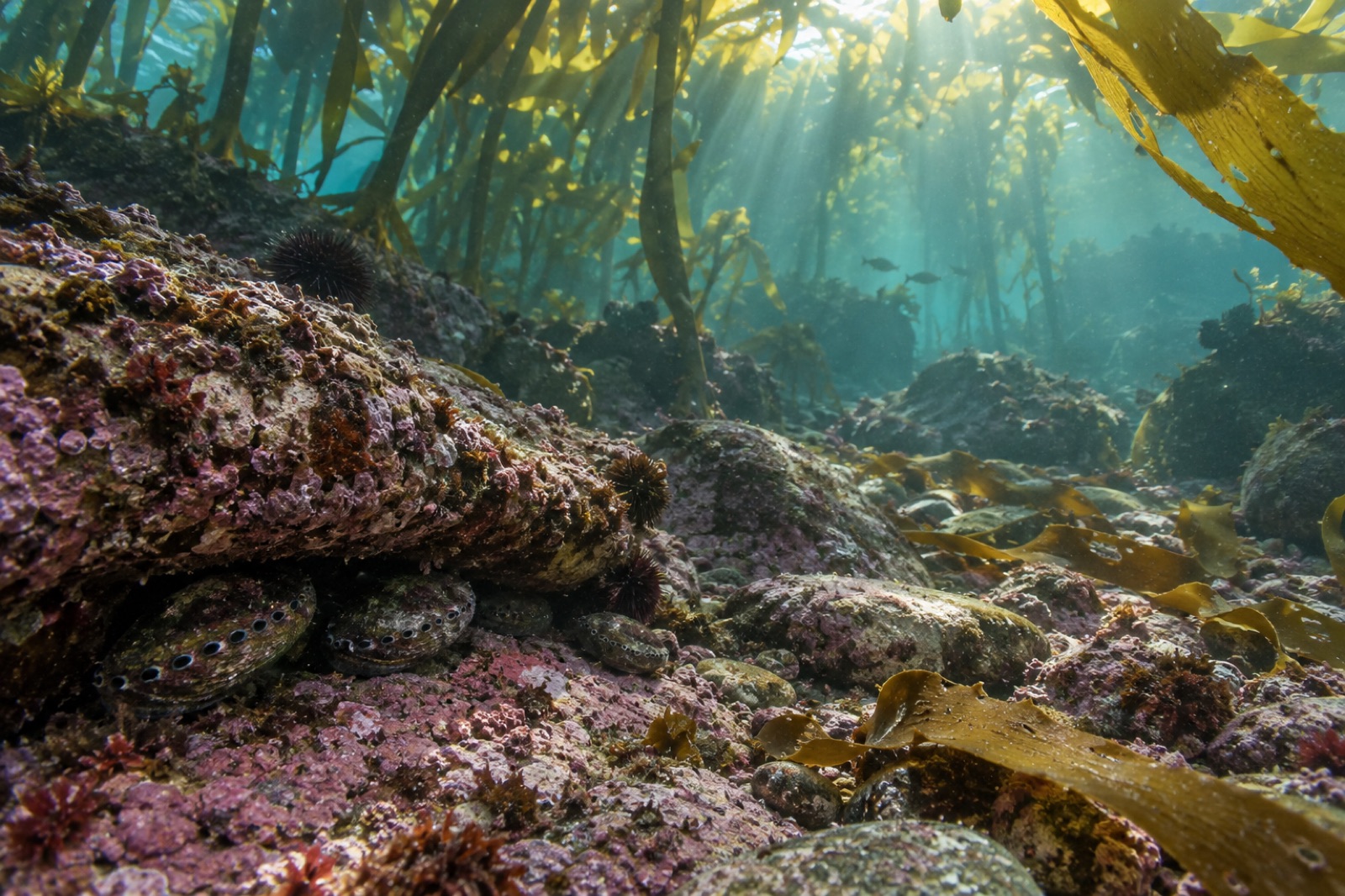
Field Notes: Abalone Back in the Quadrats
Seven years after seeding began on Tasmania's Lumeriah Coast, juvenile blacklip abalone are turning up in the monitoring quadrats again. Here's why that matters.
Dr. Mara Ellison ·
Ocean restoration, industrialised
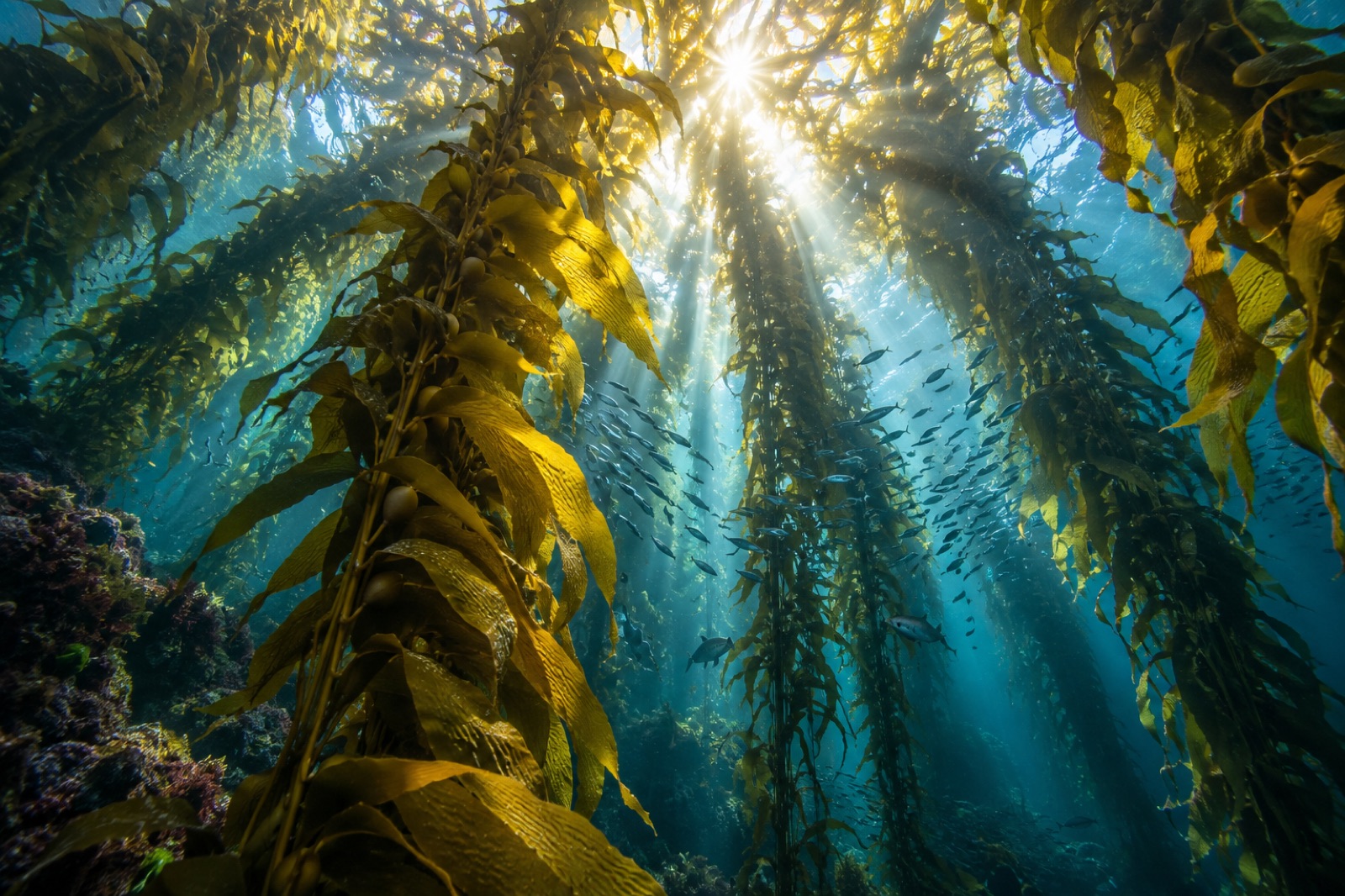
Kelp forests are among the most productive ecosystems on Earth — and they are vanishing. Tidewright restores them with autonomous vessels, climate-resilient seedstock and a blue-carbon economy that pays for the work.
The problem
A mature kelp forest rivals a rainforest for productivity. It feeds sea urchins and fish, shelters juvenile abalone, blunts storm swell and draws down carbon.
But marine heatwaves are intensifying, urchin barrens are spreading, and coastal pollution is clouding the shallow light kelp needs. In some regions, more than half the forest has vanished in living memory — quietly, underwater, out of sight. Once the canopy goes, the reef can flip into a barren state that resists recovery on its own.
Restoration works — we know how to bring these forests back. What was missing was scale: a way to reseed hundreds of hectares, prove the results, and fund it all without permanent philanthropy. That’s the system Tidewright built.
How it works
Four products work as a single system: find the right reef, seed it with the right kelp, prove what grew, and let the harvest fund the next site.
Impact
Program figures reported by Tidewright, September 2025. Tidewright is a fictional company created as a design and content demonstration. Numbers shown for the demonstration are illustrative.
Proof on the water
“The barrens off our harbour turned a corner within two seasons. Tidewright’s crews showed up, stayed, and kept showing us the data.”
Councillor Renee Avery
Marrawah Coastal Council
“It’s the first restoration program our rangers were asked to co-design instead of just host. The difference shows in the water.”
Daniel Yarli
Kudjela Sea Country Rangers
“Canopy Ledger’s verification packs were the most audit-ready blue-carbon documentation our team has reviewed.”
Meridian Climate Fund
Impact investment partner
Partner names and quotes are part of the fictional Tidewright world.
Who we work with
Learn the water
From the Journal
Seven years after seeding began on Tasmania's Lumeriah Coast, juvenile blacklip abalone are turning up in the monitoring quadrats again. Here's why that matters.
Dr. Mara Ellison ·
Abalone are built to eat kelp, but feeding them well is a craft. Feed forms, rationing by size and temperature, delivery gear, and how kelp shapes growth, colour and health.
Naomi Reyes ·
Granite headlands, golden sand and golden kelp: New Zealand's smallest national park meets scallop country at the top of the South Island.
Tom Okafor ·
Councils, fisheries, carbon buyers, dive operators, schools — there’s a way in for every coastline and every budget.