Every port, sea wall, harbour entrance and storm-surge barrier on Earth exists because a coastal engineer made decisions about waves, sand and water. For most of a century, those decisions meant hard structures in concrete and steel — and the profession is now in the middle of the most interesting pivot in its history: toward designs that work with ecological processes instead of against them. Oyster-reef breakwaters, restored saltmarshes, dune systems and even kelp beds are moving from novelty into mainstream engineering practice, which makes this one of the best moments in decades to enter the field. This guide covers what coastal engineers actually do, the degree and skills path, who employs them, and where the nature-based turn is taking the profession.
What coastal engineers actually do
Coastal engineering is a specialised branch of civil engineering concerned with the narrow strip where the ocean meets the land — the most dynamic, valuable and contested real estate on the planet. The core technical questions:
- How do waves behave here? Modelling wave generation, transformation and breaking as they approach shore — including how structures and habitats change them.
- Where does the sand go? Sediment transport: how currents, waves and wind move beaches, estuaries and river mouths, and what happens when you interrupt them.
- What will the water level do? Tides, storm surge, sea-level rise and their combinations — the design basis for every defence and every safe floor level.
- What will hold? The structural design of breakwaters, seawalls, revetments, groynes, piers and — increasingly — of living structures like reefs and marshes.
In practice the work splits between analysis (waves, tides, sediment budgets, flood risk), design (structures, nourishment, nature-based schemes), and consent/advisory work (helping governments and developers decide what should be built where, if at all).
The nature-based turn
The reason this career is changing so fast deserves its own section, because it redefines what the job is becoming.
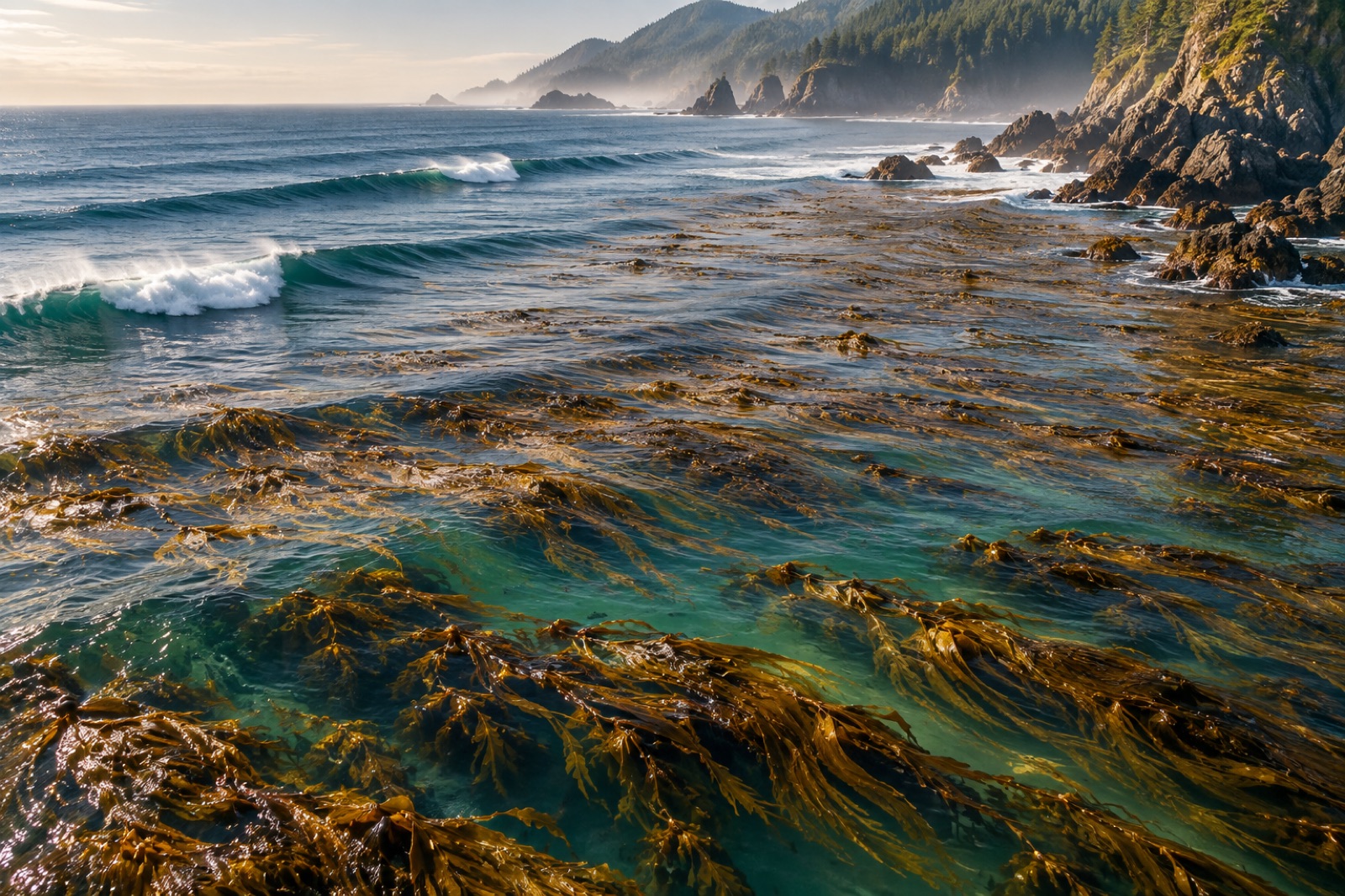
Hard coastal structures work, but they have a known failure pattern: they hold the line where they stand while starving neighbours of sediment, scour at their own toes, and must be raised forever as seas rise. The ecological alternative — often called living shorelines or nature-based solutions — uses marshes, mangroves, oyster and mussel reefs, dunes and submerged vegetation to dissipate wave energy while also providing habitat. Our explainer on how kelp forests damp waves covers one strand of the physics: a healthy canopy measurably reduces wave height before swells reach the inner reef, and several kelp genera are now being studied explicitly as wave-buffering infrastructure.
This changes the coastal engineer's skill profile in three concrete ways:
- Ecology becomes a design input. You need to understand species, substrate and seasonal biology well enough to design structures an ecosystem will adopt rather than reject.
- Performance metrics broaden. Success is no longer only "did the wall stand" but also habitat created, turbidity avoided, adaptive capacity over decades.
- Collaboration widens. Nature-based projects are designed alongside marine ecologists, coastal geomorphologists, councils and communities — our solutions for governments page describes the council-side view of the same shift. Engineers who can speak ecology are suddenly the rarest people in the room.
It also expands where engineers work: coastal squeeze — habitats caught between rising seas and hard defences — is a design problem only solvable by people who understand both the engineering constraint and the ecological asset.
Degree and training paths
The standard route, in order of commonality:
Civil engineering degree, coastal specialisation. The dominant path. An accredited civil (or ocean/marine) engineering bachelor's, with coastal and hydraulics electives, followed by a coastal-focused master's for those targeting design consultancy. Chartered/professional engineer status in your country follows through supervised practice, and it matters a great deal for seniority.
Oceanography or earth science degrees + engineering conversion. Possible and often strong — sediment transport and wave dynamics specialists frequently arrive from physical oceanography — but you will likely need to add engineering qualifications for design-signing responsibility.
Environmental engineering or landscape architecture. Increasingly relevant entry degrees for nature-based design work, though again, hard-structure authority still sits with chartered engineers.
What genuinely differentiates candidates at hiring:
- Numerical modelling — wave and hydrodynamic models, sediment transport codes, morphological models. The specific tools vary by firm; the transferable skill is building, calibrating and distrusting models sensibly.
- Data handling — programming (Python and MATLAB are the lingua franca), GIS, and comfort with instrument data from buoys, current meters and drone surveys.
- Field competence — graduates who have actually surveyed a beach, ridden out a storm deployment or spent time on site are scarce and prized.
- Communication — coastal projects are politically exposed. The engineer who can explain a managed-realignment scheme to a worried council chamber does more engineering that week than the engineering itself.
Who employs coastal engineers
- Specialist consultancies — the biggest employers. They design for ports, developers, governments: flood schemes, harbour works, nourishment, increasingly nature-based pilots.
- Government and coastal authorities — flood agencies, maritime authorities, municipal councils. The places where long-term shoreline management plans are set, and where nature-based policy is now being written into law in many regions.
- Ports and harbours — in-house engineering teams managing berths, dredging, breakwaters and expansion.
- Offshore energy developers — wind farm foundations, cable landfalls, scour protection, consenting. A large and growing share of coastal engineering hours worldwide.
- Insurers, lenders and risk analysts — flood risk pricing increasingly employs people with genuine coastal process literacy.
- NGOs and restoration organisations — the newest employer class. Living-shoreline and reef-restoration projects need engineers to design for load, longevity and permitting exactly as much as they need ecologists. The restoration of kelp forests and reefs as coastal protection is, at heart, an engineering argument — our projects show how Tidewright's reef programmes are framed with councils on precisely that basis.
Pay and outlook, honestly
Coastal engineering tracks civil engineering pay generally: comfortably professional at entry, rising steadily with chartership and project-management responsibility, with the strongest packages in ports, offshore energy and flood-defence programme delivery. The outlook is among the best in the marine professions for a simple reason: sea-level rise and storm intensity are creating non-optional demand. Coastal adaptation is how governments will spend some of the largest infrastructure budgets of the coming decades, and the people qualified to design that spending are not yet numerous enough. The nature-based segment is smaller but growing faster, and employers consistently report difficulty finding engineers who combine hard-structure competence with ecological fluency.
A realistic note
It is worth being honest about the trade-offs. The work is largely office-based, with site visits as seasoning rather than the main course. Project timelines are long; schemes you design early in your career may be built a decade later. The politics can be bruising, because every shoreline has people who love it as it is. But it is also one of the few engineering disciplines where the output is public, permanent and ecologically consequential — a wetland restored, a community defended, a harbour that works with its estuary instead of suffocating it. For people who want engineering that will still matter in fifty years, it is an unusually good place to build a working life. For the wider landscape around it, see our map of blue economy jobs.
Key takeaways
- Coastal engineering is the civil-engineering discipline of waves, sediment, water levels and shoreline structures — analysis, design and advisory work.
- The field is pivoting toward nature-based, living-shoreline design, which rewards engineers with ecological fluency on top of hard-structure competence.
- The standard path is a civil/ocean engineering degree plus professional chartership; modelling, programming, GIS and field experience differentiate candidates.
- Employers span consultancies, government authorities, ports, offshore energy, risk/insurance and — newly — restoration organisations.
- Climate adaptation makes long-term demand unusually secure; nature-based specialists are scarce and increasingly sought.
FAQ
What's the difference between a coastal engineer and an ocean engineer?
Ocean engineers typically design for offshore environments — platforms, vessels, subsea systems. Coastal engineers work in the nearshore zone: waves breaking, beaches moving, defences and harbours. The physics overlaps; the projects, employers and regulations differ substantially.
Do I need a master's degree?
Not for entry — many excellent coastal engineers hold a bachelor's plus chartership. A master's in coastal engineering or hydraulic and coastal science significantly expands which design roles you can target early and is the norm in top consultancies.
Is coding really that important?
Increasingly, yes. You will not need software-engineer depth, but scripting models, analysing instrument data and handling spatial datasets in Python or MATLAB is now an assumed competence rather than a bonus.
Are there jobs in nature-based coastal design specifically?
Yes, and growing — within consultancies' living-shorelines teams, restoration NGOs, government adaptation programmes and research-to-practice pilot schemes. The strongest candidates pair conventional coastal engineering credentials with genuine ecological and sediment-system understanding.
Can I enter from marine science rather than engineering?
You can contribute to coastal projects from the marine science side — ecology, geomorphology, monitoring — but signing off on structures and flood schemes legally requires engineering qualifications in most jurisdictions. The hybrid route (science first, engineering conversion after) is viable and produces some of the field's best nature-based designers.