Blue Carbon10 min read
The Voluntary Carbon Market 101: Who Buys, Who Sells, Who Checks
The voluntary carbon market turns verified emissions cuts into tradable credits. How it is governed, what went wrong, and where ocean carbon fits.
Priya Raman ·
Carbon insetting funds decarbonisation inside your own value chain instead of buying external credits. Here's what that means for ocean industries and kelp supply chains.
A seafood company wants to cut the carbon footprint of its supply chain. It could buy credits from a mangrove project on another continent — that's offsetting. Or it could pay to electrify its own cold-storage fleet, switch its packaging to kelp-based bioplastic, and fund restoration on the reefs its fishing fleet works over — that's insetting. The second approach is gaining serious traction in corporate climate strategy, and it has particular resonance in ocean industries, where the value chain and the ecosystem are often the same place. This explainer sets out the difference, why insetting is rising, and what coastal insetting could realistically look like.
Offsetting means compensating for emissions occurring anywhere by funding reductions or removals elsewhere. A company in Glasgow buys verified credits from a seagrass restoration in Indonesia. The credits flow through the voluntary carbon market, governed by standards, registries and third-party auditors. Offsetting can be legitimate and powerful — some of the best-funded restoration on Earth happens because of it — but it faces persistent criticism:
The first three criticisms are technical problems with technical solutions. The fourth is political — and it's where insetting enters.
Insetting is investing in emission reductions or removals within your own value chain — upstream with your suppliers, downstream with logistics and customers, or in the ecosystems your operations depend on. Instead of buying external credits, you fund change you can physically touch:
The appeal is strategic: insetting simultaneously decarbonises your supply chain, builds supplier resilience, and transports your climate story from "elsewhere" to "here, in our operations". It's also often easier to verify because you're embedded in the supply relationship.
Here's where insetting gets tricky. With offsetting, the credit is a discrete, registry-tracked instrument: one tonne, one serial number, one retirement. With insetting, the reduction happens inside your Scope 3 inventory (your value chain's emissions). There's no credit. The benefit shows up as a smaller number in your own footprint report.
That creates two integrity questions:
If you fund regenerative aquaculture on a supplier's farm, and both of you report the reduction in your emissions, you've double counted. The fix is contractual: one party claims the reduction, the other claims the co-benefit. Standards bodies are formalising how this works. See our explainer on double counting for the broader mechanics.
Measuring Scope 3 — the emissions embedded in everything you buy and sell — is notoriously imprecise. A fishing company insetting in refrigeration upgrades can't always get supplier-level data. This friction is real, and it's one reason offsetting persists: credits are, at least, countable.
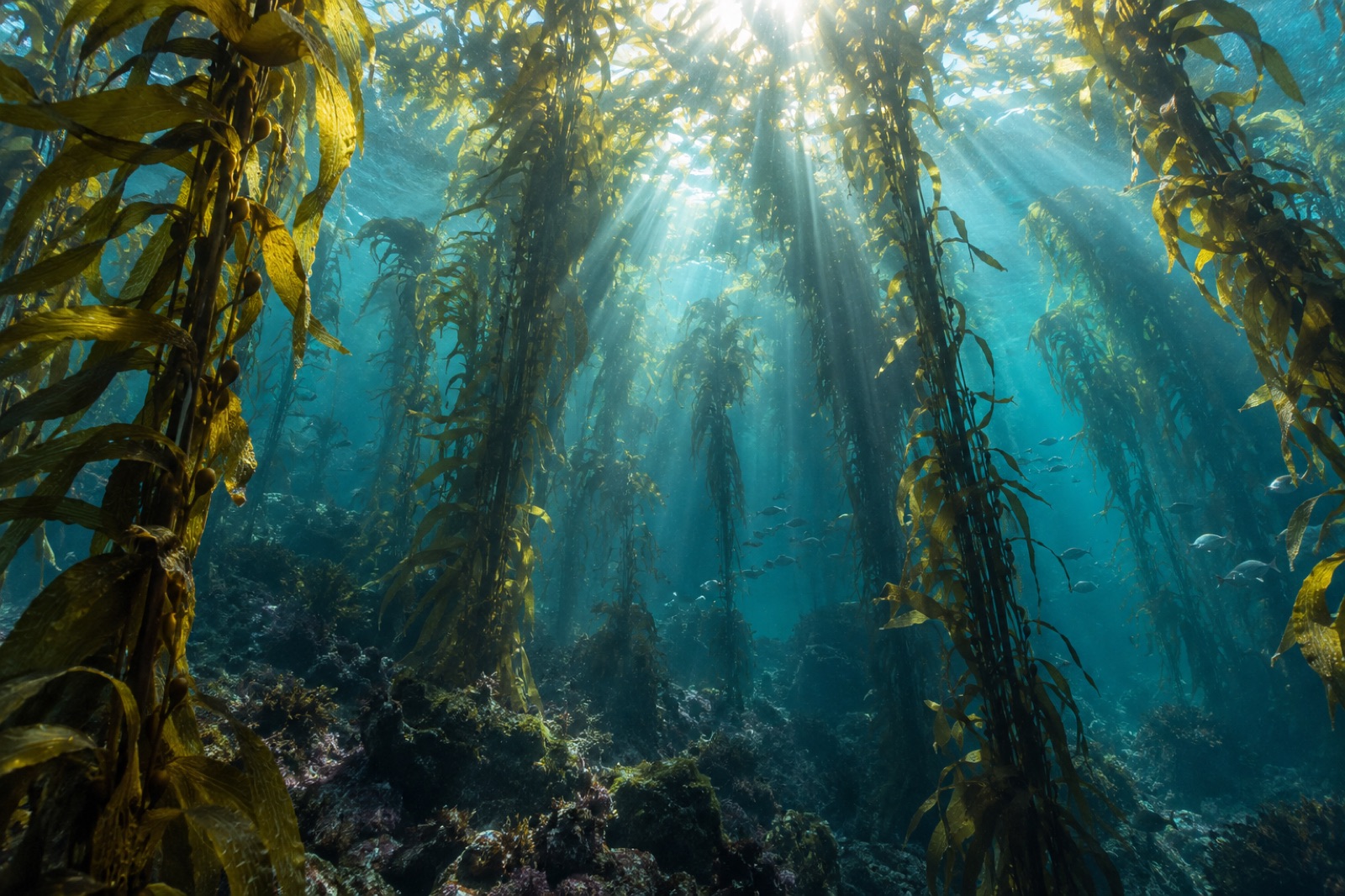
Ocean industries have a property almost no other sector shares: their value chain is an ecosystem. A seafood company's supply chain literally is the kelp forest, the reef, the fishing ground. This blurs the offset/inset line in an interesting way:
For companies under pressure to show value-chain action (as opposed to spot-buying credits), coastal insetting offers a narrative that actually aligns with the science: invest where you operate, on the systems you depend on.
If your company is considering coastal insetting, we'd suggest the following building blocks, in order:
Mature corporate climate strategies typically run both:
Standards like the Science Based Targets initiative push companies hard on value-chain cuts first. Offsetting for what remains is accepted IF the credits are high quality. The insetting/offsetting lens fits into that hierarchy: cut, insetting for your chain, offset only for what's truly residual.
Tidewright is, in some sense, a coastal-insetting vehicle: companies, councils and fisheries pay us to restore the ecosystems their operations depend on, through Reef Partners programs. A fisheries co-op funding kelp restoration on its own grounds is insetting. A carbon buyer purchasing Canopy Ledger–verified credits from our restoration sites is offsetting. Both fund the same reef; the difference is the buyer's accounting frame. We see demand for both — and we think the ocean sector's future runs on both, interleaved.
Insetting isn't a formal credit class like offsetting, but its logic appears in SBTi guidance on value-chain decarbonisation and in emerging "Scope 3 intervention" frameworks. The science is accepted; the accounting conventions are still consolidating.
Generally not the same tonne. If your investment lowers your supplier's emissions and you claim that in your Scope 3 reporting, the supplier can't also sell those reductions as credits. Registry rules increasingly check for this. Clear contracting is the safeguard.
No — it depends on your emissions profile and goals. Insetting is powerful when your value chain has decarbonisable hotspots. For emissions you can only abate elsewhere, high-integrity offsetting remains necessary. Compare options honestly rather than defaulting to whichever sounds better.
Start with a modest spend on a coastal restoration project adjacent to where you source (see our solutions for fisheries or for carbon buyers), paired with one operational change in your cold chain or packaging. Small, visible, local.
Your own auditors, under your sustainability reporting framework, plus — for nature outcomes — third-party verification of ecosystem condition. At Tidewright that verification is central to what Canopy Ledger produces for every project, inset or offset.
The voluntary carbon market turns verified emissions cuts into tradable credits. How it is governed, what went wrong, and where ocean carbon fits.
Priya Raman ·
If two parties claim the same tonne of carbon, the atmosphere loses. Here is what double counting is, why Article 6 exists, and what buyers should check.
Priya Raman ·
Blue carbon credits can fund real coastal restoration — or expensive stories. A practical due-diligence checklist for corporate buyers before they sign.
Priya Raman ·