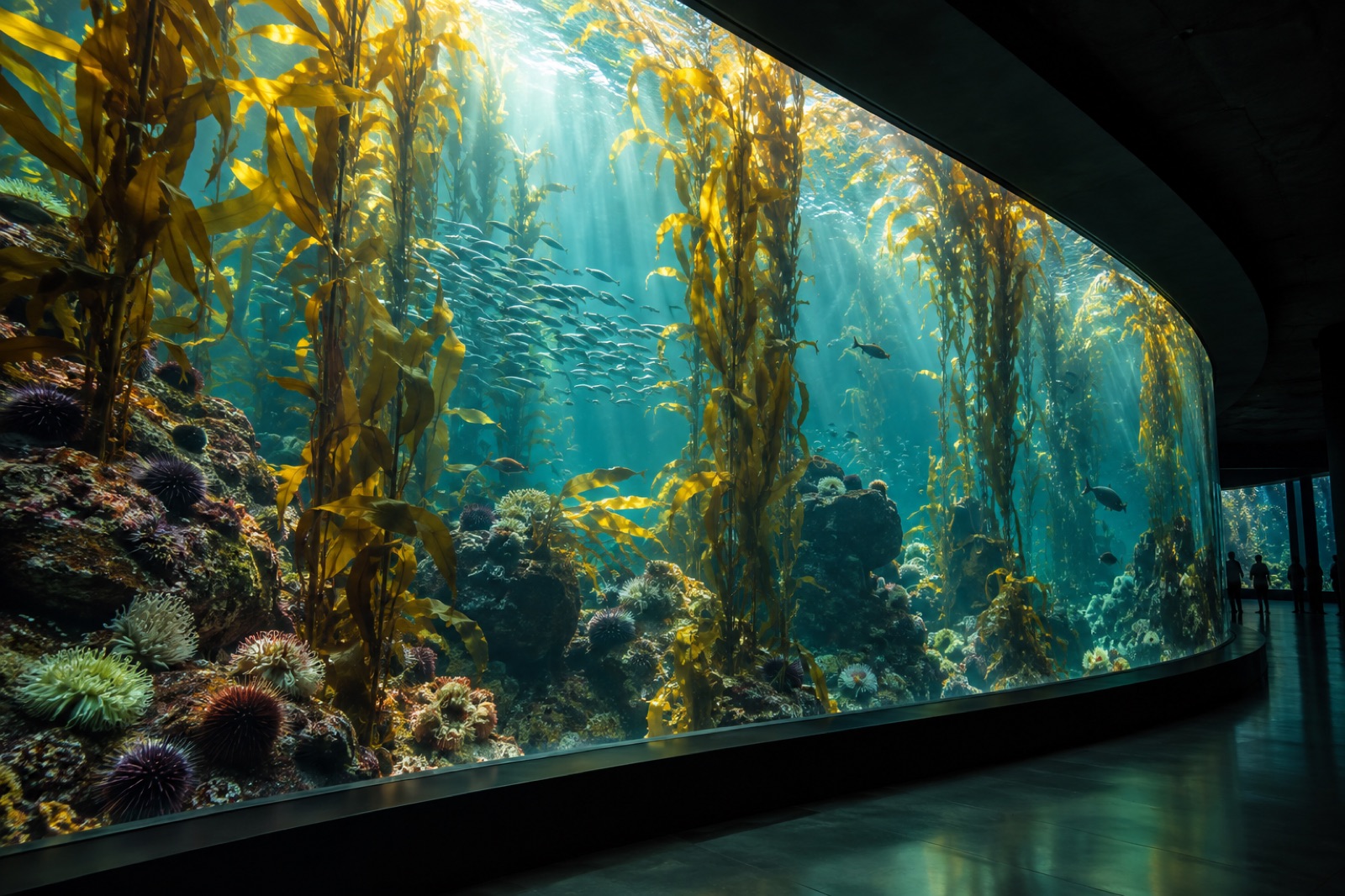
Most people never see a kelp forest. They will never pull on a wetsuit, never watch sunlight ladder down through fronds twenty metres tall — but they vote for coastal councils, buy seafood, holiday on beaches and pay the taxes that fund marine parks. Whether the ocean gets protected depends hugely on whether people who never see it understand it. That is the bet behind ocean literacy, and the reason the educators who build it have quietly become one of the blue economy's essential professions. This guide covers what ocean literacy educators actually do, who hires them, what credentials matter, and the honest economics of a career spent teaching the sea.
What ocean literacy means (and why it became a job)
Ocean literacy is the idea that there are things every person should understand about the ocean: that it regulates climate, produces much of the oxygen we breathe, feeds billions, and that human choices everywhere reach it. Educators and scientists distilled this into seven core principles in the mid-2000s, and the framework has since spread through national curricula, museum programmes, UN-endorsed initiatives and thousands of classrooms.
The job exists because knowing is not the same as feeling. A child who has held a live ochre star in a touch tank, or a councillor who has walked a kelp-fringed reef at low tide with an educator translating, carries the ocean differently afterwards. Ocean literacy educators are the people who engineer those moments at scale — and then turn the feeling into durable understanding.
Where the jobs actually are
Ocean education happens in more institutions than most job-seekers realise:
Aquariums and marine discovery centres. The classic employer — education departments running school visits, public programs, sleepovers and teacher training. Aquarium education teams are also natural springboards into the wider institution; our guide to aquarium careers shows how education intersects with husbandry and operations.
Schools and curriculum bodies. Specialist science teachers, marine-studies programs in coastal schools, and the education officers who write ocean content into state and national curricula.
Museums, science centres and zoos. Informal-education teams designing exhibits, programs and holiday science shows.
NGOs and conservation organisations. Community programs, beach citizen-science events, school partnerships — mission-driven education with campaigning edges. The skills overlap heavily with ocean science communication, and many careers hold posts in both at different times.
Ranger and Indigenous sea-country programs. Two-way education — bringing scientific frameworks and Traditional Knowledge into the same program — is among the most meaningful and fastest-growing parts of the field.
Aquaculture and restoration operators. Farms, hatcheries and restoration companies increasingly run tours, school programs and community open days as part of social licence — investor-grade education work done in waders.
What the work actually looks like
A week for an aquarium school-programs educator might run: Monday, three back-to-back school groups — a forty-minute session on food webs delivered to seven-year-olds, then to teenagers, requiring two entirely different performances of the same science; Tuesday, program development — aligning a new offering to curriculum standards, sourcing specimens, writing a risk assessment; Wednesday, teacher professional development — training thirty teachers to run their own coast unit; Thursday, public floor shifts — the wandering mic, the touch-pool vigil, the retired engineer with hard questions; Friday, evaluation data, safeguarding paperwork, and the email thread about next term's booked-out slots.
Three truths define the craft:
- You teach through attention, not content. Holding a room of thirty ten-year-olds with a live crab is a performance skill no degree formally teaches and every employer screens for.
- Evaluation is the difference between a program and a hobby. Funders increasingly require measured outcomes — who learned what, who changed behaviour. Educators who can design and report evaluation get the permanent contracts.
- You are always translating twice. Research into plain language, then plain language into an experience a specific audience will remember. If that double translation thrills you, read on.
Credentials: what you need and what you don't
The honest answer varies by employer:
- Formal school teaching requires a teaching qualification — that marketplace is regulated and the credential is non-negotiable.
- Informal education (aquariums, museums, NGOs, visitor programs) usually does not. The default recipe there is some marine or environmental science background plus demonstrated experience with groups — camps, tours, volunteering, coaching. People enter via biology degrees, education degrees, ranger programs, dive instruction and journalism; the degree matters less than the evidence you can hold a crowd and know your tide tables.
- Working-with-children clearances, first aid, and water-safety certifications are practical gates in many jurisdictions, cheap to obtain and often decisive in an otherwise tied shortlist.
What hiring managers consistently privilege is a portfolio: programs you've designed, sessions you've delivered, audiences you've held. Our piece on turning volunteering into an ocean career explains how to build exactly that evidence before anyone pays you.
Building the portfolio
The proven pathway, in rough order:
- Volunteer where educators work — aquarium visitor programs, beach cleans with education components, citizen-science events, museum holiday programs. Show up reliably for a season; references in this field are built on reliability.
- Run something yourself. A school visit organised through a local club, a rockpool ramble for a community group, a blog or video series unpacking your local shore. The Tidewright learning paths show what a well-sequenced ocean curriculum looks like — studying good existing material is the fastest way to learn instructional design.
- Learn to evaluate. Even a simple pre/post survey on a program you ran puts you ahead of most applicants, because most programs aren't evaluated at all.
- Apply seasonally. Aquariums and centres hire heavily before school terms and summer peaks; timing an application cycle matters more than polishing a CV for the tenth time.
Pay, conditions and the honest picture
Ocean education is not a wealthy profession, and pretending otherwise helps no one. Entry roles are commonly casual or seasonal, pay sits near the education and visitor-services average rather than the science average, and many educators stitch together portfolios of part-time roles early on. Permanent positions — program coordinators, education managers, curriculum officers — pay solidly and grow with seniority, and the field's expansion under ocean-decade initiatives and climate-curriculum reform is creating more of them each year.
Conditions are joyful and physical: long days on your feet, wet floors, weekends and school holidays as your busiest times, and a permanent background hum of delighted noise. Burnout is real when programs are under-resourced, so the quality of the team you join matters more than the brand on the building.
The people who stay do so because the work compounds. An experienced ocean educator has, by their mid-career, personally changed how tens of thousands of people relate to the sea. Few metrics in the ocean sector beat that one. If you're exploring how education connects into the wider mission economy, our careers page lists roles where education, community programs and restoration meet.
Key takeaways
- Ocean literacy educators build public understanding of the sea — the cultural groundwork on which all marine protection ultimately rests.
- Employers include aquariums, schools and curriculum bodies, museums, NGOs, ranger and sea-country programs, and ocean industries with education arms.
- The craft is attention management, double translation and evaluation — performance skills layered on real marine knowledge.
- Formal teaching needs teaching credentials; informal education rewards demonstrated group experience and a portfolio over any specific degree.
- Build the portfolio through volunteering, self-run programs, evaluation skills and seasonally-timed applications.
- Pay is modest and often casual at entry, solid at coordinator level and above; the career pays in compounding public impact.
FAQ
Do I need to be a marine biologist to become an ocean educator?
No. Employers value accurate knowledge, but a science degree is one route among many. Education graduates, communicators, rangers and dive professionals all enter successfully. Deep enthusiasm plus verified knowledge beats a credential you can't teach with.
What's the difference between ocean literacy education and science communication?
Education designs structured learning experiences with intended outcomes — curricula, programs, evaluation. Science communication reaches publics through story and media — articles, film, social. The careers braid together constantly, and our science communication careers guide maps the neighbouring territory.
Can I do this work inland, away from the coast?
Yes — and arguably it's needed most there. Most ocean education is delivered to audiences who don't live by the sea, through classrooms, rivers-and-catchments framing, digital programs and museum exhibits. The ocean is upstream of everyone's weather and dinner, wherever they live.
How seasonal is it?
Strongly. School terms, summer visitor peaks and holiday programs concentrate both the work and the hiring. Many early-career educators run summer contracts with winter program-development or study in the troughs — plan finances around the rhythm, not against it.
What single skill should I practice first?
Explaining one ocean concept — say, why the sea is salty, or how a marine park works — to three different audiences in one week: a child, a teenager, a sceptical adult. That's the whole job in miniature, and it's free to practice.