Careers7 min read
Careers in Marine Policy: Law, Treaties and Ocean Governance
Marine policy careers put lawyers, negotiators and analysts at the table where the ocean's future is decided. A map of the field and the roads in.
Dr. Mara Ellison ·
Coastal planning, permitting, marine spatial planning, science advice — ocean policy careers translate research into rules communities live by. Your map in.
Somewhere on your nearest coast, right now, a decision is being drafted: where a new aquaculture lease may go, how a catchment's runoff will be controlled, whether a fishing closure becomes permanent, what a council must plan for as the sea rises. These decisions are policy — the translation of science, economics and public values into rules that hold on a shoreline. Ocean policy careers are the work of that translation, and they are multiplying as climate change forces every coastal government to take the sea seriously. This guide maps the field: what the work actually is, who hires, the skills that matter, and the honest routes in. If you're drawn to the law-and-treaty end — delegations, conventions, international governance — our companion piece on marine policy careers covers that arena in depth.
International headlines make policy look like summits and treaties. The vast majority of ocean policy happens one level down, at national agencies, state and provincial departments, catchment authorities and coastal councils — the shoreline layer where abstract commitments become setbacks, licences, zones and budgets.
Five recognisable families of roles make up most of the field:
Coastal planning and management. The people who draft and administer coastal-zone plans: erosion and inundation setbacks, foreshore zoning, hazard adaptation, development referrals. As coastal squeeze tightens between rising seas and hard shores, this lane stops being niche and becomes existential for councils.
Marine spatial planning. Ocean zoning — reconciling conservation, fishing, aquaculture, energy, shipping and cultural uses in the same water. Marine protected area establishment is the best-known output; our explainer on how MPAs work is the science side of a paperwork mountain that planners carry.
Permitting and environmental assessment. Every ocean infrastructure proposal — a kelp farm, an outfall, a wind array, a marina — passes through assessment officers who weigh evidence, conditions and objections. Unspectacular and utterly decisive work.
Science advice and translation. Agencies and ministers need people who can read the literature, commission research, and state plainly what is known, unknown and contested. This is where working scientists most often cross over, and where credibility with both labs and legislatures is gold.
Community engagement and consent. Policies fail on the shoreline, not on paper. Engagement officers run the consultations, hearings and long relationships with fishers, Indigenous communities and residents that determine whether a rule is durable or dead on arrival.
Policy is a words-and-meetings profession with occasional surges of consequence. A realistic week for a coastal policy officer: Monday, editing a draft plan clause after legal review; Tuesday, a site visit with engineers about an eroding foreshore; Wednesday, a public consultation evening where thirty residents say what they actually think; Thursday, a briefing note up to a decision-maker — one page, no surprises, clear recommendation; Friday, reading a scientific assessment and a stack of stakeholder submissions, looking for the place where the evidence and the objections can be reconciled.
The binding constraint is almost never knowledge. It is coordination: getting a fisher, a modeller, a lawyer and an elected official to act on the same understanding. People who love that problem thrive here; people who find it maddening should choose a different ocean career, of which our honest map of conservation routes lists many.
Plain, fast writing. Policy is persuasion in a page or two. The ability to compress complexity without distorting it is the single most prized skill in the field.
Stakeholder translation. You must be credible in a shed with fishers in the morning and in a minister's office in the afternoon. That range is trainable, but it starts with genuine respect for every room.
Working numeracy. Quotas, budgets, flood probabilities, carbon tables — policy documents are full of numbers, and the people who can question a spreadsheet shape outcomes far beyond their job title.
Law literacy. Not a law degree — a feel for how regulations are drafted, where discretion lives, and why the comma matters in a licence condition.
Scientific fluency. Understanding uncertainty, baselines and monitoring design well enough to brief both directions: to defend the science to sceptics and to tell researchers what decision their evidence must inform.
There is no single pipeline. The reliable vectors:
Whatever the vector, the hiring signal is the same: evidence you have touched a real decision. A submission drafted, a consultation run, a briefing note written under deadline — even as a volunteer or intern — outranks a flawless transcript.
Three tides are lifting policy hiring together. First, climate adaptation: coastal governments must now plan for sea-level rise and warming waters, and almost none have enough staff to do it. Second, the blue economy's licensing wave: aquaculture, offshore energy and restoration projects all need assessors and planners; blue-carbon ventures in particular need people who can structure tenure and consent correctly — the kind of questions our explainer on blue carbon policy unpacks. Third, protection targets: national commitments to protect large ocean fractions by 2030 require consultation leads, network designers and compliance thinkers at a scale the current workforce cannot meet.
Companies hire here too. Restoration developers like Tidewright live at the policy interface — permits, consent, co-design with councils and ranger teams — and our governments and councils work is staffed by exactly this skill blend. Openings appear on our careers page.
The honest ledger: public-sector policy pays less than the equal-stress corporate lanes, consulting pays more with longer hours, and almost nobody gets rich. What the field offers instead is unusual: job stability, real pensions in public roles, geography that includes coasts, and a kind of payoff few industries can match — the ability to point at a protected headland, a reopened fishery or a settlement that retreated in time, and know the sentence you wrote is in it somewhere.
No. Law degrees are powerful in treaty, litigation and drafting lanes, but most coastal policy roles are filled by planning, public policy, economics and science graduates. What you need is law literacy — how regulations get made — which is learned on the job or through short courses.
It's relocating it. Science advisors turn evidence into decisions and tell researchers what questions matter — many find it multiplies their impact. The transition skills are drafting, briefing and the budget cycle, all learnable.
Policy officer or analyst, coastal planner, planning officer (environment/statutory), assessment or approvals officer, program officer, engagement or consultation officer, and graduate-programme rotations in environment or fisheries agencies.
Increasingly, yes. Councils, catchment authorities and regional agency offices anchor large parts of the field on the coast itself, and consultation-heavy roles must be where the coast is. Remote policy drafting work has also normalised post-2020.
Read your own council's coastal management plan, then attend one public consultation meeting as an observer. If you leave thinking about how the process could be better designed rather than desperate to escape it, you are pre-adapted to the job.
Marine policy careers put lawyers, negotiators and analysts at the table where the ocean's future is decided. A map of the field and the roads in.
Dr. Mara Ellison ·
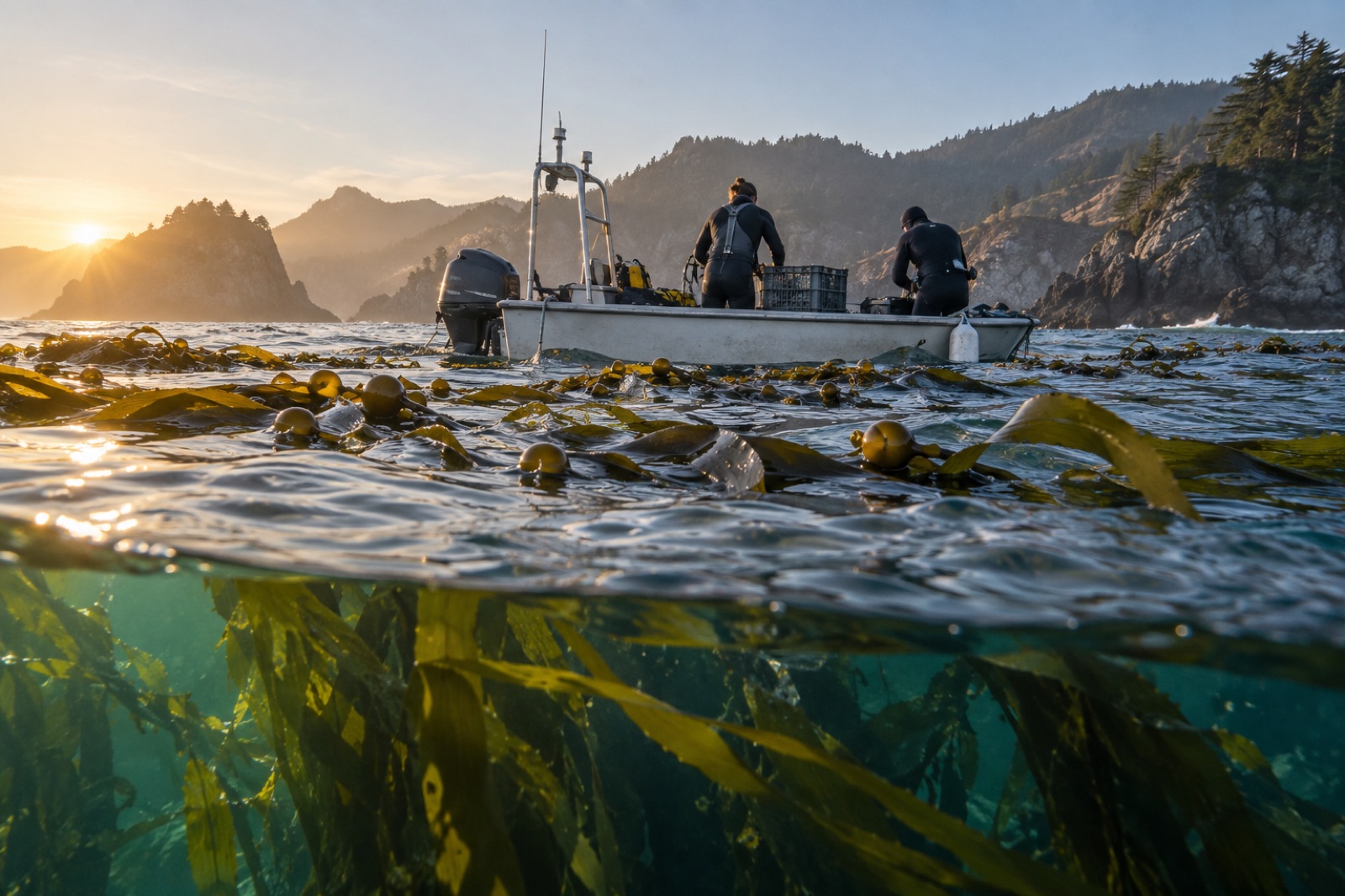
Marine conservation careers span rangers, policy staff, restoration crews and data scientists. Here is an honest map of the routes in, the pay, and the skills that matter.
Dr. Mara Ellison ·
MPAs, marine reserves, no-take zones explained — how protection levels differ, what the evidence shows, and what MPAs can and can't do for kelp forests.
Dr. Mara Ellison ·