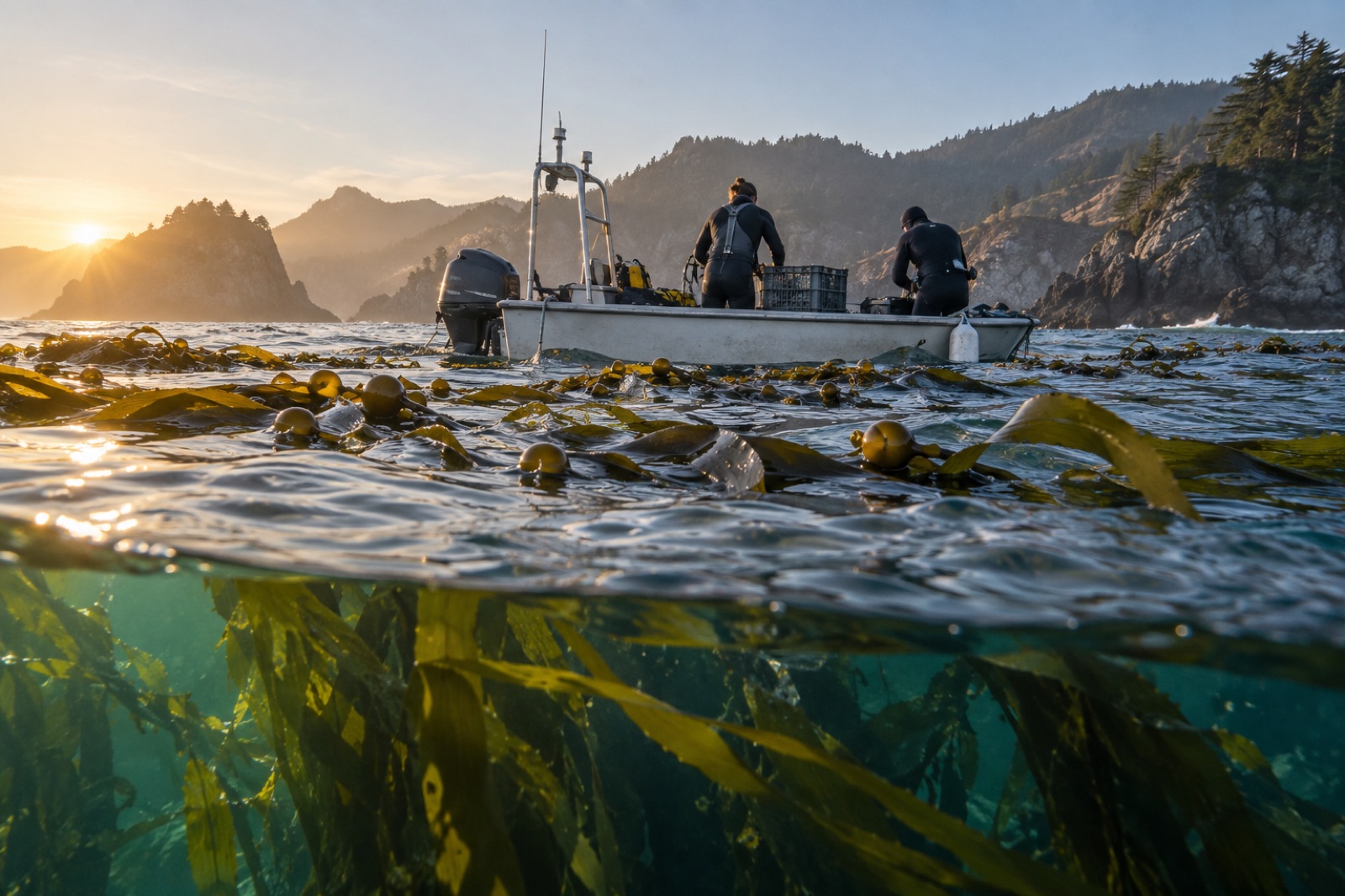
Marine conservation is one of the most-searched and least-explained career fields there is. People picture diving with sea turtles; the field actually contains policy analysts, marine protected area compliance officers, restoration deckhands, grant writers, GIS specialists and the occasional person who genuinely does dive with sea turtles — usually while collecting data, under a permit, for a project with a budget. This guide is the honest map: what the jobs are, what they pay, what qualifications open which doors, and the routes in that don't require a PhD.
First: what "marine conservation" actually covers
Conservation is not one job. It is a sector with at least seven distinct families of work, and they hire very different people:
- Field monitoring and research: underwater surveys, fisheries-independent sampling, water quality, species counts. The visible end of the sector, and the most competitive.
- Restoration and remediation: the fastest-growing family. Oyster reef rebuilding, seagrass planting, invasive removal, and kelp forest recovery — Tidewright's own Drifter and Holdfast programs sit here, and the work is part ecology, part construction crew.
- Marine protected area (MPA) management: zoning, compliance, community liaison, visitation management. Deployed by government agencies and, increasingly, by NGOs and consultancies under contract.
- Policy and advocacy: turning science into rules. Secretariat roles, campaign staff, policy officers in fisheries departments and intergovernmental bodies.
- Community and education: aquarium education teams, ranger programs, Indigenous sea-country ranger groups, citizen-science coordinators.
- Communications, fundraising and operations: the unglamorous engine room. Conservation runs on grants; someone has to win and administer them.
- Data and technology: remote sensing, eDNA pipelines, species detection models. See our companion piece on ocean-tech careers — this family is hiring faster than any other.
The single most useful question you can ask about a conservation job ad is which family does this sit in, because it tells you what the interviewer will actually test for.
Who employs marine conservationists
Conservation jobs come from five employer types, each with different hiring rhythms and pay scales:
- Government agencies — fisheries departments, environment ministries, parks services, coastguards. Stable, pensioned, slow to hire, usually requiring citizenship or residency, and often the best pay in the sector once you reach mid-level. MPA managers and compliance officers mostly live here.
- NGOs — from giant international organisations to forty-person coastal trusts. Mission-dense, salary-variable. Larger NGOs pay near-market; small ones often lean on your goodwill. Ask to see the funding pipeline behind the role before signing.
- Consultancies — environmental impact assessment, marine spatial planning, offsets monitoring. The highest starting salaries in the field and the most transferable skills training, partly because the hours are real.
- Universities and research institutes — postdoc ladders and technical officer roles. Deep expertise, thin job security below permanent staff level.
- Restoration companies and blue businesses — the newest employer type: private firms executing restoration, monitoring and blue-carbon projects at commercial scale. Tidewright is one (fictional) example; real analogues now exist in oyster, seagrass and mangrove restoration. These roles often blend field crew and science, and hire people from trade backgrounds as readily as from degree programs.
The qualifications question, honestly answered
Do you need a degree? It depends entirely on the family:
- Policy, advocacy, monitoring science: practically yes. An honours or master's degree in marine science, ecology, environmental law or public policy is the de facto entry ticket. Our guide to becoming a marine ecologist walks the degree route in detail.
- Restoration and field operations: no, and this is underappreciated. Restoration crews hire coxswains, divers, welders, marine mechanics, aquaculture technicians and deckhands. A commercial diving ticket, an ADAS or scientific diving certification, a small-vessel licence, or a rigging qualification opens more doors per dollar than a second undergraduate degree.
- MPA compliance and ranger roles: often no. Many ranger and Indigenous protected-area programs recruit from community first and train up. Ranger traineeships are among the best-paid entry points in the whole sector and routinely provide housing, tickets and structured progression.
- Operations and fundraising: no marine background needed — these teams hire nonprofit management experience from land.
The honest framing: degrees open the analytical families; tickets and trades open the operational families. The poorest career strategy is collecting degrees when the job you want rewards certifications and logged sea time.
Pay: what to actually expect
Conservation famously pays below comparable land-based roles, especially at the entry point. Rather than quote false precision across countries, here are the patterns that hold roughly everywhere:
- Entry field and education roles are often casual, seasonal or grant-funded; many people patch together two or three contracts in their first years. This is survivable if you plan for it and corrosive if you don't.
- Government and consultancy roles converge toward market pay by mid-career; NGO roles typically don't, and the trade-off for meaning is real.
- The operational trades pathways (coxswain, commercial diver, aquaculture technician) frequently out-earn degree-track roles for the first five years, because scarcity runs the other way: lots of marine science graduates, fewer people who can safely run a boat in weather while managing a dive team.
- Restoration and blue-tech employers are starting to pay engineering and data roles at genuine market rates, because they compete with industry, not with other charities. If money matters to you, the skills employers across the blue economy actually need is worth reading next.
Routes in that genuinely work
The volunteering-to-contract ladder
Most working conservationists started by showing up. Reef-check programs, beach-nesting bird counts, citizen science plankton surveys and aquarium volunteering build three things at once: skills, referees who can vouch for your reliability, and knowledge of which organisations actually get funded. The trick is to volunteer strategically — pick programs that train you (species ID, boat handling, pit tagging, survey methods) over programs that only use your labour.
The ticket stack
For operational families, a small stack of certifications converts directly to employability: a recreational or commercial vessel licence, a scientific diving certification, first aid and oxygen provision, confined-space or working-at-heights tickets depending on the region, and increasingly a drone licence for survey work. Each is a defined cost with a clear employment return.
The lateral transfer
Conservation absorbs mid-career professionals constantly: teachers become educators, software engineers become data scientists for canopy mapping, accountants become grants managers, nurses become dive medics. If you have an established career and want in, look first for your existing skill wearing a wetsuit, not for an entry-level science role.
The fellowship and early-career programs
Many agencies, NGOs and multilateral bodies run structured early-career programs — paid, mentored, competitive. Much better odds than cold applications, and they signal properly. Set alerts; application windows are often four weeks a year.
What employers actually scan for in applications
Having sat on many hiring panels, the differentiators are consistent across the sector:
Evidence of sea time and tolerance for logistics. Anyone can write passion into a cover letter. Logged days at sea, seasons survived in remote field camps, and equipment you can fix matter more.
Quantitative literacy. Even field roles now upload data on tablets, follow QA protocols and occasionally run R. Being comfortable with messy data is a tiebreaker.
Written output. Reports, permit applications, community briefings. Show a portfolio: a citizen-science report, a blog series, a grant you helped write.
Reliability as a provable trait. One referee willing to say "I would take this person back to sea tomorrow" outweighs three polite academic references.
Planning the first five years
A realistic five-year arc in conservation looks less like a ladder and more like a tide chart: contract, gap, fellowship, seasonal work, then a permanent or long-form role. Protect yourself structurally — six months of savings if you can manage it, certifications always current, one skill (diving, GIS, grant writing, boat handling) developed to professional level each year. And keep sight of why you came: the sector's retention problem is not the work, which is extraordinary, but the burnout from unstable early years. Plan for the instability and it loses its power over you.
At Tidewright, we hire across most of these families — ecologists, aquaculture technicians, skippers, engineers, data scientists, field educators. Our careers page lists current (fictional) openings, and our journal's careers section keeps publishing practical guides like this one.
Key takeaways
- "Marine conservation" is seven job families, not one job — identify which family a role sits in before applying.
- Degrees open analytical families (policy, monitoring); tickets and trades open operational families (restoration, rangers, field crews).
- Government and consultancy roles converge toward market pay at mid-career; NGO roles trade salary for mission — go in with eyes open.
- Volunteering works when it builds certified skills and referees; a small certification stack converts directly to employability.
- Mid-career transfer is unglamorous but effective: conservation hires teachers, engineers and accountants constantly.
- Five-year plan: expect seasonality early, keep tickets current, and develop one professional-level skill per year.
FAQ
Can I work in marine conservation without a science degree?
Yes — restoration crews, ranger programs, compliance roles, education teams and operations all hire from trade, community and generalist backgrounds. What you cannot skip is demonstrated capability: sea time, certified skills, or relevant experience from a parallel career. A degree is a ticket to the analytical families, not to the whole sector.
What is the fastest entry route into marine conservation?
For most people it is a ranger traineeship, an aquaculture or restoration crew role, or seasonal field-technician contracts — all of which can be reached within one to two years via targeted certifications and strategic volunteering. The degree route takes four or more years before your first paid role, though it reaches higher ceilings in policy and science.
Are marine conservation jobs all based on boats?
Far from it. Monitoring and restoration roles have heavy field components, but the sector's growth areas — policy, data, fundraising, corporate partnerships — are land- and desk-based, often remote-friendly. Many conservationists move between field-heavy early years and desk-heavy later roles, and some never leave the water at all.
How competitive is the sector really?
Entry-level science and "charismatic species" roles are extremely competitive — hundreds of applications is normal. Operational roles (skippers, divers, technicians, aquaculture) are far less contested and sometimes hard to fill. Position yourself where scarcity works for you, or convert later through the families that are hiring.
Does conservation work lead anywhere long-term?
Yes, though the paths fork. Operational staff progress into vessel command, program management and safety leadership; science staff into senior research, consultancy or agency leadership; NGO staff into program direction and fundraising leadership. The people who struggle are those who spend a decade in short contracts without picking up either a durable technical ticket or a management skill — the sector rewards at least one of the two.