Careers9 min read
How to Become an Ocean Literacy Educator
Ocean literacy educators teach the sea in classrooms, aquariums, ranger programs and on beaches — a guide to employers, skills, credentials and the roads in.
Tom Okafor ·
Aquarists, life-support operators, vet teams and educators keep aquariums alive. An honest map of careers behind the glass — and how volunteering opens the door.
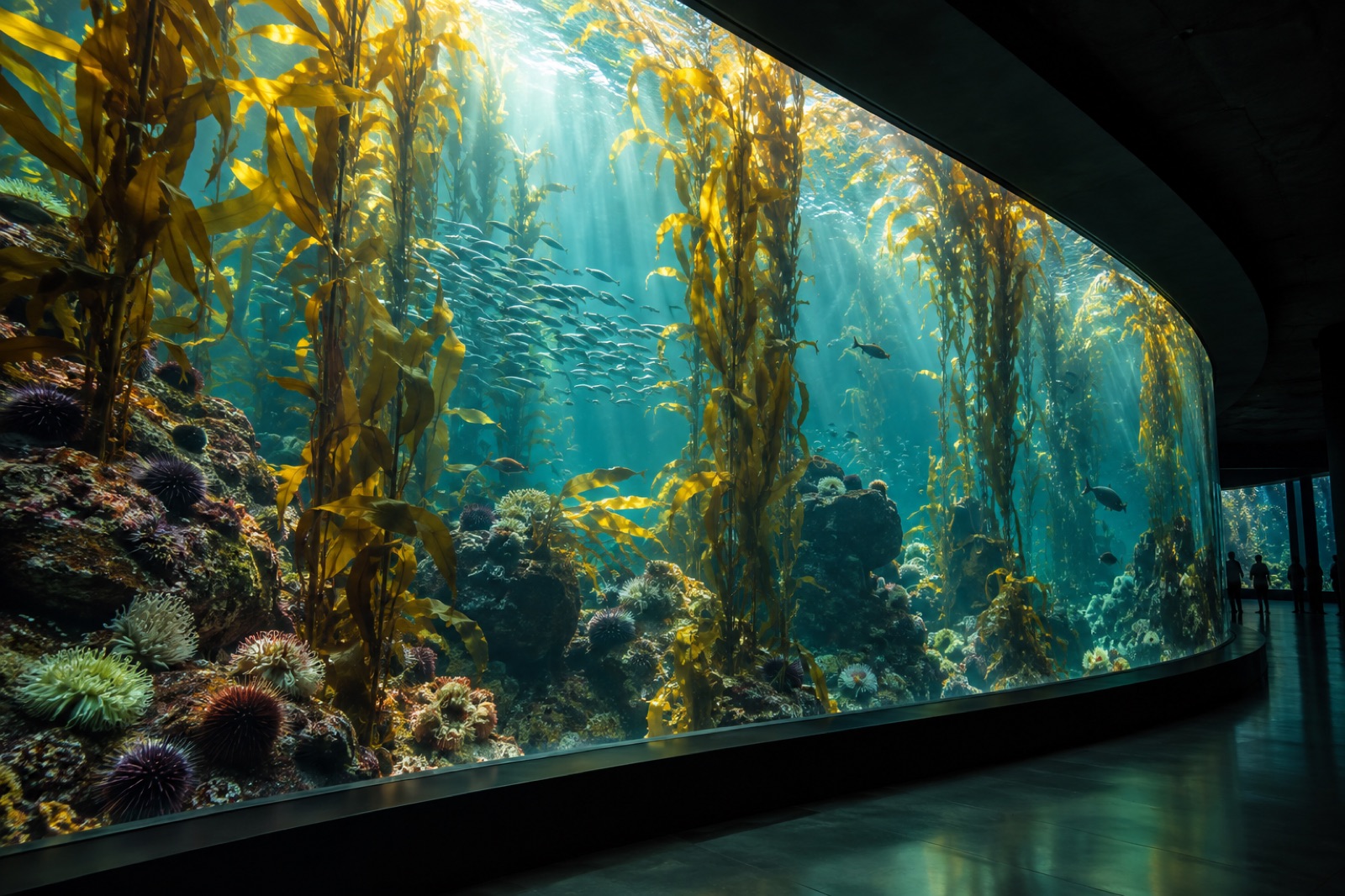
Visitors experience a public aquarium as a sequence of glowing windows: the kelp exhibit swaying in manufactured surge, the ray gliding overhead, the jellyfish pulsing in blue light. What they are actually looking at is the output of an industrial-scale life-support operation — kilometres of pipe, tonnes of salt, refrigeration plants, veterinary laboratories, food-preparation rooms that rival hospital kitchens — staffed by a crew that arrives hours before the doors open and stays after the last selfie. Aquarium careers are some of the most competitive and most misunderstood in the ocean world. This is the honest map: the roles behind the glass, what the work really involves, how people actually get hired, and what it pays.
An aquarium is five or six professions stitched into one building:
Husbandry — the aquarists. The core crew, responsible for the daily life of the collections: feeding to the gram, observing behaviour, cleaning exhibits, maintaining quarantine, recording health data. Aquarists are animal-watchers first; the job's central skill is noticing — a fish feeding shyly, a change in respiration, a wound that wasn't there yesterday — long before any instrument flags trouble.
Life support systems (LSS). The least visible department and, by water volume, the most important. LSS operators run the filtration, ozone, UV, temperature and chemistry of every system in the building; a failed pump at 3 am is their phone call. The role is industrial plant operation wrapped around living animals, and people with plumbing, refrigeration, mechanical or pool-plant backgrounds transfer brilliantly.
Veterinary and animal health. Aquarium vets, vet nurses and lab technicians run diagnostics, necropsies, quarantine protocols and nutrition programs across species that medicine barely covers — an aquarium vet might treat an octopus and a shark in the same week.
Curatorial and research. The people who design the collections: acquisition and breeding plans, conservation breeding programs, field collection permits, exhibit concepts, studbooks for threatened species. Usually senior roles grown from husbandry.
Education and guest experience. The public face — school programs, floor interpretation, behind-scenes tours. This lane is large, hires frequently, and is mapped in detail in our guide to ocean literacy and education careers.
Dive officers and exhibit divers. Commercially-certified divers who clean exhibits, maintain habitat in the water, feed by hand and run visitor dive experiences. The scientific diving guide covers the certification logic; aquarium diving adds crowd-proof composure to the same skill base.
If you want the honest texture of the job, arrive at 6 am. The building smells of salt and thawing seafood. Husbandry starts with a full walk-through — every exhibit observed, overnight events logged, mortalities recorded honestly. Food prep runs on recipe sheets: vitamins weighed, fish graded by size, enrichment items rotated. Exhibits get scrubbed — visitor glass is a daily war against fingerprints and algae — and back-of-house is pressure-washed, disinfected, re-salted. Water samples head to the lab. By the time the doors open, the crew has already done half a working day that exists purely so the public half looks effortless.
Two truths govern the whole operation:
Animal observation. The foundational craft of husbandry and the hardest to fake in an interview. Employers listen for candidates who speak naturally about behaviour and early warning signs.
Mechanical and water-craft competence. Pumps, plumbing, filtration, basic chemistry — even aquarists do constant minor engineering. Candidates who can operate and fix things are disproportionately valuable. The overlap with aquaculture technician work is enormous, and aquaculture experience is one of the strongest back doors into aquarium husbandry.
Dives and tickets. A commercial or scientific dive certification, first aid, forklift or trade licences — concrete tickets that put real capability behind a CV.
Six-day-week realism. Animals don't observe public holidays. Rotas include weekends, nights on call and feeding through festivals; employers screen hard for people who understand and want that rhythm rather than tolerating it.
Public warmth. Modern aquariums are communication institutions. Staff who enjoy talking to visitors — explaining a feed, answering a child's question for the fortieth time with genuine enthusiasm — advance faster than those who hide from the floor.
Almost nobody is hired into aquarium husbandry cold. The door is volunteering, and the sequence is remarkably consistent across the industry:
Degrees help — marine biology, zoology, veterinary nursing, animal science — and are expected for curatorial and vet roles. But for husbandry entry, demonstrable animal hours and water-craft routinely beat a bare degree. That's the same logic our honest map of marine conservation careers applies across the sector: evidence of doing is the currency.
Aquarium work is famously competitive because it is famously wanted, and the economics reflect that. Entry and casual husbandry pay is modest — in line with animal-care trades, not with the science salaries outsiders imagine. Senior aquarists, LSS specialists, dive officers and curators earn solid professional wages; veterinary and management roles reach well into professional territory. Almost everyone accepts lower pay than their skills would command elsewhere, and the trade-off they name is remarkably consistent: they work with living animals, in a mission institution, beside people who chose the same trade-off on purpose.
The conditions are physical and sensory: wet, cold, lifting, early starts, the smell of squid in your cuffs at 7 am, and — balancing all of it — the occasional moment when the exhibit hall is empty, the kelp is swaying in the surge and the forest glows green and gold behind the glass, and you remember exactly why you volunteered in the first place.
Aquarium experience is portable in surprising directions. Husbandry staff rotate into aquaculture, research-station animal care, conservation breeding and fisheries labs. LSS operators transfer to any industry with life-critical water systems. Educators move into curriculum, media and visitor-attraction leadership across the whole tourism sector. Curators and vets step into zoo and wildlife-conservation networks. And restoration operators increasingly hire aquarium alumni: an institution that can keep a living kelp forest thriving in a tank understands things about kelp that no boat crew ever will. Ocean-facing employers like Tidewright keep an eye on this talent pool for exactly that reason.
Not strictly. Degrees help and are common, but employers routinely prioritise demonstrated animal care, water-craft and reliability — much of it built through volunteering. A degree plus volunteer hours is the strongest combination; hours alone frequently beat a degree alone.
LSS operators run the filtration, chemistry and mechanical plant that keeps every tank alive. Backgrounds in plumbing, refrigeration, mechanical trades or commercial pool operation transfer directly; industry-specific training and certifications exist and are typically added on the job.
They share certification foundations but differ in practice: aquarium exhibit diving adds visitor-facing performance, strict in-tank protocols and daily repetitive maintenance. See our scientific diving guide for the certification pathway both routes build on.
Very — dozens of applications per opening is normal at famous institutions. The realistic counters are volunteering history, transferable aquaculture or animal-care experience, willingness to start casual or regional, and the specific tickets (dive, first aid, trade) that reduce an employer's training risk.
Evidence of reliability and animal exposure: pet or livestock care, wildlife shelter work, dive experience, hospitality rostering, anything that shows you can hold an unsociable-hours commitment. Then a short, genuine sentence about why the building matters to you — coordinators remember sincerity and forget adjectives.
Ocean literacy educators teach the sea in classrooms, aquariums, ranger programs and on beaches — a guide to employers, skills, credentials and the roads in.
Tom Okafor ·
How to qualify as a working scientific diver: recreational certs, scientific diver programs, the real job market, and what a career underwater actually costs.
Tom Okafor ·
Aquaculture technicians run the hatcheries and farms the blue economy is built on. Here are the skills, certifications, pay patterns and honest routes in.
Naomi Reyes ·