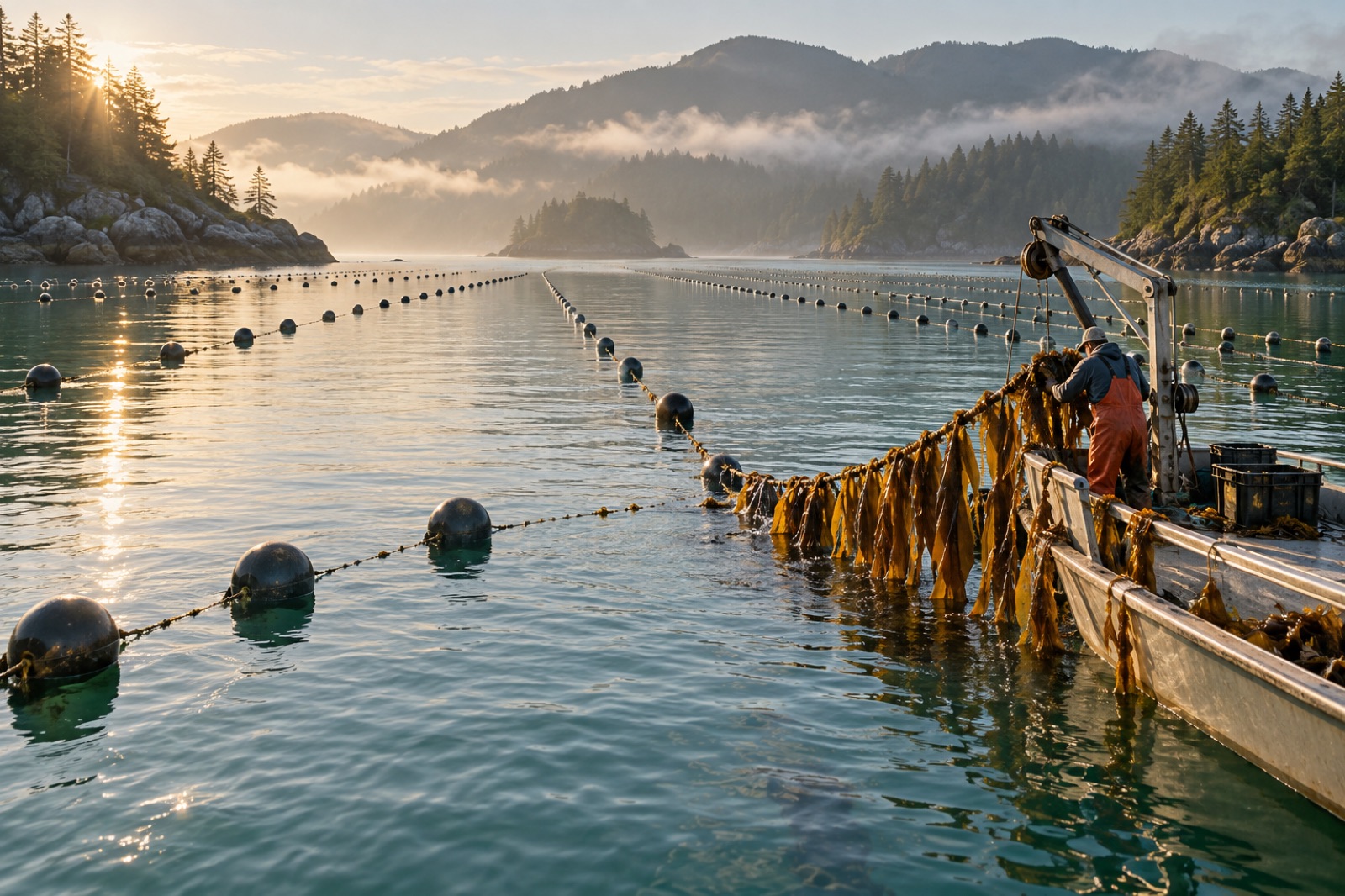
Aquaculture is the fastest-growing food production sector on Earth, and every tonne it produces passes through the hands of technicians — the people who feed the tanks, spawn the kelp, grade the shellfish, spot the disease and fix the pump at 2 a.m. "Aquaculture technician" is one of the ocean economy's most attainable careers: reachable without a degree, hungry for practical people, and with real progression into management, hatchery science and farm ownership. This guide covers what the job actually is, the tickets that get you hired, what it pays, and how the career ladder works. For the wider map of hatchery-to-harvest roles, see our careers in aquaculture overview.
What an aquaculture technician does
The title covers two related but distinct daily realities:
On-farm (grow-out) technicians work the water: feeding biomass, checking moorings, cleaning nets and lines, grading harvest, operating boats and cranes, monitoring dissolved oxygen and temperature, and repairing whatever the sea broke overnight. In shellfish they tend longlines and rafts; in kelp farming, they seed lines out of the hatchery and manage the crop through winter storms. Seasonality is real — seaweed has a winter growing rhythm, salmon runs are harvest-timed — and the calendar sets the workload more than any rota does.
Hatchery technicians work the tanks: spawning and larval rearing, phytoplankton culture, water chemistry, nursery grading. This is the most technical end of the trade — kelp hatchery work, for example, means managing spore release and seeded twine with lab-grade hygiene on an industrial clock. It is steadier, more indoor, and where the deepest expertise develops.
Most technicians start on-farm and migrate toward hatchery work as their skills deepen, though plenty stay gladly on the water their whole careers.
Who employs them
- Commercial finfish farms — salmon, barramundi, sea bass, kingfish. The largest single employer in most aquaculture regions; offshore and pen-based; structured career ladders and housing on remote sites.
- Shellfish operations — oyster, mussel, scallop and pearl farms. Family-scale to corporate; often the best work-life patterns in the sector; close to coastal communities.
- Seaweed operations — the sector's growth pole. From community longlines to industrial acreage and restoration-adjacent farming, seaweed farms are hiring people faster than the training pipelines can supply them. Our farming section documents the whole trade.
- Hatcheries and broodstock facilities — every juvenile in the industry comes from one. Tidewright's own Holdfast hatcheries employ technicians to run kelp seedstock culture from spore to seeded line.
- Government research and quarantine facilities — technician roles with the best training per hour in the sector, though fewer openings.
- Equipment and service suppliers — net-makers, mooring installers, feed and monitoring companies, all of whom recruit experienced technicians for technical sales and commissioning.
The entry ticket stack
You do not need a degree to be hired as a technician in most of the world. What gets a CV accepted instead:
- A small-vessel licence or willingness to work on boats on day one. Nearly universal. Get it before applying; two weekends and a modest fee in most regions.
- First aid and workplace safety inductions — confined space, manual handling, chemical handling. Simple tickets, visible signals of employability.
- Forklift or machinery licences for farm-site work involving shellfish equipment or feed silos.
- Occupational or commercial diving — optional but transformative. Diving technicians earn premiums and step into inspection and mooring roles early.
- Trade certificates — welding, diesel mechanics, electrical. A trades-qualified aquaculture technician is one of the most sought-after hires in the industry, because the ocean breaks machinery constantly and technicians who fix it are gold.
Where degrees do matter: progression into hatchery management and broodstock science often expects an aquaculture, marine science or veterinary-adjacent qualification. Many employers sponsor this part-time once you have proven yourself on the floor.
Skills that separate good technicians from average ones
On any shift, the differentiators are consistent:
Observational discipline. Fish behaviour, kelp blade colour, shellfish gape — technicians are the industry's sensory system. The people who spot a disease or mooring abnormality hours early are the most valuable people on site.
Water-quality literacy. Understanding dissolved oxygen, temperature, ammonia and pH as physical causes, not just numbers on a screen. Hatchery roles make this non-negotiable; see our deep-dive on hatchery water quality for what mastery looks like.
Mechanical confidence. Aeration, pumps, moorings, hydraulics, blown fuses. Rural self-sufficiency pays; learn to fix things.
Data habits. Modern farms log everything on tablets: feed ratios, mortalities, growth samples, weather. Clean, honest record-keeping is part of the craft, not admin overhead.
Animal welfare ethic. The industry's ethics and licences rest on daily welfare practice; technicians are where standards live or die.
Pay: honest patterns across the sector
Exact figures vary widely by country, species and employer, so the honest guide is shaped rather than quoted:
- Entry on-farm technician pay typically sits around or slightly above regional general labour rates, improving sharply with tickets (machinery, dive, boating) — each certification commonly justifies a visible step.
- Hatchery technicians with two-plus years of larval-rearing experience command mid-professional salaries; larval expertise is globally scarce and travels well between countries.
- Remote-site work pays premiums and usually bundles housing and board; financially it outperforms its headline wage considerably.
- Dive-qualified technicians, trades-qualified technicians and feed-management specialists occupy the top of the pay band among non-managerial roles.
- Seaweed and restoration-adjacent roles currently pay at or near parity with finfish, with faster responsibility growth because the sector is newer and short-staffed.
A rough rule for career planning: competence with live-animal systems at industrial scale has risen in market value every year for a decade, and nothing on the horizon suggests that stops.
Entry routes that work
Direct application. Farms hire continuously; walk-in and direct email applications with a boat licence attached succeed at rates that would shock white-collar sectors. Attitude and reliability genuinely outrank CVs here.
Vocational training. Many coastal regions run aquaculture certificates through technical colleges and maritime schools — typically a few months of practical blocks, often with work placement that itself converts to employment.
Seasonal and harvest contracts. Shellfish harvest seasons, kelp harvest windows and finfish grade-outs recruit temporary crews en masse. A single good season is the most common door into permanency.
Through adjacent sectors. Commercial fishing crews, farm workers, tradespeople and navy/maritime backgrounds all transfer directly. The sector prizes sea sense over certificates of alignment.
Apprenticeships and traineeships. Increasingly formalised, often paid, increasingly competitive — worth applying for as early as possible in your region.
The ladder after technician
A working technician career typically develops along four branch lines:
- Senior technician → farm manager: people leadership, budgets, compliance. The most common path; management pay in finfish especially is seriously professional.
- Hatchery specialisation → hatchery manager or broodstock scientist: the rarest expertise; global mobility. Setting up seedstock from scratch — the craft behind building a seaweed hatchery — is a genuinely elite skill.
- Technical services: equipment, feed and monitoring suppliers recruit heavily from experienced technicians; sales-engineer pay combines technical credibility with commercial upside.
- Ownership: many of the world's productive small seaweed and shellfish farms are run by former technicians who bought or leased sites once they knew the trade cold. The entry equity is far lower than most agribusiness.
Tidewright's own hatchery and farming crews follow exactly this structure, and our open roles appear on the company careers page. Whether you arrive with tickets or a willingness to earn them, technician work remains the most reliable route into professional life on the water in the 2020s.
Key takeaways
- Aquaculture technicians split between on-farm grow-out work (boats, feeding, harvest) and hatchery work (larvae, water chemistry, data) — most move between both over a career.
- No degree required for entry: a small-vessel licence, safety tickets and machinery certificates are the real keys; degrees matter mainly for hatchery-management progression.
- The differentiating skills are observational discipline, water-quality literacy, mechanical confidence, data hygiene and welfare ethic.
- Dive and trade qualifications command pay premiums; remote and hatchery roles pay most among non-managerial tracks.
- Entry routes are unusually direct — applications, seasonal crews, vocational certificates, adjacent-sector transfers.
- The career ladder leads to farm management, hatchery specialisation, technical services or farm ownership — all reachable within a decade from a standing start.
FAQ
Do I need a degree to become an aquaculture technician?
No — most technician roles are hired on tickets and attitude, not degrees. A vessel licence, safety certificates and machinery qualifications get you hired; degrees accelerate the later moves into hatchery management, quality assurance and research-side roles, and are often sponsored part-time once you're employed.
Is aquaculture technician work seasonal?
Partly. Finfish and shellfish need year-round husbandry, but workloads spike with harvest cycles, and seaweed in temperate regions is strongly winter-patterned. Many technicians build steady annual rhythms: contract-heavy summer/harvest peaks, maintenance and seeding in shoulder seasons, full-time roles coming with seniority.
What's the difference between hatchery and farm technician work?
Farm technicians work outdoors on grow-out — feeding, boat work, harvest, repairs. Hatchery technicians work indoors on reproduction and juvenile rearing — spawning, larval culture, water chemistry — with lab-grade discipline and steadier hours. Hatchery expertise is rarer, better paid and more portable globally.
Can I move from fishing or trades into aquaculture?
Yes, and seamlessly. Fishing crews transfer boat handling, gear skills and sea sense; tradespeople transfer exactly the mechanical reliability farms pay premiums for. Many of the industry's best senior technicians started on trawlers or benches, not in classrooms.
How physically demanding is the job?
Real but manageable: lifting, wet weather, long periods on your feet, and winter on the water are the daily texture, alongside early starts. Employers have mechanised the heaviest work over the past decade, and fitness requirements are honest-vigorous rather than extreme — comparable to other outdoor trades and farming roles.