Field Notes9 min read
Field Notes: Open Day at the Hatchery
A Tidewright field note from Triabunna: 300 neighbours, forty schoolkids and one microscope queue at the Holdfast kelp hatchery's first community open day.
Naomi Reyes ·
35 articles
A Tidewright field note from Triabunna: 300 neighbours, forty schoolkids and one microscope queue at the Holdfast kelp hatchery's first community open day.
Naomi Reyes ·
The gametophyte culture room is the quietest, most critical room in a kelp hatchery. How light banks, temperature regimes and sterile timing turn spores into seed.
Naomi Reyes ·
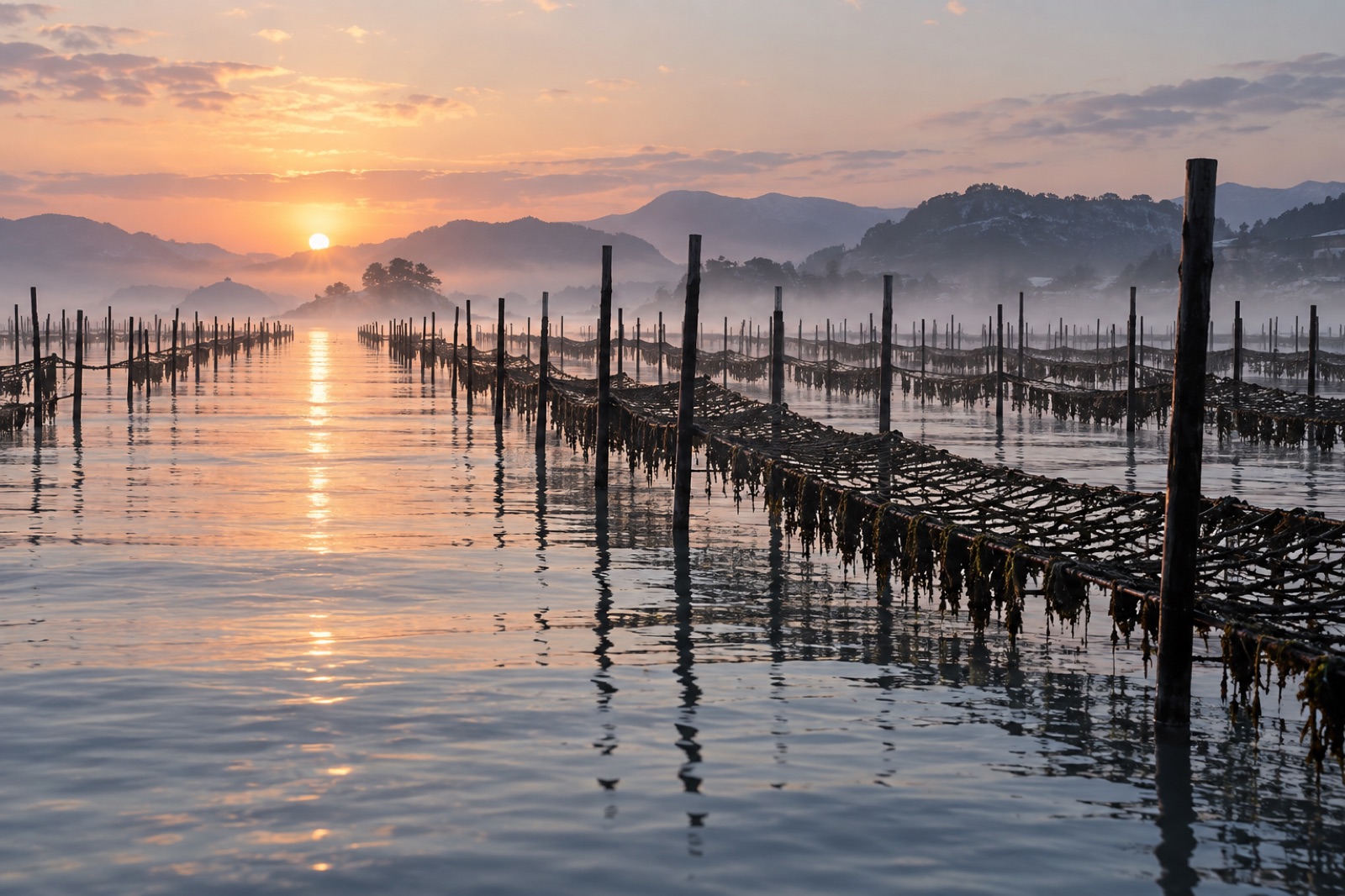
How nori is really farmed — the hidden conchocelis phase, shell-boring nurseries, pole-and-line nets, winter harvests and the grading that sets the price of every sheet.
Naomi Reyes ·
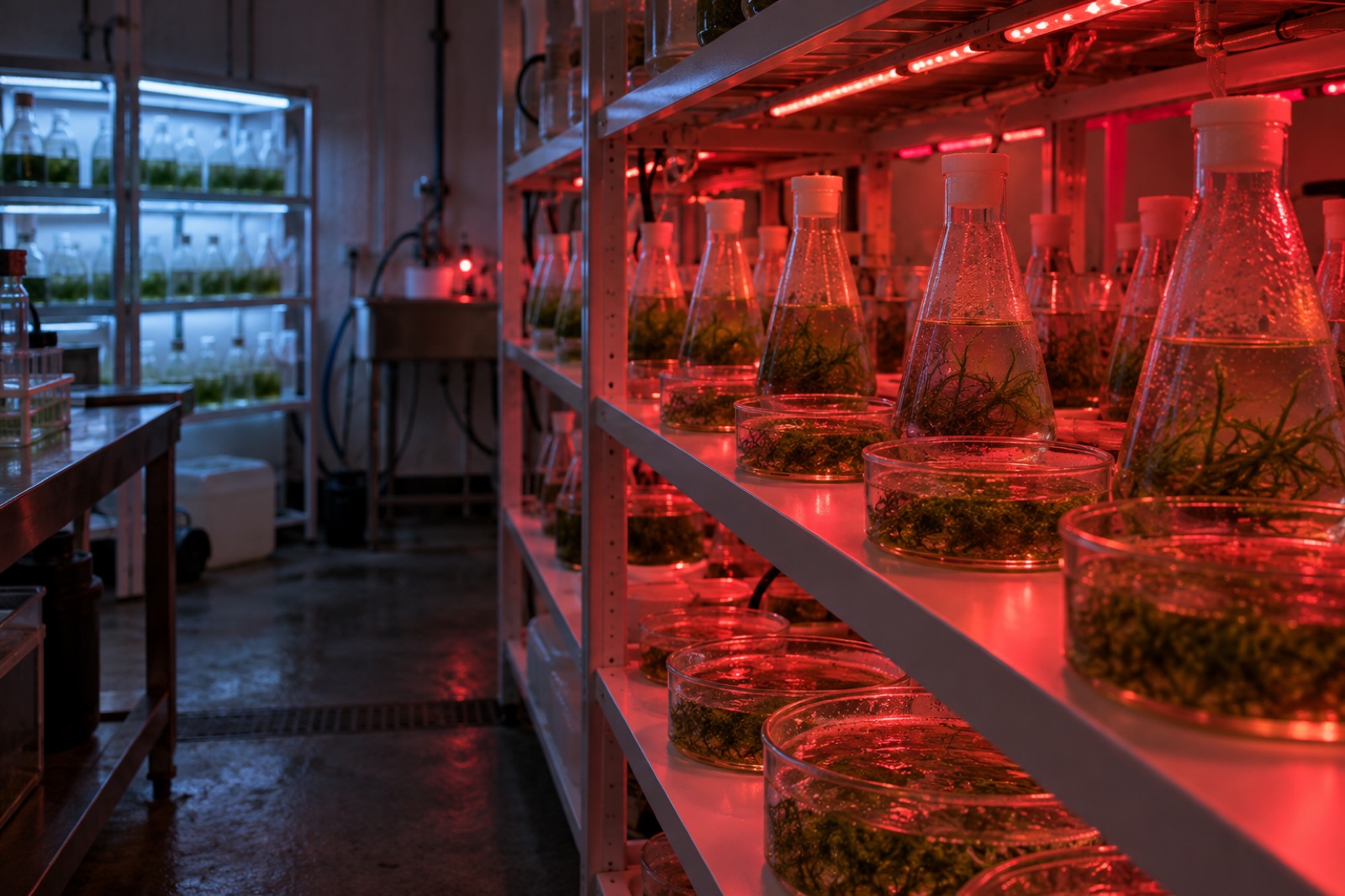
Red light to hold, blue light to release: how wavelength and day length steer kelp gametophyte cultures, with a practical hatchery lighting setup guide.
Dr. Theo Nakamura ·
Hatchery technicians grow the ocean's juveniles — kelp spores, oyster larvae, fish fry. Here's what the craft involves, how to get in, and where it leads.
Naomi Reyes ·
Filtration trains, source water choices, daily monitoring and contamination response — the water-quality management that decides whether a kelp hatchery succeeds.
Naomi Reyes ·
A kelp seed bank is a genetics program, not a freezer. Provenance, diversity targets, collection design and rotation — managing seedstock for resilient kelp.
Dr. Elias Brandt ·
Before kelp seed string leaves the hatchery, run these viability checks: settlement density, sporophyte stage, contamination, transport stress and a trial outplant.
Dr. Theo Nakamura ·
How to build and run a kelp strain catalogue: naming, provenance records, gametophyte lineage tracking, outcrossing rotation, and audit-ready hatchery documentation.
Dr. Elias Brandt ·
Selective breeding is coming to kelp farming. How hatcheries find, cross and test thermally tolerant strains — and what 'climate-resilient seed' really means.
Dr. Elias Brandt ·
How to mechanise kelp seeding on a farm: binder machines, spool carriages, spray systems and drum seeders compared, with throughput, costs and buying advice.
Naomi Reyes ·
Kelp seedstock is not a commodity: provenance, local adaptation, permitting and biosecurity decide what you may and should plant. A geneticist's guide to native seed.
Dr. Elias Brandt ·
A Tidewright field note from the Holdfast hatchery: the red-lit night shift, quiet alarms, and what 3 a.m. teaches you about kelp seed quality.
Jack Callum ·
How to design a nursery grow-out tank for kelp seedstock: flow patterns, turnover rates, lighting, aeration, materials, and scaling from bench tank to production.
Naomi Reyes ·
Seaweed hatchery technicians grow the microscopic half of kelp's life — spores, gametophytes, seeded lines. A guide to the craft, the skills and the way in.
Naomi Reyes ·
The seaweed hatchery is the farm's biosecurity front line. Intake quarantine, screening methods, health certificates, and the seedling protocols that protect farms and reefs.
Naomi Reyes ·
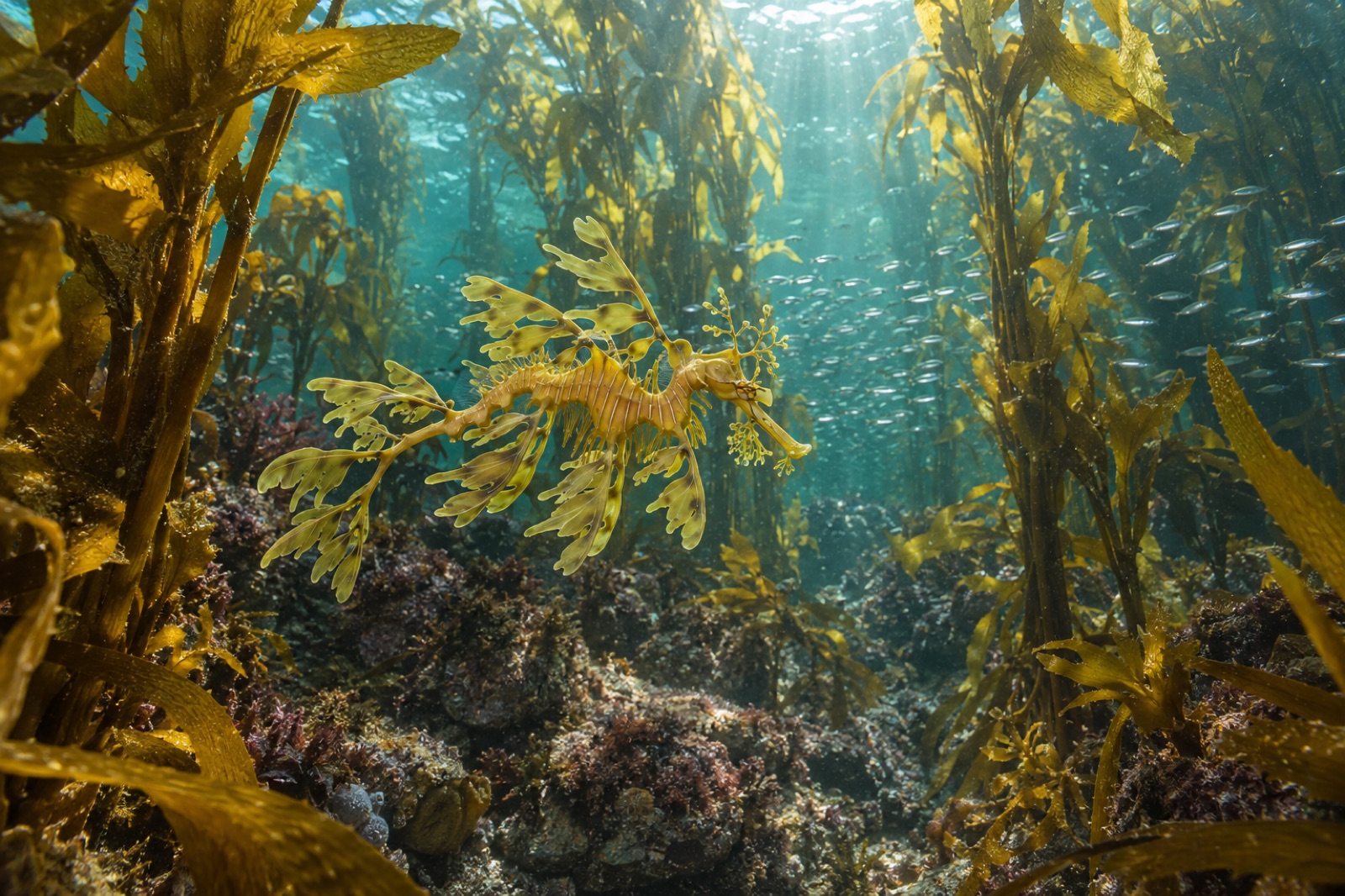
Golden kelp drops its spores for two short weeks in Gulf St Vincent. Field notes from a collection week run on the Kudjela Rangers' calendar, not ours.
Dr. Theo Nakamura ·
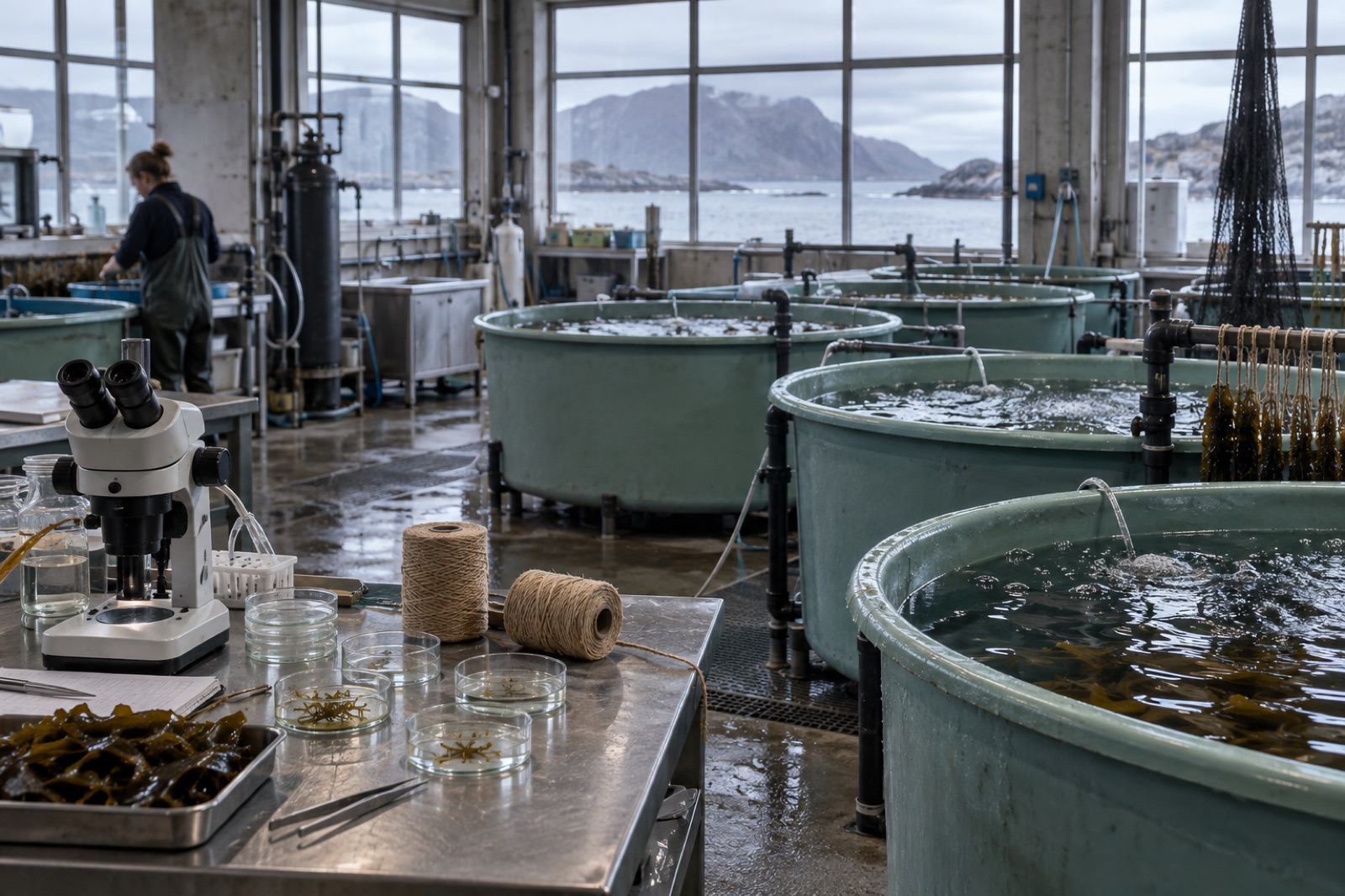
Five days as a trainee inside Tidewright's Holdfast hatchery: spore releases, cold rooms, seeded lines and the unglamorous real work of restoration.
Jack Callum ·
Aquaculture technicians run the hatcheries and farms the blue economy is built on. Here are the skills, certifications, pay patterns and honest routes in.
Naomi Reyes ·
How to grow sugar kelp (Saccharina latissima) from spores to harvest — site choice, seeding windows, grow-out depth, and the winter timing that makes this crop work.
Naomi Reyes ·
A mains failure at 2 a.m. puts a Tasmanian kelp hatchery's season on a countdown. Field notes on triage, generators and the order in which things die.
Jack Callum ·
The working numbers of a kelp hatchery — temperature, salinity, pH, nutrients, filtration and dosing math — and what to do when each one drifts.
Naomi Reyes ·
Cryopreservation turns living kelp gametophytes into a permanent seed library: the bench protocol, quality checks and storage rules that make it work.
Dr. Elias Brandt ·
A practical biosecurity system for kelp farms: the pest vectors that matter, zoning and quarantine design, and what to do in the first 48 hours of an outbreak.
Naomi Reyes ·
A field note from our Tasmanian nursery: two autumn weeks diving for fertile giant kelp blades, racing spores to tanks, and banking a forest's next generation.
Jack Callum ·
Land-based tank nurseries and open-water seed systems each win in different conditions. How to match your seaweed nursery design to species, budget, climate and scale.
Naomi Reyes ·
Wintering over at Tidewright's Lofoten hatchery means seedstock care in the polar night: light discipline, cold rooms, slow work and a culture lab that never sleeps.
Dr. Theo Nakamura ·
How and why hatcheries freeze kelp gametophyte cultures in liquid nitrogen — the germplasm-bank logic that underpins seed security and climate resilience.
Dr. Elias Brandt ·
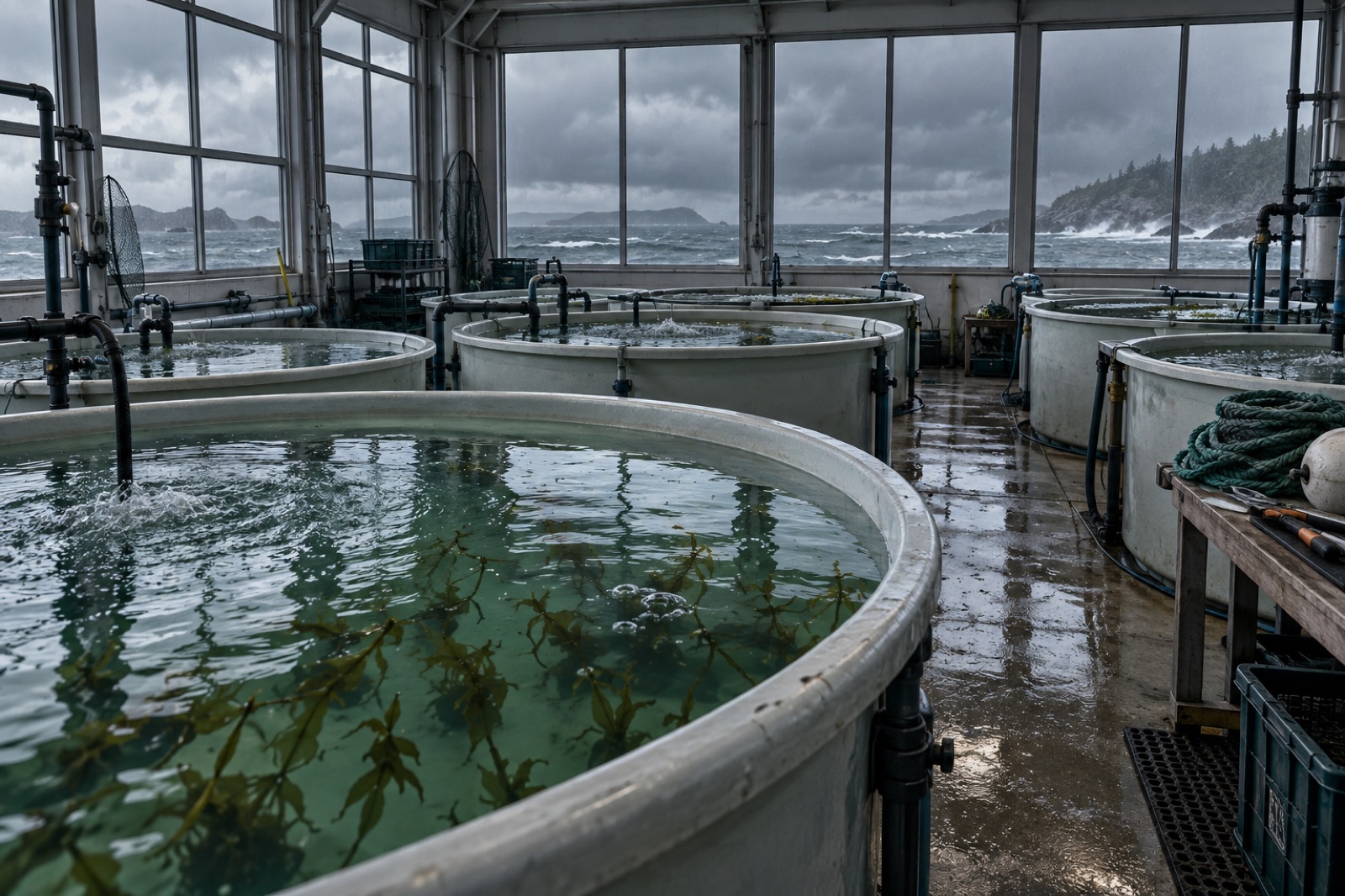
A Tidewright field note from our Triabunna hatchery: when a freak hailstorm killed the power mid-season, the crew had eleven hours to save a year of kelp seedstock.
Jack Callum ·
Behind every seeded line is a decision made months earlier: which adults to breed from. How hatcheries select, hold and manage kelp broodstock for reliable seed.
Dr. Elias Brandt ·
Seeded kelp line is fragile freight. Learn the cold, dark, wet rules of seed transport, journey-time limits, on-site holding and the hatchery handoff checklist.
Naomi Reyes ·
Between every kelp forest and its next generation sits an invisible, few-celled filament: the gametophyte. Its biology decides recruitment, resilience and hatchery success.
Dr. Theo Nakamura ·
How kelp selective breeding works — traits worth selecting, a typical breeding cycle, realistic timelines and the genetic safeguards that keep seedstock healthy.
Dr. Elias Brandt ·
A technical guide to culture media for kelp gametophytes and sporophytes — Provasoli, f/2, what each nutrient does, and how to mix, sterilise and dose it.
Dr. Theo Nakamura ·
Marine hatchery technicians raise oysters, abalone and fish from egg to juvenile. Here's the daily work, the qualifications, and the routes into the job.
Naomi Reyes ·