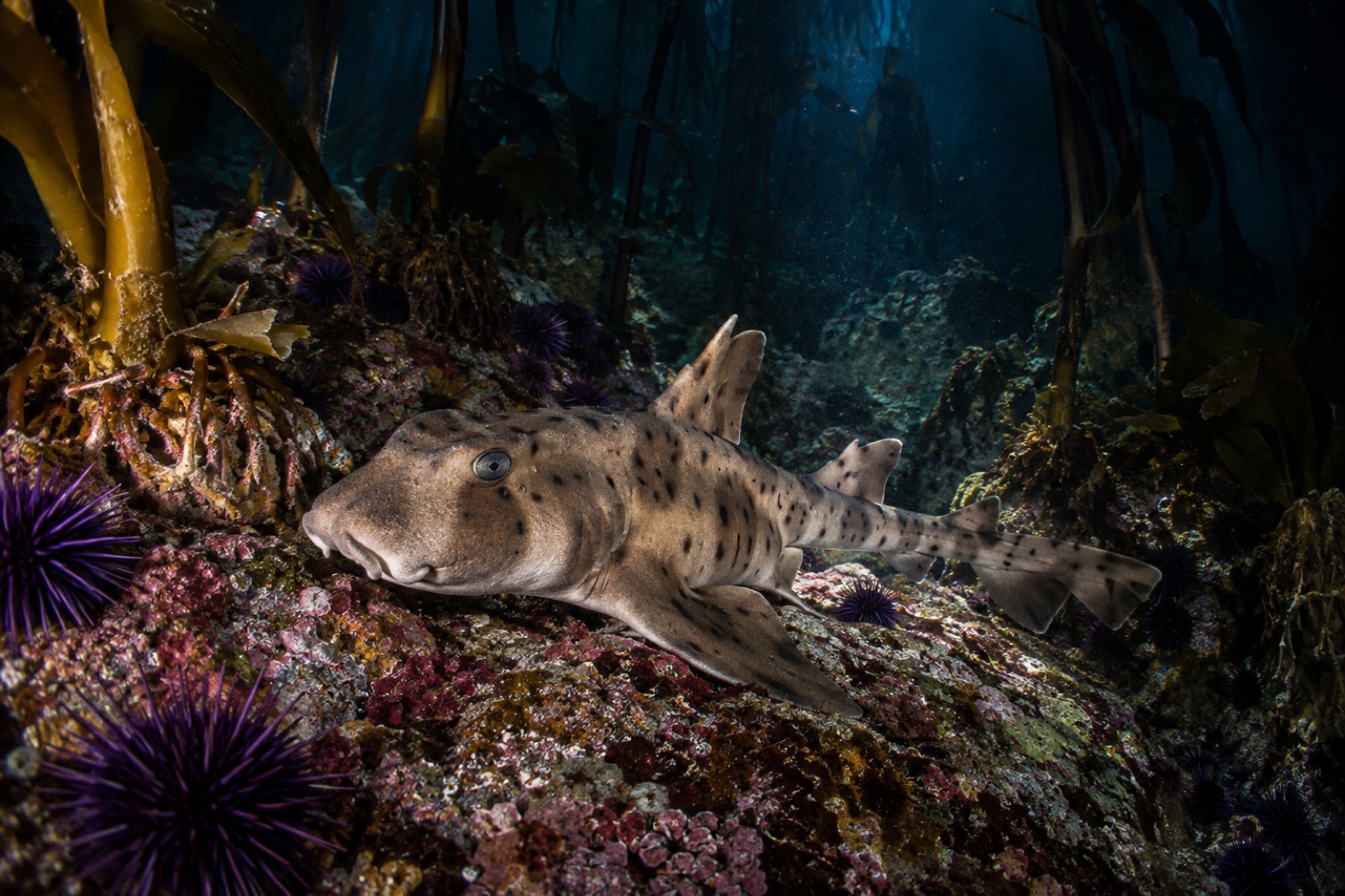
Updated: 0–1 min read for the short answer — the California scorpionfish (Scorpaena guttata) is a mottled, venomous ambush predator that lies motionless on and around rocky reefs from central California into Baja California. It is not aggressive, it does not chase, and nearly every sting on record comes from a hand or knee placed exactly where a fish was pretending to be rock.
If you dive or fish the kelp forests of Southern California, you should learn this fish's outline the way you learn a trail's poison oak: not out of fear, but so you can appreciate it from a respectful half-metre away.
What is the California scorpionfish?
The California scorpionfish — often called "sculpin" on fishing boats, though it is not a true sculpin — belongs to the family Scorpaenidae, the same family as the lionfish and the much-feared Indo-Pacific stonefish. It is the only member of the genus Scorpaena that occurs commonly off the US West Coast, which makes identification easier than in most of the world.
Key identification features
- Mottled camouflage: reddish-brown, tan, or pinkish ground colour broken by darker blotches; the pigment cells can shift somewhat to match the substrate within limits.
- Spiny, ragged profile: a large, flattened head with skin flaps (cirri) around the jaw and eyes, twelve venom-bearing dorsal spines, and rough, scale-covered flanks.
- A distinctive dark spot: a dark blotch on the spinous dorsal fin, usually between specific spines, helps separate it from lookalikes.
- Size: commonly 15–30 cm; large fish reach roughly 40+ cm.
Divers consistently rank it among the hardest fish to spot. Its camouflage is not just colour — the fish adopts a motionless, slightly head-down posture among algae-covered rubble and lets the reef finish the disguise.
Where it lives and how it hunts
California scorpionfish range from about central California (with occasional records farther north) down the Baja California peninsula, over rocky bottom, kelp-bed margins, and artificial reef from the shallows to depths approaching 180 m. The densest encounters are on patch reefs and along the sand–rock interface beneath forests of giant kelp.
The hunting style is pure ambush. The fish settles, matches the bottom, and waits for small fishes, crabs, or shrimp to cross a strike zone measured in centimetres. The attack is a suction-feeding snap over in milliseconds; the fish resumes imitating geology. Like its neighbours the cabezon and the horn shark, it is largely a creature of the reef floor rather than the water column — the kelp canopy above is scenery, not habitat.
The venom apparatus
Each of the twelve dorsal spines, plus spines in the anal and pelvic fins, is grooved and sheathed in skin containing venom-producing tissue. When the sheath is compressed along the groove, venom is pressed into the wound. The venom is a defensive weapon, not a hunting tool — the scorpionfish eats by suction, not by envenomation.
Stings: what they feel like and what to do
A California scorpionfish sting is described as an immediate, intense, burning pain that can radiate through the limb, sometimes accompanied by swelling and nausea. It is rarely dangerous to healthy adults, but it is genuinely miserable. People with fish-handling histories — deckhands, divers, anglers unhooking fish, and snorkelers steadying themselves on rocks — account for most cases.
Standard first aid, as recommended in the medical literature on marine envenomations:
- Get out of the water and remove any visible spine fragments.
- Immerse the wound in hot water — as hot as can be borne without scalding, roughly 42–45 °C — for 30 to 90 minutes. The heat helps break down the heat-labile venom proteins.
- Clean the wound, and seek medical care if pain is severe, spreading, or if the wound shows signs of infection.
Prevention is simpler: wear booties if wading rocky shallows, never put a hand down blind on a reef, and use a dehooking tool rather than fingers on any "sculpin" pulled up on a line.
Life cycle and reproduction
California scorpionfish spawn in the warmer months, producing gelatinous, floating egg masses — buoyant "balloons" of eggs embedded in mucus that drift near the surface before hatching. The larvae are planktonic for weeks, dispersing on currents before settling onto shallow rocky bottom as thumbnail-sized juveniles. They are fast-growing and relatively short-lived compared with their rockfish cousins such as the treefish, maturing within only a few years.
That fast life history matters. Slow, long-lived reef fish are easy to overfish and slow to recover; a quick-maturing species like the scorpionfish has more biological headroom.
Fishery and conservation status
The California scorpionfish supports recreational and small commercial fisheries in Southern California, prized as a firm, white-fleshed eating fish. A US federal stock assessment in 2005 found the population depressed relative to its unfished level, prompting tighter management within the groundfish fishery; a subsequent assessment in 2017 indicated the stock had recovered to healthy levels — a rare good-news arc in groundfish management, and a reminder that monitoring and catch limits work.
There is also a quiet lesson in the fishery's history: this is a fish people catch by accident while targeting other species, which makes bycatch data and ongoing surveys essential to keeping the recovery on track. Tidewright's own Canopy Ledger monitoring program counts scorpionfish among the reef-resident indicators its teams log during biodiversity surveys — a healthy mottled back twitching under survey lights is one small datum in a much bigger reef-health picture.
Why the reef needs its scorpionfish
Mid-level ambush predators like Scorpaena guttata sit in the middle of the kelp-forest food web: they convert swarms of juvenile fish and crustaceans into meals for larger predators, and their presence constrains the behaviour of prey species, shaping where young fish dare to forage. Remove the ambush layer and the reef's choreography changes. A kelp forest is not just the kelp — it is the full cast, and the scorpionfish is one of its most patient actors.
Key takeaways
- The California scorpionfish is a camouflaged, venomous ambush predator of rocky reefs and kelp-bed margins from central California to Baja.
- Look for a mottled, ragged fish lying still on the bottom, with flaps around the jaw and a dark spot on the spiny dorsal fin.
- Its dorsal spines deliver a painful but rarely dangerous sting; hot-water immersion is the standard first aid.
- It is a quick-growing species whose stock recovered after depleted status was identified in the mid-2000s — a fisheries-management success story.
- Keep a respectful distance, never touch reef fish, and handle any scorpionfish catch with tools, not hands.
FAQ
Are California scorpionfish dangerous to divers?
Only if touched. The fish cannot "attack" — its venom is purely defensive, deployed when the spines are pressed. Divers who keep their hands and knees off the reef have essentially nothing to fear.
How do I tell a scorpionfish from a true sculpin like the cabezon?
Look for the spiny dorsal fin (the cabezon's is soft-rayed with no venom), the skin flaps around the lower jaw, and the venom-spine grooves. When in doubt, treat any sedentary bottom fish as venom-bearing and use a dehooking tool.
Can you eat California scorpionfish?
Yes — the flesh is firm and mild, and the venom lives in the fin spines, not the meat. Handle with care while cleaning and follow local regulations and size limits.
Is the California scorpionfish the same as a lionfish or stonefish?
Same family (Scorpaenidae), different genus and far milder venom. It is not invasive like the lionfish, and its sting, while very painful, is not comparable in danger to a stonefish's.
Where am I most likely to see one while snorkelling?
On rocky patch reefs at the edge of kelp beds in 3–15 m of water, especially late in the day. Scan the algae-covered rubble rather than the open sand — you are looking for a rock that seems to have eyes.