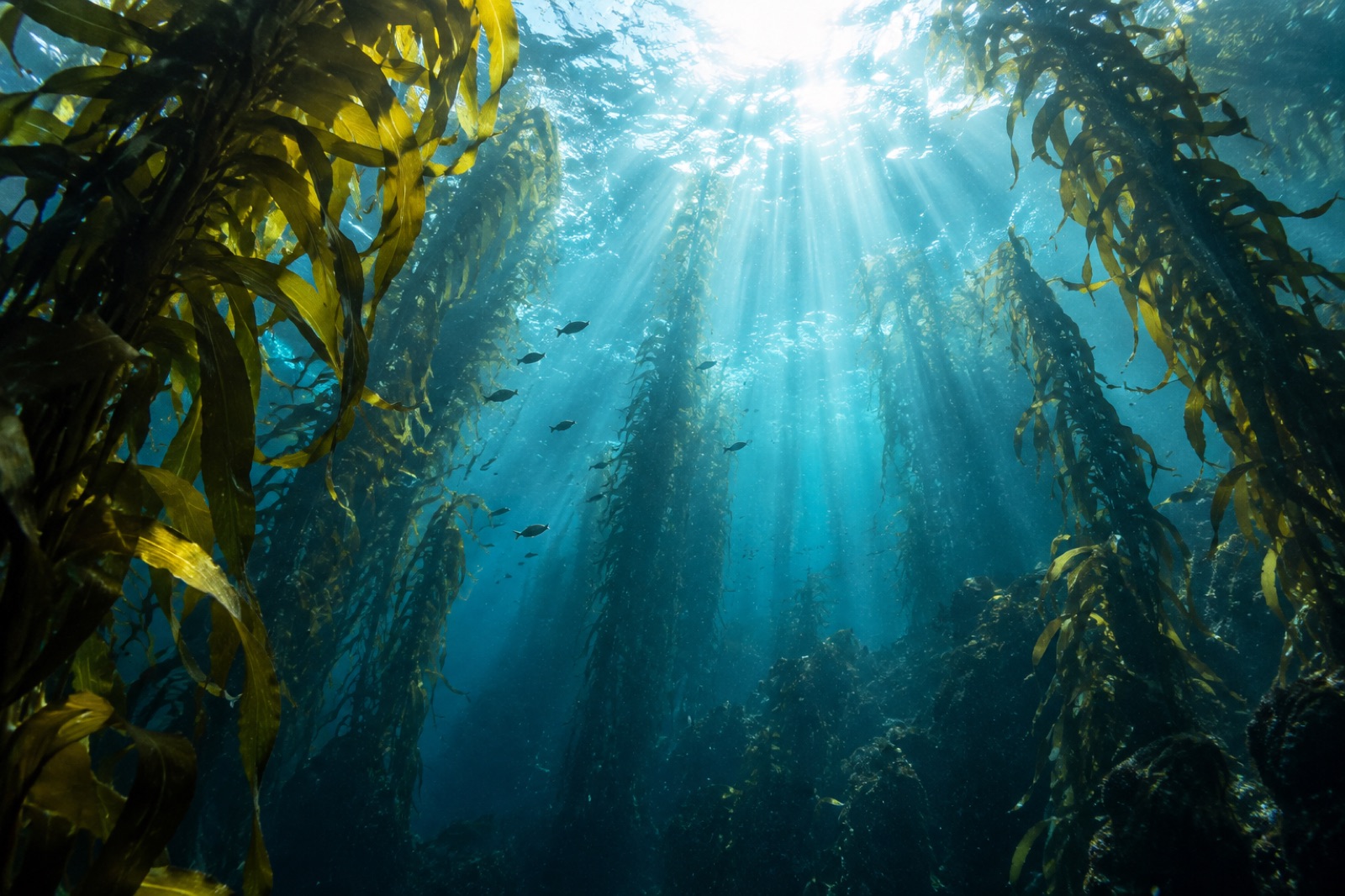
Annual or Perennial: How Kelp Life Strategies Shape the Forest
Some kelps live one season, others many years. What annual vs perennial life strategies mean for forest dynamics, storm recovery — and choosing restoration species.
Dr. Theo Nakamura ·
Journal author
Kelp Biologist & Science Lead
Theo studies kelp life cycles, genetics and gametophyte biology. He designs Tidewright’s seed-stock program and writes the species deep-dives he wishes he’d had as a student.
Some kelps live one season, others many years. What annual vs perennial life strategies mean for forest dynamics, storm recovery — and choosing restoration species.
Dr. Theo Nakamura ·

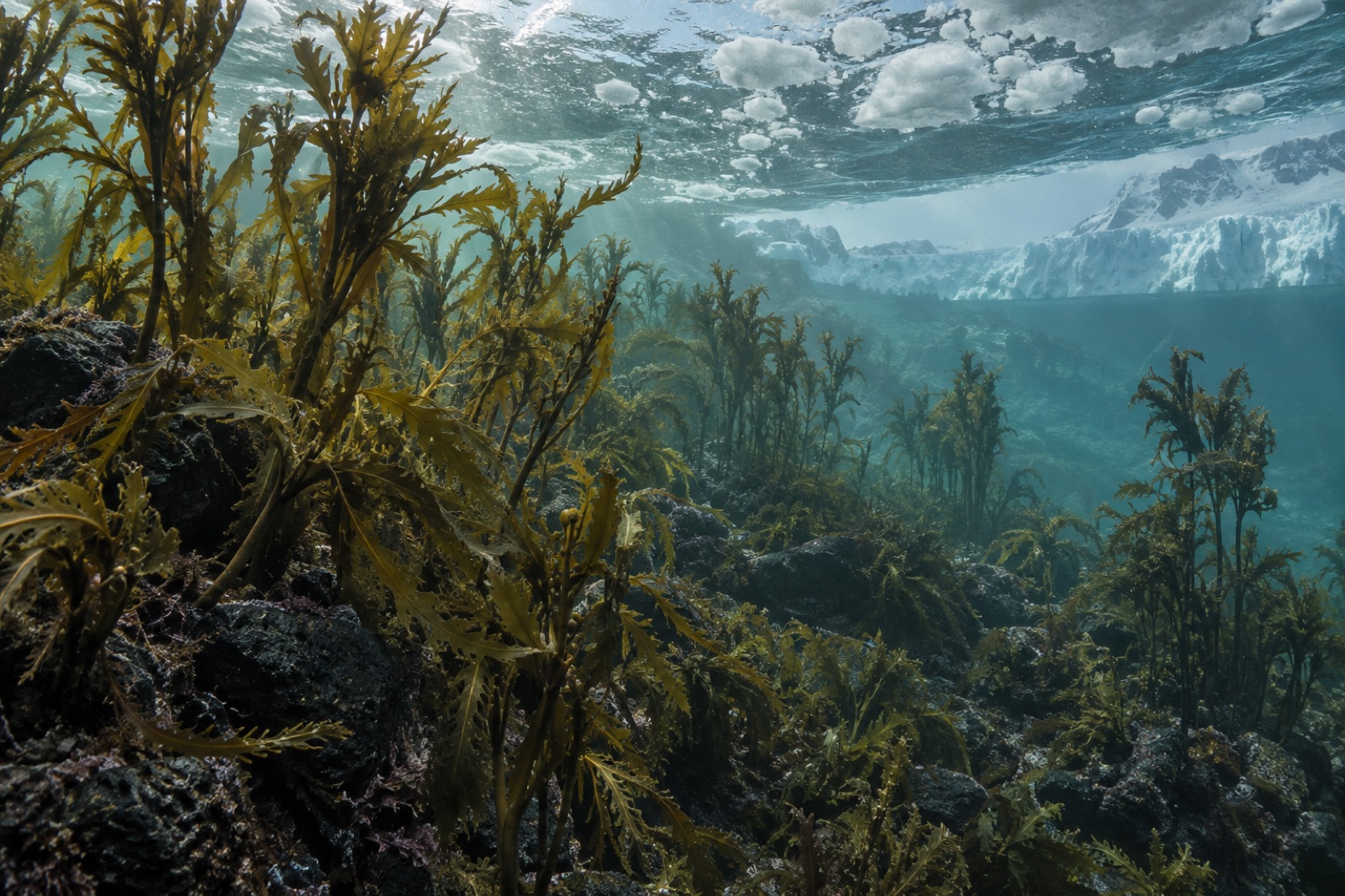
No true kelp grows south of the Antarctic polar front, yet the Peninsula guards seaweed forests of its own. A guide to the frozen edge.
Dr. Theo Nakamura ·
Asparagopsis fed to cattle slashes methane emissions, and farmers want to grow it. The biology, the tank systems, the hard problems and what to know before trying.
Dr. Theo Nakamura ·
Meet the Atlantic wolffish — a fanged, antifreeze-blooded reef fish that crushes sea urchins and has declined badly from trawl bycatch.
Dr. Theo Nakamura ·
Plunging from thirty metres at highway speed, the Australasian gannet runs the baitfish economies of southern kelp coasts. Meet Morus serrator, the takapu.
Dr. Theo Nakamura ·
Bahía Magdalena on Baja's Pacific coast shelters gray whales in mangrove lagoons — and hides giant kelp at its southern limit on the ocean shore outside.
Dr. Theo Nakamura ·
The banded morwong is a slow-growing, site-loyal grazer of Tasmania's kelp reefs — a fish that can live for generations and taught fisheries a hard lesson.
Dr. Theo Nakamura ·

Barkley Sound on Vancouver Island's west coast holds giant and bull kelp forests, the Broken Group islands and one of Canada's great marine research stations.
Dr. Theo Nakamura ·

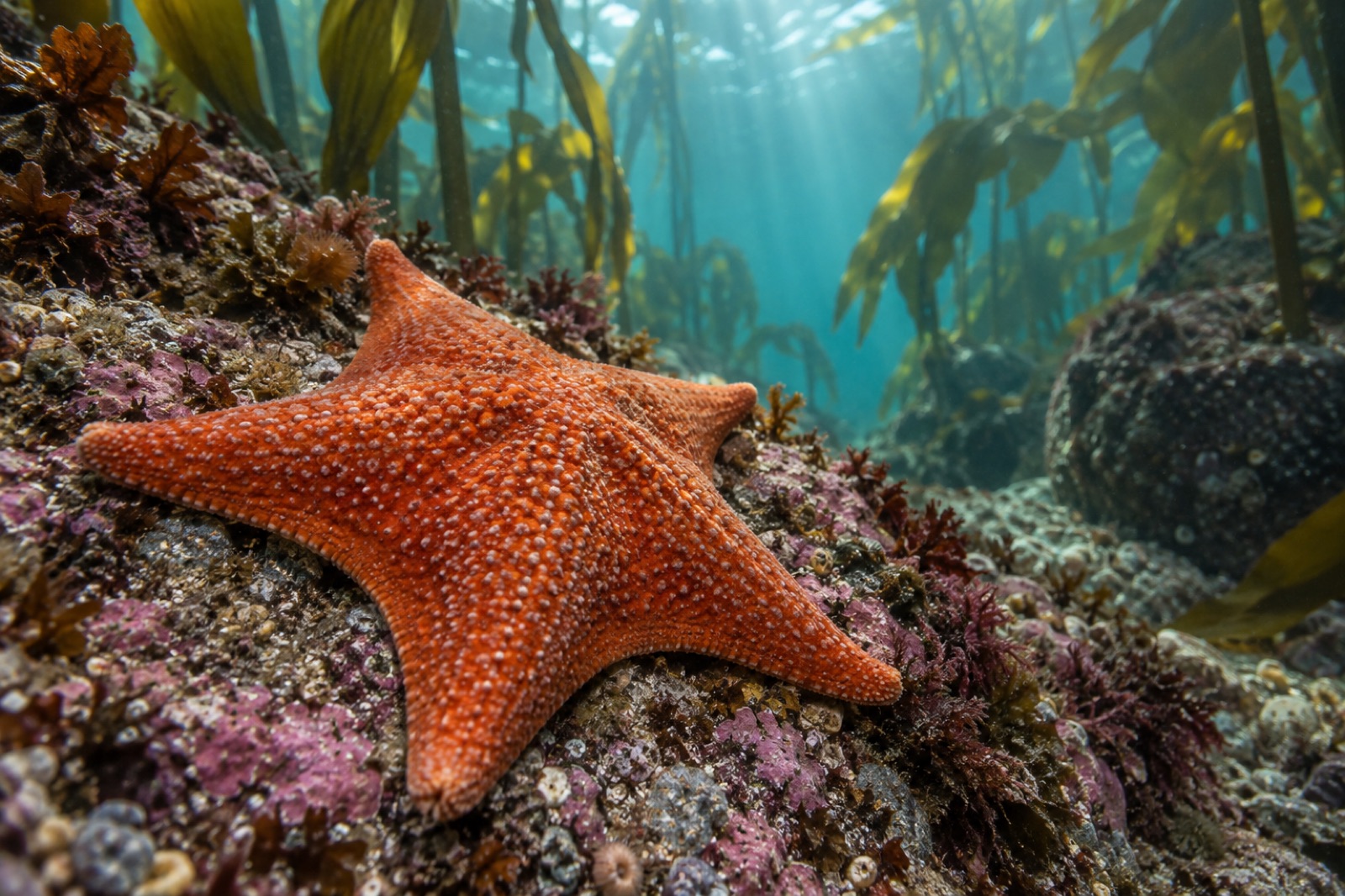
The bat star (Patiria miniata) is the kelp forest's web-fingered clean-up crew — a slow omnivore that turns detritus into reef fertility. Facts, ecology, where to see one.
Dr. Theo Nakamura ·
A marine larva picks its lifelong address in minutes, guided by microbial slime and chemical whispers. How biofilms and settlement cues decide who settles where.
Dr. Theo Nakamura ·
The black-and-yellow rockfish is one of the most boldly patterned fish of California's shallow kelp reefs — dark as kelp shadow, patched with shout-yellow.
Dr. Theo Nakamura ·
The blacklip abalone is southern Australia's largest abalone — a kelp-fed reef grazer that supports one of the world's most valuable wild shellfish fisheries.
Dr. Theo Nakamura ·
An atlas guide to Bohuslän — Sweden's pink-granite archipelago of tangle kelp forests, lobster grounds, cold-water coral and 6,000 islands in the Skagerrak.
Dr. Theo Nakamura ·
The brown rockfish is the shallowest of the Pacific rockfish — a dusky, bay-loving homebody of kelp beds, pier piles and eelgrass edges from Alaska to Baja.
Dr. Theo Nakamura ·
Pholis gunnellus lives in kelp holdfasts and under tidepool stones, can cross wet rock between pools, and carries a necklace of eyespots down its back.
Dr. Theo Nakamura ·
Panulirus interruptus is the clawless, night-hunting lobster of California kelp reefs — an urchin predator, a famous fishery, and a quiet guardian of the forest.
Dr. Theo Nakamura ·
Off the Sahara's shoulder, the Canary Islands grow seaweed forests in upwelled water — until heatwaves and sea urchins turn them. An atlas of kelp's southern edge.
Dr. Theo Nakamura ·
Cape Arago's sandstone reefs hold Oregon's best tidepools, a sea lion haulout, and bull kelp gardens shaped by wild storms. A coastal atlas guide.
Dr. Theo Nakamura ·
Neobernaya spadicea, the chestnut cowry, is the only cowry native to California — a glossy chestnut shell beneath a blazing orange mantle, grazing the reef by night.
Dr. Theo Nakamura ·
Lessonia trabeculata, the huiro, builds Chile's great subtidal kelp forests and feeds a global alginate industry. Biology, fishery, ecology and El Niño risk.
Dr. Theo Nakamura ·
Nutrient pollution feeds opportunistic algae that shade and smother kelp, while rotting blooms strip oxygen. How eutrophication degrades kelp coasts.
Dr. Theo Nakamura ·
Cochayuyo is Chile's great edible bull kelp — a surf-loving brown alga, a market staple and an ocean-going raft. Biology, culture, harvest and rafting ecology.
Dr. Theo Nakamura ·
A region guide to Chile's Bay of Concepción — Humboldt Current kelp beds, cochayuyo harvest, artisanal fishing caletas, and where nature persists beside industry.
Dr. Theo Nakamura ·
Coralline algae are calcified red algae that paint reefs pink, cement them together and decide where young shellfish settle. Forms, ecology and climate risks.
Dr. Theo Nakamura ·

A coastal atlas guide to Corsica — Cystoseira canopy forests, vast Posidonia meadows, and the Mediterranean's only true kelp in deep water off the island of granite.
Dr. Theo Nakamura ·

Croatia's island-chained coast grows the Mediterranean's great brown algal canopies on drowned karst — clear water, coralligenous reefs and forests now measured in fragments.
Dr. Theo Nakamura ·
Chorda filum is a true kelp disguised as a slippery brown string. Where the bootlace kelp grows, how a hollow cord survives a year, and its edible end.
Dr. Theo Nakamura ·
Eisenia arborea, the southern sea palm, is the tree-like kelp of the California–Baja low shore. Profile of its ecology, range shifts and role.
Dr. Theo Nakamura ·
Estuaries layer fresh water over salt in shifting gradients. How estuarine circulation works, where kelp's brackish limit lies, and why the river–sea edge matters.
Dr. Theo Nakamura ·

The euphotic zone is the sunlit skin of the sea where photosynthesis powers nearly all marine life. What defines it, how deep it runs, and why it matters.
Dr. Theo Nakamura ·
The flat porcelain crab packs under Pacific shore rocks by the hundred, sifting plankton with feathery mouthparts and shedding legs it can calmly regrow.
Dr. Theo Nakamura ·
The frilled dogwinkle drills barnacles on rocky shores and famously thickens its shell when crabs patrol — a textbook case of predator-induced defence.
Dr. Theo Nakamura ·
Eisenia galapagensis, the Galápagos' only kelp, vanished after the 1982–83 El Niño and was feared extinct — until deep divers found it alive in 2018.
Dr. Theo Nakamura ·
Gelidium, the agar weed: how to recognise this small red seaweed, where it grows, and why its gels run from dessert moulds to microbiology labs.
Dr. Theo Nakamura ·
The giant kelpfish changes colour to vanish among kelp blades. Identification, camouflage, behaviour and life cycle of this Southern California clinid.
Dr. Theo Nakamura ·
Megathura crenulata, the giant keyhole limpet, cloaks its shell in a living mantle and bleeds blue blood prized by medicine. Identification, diet and reef role.
Dr. Theo Nakamura ·
Apostichopus californicus, the biggest sea cucumber on the Pacific coast, recycles kelp forest sediment from Alaska to California. Biology, defences, fishery.
Dr. Theo Nakamura ·
The goldsinny wrasse is the most abundant small wrasse on Europe's kelp coasts — a parasite cleaner, nest guard and aquaculture conscript. Full species profile.
Dr. Theo Nakamura ·
The gopher rockfish is a mottled, hole-dwelling resident of California's shallow kelp reefs — sedentary, long-lived and beloved of reef divers.
Dr. Theo Nakamura ·
Haliotis fulgens, the green abalone, is a kelp-trapping herbivore of Baja and southern California. Shell, life cycle, fishery history and recovery.
Dr. Theo Nakamura ·
Sea ice, tides and working coasts shape the Gulf of St Lawrence's kelp beds — from the Magdalen Islands to Gaspé and the Mingan shore.
Dr. Theo Nakamura ·

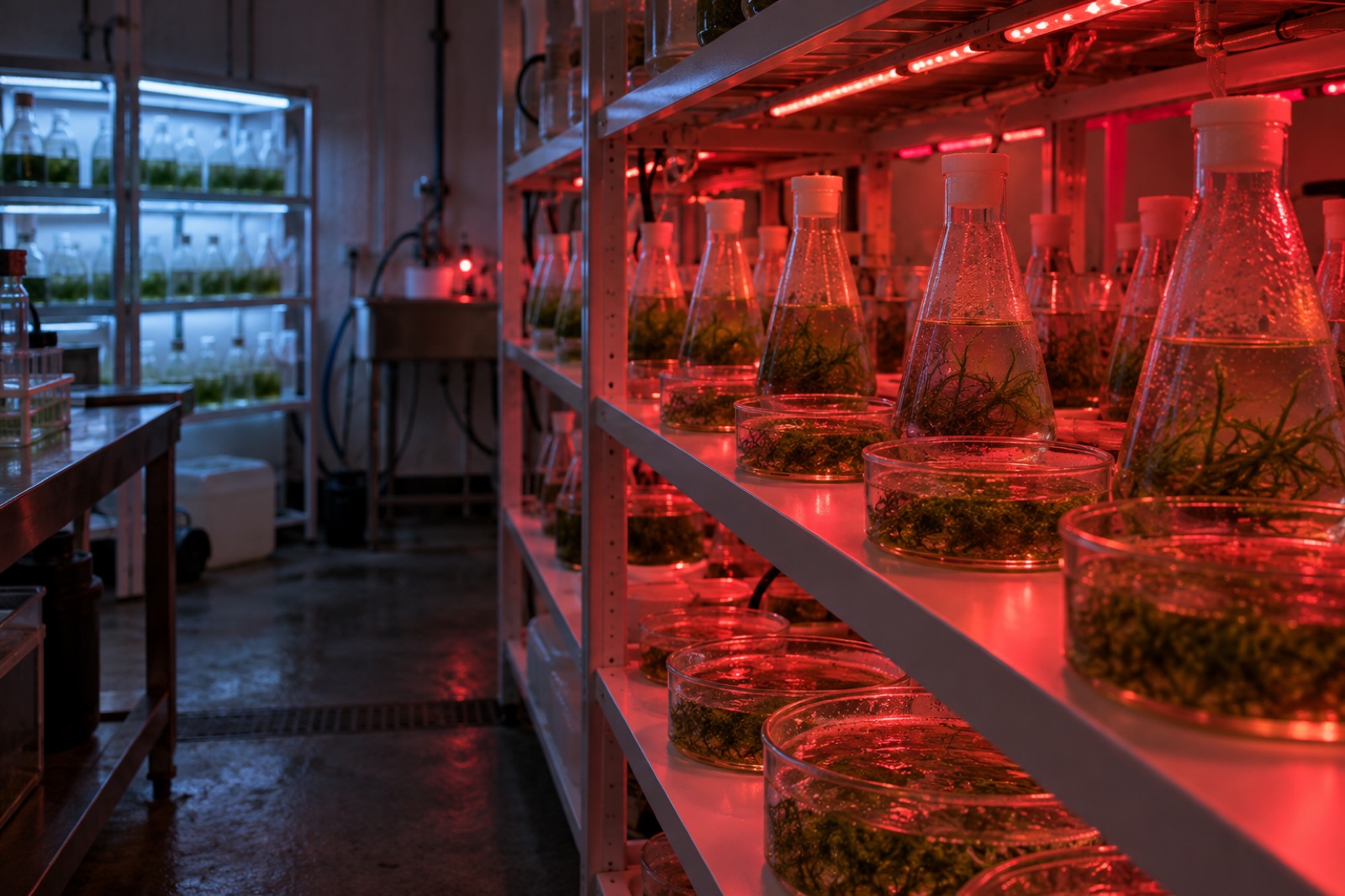
Red light to hold, blue light to release: how wavelength and day length steer kelp gametophyte cultures, with a practical hatchery lighting setup guide.
Dr. Theo Nakamura ·
Practical rules for eating seaweed safely: the hijiki arsenic warning, cadmium in kelp, prep steps that cut exposure, and sensible portions.
Dr. Theo Nakamura ·
The hooded nudibranch Melibe leonina is a translucent sea slug that nets plankton from its perch on kelp blades. Biology, diet and where to see one.
Dr. Theo Nakamura ·

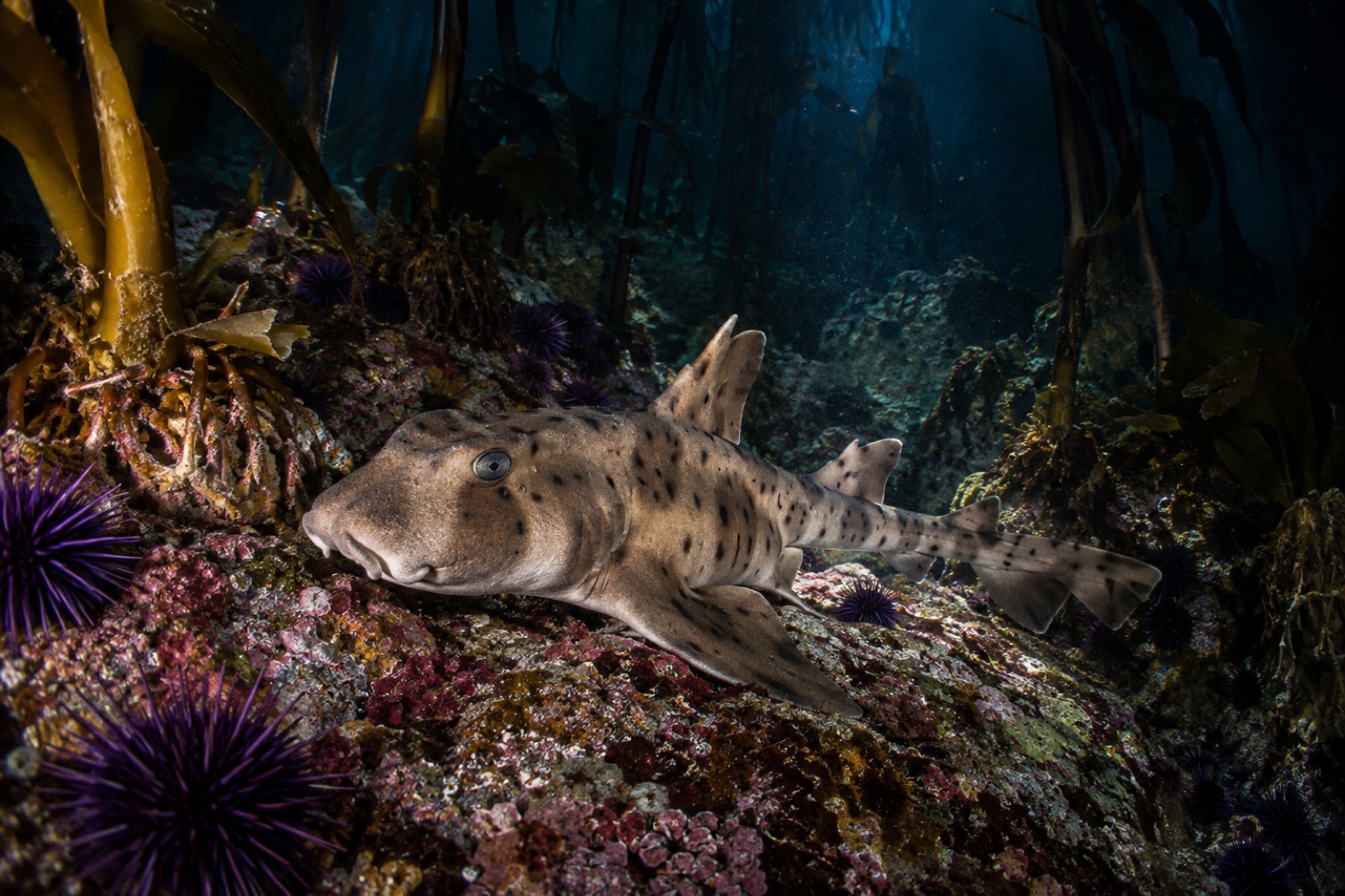
The horn shark is a small, harmless shark that hunts urchins and abalone by night in kelp beds. Biology, the fin spines, the purple teeth, the screw-shaped egg.
Dr. Theo Nakamura ·
Kelp survives storm forces that would snap rigid structures. The biomechanics of the holdfast, flexible stipes and drag-reducing blades — nature's offshore engineering.
Dr. Theo Nakamura ·
Irish moss is the small red alga of North Atlantic shores that gave the world carrageenan. Profile: ecology, history, harvest and modern uses.
Dr. Theo Nakamura ·
The kelp of the Manx coast, species by species — wrack zonation, tangle forests in the tide races, the forest's seasons, and the wildlife it feeds.
Dr. Theo Nakamura ·

Those bulbs along a kelp frond are gas bladders called pneumatocysts. Here's what's inside them, how kelp inflates them, and why a forest floats.
Dr. Theo Nakamura ·
Inside kelp tissue: alginate cell walls, laminarin energy stores, mannitol, iodine and pigments — the chemistry that feeds kitchens, clinics and industry.
Dr. Theo Nakamura ·
Kelp blades are packed with food — so why don't grazers eat them all? Inside the chemical arms race between brown algae and the herbivores that hunt them.
Dr. Theo Nakamura ·

Kelp endures waves that would snap a rigid mast by going with the flow. The biomechanics of flexibility, reconfiguration and drag trade-offs in storm survival.
Dr. Theo Nakamura ·
Kelp forests fix carbon at rates rivalling tropical rainforests. What primary production means, how fast kelp really grows, and how scientists measure it.
Dr. Theo Nakamura ·
Kelp barely fossilises, yet fossils, archaeology and DNA tell a rich story: Neogene origins, extinct kelp grazers, the kelp highway and ancient Indigenous stewardship.
Dr. Theo Nakamura ·
Devon's two coasts hold England's richest kelp forests — oarweed, cuvie and golden kelp from Plymouth Sound to Lundy — plus the science capital of British marine life.
Dr. Theo Nakamura ·
Oregon's bull kelp rides one of the wildest upwelling coasts on Earth — and its southern forests are on the edge. A guide to the reefs and the fight back.
Dr. Theo Nakamura ·
A coastal atlas guide to Portugal's kelp forests — upwelling-fed golden kelp at its southern Atlantic limit, from the Minho to the Arrábida, and what heat is doing to it.
Dr. Theo Nakamura ·
Beneath every kelp forest sleeps an invisible reserve of microscopic filaments. How gametophyte seed banks form, persist and wake — the forest's hidden memory.
Dr. Theo Nakamura ·
Kelp isopods graze fouling algae off giant kelp blades — and in boom years can chew through the stipes themselves. Meet the forest's smallest crew.
Dr. Theo Nakamura ·
How the kelp perch spends its whole life inside the kelp canopy — feeding, cleaning larger fish and raising live-born young — and what canopy loss means for it.
Dr. Theo Nakamura ·
Kelp forests run on an annual clock of light, temperature and nutrients. Learn how kelp phenology works, why it's shifting, and why timing runs restoration.
Dr. Theo Nakamura ·
The kelp rockfish (Sebastes atrovirens) lives in the kelp canopy itself — a mottled, camouflaged hunter: identification, habitat, life history and where to see it.
Dr. Theo Nakamura ·
The spiny scallop Chlamys hastata is a sponge-armoured, blue-eyed bivalve of Pacific kelp forests that can swim away from sea stars. Full species profile.
Dr. Theo Nakamura ·
Before kelp seed string leaves the hatchery, run these viability checks: settlement density, sporophyte stage, contamination, transport stress and a trial outplant.
Dr. Theo Nakamura ·

Kelp is an alga; seagrass is a flowering plant. How the ocean's two great habitats differ in biology, range, carbon storage and the ways we restore them.
Dr. Theo Nakamura ·

Keystone species hold ecosystems together despite small numbers. How Robert Paine's starfish experiment defined the idea — and what it means for kelp forests.
Dr. Theo Nakamura ·
The leather star (Dermasterias imbricata) is a smooth, slippery, garlic-scented sea star that hunts anemones and sea cucumbers — biology, range and how to find it.
Dr. Theo Nakamura ·

Macquarie Island's giant kelp forests became the first marine ecosystem listed as Critically Endangered on the IUCN Red List — a subantarctic warning in full view.
Dr. Theo Nakamura ·
Marbled, thick-lipped and built to crop kelp: the marblefish of New Zealand and southern Australia, a herbivore with the reef's strangest tools.
Dr. Theo Nakamura ·
Nitrogen feeds every kelp blade and limits most ocean growth. A plain-language tour of the marine nitrogen cycle — fixation, upwelling, uptake and loss.
Dr. Theo Nakamura ·
Marine snow is more than falling debris — each flake is a sticky, living microhabitat. How aggregates form, who lives on them, and why they matter.
Dr. Theo Nakamura ·
How nitrogen moves through coastal ecosystems — nitrate, ammonium, microbes and upwelling — and why the nitrogen cycle decides where kelp forests thrive.
Dr. Theo Nakamura ·
The pinto abalone is the small, iridescent grazer of the northeast Pacific — endangered since the 1990s and the focus of a careful hatchery recovery effort.
Dr. Theo Nakamura ·
Northern anchovy (Engraulis mordax): the filter-feeding forage fish behind seabirds, salmon and sea lions all along the Pacific kelp coast.
Dr. Theo Nakamura ·
Rising CO₂ acidifies seawater — but it also fertilises algae. What ocean acidification really does to kelp growth, urchins and whole reef food webs.
Dr. Theo Nakamura ·
Kelp blades and diatom blooms run on four nutrients: nitrogen, phosphorus, silica and iron. Where each comes from, where it runs out, and why that shapes the sea.
Dr. Theo Nakamura ·
Gracilaria sea mosses are among the most farmed seaweeds on Earth and the classic source of agar. Profile of their ecology, culture and cuisine.
Dr. Theo Nakamura ·
Olive rockfish (Sebastes serranoides) school in the dim water above Pacific kelp beds. Profile: ID tips vs kelp rockfish, life history, fishery and role.
Dr. Theo Nakamura ·
The opalescent nudibranch steals stinging cells from its anemone prey and wields them as weapons. Learn to identify Hermissenda crassicornis and its world.
Dr. Theo Nakamura ·
The orange sea pen is a quill-shaped coral colony of the sandy seafloor that retracts into the sediment when touched — and glows when disturbed.
Dr. Theo Nakamura ·
The ornate cowfish (Aracana ornata) carries blue-and-gold armour through southern Australia's kelp and seagrass. A profile of the reef's small Picasso.
Dr. Theo Nakamura ·
Meet the ostrich plume hydroid, the feathery stinging colony that covers kelp stipes — hundreds of polyps living as one animal, hunted by mites and sea slugs.
Dr. Theo Nakamura ·

Lottia gigantea, the owl limpet, farms a private algae garden on Pacific rocks and bulldozes rivals off it. Biology, territory defence and status.
Dr. Theo Nakamura ·
Banded like a convict, tusked in miniature, and perched on the rock: how to find and identify the painted greenling of North Pacific kelp beds.
Dr. Theo Nakamura ·
The painted topshell is a glossy, conical grazer of Europe's kelp-bed reefs. How to identify Calliostoma zizyphinum, where it lives and how it feeds.
Dr. Theo Nakamura ·
Alginate, agar and carrageenan: the gelling polysaccharides inside seaweed cell walls, why each species gives a different gel, and how extraction works.
Dr. Theo Nakamura ·
The pile perch (Rhacochilus vacca) is the big, deep-bodied seaperch of Pacific kelp forests and pilings — live-bearing, hard-shelled-prey crusher, diver favourite.
Dr. Theo Nakamura ·

Meet the giant pink sea star — a two-foot, sand-plowing predator of clams and sand dollars that patrols the soft floors between Pacific kelp forests.
Dr. Theo Nakamura ·

Hippocampus abdominalis, the pot-bellied seahorse, is one of the world's largest seahorses — a slow, golden giant of Australian and New Zealand kelp gardens.
Dr. Theo Nakamura ·
Crassadoma gigantea, the purple-hinged rock scallop, cements itself to rock for life and filters the kelp forest's currents behind a bright orange mantle. ID and ecology.
Dr. Theo Nakamura ·
The quillback rockfish is a long-lived, deep-bodied resident of Pacific kelp reefs — orange-freckled, fiercely site-loyal and one of the slowest fish to grow old.
Dr. Theo Nakamura ·

The rainbow seaperch is the most colourful fish in California kelp — a live-bearing surfperch in red, blue and gold that gives birth to fully formed young.
Dr. Theo Nakamura ·
Red Irish lords are mottled, spiny, glued-to-the-rock sculpins that vanish against red algae and barnacles — a masterclass in benthic camouflage.
Dr. Theo Nakamura ·
The red sponge dorid (Rostanga pulchra) lives, feeds and hides on one red sponge — a thumbprint-size lesson in camouflage every tidepooler can find.
Dr. Theo Nakamura ·
The red turban snail (Chlorostoma funebralis) grazes the kelp forest's turf night and day — and when its numbers swing, whole reefs can tilt. A species profile.
Dr. Theo Nakamura ·
Long brown streamers on the surf-struck low shore: how to identify ribbon kelp, follow its fierce seasonal cycle, and place it among its edible kin.
Dr. Theo Nakamura ·
Why rocky reefs flip from kelp forest to urchin barren — and why flipping them back is so much harder. Alternate stable states and hysteresis, explained.
Dr. Theo Nakamura ·
The rock wrasse (Halichoeres semicinctus) changes sex, colour and career over one lifetime on Southern California's kelp reefs – a full species profile.
Dr. Theo Nakamura ·
Rubberlip seaperch (Rhacochilus toxotes) species profile: the largest surfperch, with fleshy lips for picking invertebrates off rocks at the kelp forest edge.
Dr. Theo Nakamura ·
It lives in a shell, it fights with its mouth, and it never backs down. Inside the famous gape-wrestling world of the sarcastic fringehead.
Dr. Theo Nakamura ·

A granite-and-limestone island ringed by brown-algal canopies, Posidonia meadows and marine reserves — the Mediterranean's canopy kelp story, up close.
Dr. Theo Nakamura ·
Sargassum horneri arrived in California in the 2000s and spread fast. Profile of the invasive 'devil weed', its ecology, impacts and control.
Dr. Theo Nakamura ·

The scaled worm snail (Thylacodes squamigerus) glues its shell to rock, spins a mucus net for food, and grows into living reefs on kelp-bed boulders.
Dr. Theo Nakamura ·

Sea bamboo is the towering hollow-stemmed kelp of South Africa's cold west coast. Biology, range, ecology and harvest of Ecklonia maxima, the Cape's forest builder.
Dr. Theo Nakamura ·
Sea cabbage (Hedophyllum sessile) is a tough, leathery kelp of the wave-washed low intertidal. Its biology, range, ecology and how to identify it on the shore.
Dr. Theo Nakamura ·
The sea lemon Peltodoris nobilis is a fist-sized, lemon-scented nudibranch that grazes sponges on Pacific kelp reefs. Identification, biology and ecology.
Dr. Theo Nakamura ·
Sea lemons are confused with leopard dorids, the Monterey dorid and the Atlantic sea lemon. A diver's guide to telling the real Peltodoris nobilis apart.
Dr. Theo Nakamura ·
Sea lettuce (Ulva lactuca): the two-cell-thick green sheet of every harbour — how it grows so fast, why green tides happen, and how it can be put to work.
Dr. Theo Nakamura ·
Sea spaghetti grows buttons one year and two-metre straps the next. Where thongweed grows, its odd two-stage life, and why it's the forager's best first kelp.
Dr. Theo Nakamura ·
Seagrass meadows bury carbon in sediments for centuries to millennia. How the biology works, what is at risk, and where seagrass credits stand today.
Dr. Theo Nakamura ·
Green, brown or red: seaweed colour is chemistry plus ancestry. A guide to algal pigments, the three seaweed lineages, and what colour says about depth.
Dr. Theo Nakamura ·
Kelp fights back without moving. How phlorotannins, iodine bursts and acid vacuoles deter grazers and foulers — and why that chemistry shapes whole reefs.
Dr. Theo Nakamura ·
Seaweed has fed coastal livestock for centuries. Now it's also a methane-cutting feed additive. What the science supports, species by species.
Dr. Theo Nakamura ·
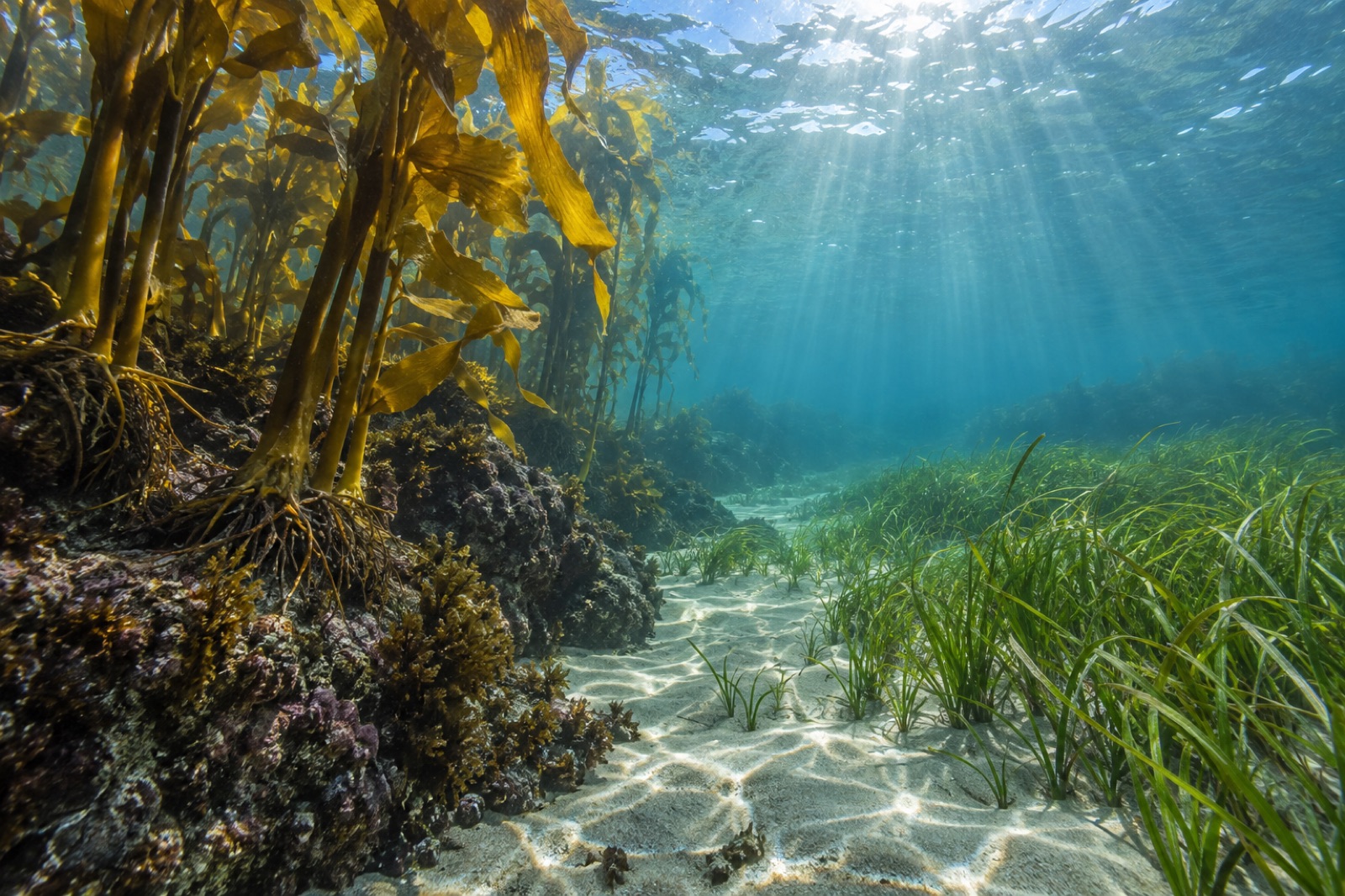
Between the kelp blades and the open ocean runs an invisible microbial economy: exudates out, nutrients back, viruses policing it all. A field guide.
Dr. Theo Nakamura ·
The shiner surfperch (Cymatogaster aggregata) is the small, schooling seaperch of Pacific kelp beds and piers — a live-bearing forage fish worth knowing.
Dr. Theo Nakamura ·
Leptasterias, the six-rayed star, broods its babies under its own body on the wave-beaten rocks of the Pacific kelp fringe — a small star with a big secret.
Dr. Theo Nakamura ·
Granite islands wrapped in storm-built bull kelp, penguins found nowhere else and no landings allowed: inside the Snares Islands' kelp coast, 200 km south of Bluff.
Dr. Theo Nakamura ·
The soupfin or school shark once blackened the water over kelp coasts — until a vitamin boom nearly erased it. Meet Galeorhinus galeus.
Dr. Theo Nakamura ·
Southern bull kelp (Durvillaea) grips the roughest surf coasts on Earth with the strongest holdfast of any kelp. Honeycomb blades, Māori pōhā, ocean rafting.
Dr. Theo Nakamura ·

The Pacific spiny lumpsucker is a walnut-sized armoured fish that clamps to kelp and eelgrass with a suction-disc belly. Biology, range, where to look.
Dr. Theo Nakamura ·

Golden kelp drops its spores for two short weeks in Gulf St Vincent. Field notes from a collection week run on the Kudjela Rangers' calendar, not ours.
Dr. Theo Nakamura ·
The spot prawn lives half its life male and half female, hides in cold rocky depths, and anchors one of the Pacific's most admired trap fisheries.
Dr. Theo Nakamura ·
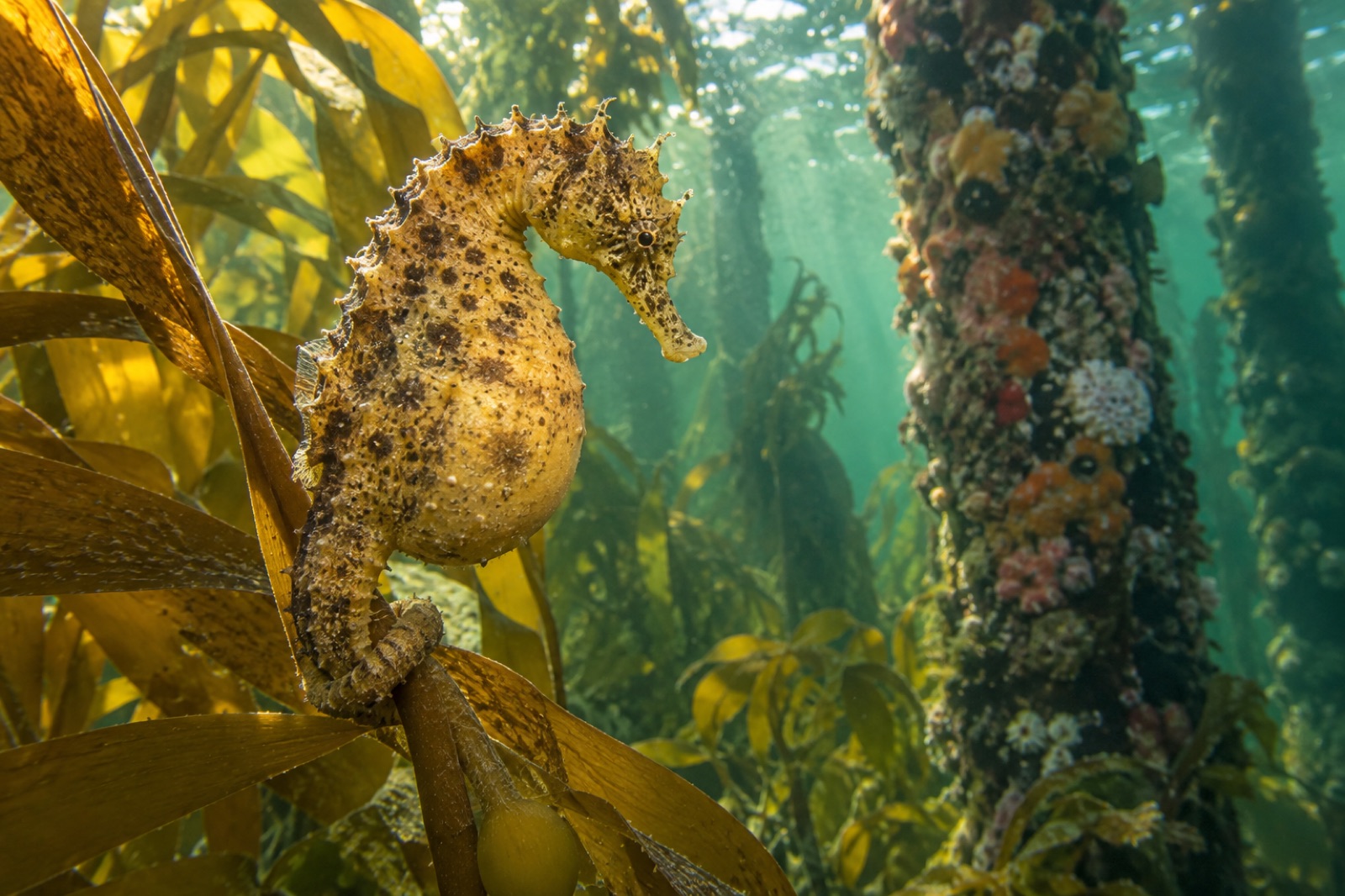
Kelp carbon carries a chemical fingerprint. Stable isotope analysis lets ecologists trace it from blade to grazer to fish — and test restoration claims.
Dr. Theo Nakamura ·

Pterygophora californica grows a woody stipe that stands for decades, sheltering understory life while faster kelps rise and fall around it. Species profile.
Dr. Theo Nakamura ·
Meet the striped seaperch, a live-bearing surfperch of Pacific kelp beds — and a close look at how viviparity works in a fish that births on the reef.
Dr. Theo Nakamura ·
Striped shore crab (Pachygrapsus crassipes) species profile: the bold, fast, green-striped crab of Pacific rocky shores — sprinter, grazer and lab superstar.
Dr. Theo Nakamura ·
It sleeps all day in kelp-bed crevices, hunts by night, and inflates like a balloon when threatened. Meet the swell shark of the Pacific coast.
Dr. Theo Nakamura ·
Laminaria hyperborea builds the kelp forests of Europe's cold coasts — with stiff stipes standing like an undersea grove. Biology, harvest history, ecology.
Dr. Theo Nakamura ·
Meet the treefish (Sebastes serriceps) — the tiger-barred golden rockfish of California kelp reefs: identification, habitat, behaviour and conservation.
Dr. Theo Nakamura ·
Turf-forming algae are the low, weedy mats that move in when kelp forests fall — and can hold a reef in place. A group profile of the kelp forest's most stubborn rival.
Dr. Theo Nakamura ·
Octopus bimaculoides is a small den-dwelling octopus of California's rocky kelp reefs, named for the blue-ringed ocelli behind its eyes. Habits and habitat.
Dr. Theo Nakamura ·
Apostichopus parvimensis vacuums detritus off California reefs day and night, cycling nutrients for the whole kelp forest. Biology, defences and the fishery.
Dr. Theo Nakamura ·
The white abalone crashed so fast that by the time it was protected, wild adults were too far apart to breed. Captive breeding is testing a way back.
Dr. Theo Nakamura ·
Kelp looks brown, red seaweeds look red, and grass is green — because each lineage solved the sunlight problem differently. Here's the pigment chemistry of the sea.
Dr. Theo Nakamura ·
Brittany grows the biggest kelp beds in Europe and built an industry on goémon. A guide to the Iroise Sea's Laminaria forests, the harvest and its future.
Dr. Theo Nakamura ·
Seven gill slits, one rear-set dorsal fin, and fossils deep in its past: the broadnose sevengill is the ancient apex cruiser of temperate kelp coasts worldwide.
Dr. Theo Nakamura ·
Meet the garibaldi, California's blazing orange state marine fish — a fiercely territorial damselfish that gardens algae on the kelp forest floor.
Dr. Theo Nakamura ·
The gumboot chiton is the world's largest chiton — a hand-long, magnetite-toothed grazer nicknamed the wandering meatloaf. Meet the kelp coast's gentle giant.
Dr. Theo Nakamura ·
Kelp has no true roots — its holdfast is a branching biological anchor built for storms. Explore holdfast anatomy, how kelp really feeds, and its hidden biodiversity.
Dr. Theo Nakamura ·
A step-by-step guide to becoming a marine biologist — which degrees matter, the field skills that hire, what first jobs pay, and the mistakes to avoid along the way.
Dr. Theo Nakamura ·
Kelp crabs graze the very forest they live in. How Pugettia producta clips, prunes and cleans kelp fronds — and why predators keep the shears in check.
Dr. Theo Nakamura ·

Why is kelp brown, not green? The answer is a pigment strategy tuned to underwater light — and it explains how kelp forests become some of Earth's most productive ecosystems.
Dr. Theo Nakamura ·
Monterey Bay holds some of North America's most accessible giant kelp forests — a canyon-fed, otter-patrolled ecosystem you can dive, kayak or watch from shore.
Dr. Theo Nakamura ·
Norris's top snail spends its whole life on giant kelp — a large red-brown top snail found in no habitat but the southern California kelp forest.
Dr. Theo Nakamura ·
Tochuina tetraquetra, the orange-peel nudibranch, is one of the world's largest sea slugs — a cold-water giant that hunts sea pens and smells faintly of watermelon.
Dr. Theo Nakamura ·
Pāua, New Zealand's iridescent abalone, is a taonga species, a prized kaimoana and a carefully managed fishery. Its biology and cultural story.
Dr. Theo Nakamura ·
Meet the world's largest abalone — a kelp-eating giant sea snail of the Pacific coast. Its biology, fishery history and the road to recovery.
Dr. Theo Nakamura ·
A field note from Hokkaido's kombu coast: autumn seeding with the Kushiro growers' guild, and what a century of kombu craft teaches a restoration nursery.
Dr. Theo Nakamura ·
Kelp forests are safe, magical snorkeling — if you respect cold water, surge and canopy. Skills, gear, hazards and spots for your first kelp snorkel.
Dr. Theo Nakamura ·
Sea squirts look like alien machinery but land among our closest living relatives. Meet the stalked tunicates of kelp understories — anatomy, role and invaders.
Dr. Theo Nakamura ·
Strawberry anemone Corynactis californica: the cloning corallimorph that carpets kelp forest reefs — how it feeds, clones and spreads.
Dr. Theo Nakamura ·

Tasmania lost around 95 percent of its giant kelp forests in decades. Here's the science of the collapse, the urchin invasion — and the restoration race to bring it back.
Dr. Theo Nakamura ·
The wavy turban snail is the big, armoured grazer of southern California kelp forests — a hand-sized shell with a built-in door and a small fishery of its own.
Dr. Theo Nakamura ·
Winged kelp (Alaria esculenta) is the wave-exposure specialist of Atlantic shores — and a mild, edible kelp. Its biology, range and kitchen appeal.
Dr. Theo Nakamura ·
Acid kelp (Desmarestia) stores battery-strength acid inside its own cells — the strangest chemical defence in the kelp forest.
Dr. Theo Nakamura ·
Eroded volcano harbours, Hector's dolphins, bull kelp and pāua reefs: a field guide to Banks Peninsula and Akaroa, Canterbury's wild maritime backyard.
Dr. Theo Nakamura ·
Meet the California moray eel — a nocturnal, crevice-dwelling ambush predator of Pacific kelp reefs, with pharyngeal jaws and a reputation it doesn't deserve.
Dr. Theo Nakamura ·
Clown dorid (Triopha catalinae) species profile: identifying the polka-dotted nudibranch, its bryozoan diet, rhinophores and where to find it on kelp reefs.
Dr. Theo Nakamura ·
Identify the coralline sculpin — the small California reef fish whose pink-and-grey skin lets it vanish against crusts of coralline algae.
Dr. Theo Nakamura ·
Meet the eastern blue groper, the friendly, urchin-crunching giant wrasse of New South Wales reefs — every adult blue male began life as a female.
Dr. Theo Nakamura ·
Feather boa kelp streams from Pacific rocks in long, lacy straps, and shelters its own miniature rainforest of life. How to identify, where it grows, what eats it.
Dr. Theo Nakamura ·
West of Brittany, the Iroise Sea holds Europe's biggest kelp beds under some of its fiercest tides — inside a marine park the working coast helped build.
Dr. Theo Nakamura ·
Montenegro's short, mountainous coast holds the Adriatic's southern Cystoseira canopies — drowned-karst bays, rising urchin pressure, and its first young marine parks.
Dr. Theo Nakamura ·
Evasterias troschelii, the mottled or false ochre star — the soft-bodied, deep-dwelling predator that picks off limpets, whelks and baby sea stars.
Dr. Theo Nakamura ·
East Pacific red octopus Octopus rubescens: den middens, colour-flash camouflage, egg brooding and night hunting in California's kelp forests.
Dr. Theo Nakamura ·
The rockweed gunnel is a slender Pacific shore fish so perfectly matched to seaweed butter and olive tones that it looks like the rockweed itself.
Dr. Theo Nakamura ·
Red in red algae, green in surfgrass, spotted all over — the spotted kelpfish rewrites its own wardrobe to match the kelp it hides in. How to know one.
Dr. Theo Nakamura ·

Australia's weedy seadragon drifts through kelp like fallen seaweed come alive. Discover its camouflage, male egg-brooding, range and conservation.
Dr. Theo Nakamura ·
Kelp has no roots, yet builds the fastest-growing forests on Earth. How nitrogen, phosphorus and trace metals reach kelp blades — and how kelp recycles them back.
Dr. Theo Nakamura ·
Soft as jelly, clinging like a limpet: the kelp snailfish lives where the forest meets the rock. Identification, ecology and where to look for one.
Dr. Theo Nakamura ·

The masked greenling is a small, dark-barred reef fish of Alaska's shallow kelp and eelgrass beds. How to identify it — and the nest-guarding life it leads.
Dr. Theo Nakamura ·
Nori comes from red algae with a decades-long life-cycle mystery — solved in 1949 by a British phycologist whose discovery built an entire industry.
Dr. Theo Nakamura ·
The northern kelp crab is a colour-changing spider crab that lives its whole life in the kelp canopy. Learn its biology, diet, and role in the forest.
Dr. Theo Nakamura ·
Phlorotannins are the brown algae's chemical shield against grazers, microbes and UV. What they are, how they work, and why the defence story is nuanced.
Dr. Theo Nakamura ·
How polar kelp survives months of darkness: the physiology of Arctic forests, light under sea ice, carbohydrate hoarding and the mad sprint of spring.
Dr. Theo Nakamura ·
Elk kelp grows deep, in clear water, with a single antlered float the size of a grapefruit. The deep edge kelp of the Channel Islands and Baja — biology and status.
Dr. Theo Nakamura ·
Wintering over at Tidewright's Lofoten hatchery means seedstock care in the polar night: light discipline, cold rooms, slow work and a culture lab that never sleeps.
Dr. Theo Nakamura ·
Meet the harbour porpoise, the small, shy cetacean of northern coasts: how to identify it, where it lives, what it eats, and why gillnets haunt it.
Dr. Theo Nakamura ·

Kombu is the kelp behind dashi and the backbone of the world's seaweed farms. Learn its biology, life cycle, Hokkaido roots and future in a warming sea.
Dr. Theo Nakamura ·
Urticina crassicornis, the painted or Christmas anemone of North Pacific kelp reefs: identification, diet, reproduction and its place in the cold-water forest.
Dr. Theo Nakamura ·
Portrait of the Port Jackson shark: Australia's gentle, crested egg-layer that crunches sea urchins and returns to the same reef year after year.
Dr. Theo Nakamura ·
The red sea urchin can live a century, grows to dinner-plate size, and feeds the uni trade. Meet the kelp forest's most venerable grazer — and its fishery.
Dr. Theo Nakamura ·
The starry flounder is the North Pacific's most river-loving flatfish, banded in orange and black. How to identify it, where it hunts, and why estuaries need it.
Dr. Theo Nakamura ·
Albania's Ionian shore is one of the Mediterranean's least-mapped algal coasts — karst reefs, Cystoseira canopies, and the single marine park of Karaburun-Sazan.
Dr. Theo Nakamura ·

A single kelp blade hosts algae, bryozoans, hydroids and a whole mobile fauna. Meet the epiphytes — the living deck that perches on the forest's leaves.
Dr. Theo Nakamura ·
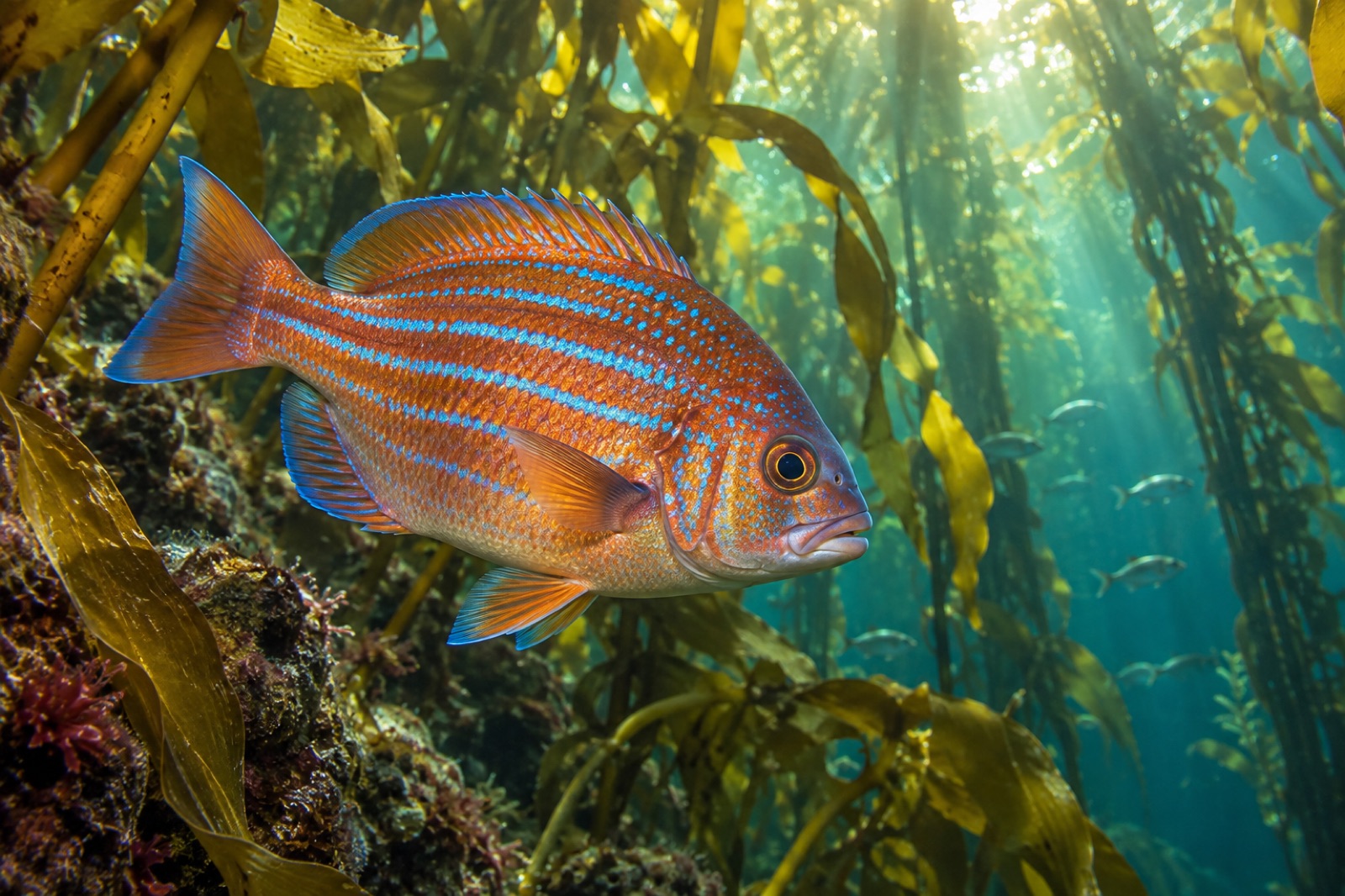
Meet the lion's mane jellyfish, the cold sea's largest drifter: tentacles longer than a blue whale, a fiery sting, and an unlikely role as fish shelter.
Dr. Theo Nakamura ·
Paguristes ulreyi, the furry hermit crab of Pacific kelp forests: how to identify it, why it wears hydroid-covered shells, and its role on the reef floor.
Dr. Theo Nakamura ·

Giant kelp is the fastest-growing organism on Earth and the architect of undersea forests. Learn its biology, life cycle, range and why it matters.
Dr. Theo Nakamura ·
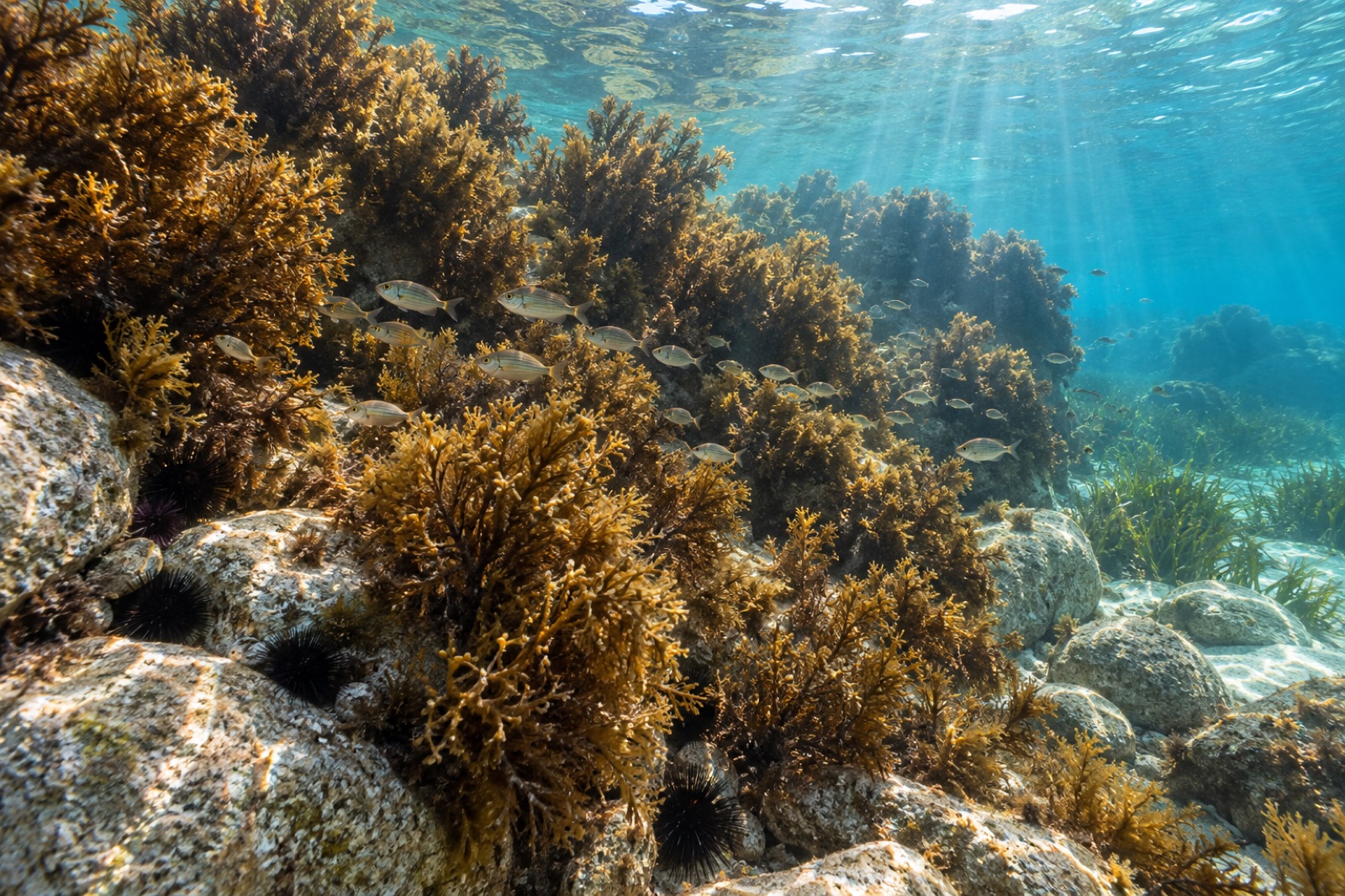
Meet the giant Pacific octopus: the world's largest octopus, a kelp-forest den-dweller with three hearts, blue blood and one shot at motherhood.
Dr. Theo Nakamura ·
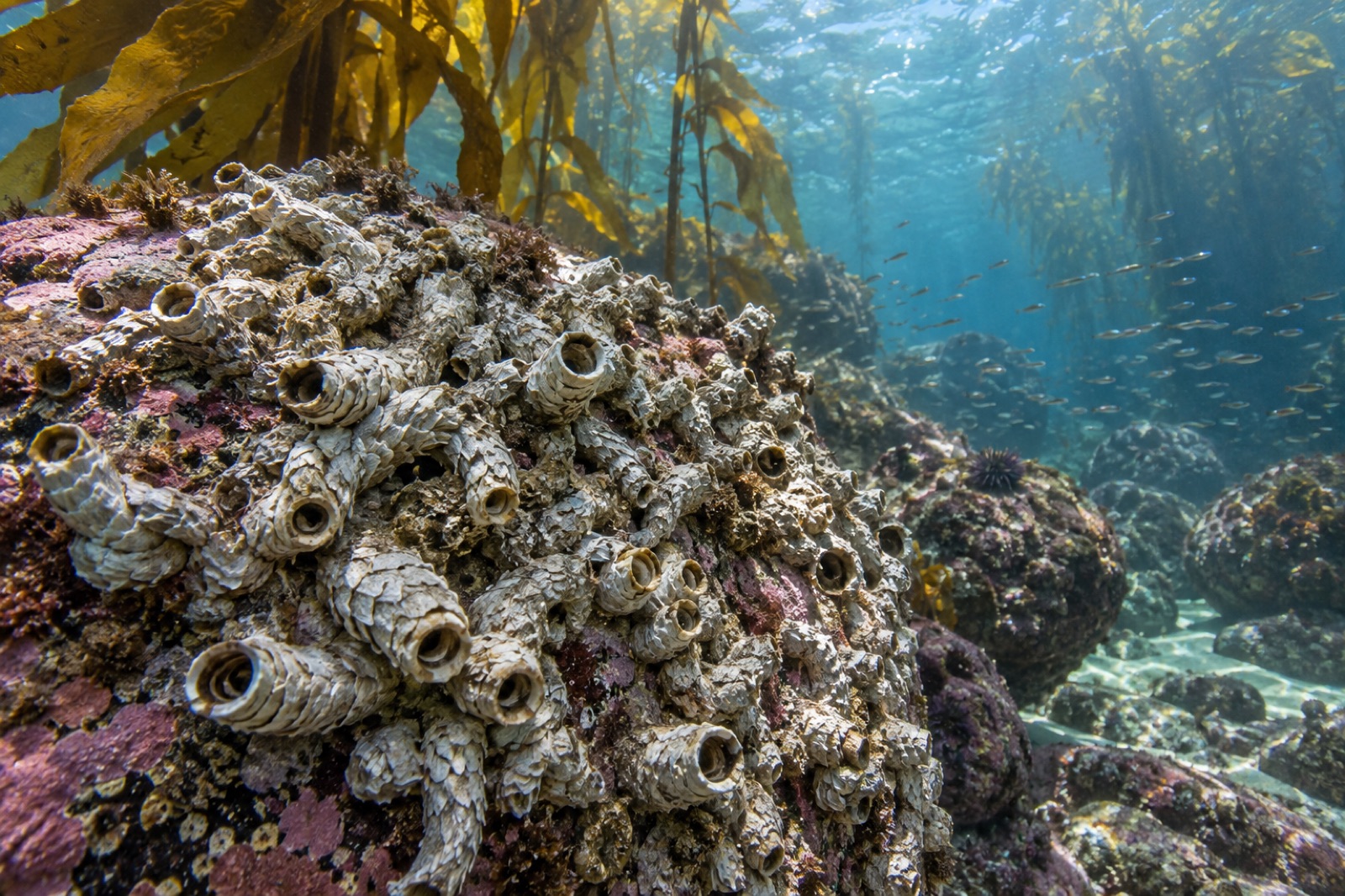
Kelp can't open pores for CO₂ like a land plant. Here's how brown algae concentrate carbon for Rubisco underwater — and why 'C4 kelp' is a myth.
Dr. Theo Nakamura ·
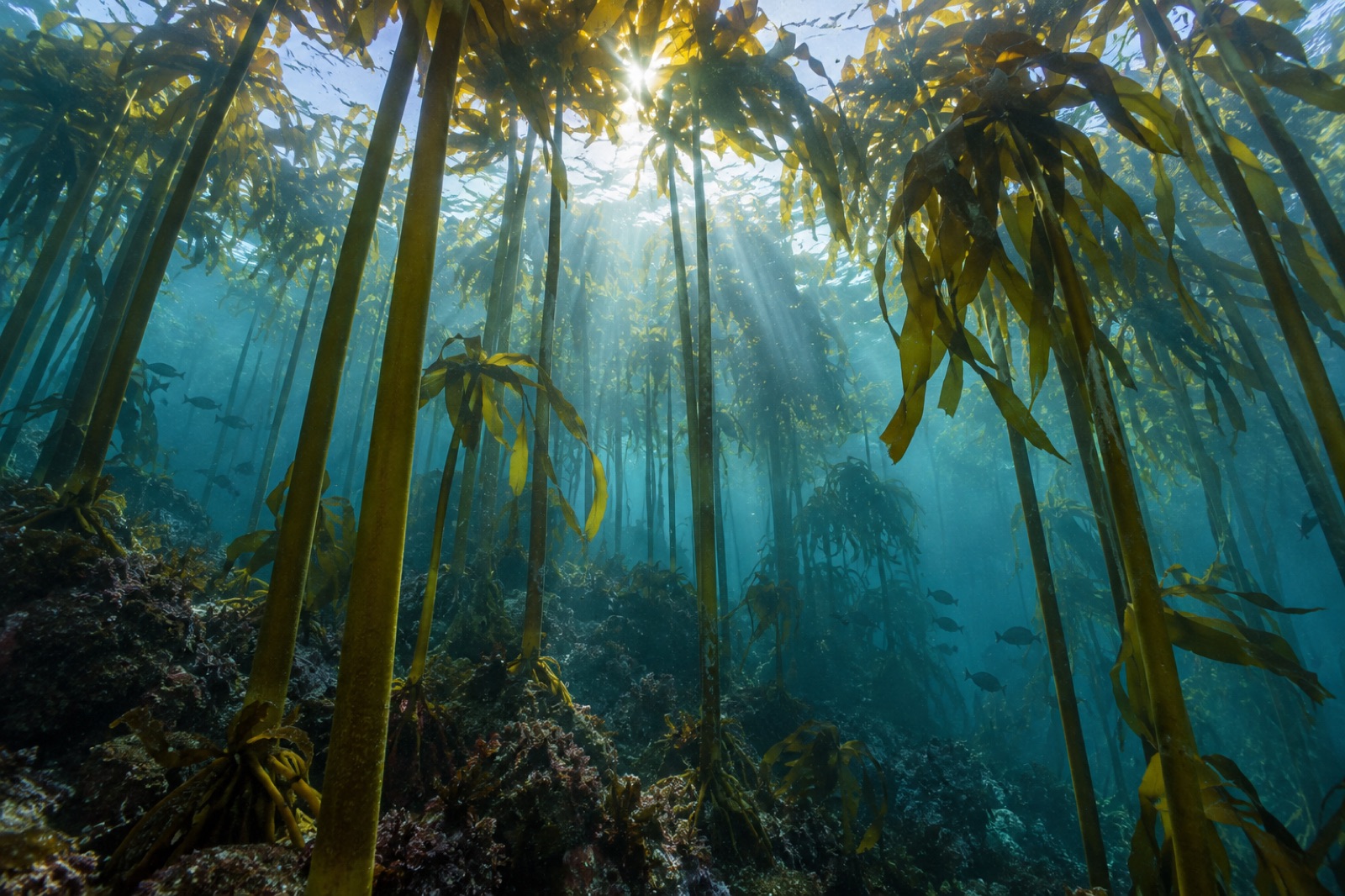
Meet the moon jelly, the four-ringed drifter of harbours and kelp bays: identification, life cycle, mild sting, and why its blooms fascinate ecologists.
Dr. Theo Nakamura ·
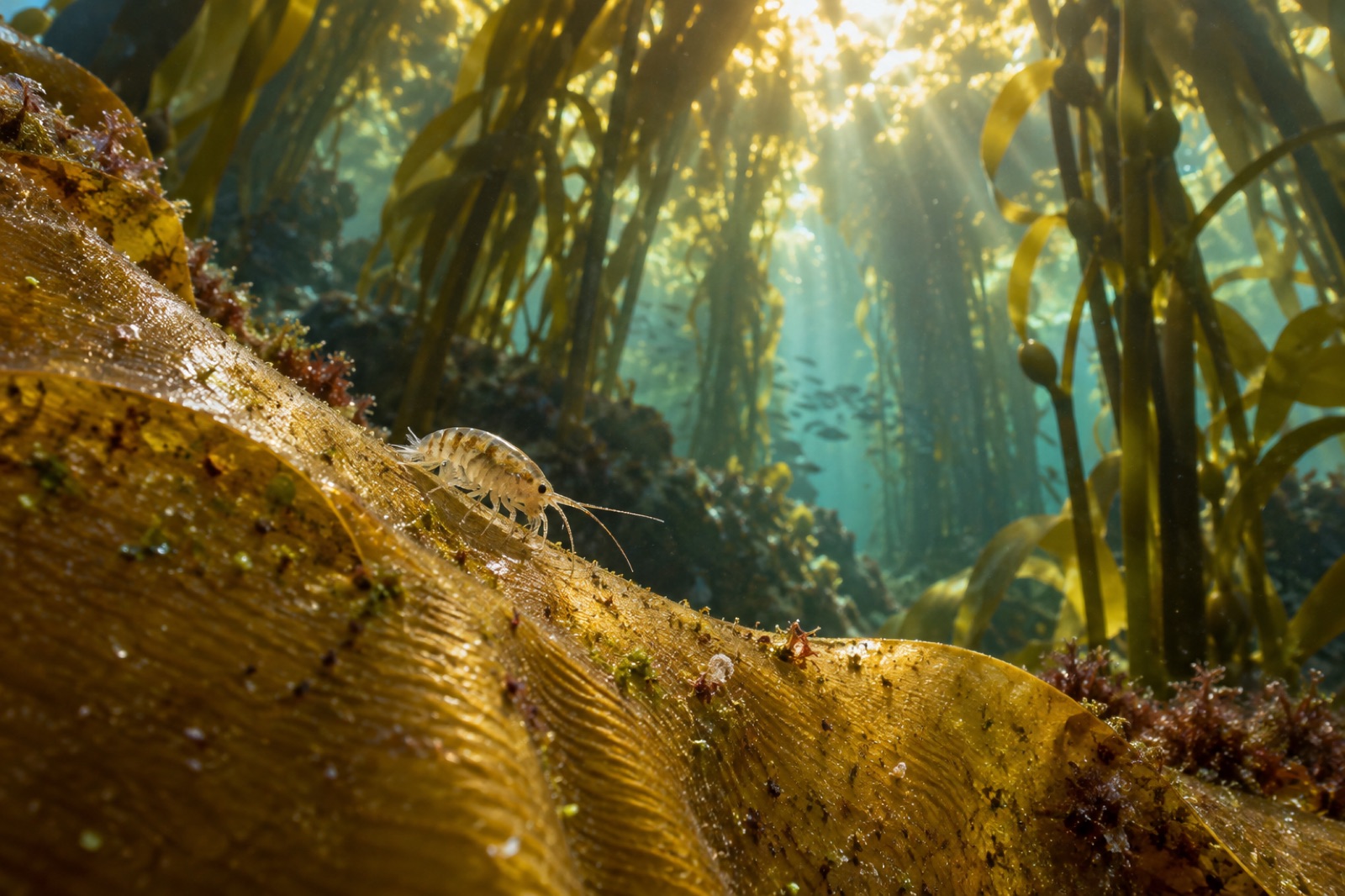
Meet the woolly sculpin, the little California tidepool fish that survives heat, rain-fresh water and hours in the air between tides.
Dr. Theo Nakamura ·
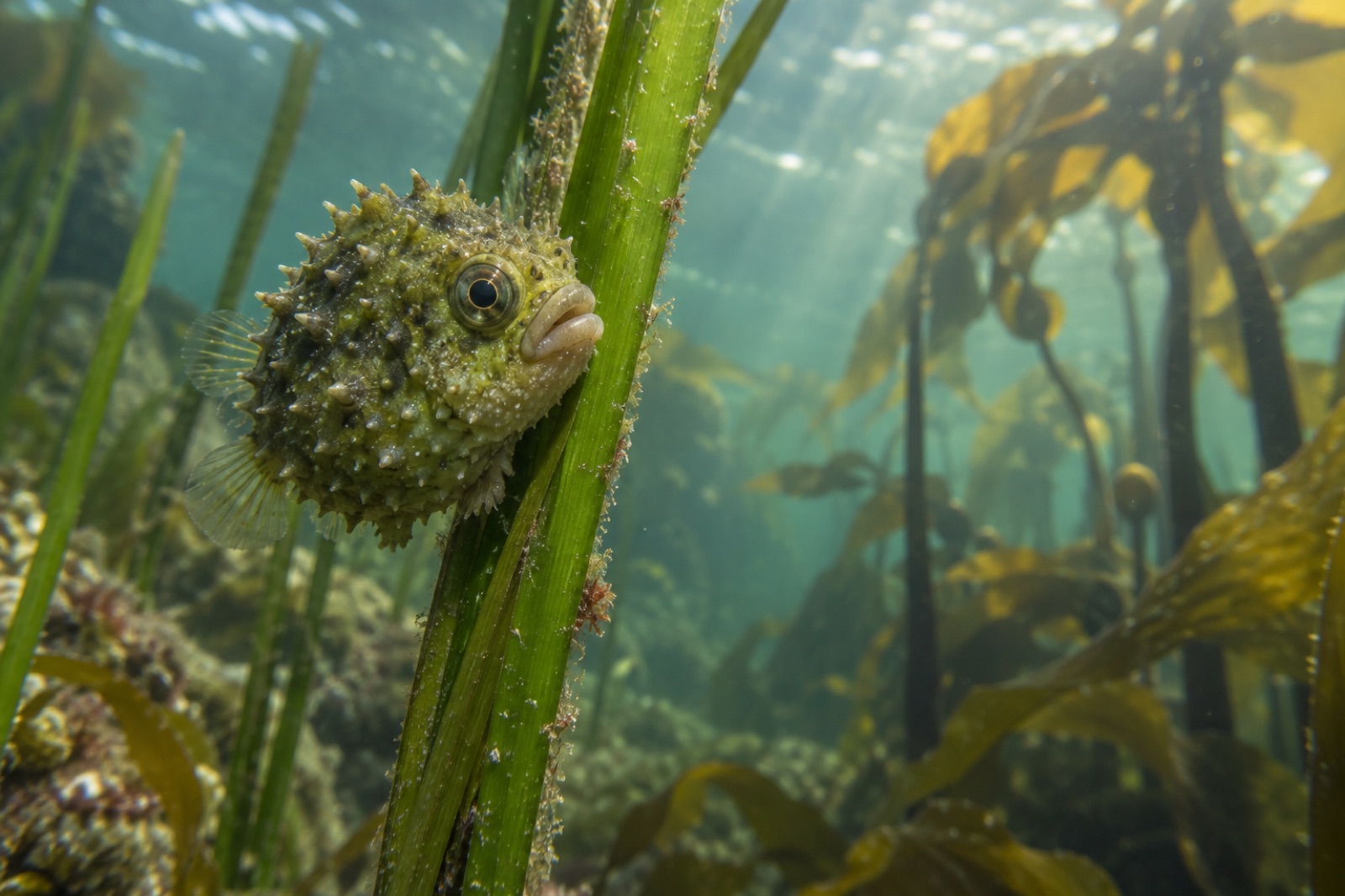
Meet the California sea hare, the kelp forest's purple-inking giant sea slug: what it eats, why it inks, and how it helped decode memory.
Dr. Theo Nakamura ·
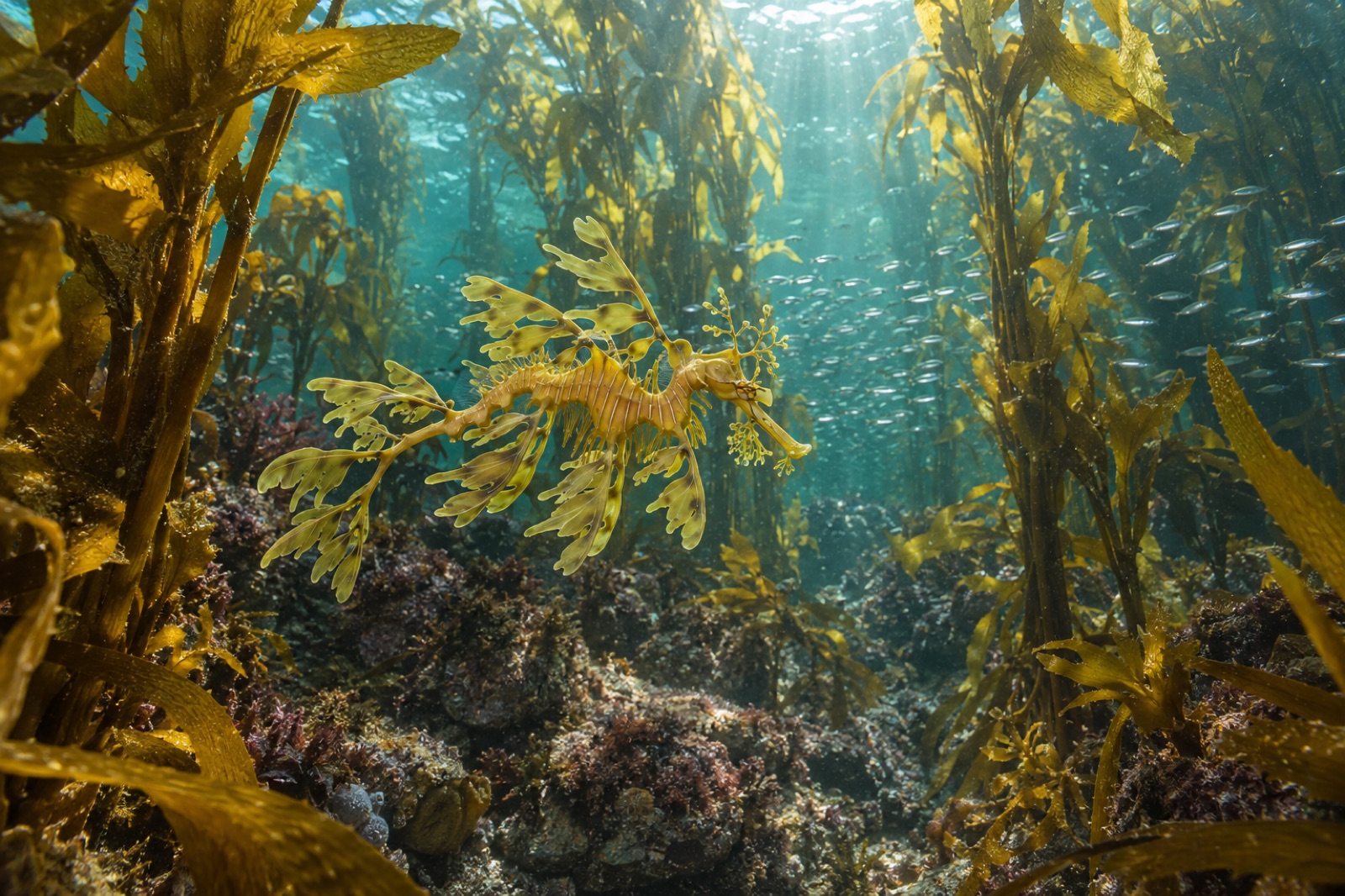
Meet the crescent gunnel — the crescent-marked, rock-flipping eel-lookalike of Pacific tidepools, and why its colours make it a barometer of the weed it lives in.
Dr. Theo Nakamura ·
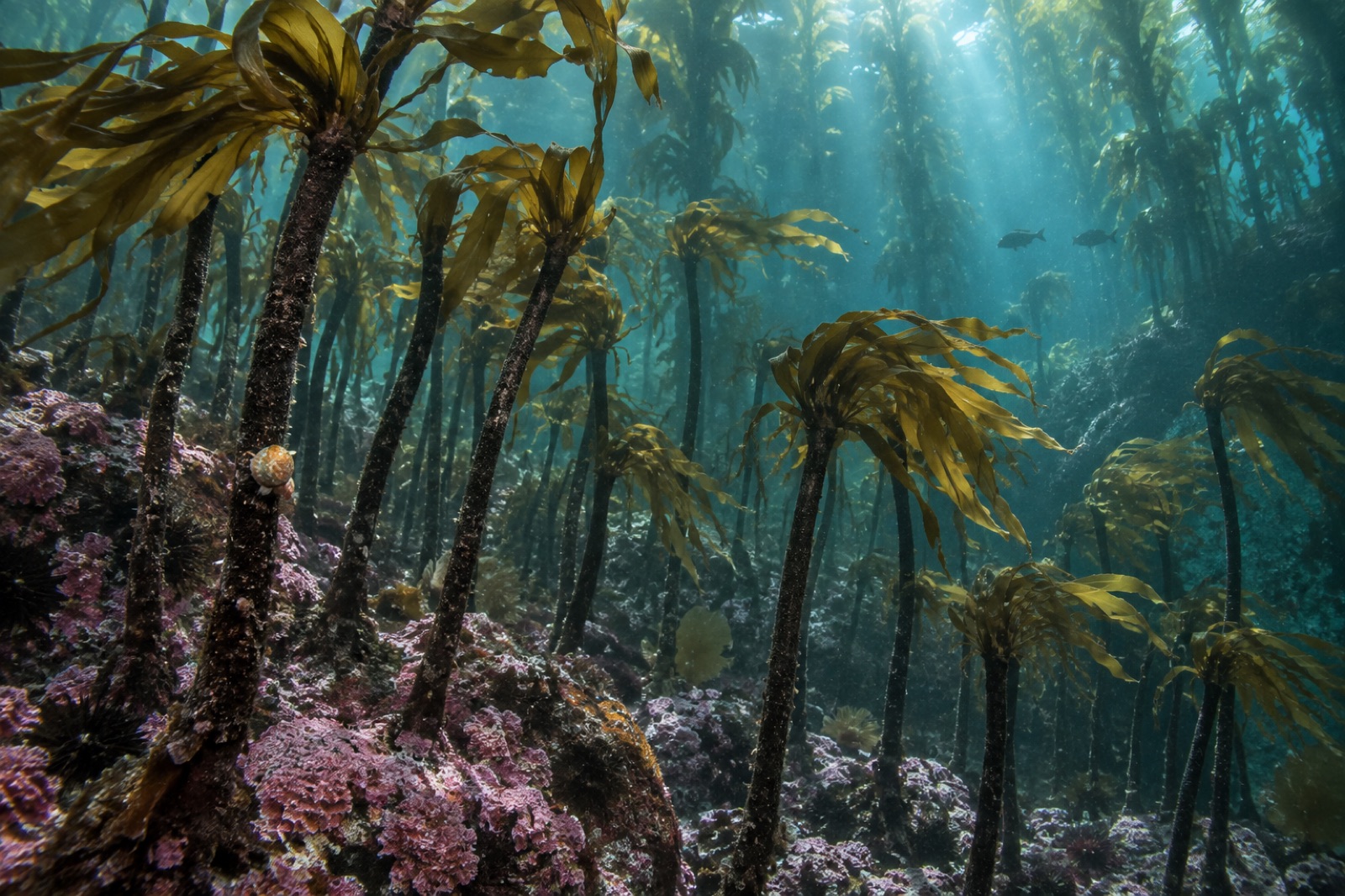
The señorita is a small California wrasse that runs cleaning stations, swarms in glittering schools and buries itself in sand at night. Meet the kelp forest's hygienist.
Dr. Theo Nakamura ·
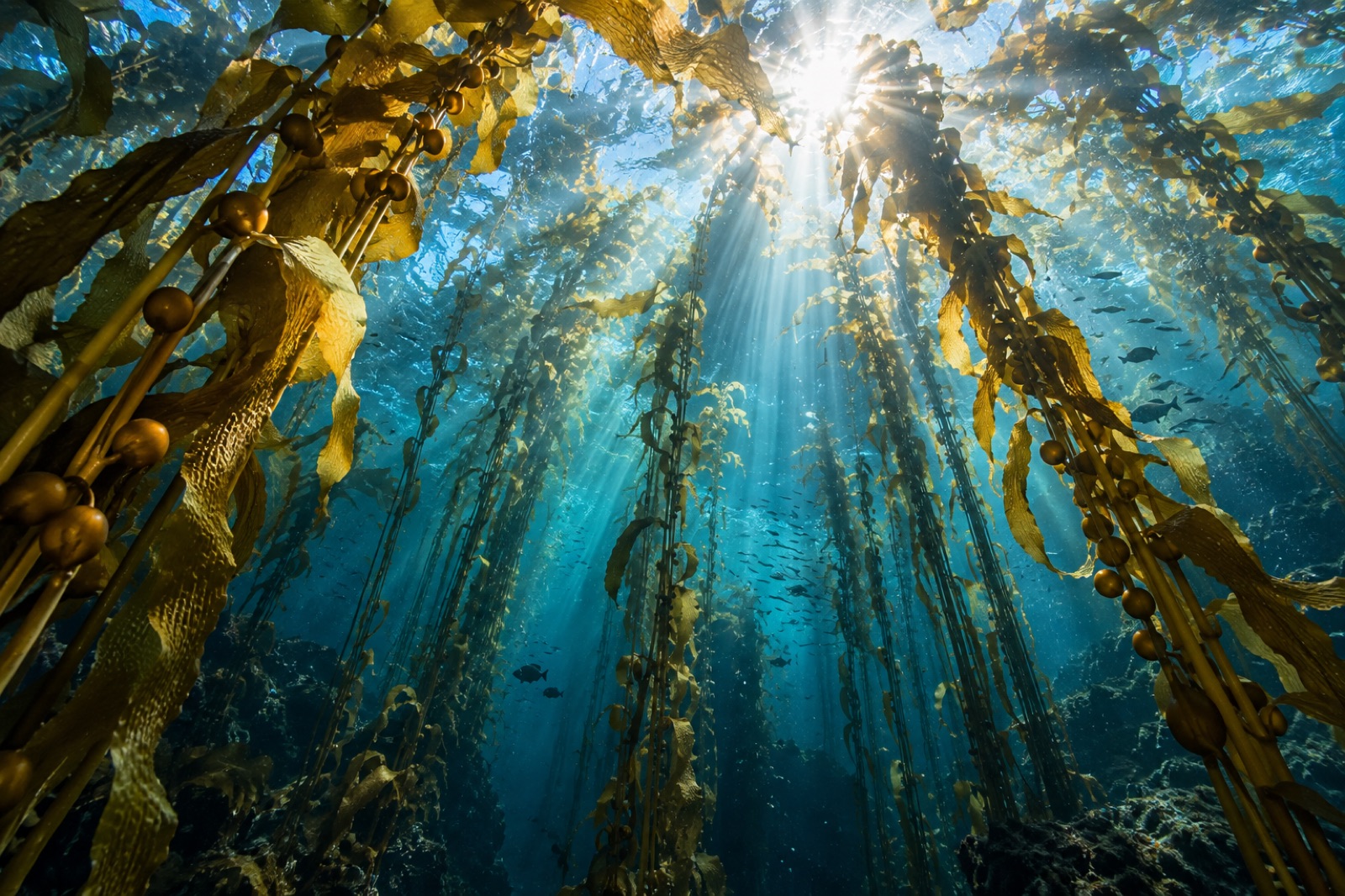
Discurria insessa, the kelp limpet, lives its whole life on a single stipe of feather boa kelp — one of the coast's strictest partnerships.
Dr. Theo Nakamura ·
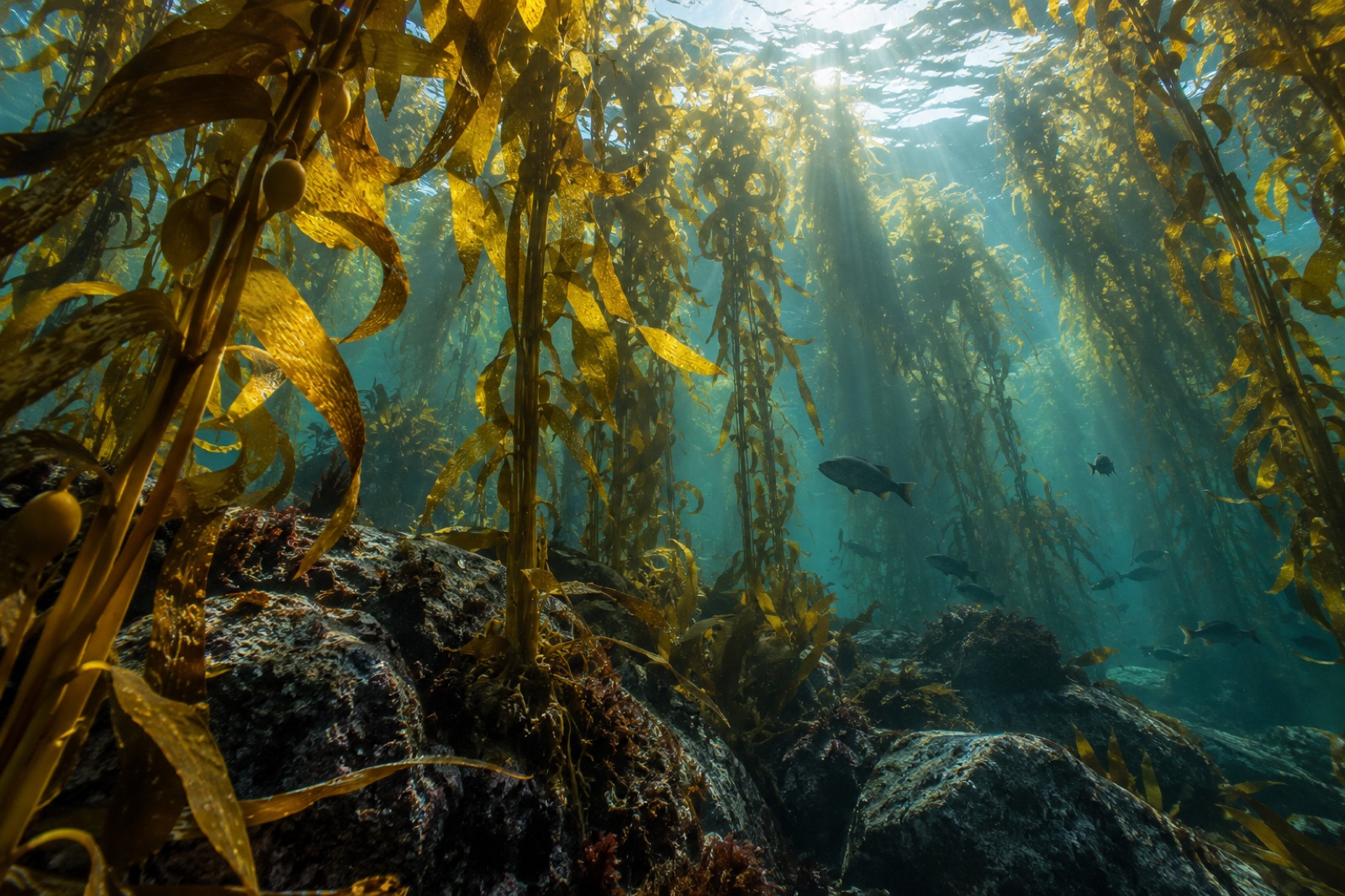
Meet the ochre sea star, the purple tidepool predator whose removal in a famous 1960s experiment coined the keystone species concept.
Dr. Theo Nakamura ·
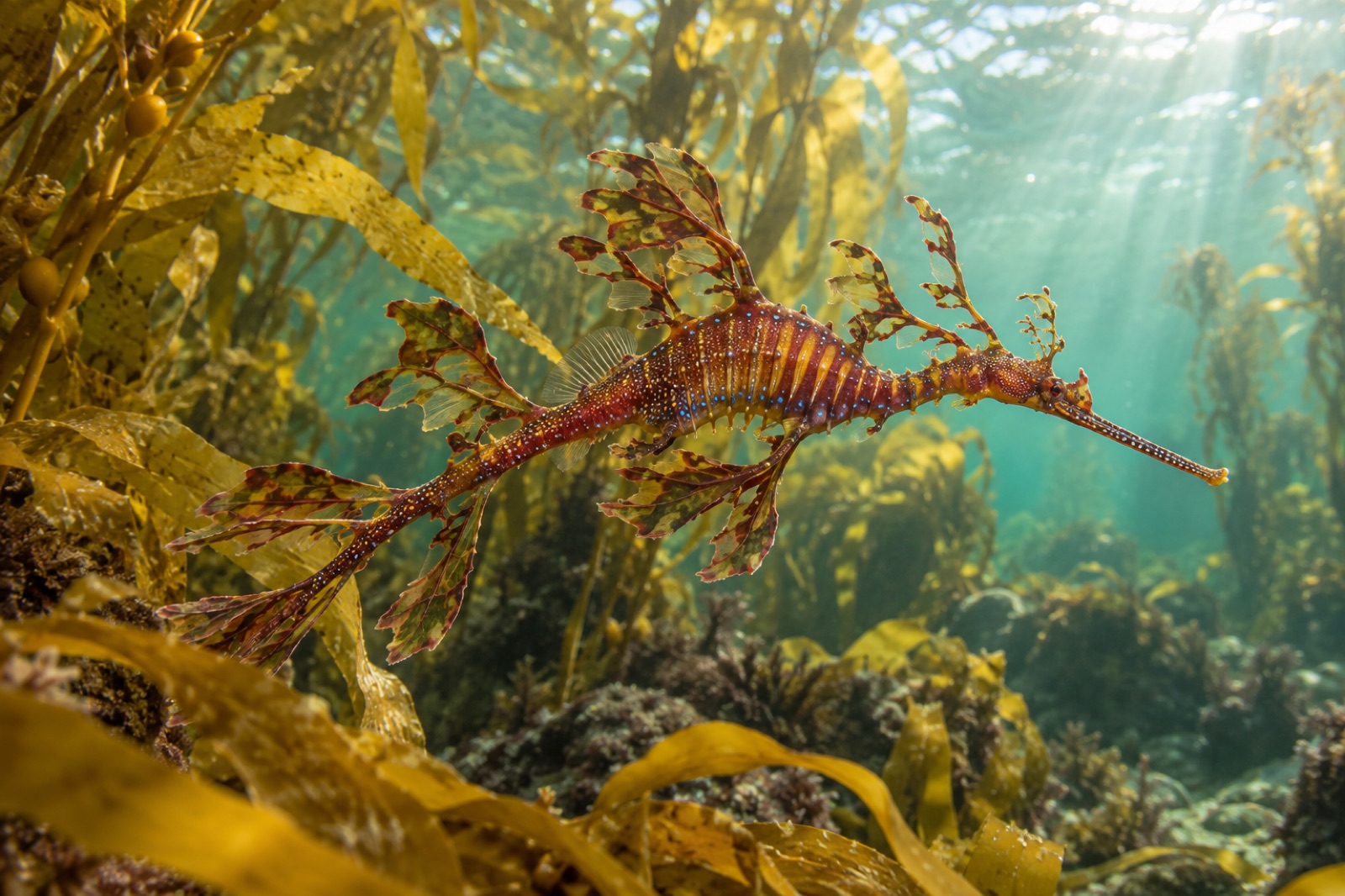
Porichthys notatus hums for hours to woo mates, glows with borrowed light and survives hours out of water. Meet the kelp coast's oddest neighbour.
Dr. Theo Nakamura ·
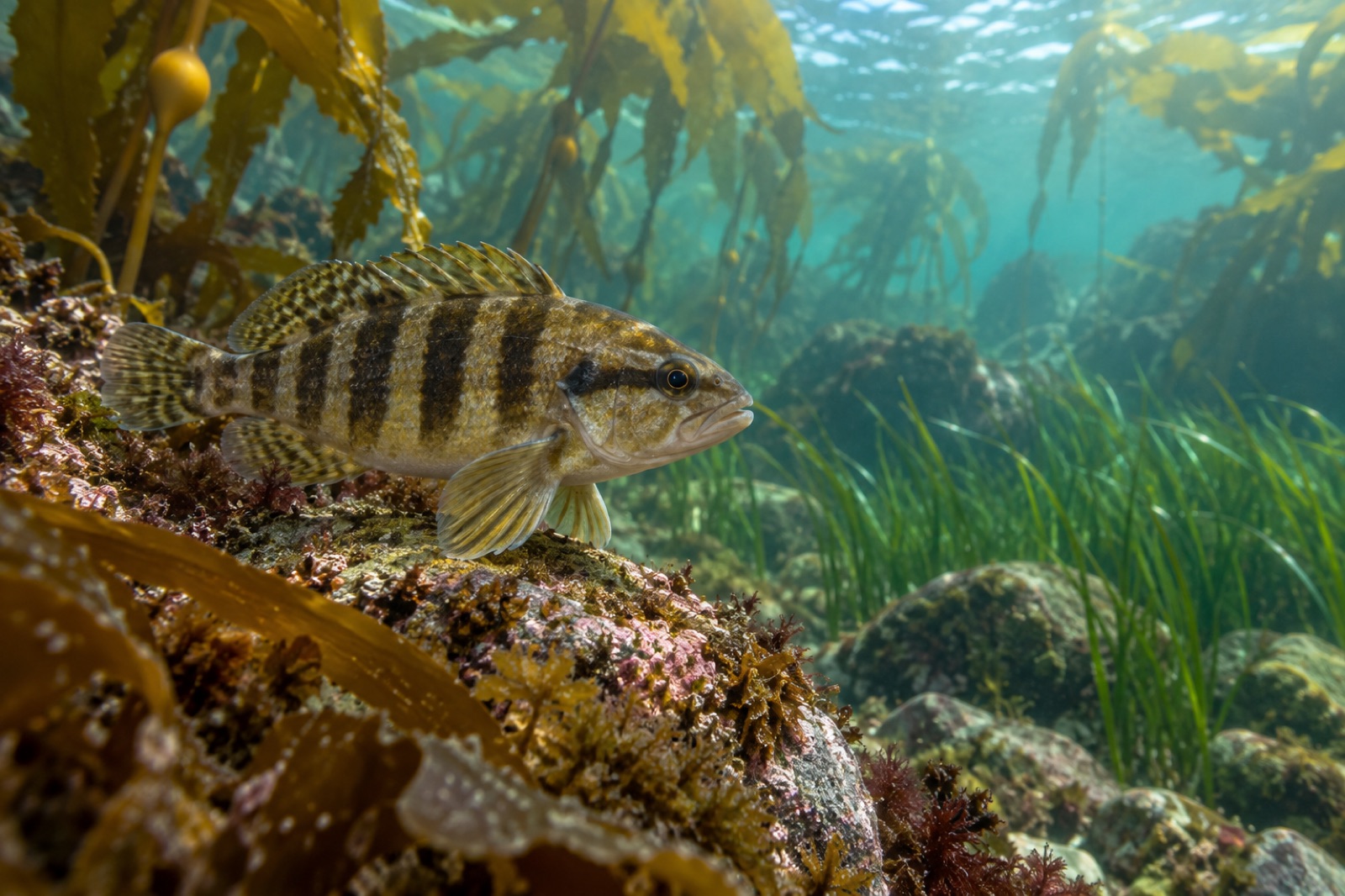
DNA barcoding reads a short, standard gene to name a seaweed. How it works, what it has revealed about kelp's cryptic species — and where it struggles.
Dr. Theo Nakamura ·
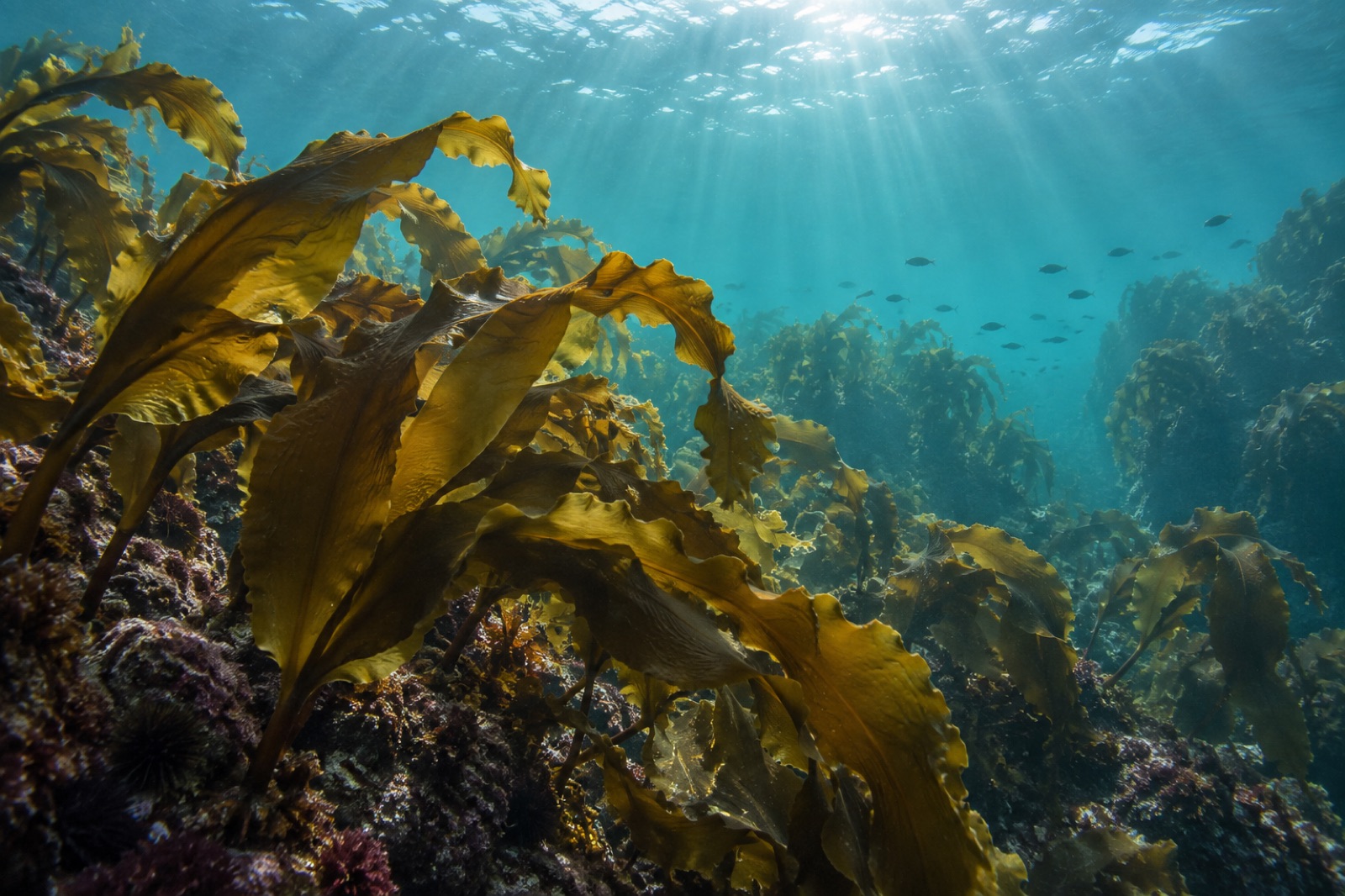
Meet the bay pipefish, the Pacific coast's eelgrass mimic — a seahorse relative that hunts like a drifting grass blade from Alaska to Baja.
Dr. Theo Nakamura ·
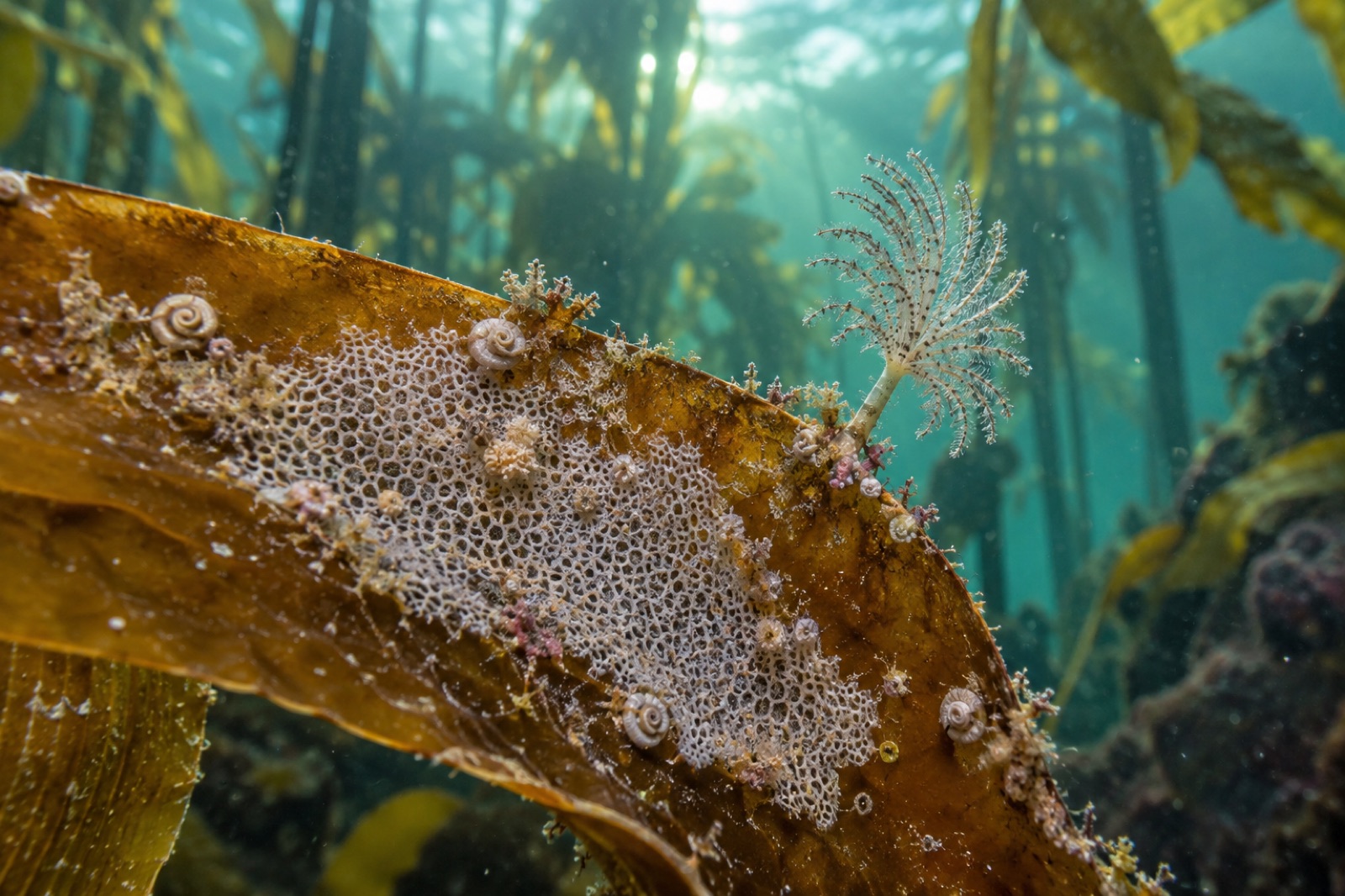
A Coastal Atlas guide to Hokkaido: Rishiri, Rausu and Hidaka kombu beds, the beach-drying harvest culture, and the kelp road that fed Kyoto for centuries.
Dr. Theo Nakamura ·
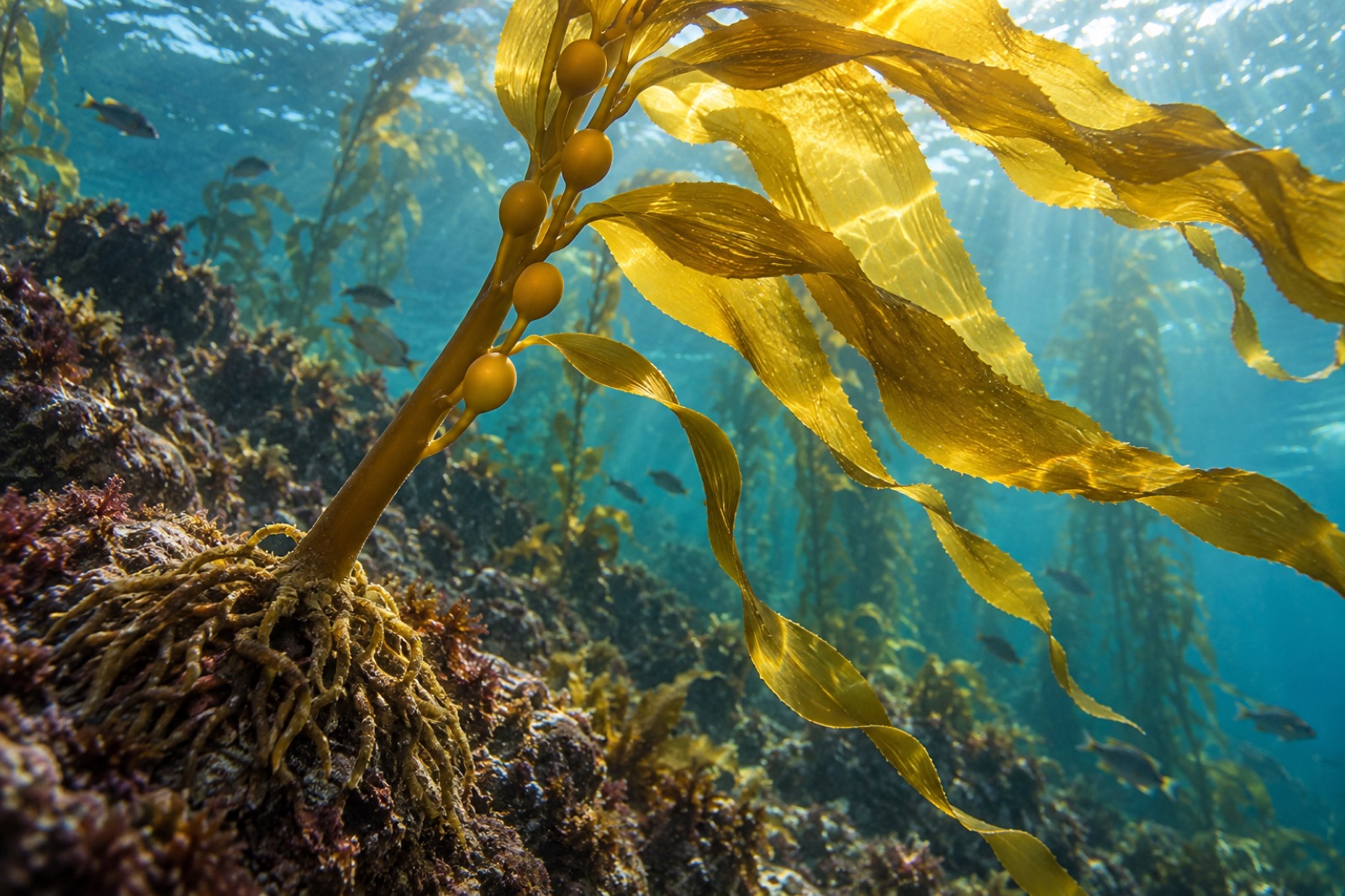
Identifying the walleye surfperch: the big-eyed, silver schooler of kelp edges and sand flats, and a member of the ocean's great live-bearing family.
Dr. Theo Nakamura ·
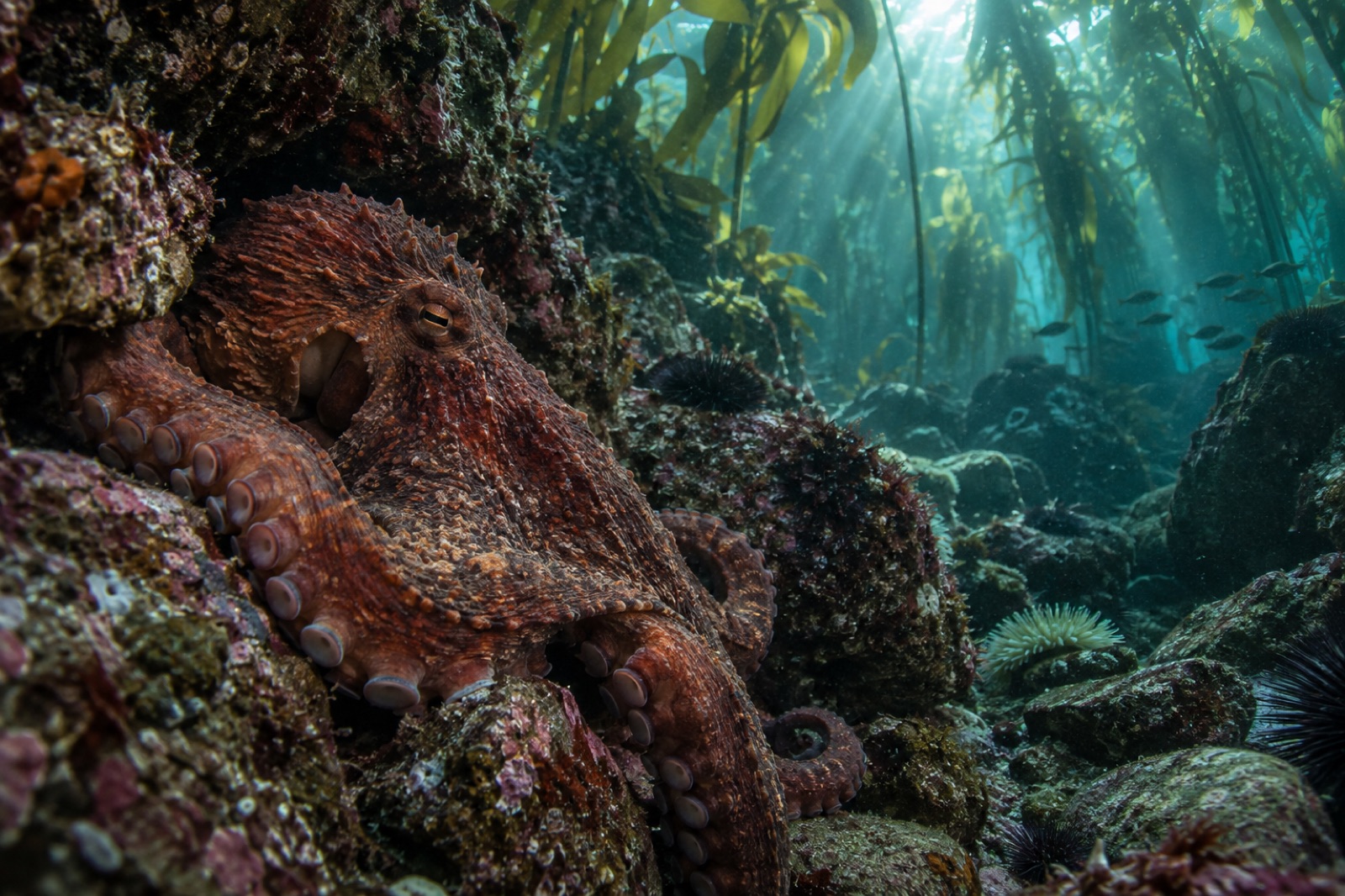
Meet the heart crab — a flattened, heart-shaped California reef crab that is not a true crab at all, but a king-crab relative descended from hermit ancestors.
Dr. Theo Nakamura ·
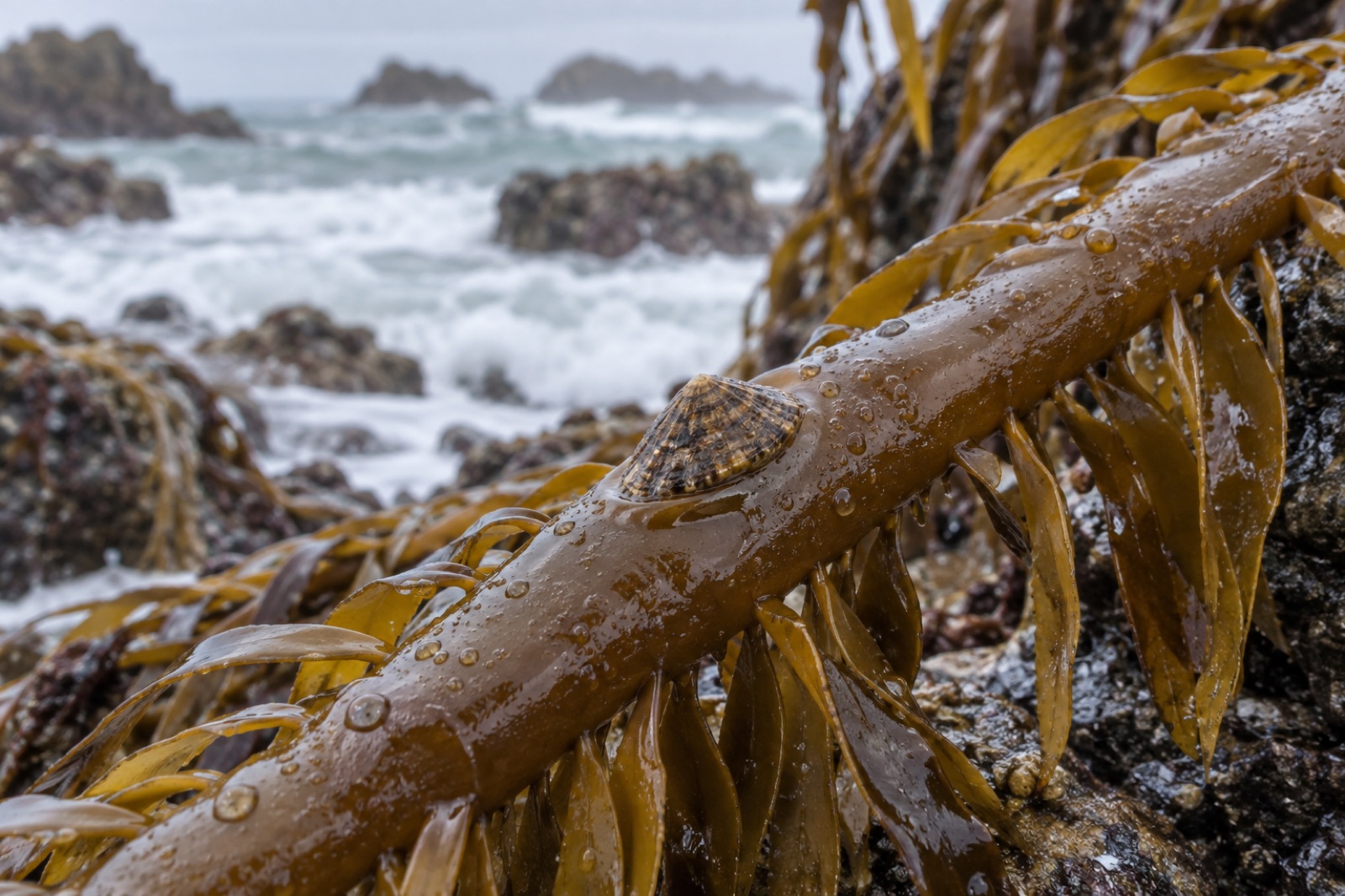
Calliostoma ligatum, the blue-top snail, is a small pearly topsnail that grazes living kelp blades along the Pacific coast, from blade to canopy.
Dr. Theo Nakamura ·
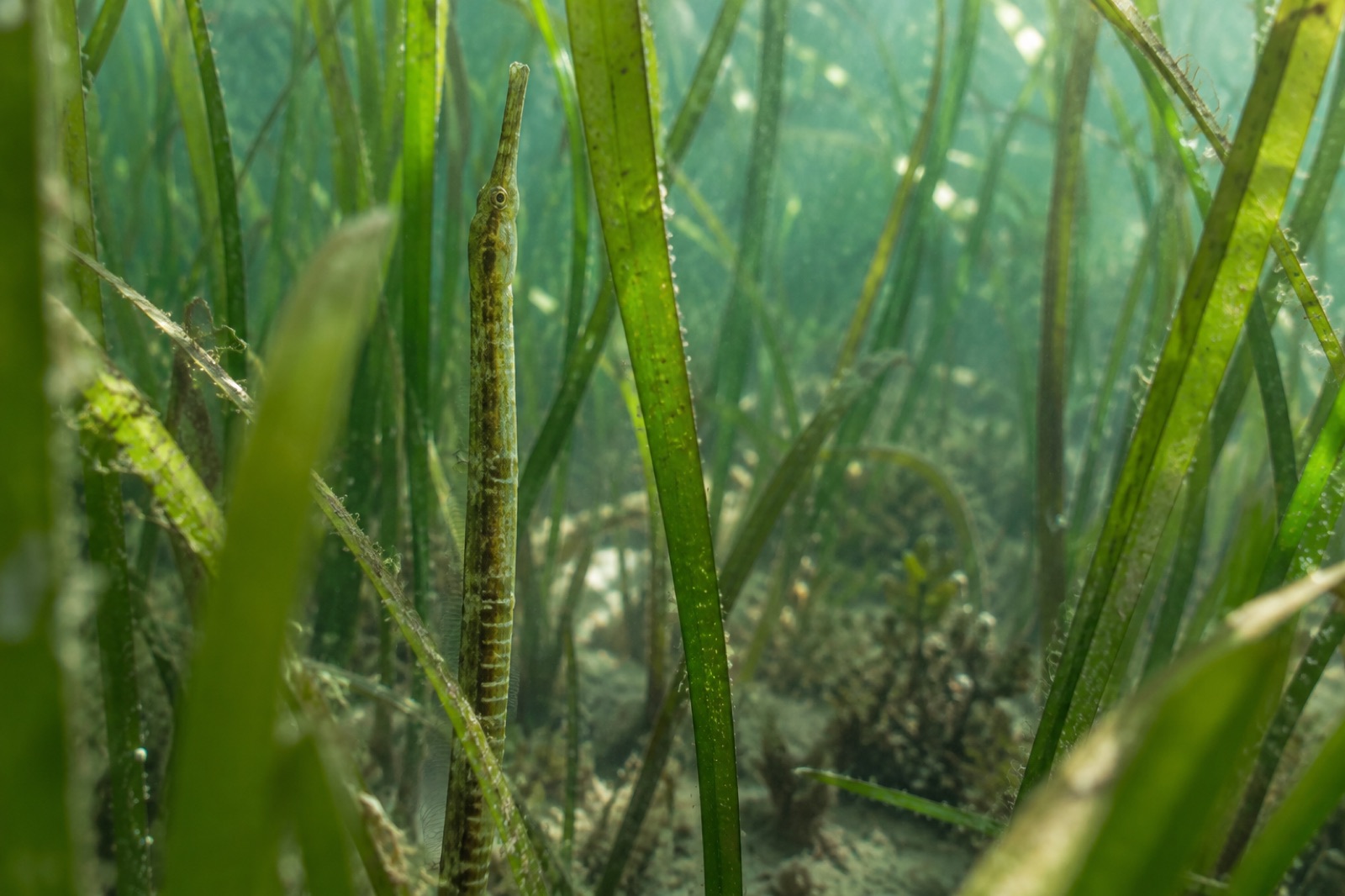
Stalked jellyfish are thumbnail-sized staurozoans that grip kelp fronds with a sticky foot and never swim. A guide to finding these hidden kelp forest gems.
Dr. Theo Nakamura ·
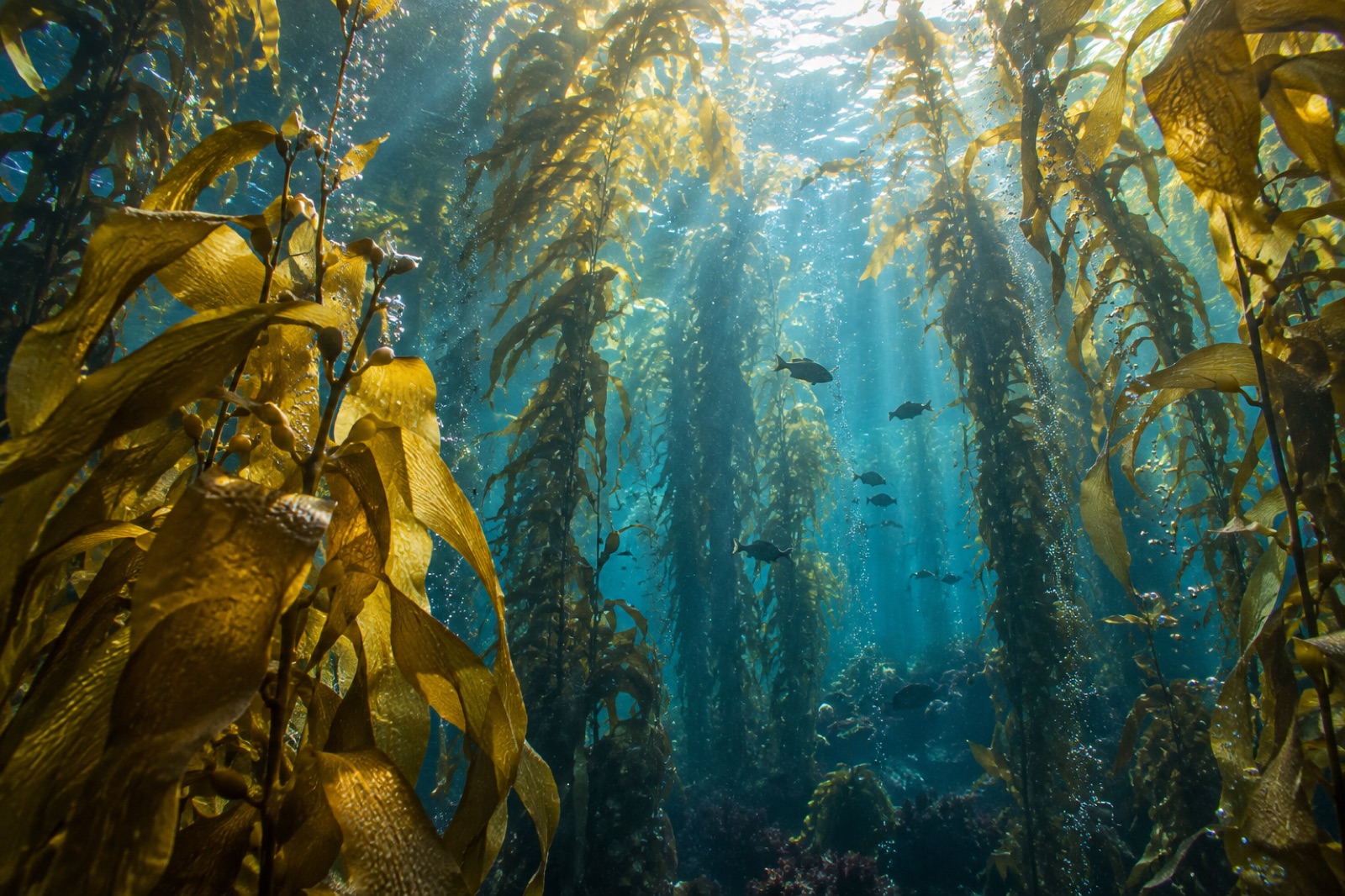
The sailfin sculpin is a banded-eye, flag-finned reef fish of the North Pacific — famous for the courtship wave of its tall sail-like first dorsal fin.
Dr. Theo Nakamura ·
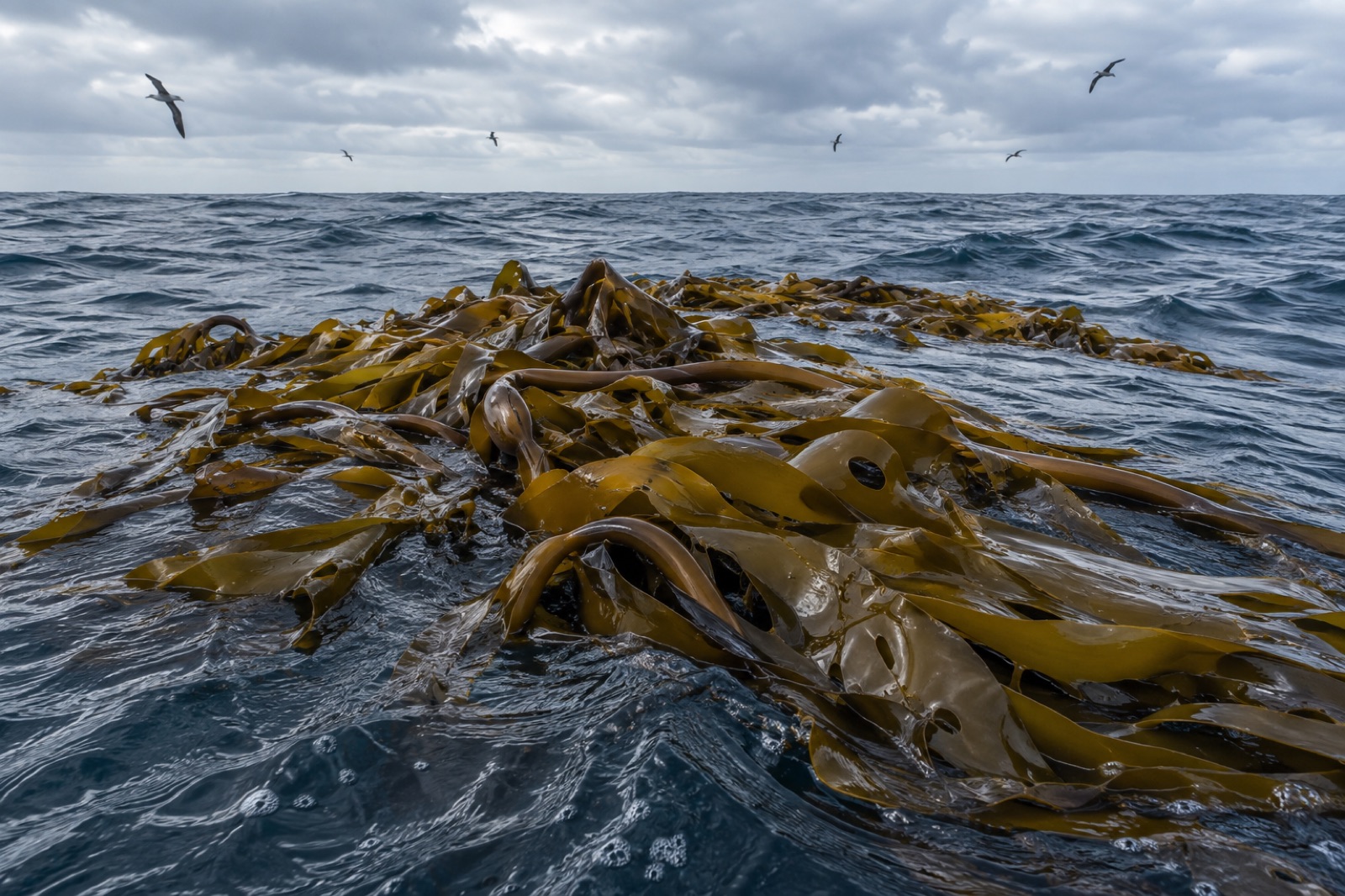
The mosshead warbonnet is a moss-fringed, eel-like prickleback of North Pacific reefs — a shy, hole-loving specialist of kelp-bed cracks and crevices.
Dr. Theo Nakamura ·
A field guide to Bodega Head — the granite headland on California's Sonoma Coast where upwelling, bull kelp and world-class marine science meet.
Dr. Theo Nakamura ·
The scalyhead sculpin is a tassel-headed, fully scaled cottid of Pacific kelp beds — a small ambush hunter whose males turn crimson over guarded egg masses.
Dr. Theo Nakamura ·

Kelp forests photosynthesise hard — but how much oxygen do they actually produce, where does it go, and is the 'lungs of the ocean' slogan honest science?
Dr. Theo Nakamura ·
The whitespotted greenling is the North Pacific's chameleon reef fish — a male in red camouflage, a female in grey speckle, and both ferociously territorial.
Dr. Theo Nakamura ·
The brown Irish lord is a spiny, red-bellied sculpin of North Pacific reefs — a camouflaged ambush hunter of crabs and shrimps from Alaska to California.
Dr. Theo Nakamura ·
Meet Mola mola, the heaviest bony fish on Earth — a flattened, fin-flapping giant that visits kelp coasts to be cleaned, bask and feed on drifting gelata.
Dr. Theo Nakamura ·
Meet the kelp greenling, a shy Pacific reef fish of extraordinary colours — and learn why males turn midnight-dark to guard their egg clutches for weeks.
Dr. Theo Nakamura ·
Denmark's bedrock island sits where the Baltic thins to half-strength seawater — a coastal atlas guide to brackish kelp beds, bladderwrack reefs and the salt frontier.
Dr. Theo Nakamura ·
Brooding anemone species profile: protandric hermaphrodite, live-bearing parent, epiphyte of kelp and eelgrass — and a dispersal puzzle solved by rafting.
Dr. Theo Nakamura ·
One ratio — 106 carbon, 16 nitrogen, 1 phosphorus — runs through plankton and deep water alike. What the Redfield ratio reveals about a changing sea.
Dr. Theo Nakamura ·
A temperate reef is stacked like a city: canopy, understory, turf and encrusting floor. Learn what drives subtidal zonation and why divers see it everywhere.
Dr. Theo Nakamura ·
Turkish towel species profile: the rough-textured red alga of surf-swept Pacific rocks, its carrageenan chemistry, life cycle and kelp-forest role.
Dr. Theo Nakamura ·
Between every kelp forest and its next generation sits an invisible, few-celled filament: the gametophyte. Its biology decides recruitment, resilience and hatchery success.
Dr. Theo Nakamura ·
A technical guide to culture media for kelp gametophytes and sporophytes — Provasoli, f/2, what each nutrient does, and how to mix, sterilise and dose it.
Dr. Theo Nakamura ·
Meet the California scorpionfish — a venomous, camouflaged ambush predator of southern kelp reefs. How to identify it, where it hides, and why its sting deserves respect.
Dr. Theo Nakamura ·
The greenbone — also called butterfish — is New Zealand's own kelp grazer, a beak-toothed odacid that changes sex, varies in colour, and moves kelp energy into fish.
Dr. Theo Nakamura ·
A coastal atlas guide to Japan's Noto Peninsula: satoumi stewardship, ama divers, wakame culture and a coast remade by the 2024 earthquake.
Dr. Theo Nakamura ·
A guide to Namibia's Skeleton Coast kelp — sea bamboo in cold Benguela water beside the world's oldest desert, guano islands, lobster fisheries and fog-shrouded forests.
Dr. Theo Nakamura ·
The herring cale is a cigar-shaped, beak-toothed herbivore that grazes kelp across the Great Southern Reef — and moves its energy up the food web.
Dr. Theo Nakamura ·
Meet the tidepool sculpin, the Pacific's toughest little fish: how it survives heat, low oxygen and hours out of water — and finds its way home.
Dr. Theo Nakamura ·
Meet the Pacific angelshark, the sand-buried ambusher of California's kelp edges: how it hunts, how it nearly vanished, and how it came back.
Dr. Theo Nakamura ·
From Cascais to Cabo da Roca, Portugal's kelp grows at the warm southern edge of its range. A guide to the coast where forests thin and science watches closely.
Dr. Theo Nakamura ·
What a marine biology degree actually delivers: the jobs it opens, the salaries it misses, when it pays off, and smarter alternatives for some students.
Dr. Theo Nakamura ·
Oarweed is the digitate kelp marking the low-water line of North Atlantic shores. Learn its biology, industrial past, and the warm-water rival now replacing it.
Dr. Theo Nakamura ·

Storms tear kelp free and send it drifting with whole communities aboard. Inside the science of kelp rafts and transoceanic dispersal.
Dr. Theo Nakamura ·
How kelp alternates between a visible sporophyte forest and a microscopic gametophyte generation — and why that hidden half decides whether forests recover.
Dr. Theo Nakamura ·
Sugar kelp is the sweet-tasting cold-water kelp that farmers love. Explore its biology, range, life cycle and why it anchors a new wave of ocean farming.
Dr. Theo Nakamura ·