Encyclopedia9 min read
Kombu (Saccharina japonica): Species Profile
Kombu is the kelp behind dashi and the backbone of the world's seaweed farms. Learn its biology, life cycle, Hokkaido roots and future in a warming sea.
Dr. Theo Nakamura ·
A Coastal Atlas guide to Hokkaido: Rishiri, Rausu and Hidaka kombu beds, the beach-drying harvest culture, and the kelp road that fed Kyoto for centuries.
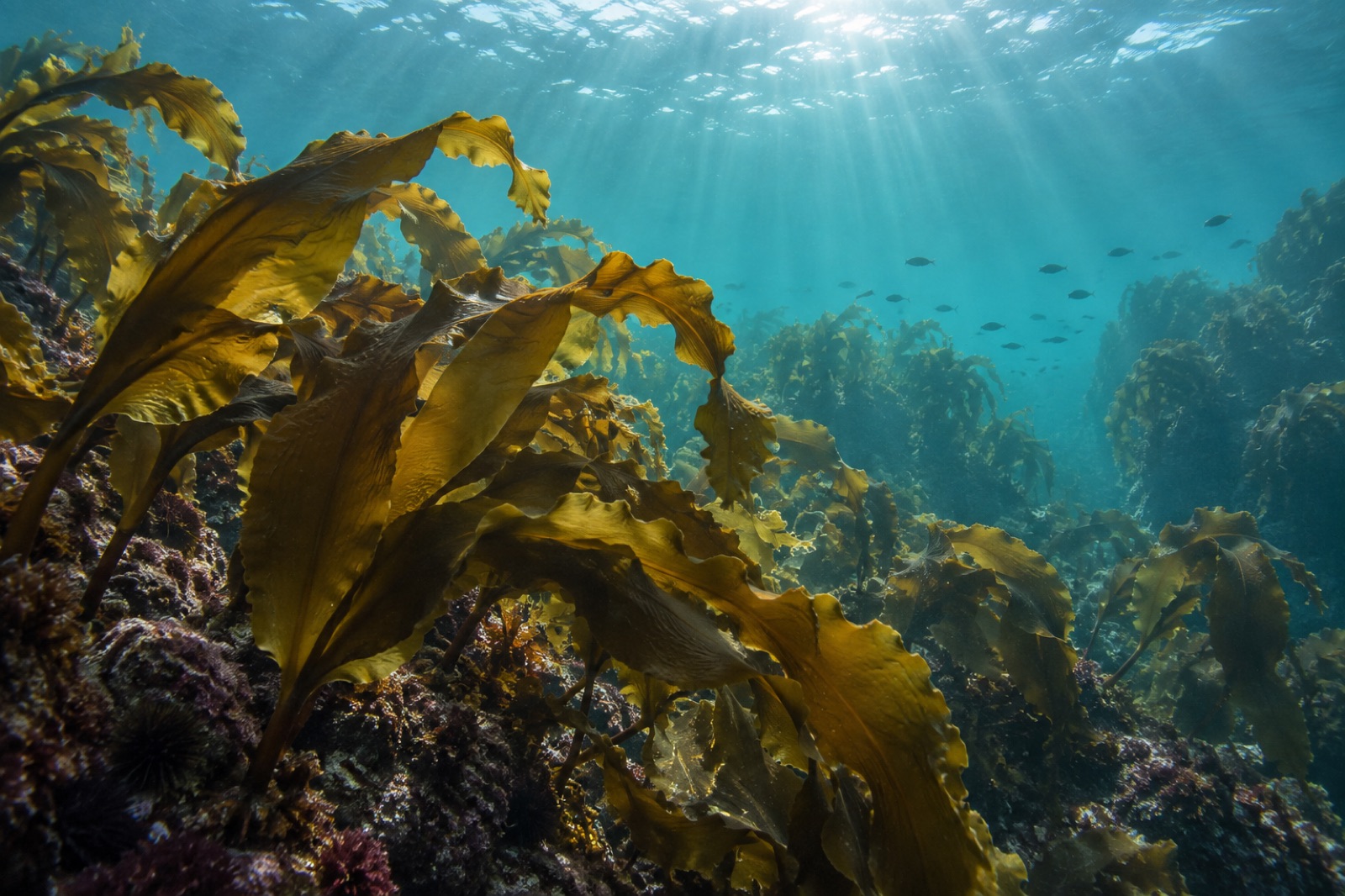
Nearly all of Japan's kombu grows along one island: Hokkaido, where the cold Oyashio current slides down from the Sea of Okhotsk and bathes rocky shores in nutrient-rich water. For more than three centuries, Hokkaido's kelp has travelled the length of Japan — carried by cargo ships called Kitamaebune along a trade route locals still call the "kombu road" — and quietly built the flavour foundation of Japanese cuisine. This guide follows that coast: the species, the beach-drying harvest culture, the great kelp place-names, and what the future holds for these cold-water beds.
Kombu — Saccharina japonica and its close relatives — is a specialist in cold. It grows best in water well under 20°C, on clean rocky substrate with strong water movement. Hokkaido's shores deliver all three, and different bays produce kombu of distinct character, so reliably that Japanese chefs buy by place-name the way wine buyers buy by region:
The chemical reason these grades matter — glutamate concentration, which varies with species, age, and growing conditions — is unpacked in our dashi masterclass.
Hokkaido's kombu is harvested in July and August, in a choreography between boat and beach. Harvesters pole and paddle flat-bottomed boats into the beds at low swell, hooking kelp fronds with long wooden poles fitted with iron kagi (hooks), twisting until the stipe releases — experienced hands can read the bed's maturity by how it yields. Wild kombu must be harvested selectively: plants are left to spore and reseed the beds, a practice of restraint refined over generations.
Then the beaches become factory floors. Harvested fronds are spread on designated kombu-drying beaches — cleaned, raked banks of round stone — and dried under the brief Hokkaido summer sun, turned by hand to dry without bleaching. Sun-drying concentrates the mannitol powder that frosts the finished blade. On July evenings along the kelp coast, whole families turn fronds under long light, an image as essential to coastal Hokkaido as vineyards are to Burgundy.
After drying, the kelp is trimmed, graded by colour, width and lustre, and pressed flat. Historic warehouses in Matsumae — Japan's only castle town — and in the port of Hakodate still hold the black, pressed bales that once piled by the tonne onto Kitamaebune ships. The ships sailed for Osaka, and the finest grades onward to Kyoto — fuelling more than flavour: the trade financed the rise of shipping fortunes and knitted Hokkaido into Japan's economy centuries before colonisation.
The Shiretoko Peninsula, designated a UNESCO World Heritage site in 2005, is the coast's wild crown. Sea ice forms here in winter at the lowest latitude anywhere on Earth, and its spring melt drives a phytoplankton bloom that feeds everything above: kelp recruitment, salmon runs, Steller's sea eagles and white-tailed eagles massing on the ice, brown bears foraging the shore.
Rausu, on Shiretoko's east side, lives this web directly. Its fishing grounds, sitting where cold Oyashio water pours past deep trenches, yield kombu of unmatched glutamate richness — and in winter, drift-ice tourism and sea-kayaking supplement harvest income. The coast shows what a kelp-town economy can look like in the 21st century: working fisheries, wild-forest pride, careful tourism.
Understanding what holds these forests mechanically anchored through storm and ice scour is its own science, covered in our explainer on holdfast biology.
Nothing on this coast is guaranteed. Japan's seaweed count has declined substantially over recent decades in southern regions — on Kyushu and Shikoku coasts, kelp has largely vanished with warming. Hokkaido's northern beds remain productive, but Oyashio strength varies with climate-driven changes to the larger system (explored in Marine Heatwaves 101), and Japanese researchers track the southern edges of kombu's range as climate indicators.
The response has two branches: cultivation — seeded longlines grown in colder bays, using hatchery methods of the kind described in our seaweed seed stock guide — and stewardship of the wild beds through harvest restraint and genetic care. Tidewright's own Holdfast nursery philosophy, illustrated on the platform page, grows from the same principle these harvesters have practised for generations: match the kelp to the place, protect the genetics of the source beds.
Summer is harvest season and best for seafood and hiking; winter brings ice, eagles, and steaming bowls of rausu kombu-nabe hotpot in port-side inns.
Rausu kombu grows in exceptionally cold, nutrient-rich water off Shiretoko and develops very high glutamate density — measured values consistently top all kombu regions. Its dashi is consequently the deepest-tasting of the named grades, though the kelp itself is trickier to handle in the pot.
Trading cargo ships that plied the Sea of Japan coast from Hokkaido to Osaka from the 17th to 19th centuries, carrying kombu, herring, and other northern goods south and returning with rice, cloth and salt. Their route fed — and economically fuelled — Kyoto's refined cuisine, and their landfalls became towns in their own right.
Yes — July and August mornings along the kombu coast from Hakodate to Kushiro feature active drying beaches, and some harbours offer boat tours into the beds. Rebun Island even has kayak tours over wild kombu forest.
Currently less than southern Japan's beds, which have declined significantly with warming — but monitoring shows variability in the Oyashio current's strength matters enormously for bed health. Scientists track Hokkaido's southern-range beds as a bellwether.
By the dish: Rishiri for clear, elegant dashi; Rausu where depth dominates (rich braises, miso); Ma-kombu for balanced sweetness; Hidaka where the kelp is eaten in the dish. Our dashi masterclass details how to match grade to purpose.
Kombu is the kelp behind dashi and the backbone of the world's seaweed farms. Learn its biology, life cycle, Hokkaido roots and future in a warming sea.
Dr. Theo Nakamura ·
A deep, technique-first guide to kombu dashi: glutamate science, exact temperatures, ichiban and niban infusions, and how to fix every common mistake.
Sofia Andersson ·
Iwate's ria coast grows some of Japan's finest kelp in drowned valleys — and fifteen years on from the 2011 tsunami, its recovery tells a coastal story for our century.
Tom Okafor ·