Kitchen9 min read
Miso Soup with Wakame: The Fifteen-Minute Classic Done Right
How to make genuinely good miso soup at home: dashi fundamentals, when to add wakame, the one boiling rule, and why the miso goes in off the heat.
Sofia Andersson ·
A deep, technique-first guide to kombu dashi: glutamate science, exact temperatures, ichiban and niban infusions, and how to fix every common mistake.
Part of a learning path
This article is stop 5 of 9 on Cooking the Forest — Seaweed in your kitchen, from safety nerve to dashi craft.
Kombu dashi is the quiet foundation of Japanese cooking — a clear, golden stock that tastes of almost nothing and seasons everything. This masterclass gives you both the dependable weeknight recipe and the deeper craft: why the temperature matters to the degree, what that white powder on the kombu actually is, how to get two infusions from one piece of kelp, and how to taste like a professional instead of following a timer.
Everything below applies whether you are making a clear soup for guests or a big batch of cooking stock for the week. Once you understand the handful of variables — kombu quality, water, time, and heat — dashi stops being a recipe and becomes a skill.
Dashi works because of one molecule: glutamic acid, the amino acid behind the taste we call umami. When kombu steeps in water, free glutamates dissolve into the liquid. They are joined by smaller amounts of inosinate-friendly ribonucleotides from the kelp and, when you season the finished dashi, by the salt that unlocks umami perception on the tongue.
Two practical consequences follow from the chemistry:
Understanding this is the difference between making dashi and understanding dashi. For more on the plant behind the pot, see our kombu species profile, which covers how Saccharina japonica grows and why different harvest regions produce different dashi character.
Not all kombu is equal, and the label rarely tells you what you need to know. Look for:
Store kombu in an airtight container away from light and humidity. Kept dry, it keeps for years and, many cooks argue, improves as its flavour concentrates.
This is the technique used in most serious kitchens. It takes planning, not effort.
Water matters more than people expect. Hard water — high in calcium and magnesium — inhibits glutamate extraction, which is one reason Kyoto's famously soft water helped shape its dashi culture. If your tap water is very hard, use filtered or bottled soft water.
Submerge the kombu in the cold water. Cover and refrigerate. A 30-minute room-temperature soak is the minimum; overnight in the fridge is the ideal. You can even stop here: this is mizudashi (water dashi) — pale, delicate, and stunning as a soup base for summer dishes.
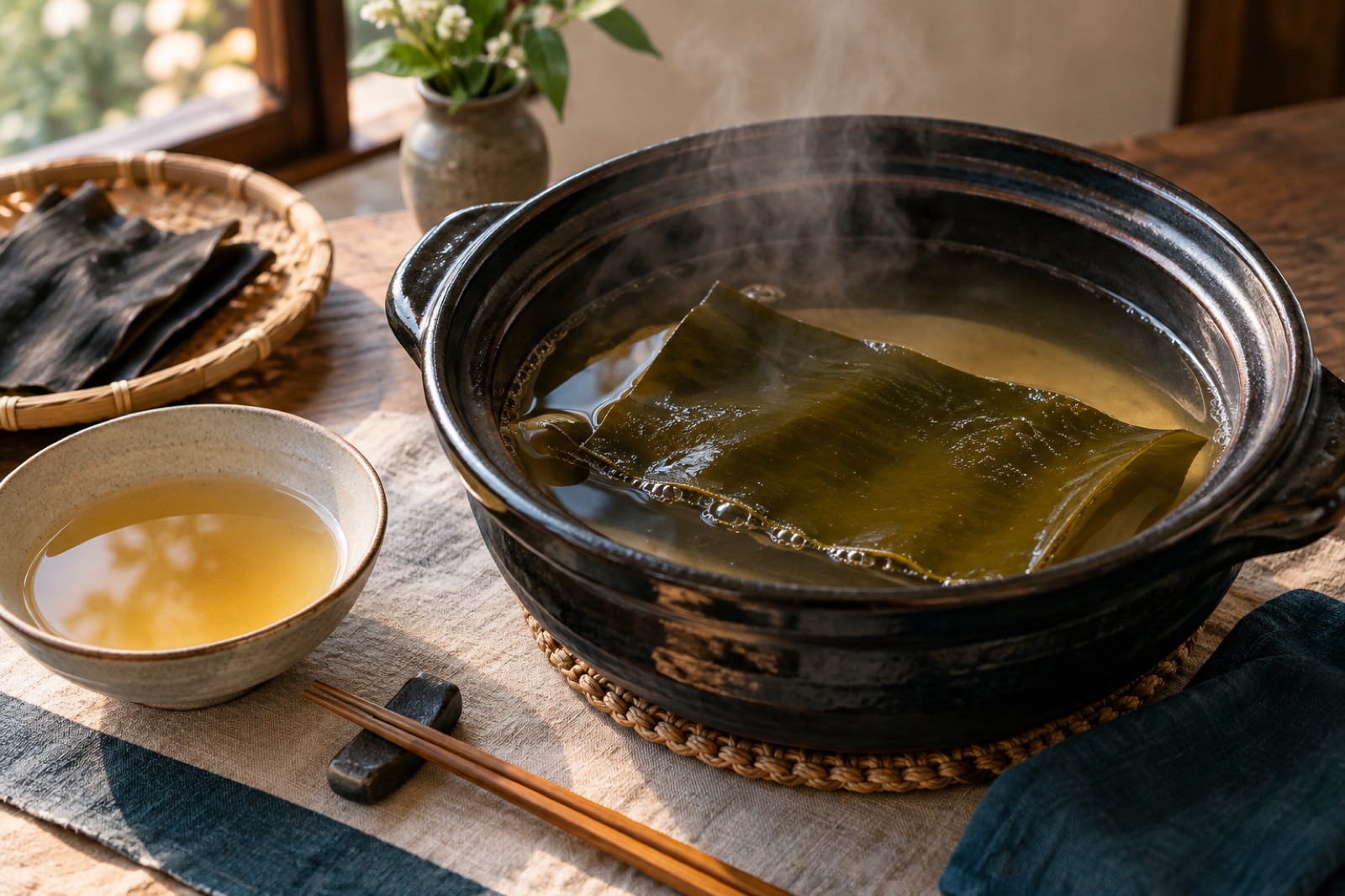
Move the pot to medium-low heat. Your target is 60–65°C sustained, where glutamate extraction peaks without alginate release. You do not need a thermometer forever — learn the visual cues:
Hold this zone for about 10 minutes, then remove the kombu just before the water approaches a simmer. If the pot accidentally boils, do not panic: strain out the kombu immediately and accept a slightly cloudier, bitter-edged stock. It still makes excellent miso soup; save your perfect-temperature batch for clear soups.
Taste the dashi plain. It should be subtly oceanic, faintly sweet, and leave a long savoury finish. Seasoned dashi for miso soup typically takes 1–2 teaspoons of miso per cup; clear soups (osuimono) use salt and a touch of usukuchi (light) soy sauce so the golden colour survives.
Traditional kitchens never discard kombu after one use.
Frugal, sustainable, and genuinely useful: the second extraction captures compounds the first deliberately leaves behind.
Dried shiitake contribute guanylate, which multiplies umami perception with kombu's glutamate in a synergy researchers have measured at several times the strength of either alone. Cold-steep 10 g kombu with 2 dried shiitake per litre overnight; heat gently as above. This is the classic shōjin (temple cuisine) dashi.
Make the master kombu dashi, bring it just to a simmer, then kill the heat and add a generous handful (about 10–15 g) of katsuobushi shavings. Wait two to three minutes — no stirring — until the flakes sink, then strain through a fine cloth. This is the stock behind most ramen, udon, and restaurant miso soup.
No time? Soak kombu for just 10 minutes while you prep other ingredients, then heat gently. You will extract perhaps half the glutamate of an overnight steep — easily compensated with a slightly larger piece of kombu. Technique scales; panic is optional.
Once dashi lives in your fridge (it keeps three days refrigerated, a month frozen), a dozen dishes get easier: miso soup, of course, but also chawanmushi (savoury egg custard), agedashi tofu, noodle broths, simmered greens, and the cooking liquid that makes kelp noodle dishes taste complete. A spoonful enriches vinaigrettes, pan sauces, and even risotto-style rice dishes in a Western kitchen. Cooks who care about where their kombu comes from can read about regenerative kelp sourcing in our guide to starting a seaweed farm and the harvest program behind our own supply on the Tidewright Harvest page.
Refrigerated in a sealed container, kombu dashi keeps about three days before its aroma fades. Frozen in ice-cube trays, it keeps a month and can be dropped straight into soups and sauces.
Yes — that is niban dashi. After that, the spent sheet is edible: slice it thin and simmer it in soy sauce, mirin, and sake for tsukudani, a classic rice condiment. Nothing needs to go to waste.
Pure kombu dashi is entirely plant-based. The classic awase dashi adds katsuobushi (smoked skipjack tuna shavings), so check which version a recipe or restaurant uses if you cook for vegetarian or vegan guests.
Not once you learn the cues: small bubbles clinging to the kombu, a shimmering surface, and faint steam mean you are in the 60–65°C zone. A thermometer simply shortens the learning curve.
Kobucha is a drink made by steeping shredded, often salted kombu in hot water — a savoury tisane rather than a cooking stock. It uses a hotter, faster extraction and is seasoned to taste drinkable on its own.
Filed under
How to make genuinely good miso soup at home: dashi fundamentals, when to add wakame, the one boiling rule, and why the miso goes in off the heat.
Sofia Andersson ·
Kelp noodles are the crunchy, glass-clear, low-carb noodle made from seaweed. Learn what they're made of, how they taste, and the best ways to cook them.
Sofia Andersson ·
A clear-eyed guide to seaweed nutrition: what's actually in kelp, nori and dulse, how iodine varies wildly by species, and how much is safe to eat.
Sofia Andersson ·