Encyclopedia9 min read
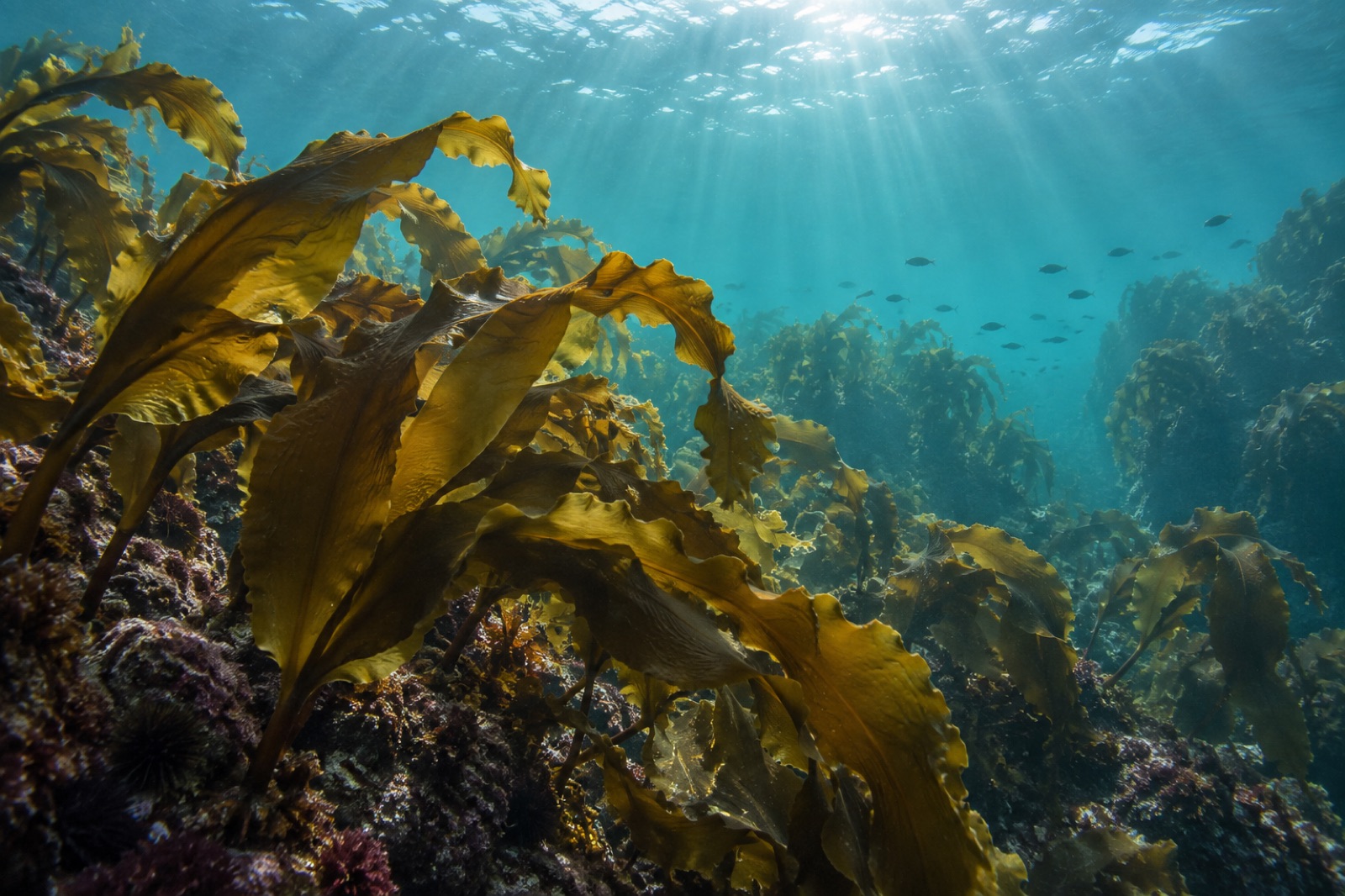
Kombu (Saccharina japonica): Species Profile
Kombu is the kelp behind dashi and the backbone of the world's seaweed farms. Learn its biology, life cycle, Hokkaido roots and future in a warming sea.
Dr. Theo Nakamura ·
A clear-eyed guide to seaweed nutrition: what's actually in kelp, nori and dulse, how iodine varies wildly by species, and how much is safe to eat.
Seaweed has a reputation as a almost magically healthy food — and also, in certain corners of the internet, as a dangerous one. Both stories come from the same fact: seaweeds are extraordinary accumulators of minerals from seawater, and the mineral people worry about most is iodine. Get the portion right and seaweed is one of the most nutrient-dense ingredients in the kitchen. Get it wildly wrong — mostly by eating large amounts of certain kelps every day — and you can genuinely overdo it.
This guide walks through what's actually in the seaweeds you're most likely to eat, why iodine content varies by a factor of a thousand between species, and the simple rules that let you enjoy seaweed daily without a second thought. Nothing here is medical advice, but it is the same framework I use in my own kitchen and teach in Tidewright Harvest cooking workshops.
Seaweeds are not vegetables, but nutritionally they behave like a cross between leafy greens and a mineral supplement. There is no land vegetable that grows in filtered ocean for its entire life, so the comparison only goes so far — it's more useful to look at what dried seaweed delivers gram for gram.
This is seaweed's signature. Depending on species and harvest location, dried seaweeds are typically 7–35% minerals by weight. The headline numbers:
Nori stands out for vitamin content: it contains meaningful amounts of B vitamins and is one of the very few non-animal foods containing a form of vitamin B12, although the reliability of that B12 for human nutrition is debated and it shouldn't be a vegan's sole strategy. Vitamin A (as carotenoids), vitamin C and vitamin K appear across species in modest amounts.
Protein runs from around 6–11% of dry weight in brown kelps to 30–40% in nori and other red seaweeds — putting dried nori in the same league as legumes, if you could ever eat that much of it. Practically, seaweed is a seasoning and a vegetable, not a protein source; enjoy the protein it has without relying on it.
Roughly a third to half of the dry weight of many seaweeds is dietary fibre, much of it soluble forms you won't find on land: alginates, fucoidans, and the porphyran that gives nori its texture. These aren't digested by you — they're fermented by your gut microbes, and research into their prebiotic effects is one of the more interesting areas of food science right now. Seaweeds also contain polyphenols and unique carotenoids like fucoxanthin, all under active study. Be healthily sceptical of miracle claims, but the broad picture — whole, mineral-rich, fibre-rich sea vegetables — is a solid one.
Iodine is why seaweed deserves respect rather than fear. Your thyroid needs iodine to make hormones; too little causes goitre and developmental problems, while chronic excess can also disrupt thyroid function. Adults generally need around 150 micrograms per day, and official upper tolerable limits sit near 600–1,100 micrograms depending on the country.
Here is the critical part: iodine content varies enormously by species, and even within a species by harvest site and season.
So when a headline says "seaweed snacks are high in iodine," the honest translation is: some seaweeds are, and most everyday snack-and-soup portions of nori, wakame and dulse are not a problem.
I cook with seaweed most days, and my rules fit on an index card:
Because seaweeds accumulate minerals from their environment, they can also accumulate things you'd rather not eat — arsenic (mostly the benign organic form, but the inorganic fraction matters), cadmium and lead — when grown in contaminated water. This is not a reason to avoid seaweed; it's a reason to care where it comes from, exactly as you would with shellfish. Wild-harvested and farmed seaweed from monitored, clean waters, sold by producers who test and publish, is a different product from anonymous seaweed of unknown origin. Ask the question; good suppliers love answering it.
If you're new to all this, the gentlest on-ramp looks like this: nori as a snack or wrapper, a spoonful of soaked wakame in soup a few times a week, dulse flakes where you'd otherwise reach for a salty seasoning, and kombu as the quiet backbone of a broth. If you'd like technique and recipes for each of those, our kitchen cluster is built exactly for that path — and the species profiles for sugar kelp and kombu explain what you're actually holding.
For most healthy adults, a few grams of dried nori, wakame or dulse daily is comfortably within iodine guidelines. Strong kelps like kombu are best used a few times a week as broth infusions. If in doubt, target the adult reference intake of roughly 150 micrograms of iodine per day and vary the species you eat.
Nori contains a form of B12, unusual among plant-like foods, but its reliability for meeting human needs is debated and studies disagree on bioavailability. Vegetarians and vegans should treat it as a bonus, not a strategy, and use fortified foods or supplements as their dependable source.
Extraordinarily unlikely. A sheet of sushi nori typically carries a small fraction of the daily iodine requirement, and the rice-and-fish format limits how much nori anyone eats. The iodine stories you may have seen involve daily consumption of large amounts of dried kelp or kelp supplements — a very different pattern.
It changes them rather than destroying them. Heat and water leach iodine and some minerals (helpful if you're moderating iodine), soften fibres, and can reduce vitamin C. Minerals largely persist in the cooking liquid — one more reason dashi, where the liquid is the point, is such a clever format.
In small, age-appropriate portions of low-iodine species — nori strips, a little wakame in soup — yes, and it's a normal part of the diet in many food cultures. Avoid giving children kombu-heavy preparations or kelp supplements, and keep portions modest since children's iodine tolerances are lower than adults'.
Kombu is the kelp behind dashi and the backbone of the world's seaweed farms. Learn its biology, life cycle, Hokkaido roots and future in a warming sea.
Dr. Theo Nakamura ·
Nori comes from red algae with a decades-long life-cycle mystery — solved in 1949 by a British phycologist whose discovery built an entire industry.
Dr. Theo Nakamura ·
Dulse is the red seaweed the North Atlantic has snacked on for a thousand years — protein-rich, bacon-savoury when fried, and stranger in its life cycle than you think.
Sofia Andersson ·