Encyclopedia9 min read
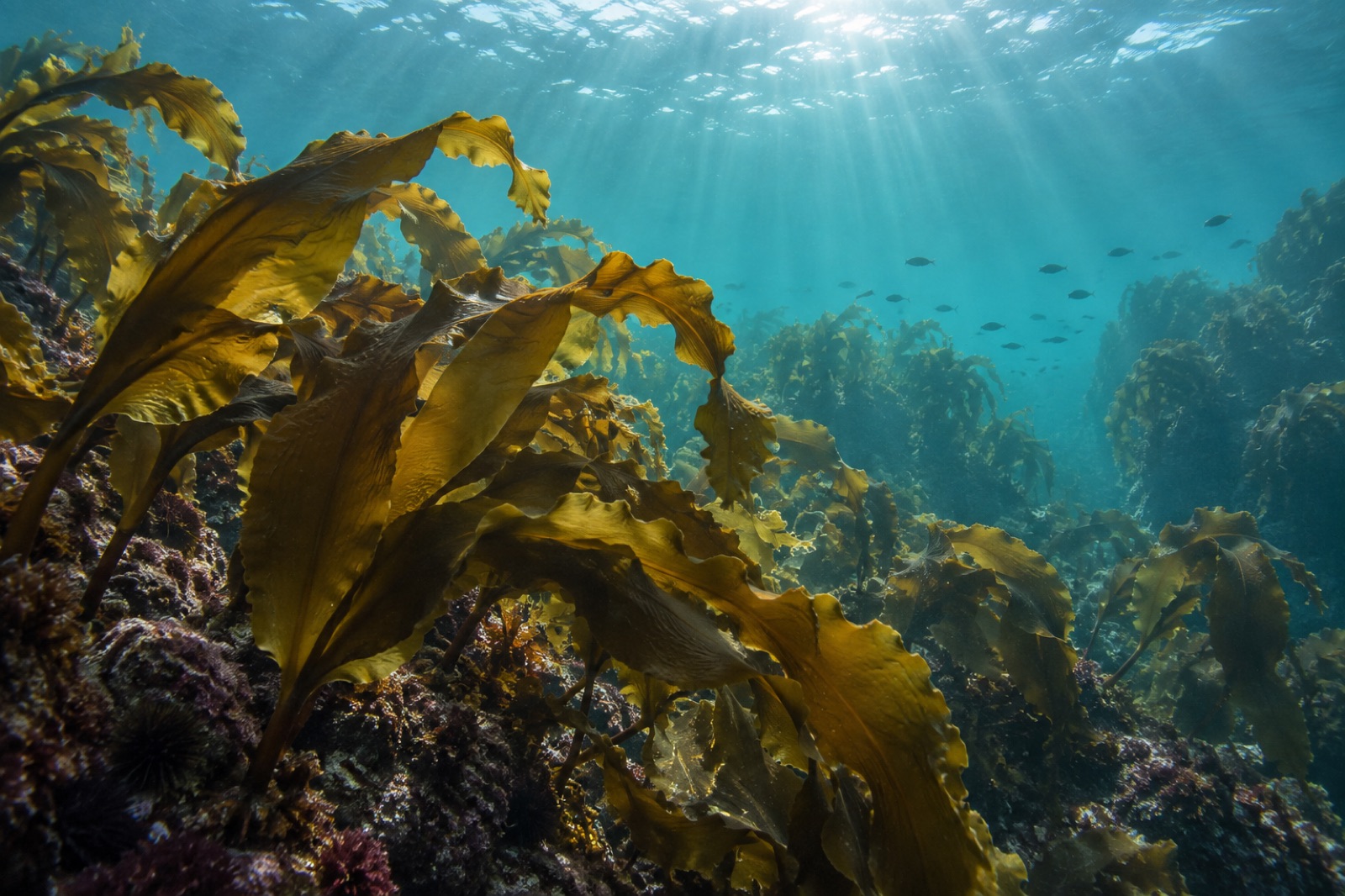
Kombu (Saccharina japonica): Species Profile
Kombu is the kelp behind dashi and the backbone of the world's seaweed farms. Learn its biology, life cycle, Hokkaido roots and future in a warming sea.
Dr. Theo Nakamura ·
Dulse is the red seaweed the North Atlantic has snacked on for a thousand years — protein-rich, bacon-savoury when fried, and stranger in its life cycle than you think.
Dulse (Palmaria palmata) is the seaweed you can eat like crisps. Hand-harvested on North Atlantic shores for at least a millennium — in the laws of early medieval Ireland it was already a listed commodity, and Icelandic saga-era diets leaned on it hard — it remains the most snackable of the edible seaweeds: chewy, mineral, faintly smoky, and genuinely bacon-adjacent when fried in hot oil. Beneath the flavour, dulse is also a fine case study in how much hidden complexity a single frond can carry — including a sex life that took science most of the twentieth century to find.
| Scientific name | Palmaria palmata (Pacific "dulse" is now separated as P. mollis and relatives) |
| Group | Red algae (Rhodophyta), family Palmariaceae |
| Maximum length | Usually 15–40 cm of blade, sometimes longer |
| Lifespan | Perennial fronds; individuals commonly live several years |
| Depth range | Mid-shore down to roughly 20 m subtidally, on rock and as an epiphyte on kelp stipes |
| Temperature preference | Cold-temperate to subarctic water, roughly 0–15 °C |
| Distribution | Both sides of the North Atlantic — from Canada and Greenland to Scandinavia, Ireland, Scotland, Brittany; close relatives in the North Pacific |
Dulse grows as a fan of flat, leathery, deep-red to russet blades, branching by splitting at the tips into finger-like lobes — the Latin palmata refers to the hand-shape of a mature frond. The colour deepens in bright light and goes almost wine-dark in the shade of kelp canopies. Blades feel flexible, never crisp, and carry a faintly waxy sheen when pulled, still dripping, from the water.
Two habitats, two experiences:
Telling dulse from lookalikes is mostly about texture and geography: no other common North Atlantic red has quite the same leathery, hand-shaped frond and kelp-stripe habit.
Dulse has one of the more quietly astonishing life histories in the algae, and until the 1980s nobody could find half of it. The visible fronds come in two kinds: male gametophytes, which release sperm, and tetrasporophytes, which release tetraspores that grow into the sexual generation. But the female gametophyte — the plant that should receive the sperm and carry the fertilised development — was missing from every shore anyone searched.
The answer, established in a classic study in 1980, is that the female dulse is microscopic: a tiny crust of cells living on rock or on kelp stipes, essentially invisible in the field. Fertilisation happens at this scale entirely, with the fertilised female crust then developing into the next blade-bearing generation. In other words, dulse spends the most consequential part of its reproductive life too small to see, then only the survivors of that invisible stage become the fronds we harvest.
It is a red-algal version of the same principle that governs kelp: the stages that matter most for persistence — the seedbanks of the reef — are the ones we cannot see. That is why Tidewright's Holdfast hatcheries and the restoration science behind them focus so heavily on microscopic life stages. Lose the invisible generation, and no amount of frond-gazing will save a bed.
By seaweed standards, dulse is a serious food. Analyses consistently put its protein content in the region of 15–25% of dry weight — exceptional for a seaweed — along with:
As always with wild-harvested coastal food, location matters: clean, clear water and legal harvests are non-negotiable, exactly the standard behind the sourcing guides in our kitchen cluster.
Raw dulse is leathery and intensely marine. Dried, it turns chewy, salty-sweet, and faintly nutty — this is the snack form, and the reason dulse sells in paper packets at health-food shops two thousand kilometres from the sea. The famous trick is this: fry it. Thirty seconds in a hot, lightly oiled pan transforms dulse into crisp, bacon-savoury shards that work in chowders, on eggs, or wherever you would reach for something smoked and salty. It is the closest the plant kingdom gets to bacon without trying.
Traditional uses are equally direct: flaked into bread doughs and oatcakes in Scotland and Ireland, boiled and eaten with butter, or simply chewed from the bag by generations of coastal children. In Brittany, dulse (sometimes under its Breton name) turns up in seaweed butters and tartines. Where kombu is a brewer's kelp and nori is a wrapper, dulse is a standalone ingredient — it carries the dish itself.
Wild dulse harvesting is one of the Atlantic's oldest traditional forages, and its etiquette is worth preserving, because it is biologically sound:
On Canada's Grand Manan Island in the Bay of Fundy, dulse harvesting is still a licensed small-boat livelihood, dried on the beach in the sun as it has been for generations. Done this way, wild dulse harvest is among the most sustainable forages in the sea — and that model of regulated, low-impact hand harvest is the template for what sustainable seaweed gathering can look like worldwide.
Dulse is not an endangered species, but neither is it immune to the pressures reshaping Atlantic coastlines. Warming at the southern edge of its range, competition from fast opportunists like wakame in disturbed habitats, and the industrialisation of some harvests are all live concerns. The species' future looks most secure where harvest stays small, licensed and rooted in the cut-don't-pull tradition — and where the kelp forests it so often grows on remain standing.
"Bacon seaweed" is a nickname for dulse, earned by its ability to turn crisp and smoky when fried. It is not a different species, just the same Palmaria palmata treated the right way in a hot pan.
Cold-temperate to subarctic North Atlantic shores — Atlantic Canada, Greenland, Iceland, Scandinavia, Ireland, Scotland, Brittany and points between — from the mid-shore down to about 20 m, often on kelp stipes. Closely related Palmaria species occupy the North Pacific.
Yes, on a small scale — tank-based and land-based cultivation exist, and research into seeded-line farming is active. It has proved fussier to farm at scale than kelps like kombu, which is most of why wild harvest still provides much of the world's supply.
Airtight, dark and dry, like any dried herb — it keeps its character for many months. Once opened, dulse pulls moisture from the air, so reseal bags promptly and keep it away from the kettle's steam.
Done the traditional way — cut above the holdfast, in season, from licensed beds in clean water — yes, it is among the gentlest harvests in the sea. Industrial trawling of kelp-dulse habitat would be a different matter, and is exactly the sort of practice the hand-harvest tradition protects against.
Kombu is the kelp behind dashi and the backbone of the world's seaweed farms. Learn its biology, life cycle, Hokkaido roots and future in a warming sea.
Dr. Theo Nakamura ·
Nori comes from red algae with a decades-long life-cycle mystery — solved in 1949 by a British phycologist whose discovery built an entire industry.
Dr. Theo Nakamura ·
Wakame is a beloved edible kelp in Japan and Korea — and one of the world's most widespread invasive seaweeds. Understand both sides of Undaria pinnatifida.
Dr. Mara Ellison ·