Kitchen11 min read
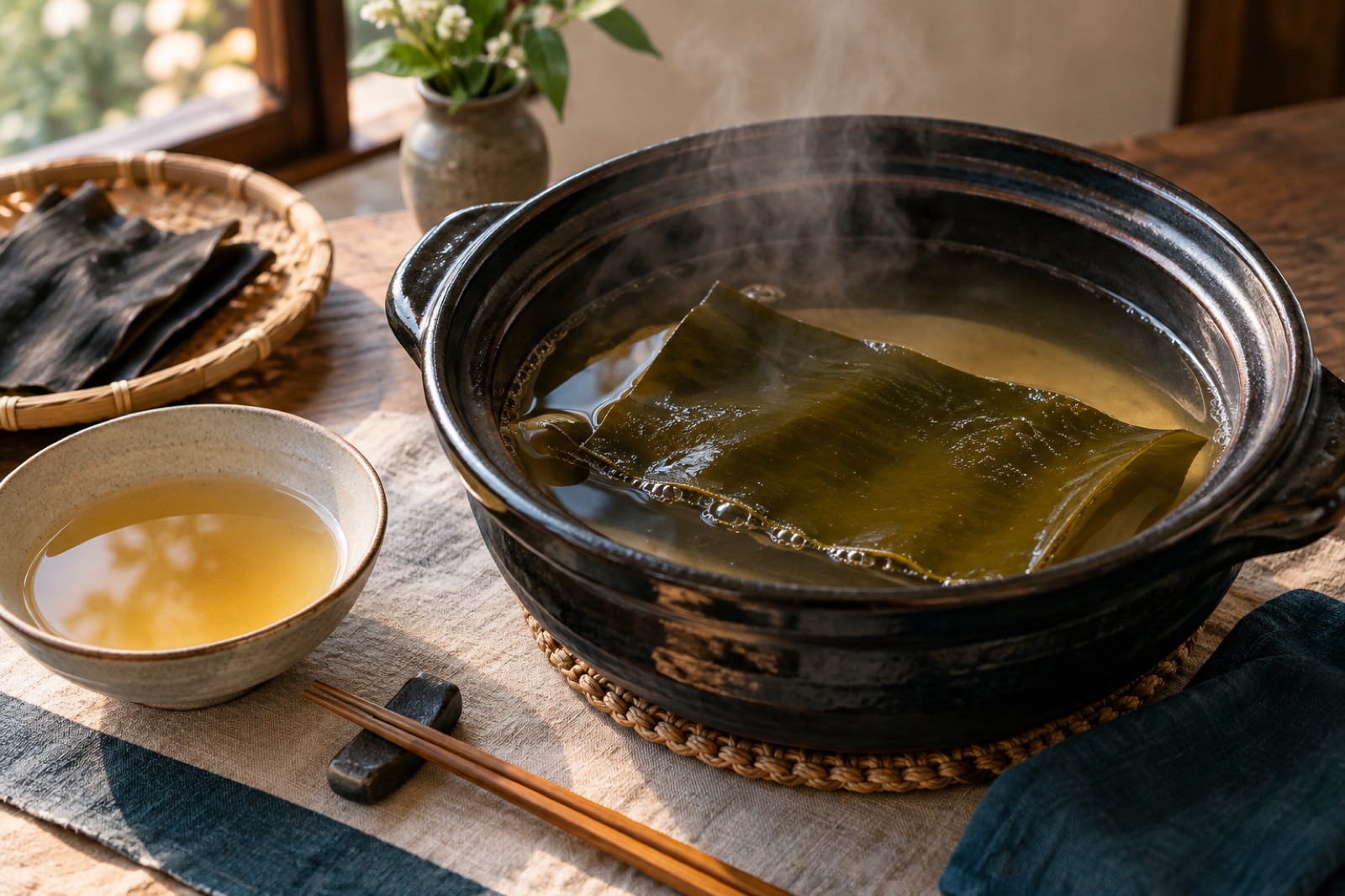
Kombu Dashi Masterclass: The Broth That Built a Cuisine
A deep, technique-first guide to kombu dashi: glutamate science, exact temperatures, ichiban and niban infusions, and how to fix every common mistake.
Sofia Andersson ·
How to make genuinely good miso soup at home: dashi fundamentals, when to add wakame, the one boiling rule, and why the miso goes in off the heat.
Part of a learning path
This article is stop 6 of 9 on Cooking the Forest — Seaweed in your kitchen, from safety nerve to dashi craft.
Miso soup looks like the simplest thing in Japanese cooking — and it is, once you know the three rules that nearly every bad bowl breaks. The first is that miso soup is really dashi soup: the broth underneath matters more than anything you put in it. The second is that wakame goes in at the last moment and barely cooks at all. The third is that miso is never boiled. Follow those, and fifteen minutes gets you a bowl that tastes like the soup you remember from good Japanese restaurants, not the thin, salty version that gives home miso soup a bad name.
For four small bowls (Japanese soup is served in modest portions — it's an accompaniment, not a meal in a bowl):
The tub of miso determines the soup's soul more than any technique:
Buy miso from the refrigerated section, not the shelf-stable packets — live, unpasteurised miso tastes brighter. It keeps for many months refrigerated, so one tub is a long-term kitchen investment.
Dried wakame looks like coarse dark-green paper flakes. Thrown in dry, it rehydrates in the soup but sheds grit and takes seasoning unevenly. The professional habit is a two-minute soak in cold water first — the wakame unfurls into silky green ribbons, any sand drops out, and it wilts into the hot broth in seconds rather than stewing in it.
Texture is the point. Wakame should be silky with a faint, pleasant slip — never chewy, never cooked to khaki. Overboiled wakame loses its vivid colour and its clean ocean taste, one of the reasons we rate it among the most approachable of the edible seaweeds. If you want to know the plant behind the bowl, our wakame species profile covers how Undaria pinnatifida grows — and why it's beloved in some seas and notorious in others.
Bring 1 litre of dashi to a bare simmer over medium heat. If you're adding root vegetables, this is their moment — simmer small cubes of daikon or sweet potato in the dashi until just tender, 8–10 minutes, before continuing. Tofu cubes need only to heat through, so they join later.
While the dashi warms, cover the dried wakame with cold water in a small bowl. It will expand to five or six times its dried volume. Drain, give it a gentle squeeze, and roughly chop any long strands — nobody enjoys pulling a metre of kelp from a lacquer bowl.
When the dashi is steaming-hot but not boiling, kill the heat. Ladle 100 ml of hot dashi into a small bowl, add your miso, and whisk it smooth — a small whisk, two chopsticks, or a miso muddler all work. Pour the slurry back into the pot and stir once.
Why the ceremony? Two reasons. First, dissolving miso in a full pot leaves you chasing lumps with a spoon. Second — and chemically more important — boiling miso drives off the volatile aromatic compounds that give it fragrance, flattening its complexity into plain salt. Hard-boiled miso soup tastes like salt water with regrets. Gentle heat keeps the aroma alive; it's the same respect you'd give fresh herbs.
Add the drained wakame and tofu cubes, stir once, and wait 30 seconds for everything to come back to temperature. Ladle into warm bowls, scatter spring onion over the top, and serve at once. Miso soup waits for no one: it separates as it stands (a brief stir revives it) and its perfume fades by the minute.
Make dashi ahead — it keeps 3–4 days refrigerated — but miso soup itself should be assembled fresh. That said, if life intervenes: refrigerate leftovers for up to a day, reheat to steaming without boiling, and stir to recombine. Dried wakame, meanwhile, keeps for a year or more in an airtight jar away from light; see our guide to storing seaweed for the full shelf-life picture.
Yes — good instant dashi granules or tea-bag-style dashi packs make entirely respectable soup, and most Japanese households use them on busy nights. Dissolve in hot water per the packet, taste, and don your more demanding standards on weekends with homemade kombu dashi.
Yes — the glossy green strands in restaurant seaweed salad are blanched, dressed wakame (usually the stem, kuki wakame). For the salad version of the story, see our wakame salad recipe.
Usually one of three things: weak dashi (use more, or better, broth), miso boiled too long (add a fresh spoonful off the heat at the end), or soup left standing (serve sooner). Flatness is almost always about aroma, not salt.
Miso soup contributes protein, and fermented miso carries compounds of ongoing nutritional interest; wakame adds iodine, minerals and virtually no calories. The main watchpoint is sodium, so enjoy it as a small accompanying bowl rather than a bucket — our seaweed nutrition guide covers the mineral detail, and as with any dietary question, it's worth a conversation with a health professional if you have thyroid or blood-pressure considerations.
Dulse softens pleasantly in hot broth and shredded sea lettuce works in a pinch, but each seaweed changes the soup's character. Wakame is the classic for good reason: silky, mild, and quick. Kombu, by contrast, is for making the dashi itself rather than floating in the finished bowl.
A deep, technique-first guide to kombu dashi: glutamate science, exact temperatures, ichiban and niban infusions, and how to fix every common mistake.
Sofia Andersson ·
Make wakame seaweed salad the proper way: rehydrate, blanch to jade green, dress with sesame and rice vinegar. Recipe, technique and sourcing.
Sofia Andersson ·
A clear-eyed guide to seaweed nutrition: what's actually in kelp, nori and dulse, how iodine varies wildly by species, and how much is safe to eat.
Sofia Andersson ·