Kitchen11 min read
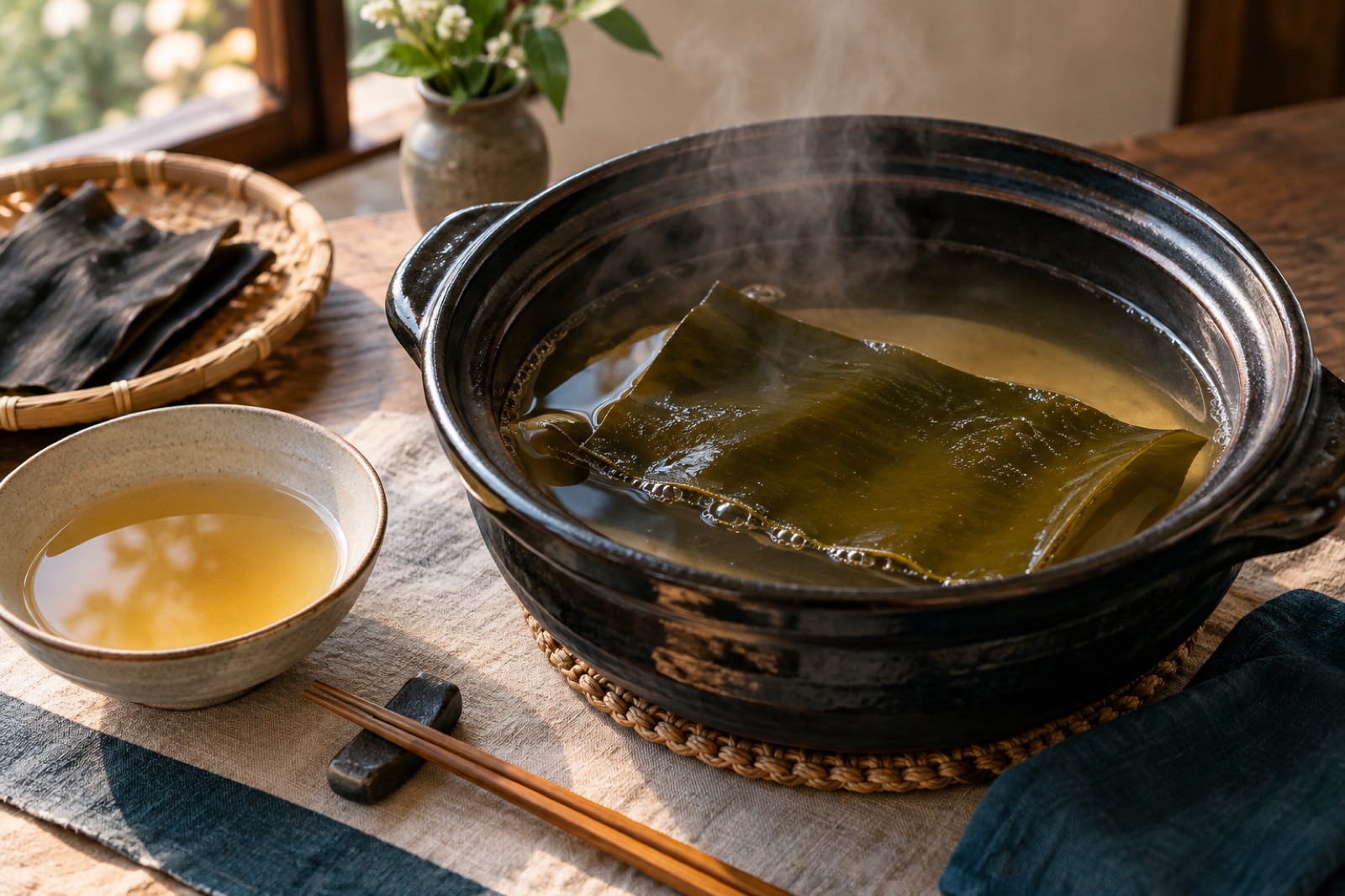
Kombu Dashi Masterclass: The Broth That Built a Cuisine
A deep, technique-first guide to kombu dashi: glutamate science, exact temperatures, ichiban and niban infusions, and how to fix every common mistake.
Sofia Andersson ·
Kombu does quiet chemistry in a slow braise — deeper savour, tenderer meat, cleaner sauce. How to build dashi-based braises, plus three recipe frameworks.
Every good braise is an argument between patience and flavour: time does the tenderness, but time can also flatten taste into a homogenous brown. Western kitchens answer with wine, tomato paste, anchovy. Japanese kitchens have a quieter answer that has been doing this work for centuries: a piece of kombu slipped into the pot.
Braising with kombu does three things at once. It loads the braising liquid with free glutamate — the highest natural concentration of any ingredient — so the sauce tastes deeper at the same salt level. It contributes minerals and a gentle brininess that season from inside the pot rather than from the salt cellar. And there is decent culinary logic, supported by what we know of kombu's enzymes and natural salts, that meat braised alongside it stays tenderer and needs less aggressive reduction at the end. This is why Japanese home cooks braise pork belly (kakuni) and simmer beef-tendon stews in dashi rather than plain water, and why the trick translates beautifully to a French-style daube or a pot of short ribs.
This article explains what kombu actually does in a braise, how to choose and dose it, how to build the braising liquid, and three frameworks that cover beef, pork and chicken. If dashi is new territory, start with our kombu dashi recipe — you will be making a stronger, meat-destined version of the same thing.
Kombu's dried frond carries glutamate in its surface powder — the white dusting first-timers sometimes wipe off and should never wipe off. In a braise, that glutamate dissolves into the liquid and then meets the natural inosinate in meat. Glutamate plus inosinate do not add; they multiply, a synergy our explainer on the science of seaweed umami covers in detail. The practical effect: the sauce tastes dramatically more "meaty" than the same braise made with water or wine alone, and you can hold back salt until the very end, when you can season accurately against a finished sauce rather than guessing at hour one.
Kombu is mildly alkaline in cooking water and carries natural compounds that soften protein surfaces over long, gentle heat — the same reason Japanese cooks have always simmered beans with a kombu square, a tradition we detail in kombu and beans. In a meat braise the effect is subtler — collagen breakdown is still mostly time and temperature — but briskets and shanks cooked with kombu reliably keep a silkier surface texture, and lentils or beans added to the same pot cook noticeably faster than the meat around them. Consider it a gentle assist, not a meat mallet.
Plain-water braises need aggressive salting early (which can firm meat surfaces) or risky salting late. Kombu's natural mineral salts season passively through the whole cook. And because kombu's flavour body is savour rather than acid or tannin, the sauce finishes round and glossy without the rawness a young wine can leave behind after long simmering.
Any culinary kombu works; thicker, wider fronds (sold as ma-kombu or "dashi kombu") give the deepest bass note, while thinner naga-kombu infuses faster. What matters more is dose and timing.
Think of the kombu braise as a dashi-based stock that happens to cook meat, rather than the reverse. The architecture:
Aromatics that love kombu: ginger, garlic, spring-onion whites, dried shiitake (the classic dashi duet — the classic dashi duet, whose chemistry our vegetarian dashi guide explains), star anise in small quantities, and charred onion. What to skip or go light on: raw tomato in quantity (its acidity fights dashi's roundness early on; add late if wanted) and heavy smoked elements, which can read as muddled against kombu's clean savour.
Brown 1.2 kg of bone-in short ribs. Combine 1 litre kombu-steeped liquid, 120 ml sake, 3 tablespoons soy sauce, 1 tablespoon mirin, a thumb of ginger, two spring-onion whites. Braise covered at 150°C for three hours. Rest overnight. Defat, reheat, and reduce the sauce to a lacquer. Serve with rice and the sliced spent kombu as a side vegetable. The result sits between kakuni and a French daube, and it is what I cook for people who believe seaweed belongs only in soup.
Brown a 1.5 kg pork shoulder. Liquid: 1 litre kombu liquid, 150 ml sake, 6 rehydrated dried shiitake with their strained soaking liquor, 2 tablespoons soy, a strip of orange peel. Braise 3.5–4 hours until spoon-tender. Pull the pork to rest; strain and reduce the sauce by a third. The shiitake–kombu double extraction makes the sauce almost beefy; serve over buttered noodles or soft polenta — fusion, but the sauce logic is pure Japanese tavern cooking.
The lightest of the three and the fastest: brown 8 bone-in chicken thighs; add 750 ml kombu liquid, 100 ml sake, 2 tablespoons soy, thick rounds of daikon radish, ginger. Simmer gently 50–60 minutes. The daikon drinks the broth and becomes the best thing in the pot — this is the homey nimono logic applied to a one-pot dinner. Finish with spring onion and a few drops of toasted sesame oil. No reduction needed; the broth is the point.
Braising uses kombu generously, so quality matters: look for thick, wide, dark-green fronds with their natural white surface bloom intact, from cold-water origins (Hokkaido is the benchmark, with excellent kombu also from Korea and the North Atlantic). Our guide to buying seaweed sustainably covers grading and labels. Farmed kelp from restoration-linked operations — including Tidewright Harvest sites, where farm revenue funds kelp-forest regrowth — is where this ingredient is heading, and braising is its best showcase: a long, slow pot that tastes deeper, costs less salt, and quietly does the ocean a favour.
Yes — dropping it in with the liquid at the start works well, provided the pot comes up gently. You lose a little extraction depth compared with a pre-steep, but at braise length (two to four hours) the difference is modest. Pre-soaking matters more for fast dashi than for long braises.
For a clear sipping dashi you remove kombu before the boil. For a braise, keeping it in at a gentle simmer is fine and deepens extraction; the texture rule against boiling still applies. Most cooks pull it at the halfway point simply so it does not disintegrate into the sauce.
It replaces wine's job — depth and complexity — better than it replaces wine's flavour. Kombu gives savour and mineral roundness but none of wine's acid brightness. Many of the best kombu braises use both: a modest measure of sake or white wine for lift, kombu for the bass note.
A frond that has braised for three hours is spent as a broth ingredient, but not as food: slice it and simmer with soy, mirin and sesame for tsukudani (see the approach in our kombu tsukudani guide), where the already-extracted frond is exactly the right starting texture.
The frond transfers only part of its iodine to the liquid, and you use one small piece across a four-serving pot. Per-serving iodine from a kombu braise is modest and comparable to a bowl of miso soup made with dashi. Our iodine-and-seaweed guide has the figures; those with thyroid conditions should follow their clinician's advice.
A deep, technique-first guide to kombu dashi: glutamate science, exact temperatures, ichiban and niban infusions, and how to fix every common mistake.
Sofia Andersson ·
Why a strip of kombu softens stubborn bean skins, speeds cooking and rescues old legumes — the chemistry of tenderising, tested against plain water and soda.
Sofia Andersson ·
Kombu led chemists to discover umami in 1908. How glutamate, ribonucleotides and salt work together — and how to use seaweed umami in everyday cooking.
Sofia Andersson ·