Kitchen11 min read
Kombu Dashi Masterclass: The Broth That Built a Cuisine
A deep, technique-first guide to kombu dashi: glutamate science, exact temperatures, ichiban and niban infusions, and how to fix every common mistake.
Sofia Andersson ·
Tsukudani turns the kombu left in your dashi pot into a glossy, sweet-savoury relish for rice. Recipes, ratios, storage and why nothing leaves the kitchen.
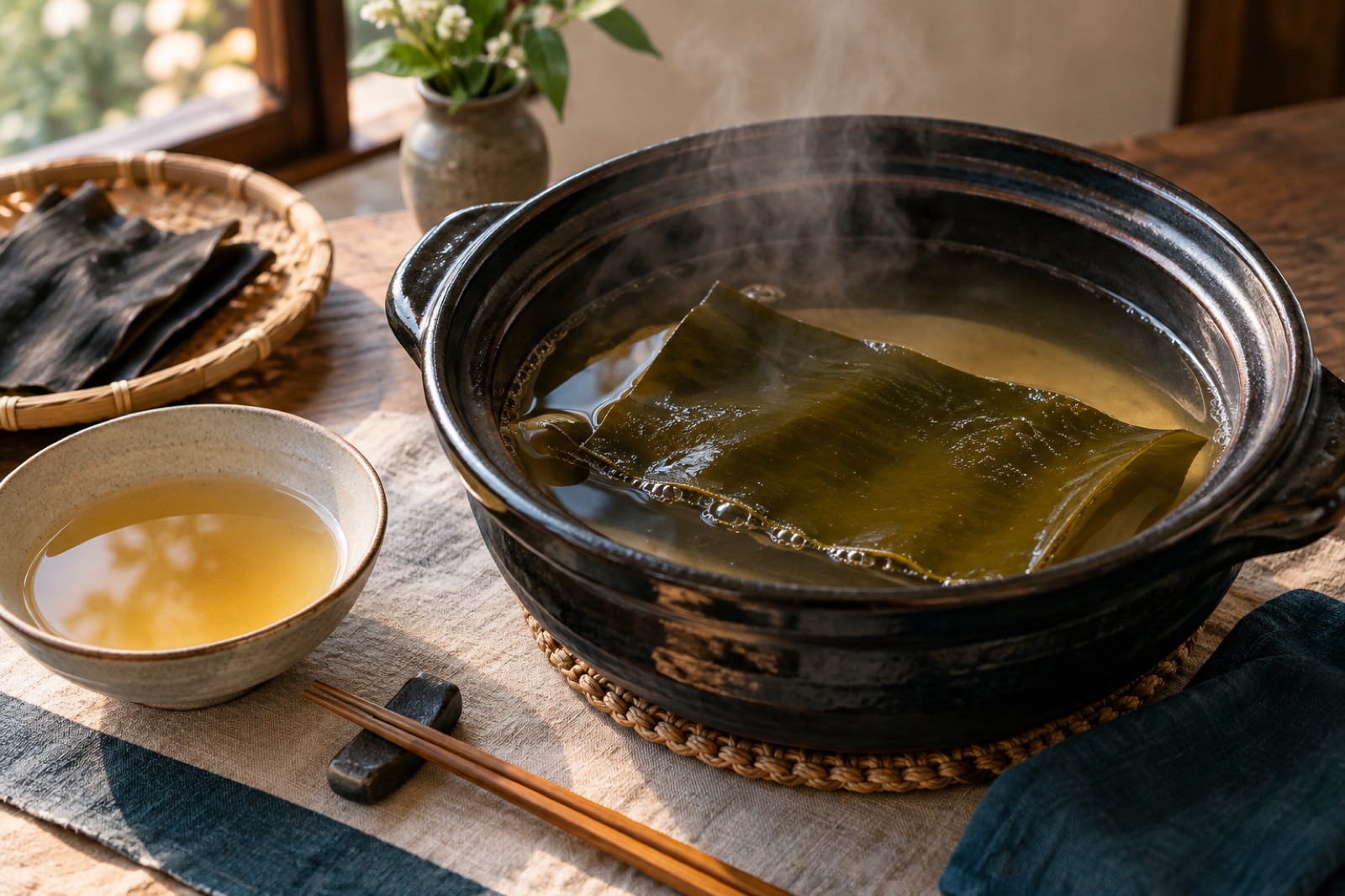
The dashi pot leaves behind a gift. When you lift the kombu out of a finished stock — the usual advice in our kombu dashi masterclass is to remove the sheet just before the water simmers — what you hold is a soft, olive-green piece of kelp that has given up perhaps a quarter of what it has to offer. Most Western kitchens compost it. Japanese kitchens simmer it once more, in soy, mirin and sugar, until it turns dark and glossy and intensely savoury: tsukudani, the great thrift preserve of the seaweed pantry.
Tsukudani is salt-sweet, deeply umami, and keeps for weeks in the fridge. A single batch made from dashi scraps will season a fortnight of rice bowls. If you cook Japanese food even occasionally, this is the recipe that makes the whole system click: nothing thrown away, everything carrying forward into the next meal.
The word covers a family of small preserved foods — tiny fish, shellfish, seaweed, meat or vegetables — simmered down in soy sauce, mirin and sugar until nearly dry. The technique is old and practical: on the island of Tsukudajima, in Edo-period Tokyo, fishermen preserved their small catch this way for storage and for sailors' provisions. Concentration was preservation; the soy-sugar syrup was a shelf before there were fridges.
Kombu tsukudani is the most common home version today, precisely because dashi-making is so common. Fresh kombu works, and we'll cover it, but the spent leaf is the classic starting material. Simmering it a second time isn't a downgrade — dashi extraction is deliberately gentle, and the kombu's glutamates, minerals and body largely remain in the blade. The second simmer trades the leaf's quiet oceanic depth for a louder, syrup-glazed richness.
Three reasons, in descending order of importance to a cook.
Flavour concentration. Dashi extraction is a negotiation: you pull the free glutamates and minerals off the kombu's surface without cooking out the bitter, slimy compounds that appear at a boil. What's left in the leaf still carries glutamate — plus the texture of the blade itself, which after a long, sweet simmer turns from leathery to supple, almost candied.
Texture. Proper tsukudani has bite. Thin slivers of kombu in a soy glaze eat like a relish: chewy, glossy, clinging to grains of rice. That texture doesn't exist anywhere else in the Western condiment shelf.
Principle. A sheet of good kombu (Saccharina japonica) took a year or more to grow in cold water before it was harvested, cured and shipped. Using it twice is the least a respectful kitchen can do — something our sustainable seaweed buying guide argues is part of the purchase.
This makes a small jar — roughly 150 ml — from one sheet's worth of scraps. Double freely; it scales without drama.
Ingredients
Method
The calibration test: a good tsukudani reads sweet first, then salty, then a long umami tail. If it's bluntly salty, your soy was heavy or the reduction went too far; next batch, cut the soy by a third. If it's cloying, more vinegar or a pinch of grated ginger fixes it.
The most traditional finish. Fold in ½ tsp ground sansho pepper (or a dozen whole dried sansho berries, simmered along) at the end. Sansho's citrus-tingle against the sweet soy is one of Japanese cooking's great small pleasures, and it's the version most often packed into bento.
Add a thumb of ginger, cut into matchsticks, at the start of the simmer. The ginger cooks tender along with the kombu and becomes part of the relish. Excellent with grilled fish and with the mixed rice in our takikomi gohan recipe.
If you make vegan dashi with kombu and dried shiitake, both scraps go into the pot together. Slice the rehydrated shiitake thin, add an extra splash of water, and simmer as above. Deeper, darker, almost meaty — the version to serve sceptics.
The classic shop version adds chirimen jako — tiny dried sardines — toasted separately and folded in at the end. It pushes the relish from rice topping to something closer to a meal element: protein, crunch, salt, sweet.
The default is a spoonful over hot steamed rice, where the glaze melts down into the grains. From there:
Tsukudani is a preserve, not a pickle: the sugar-and-soy reduction buys it weeks in the refrigerator, not months at room temperature. Keep it in a clean, sealed jar; use a clean spoon every time (crumbs and rice grains shorten shelf life); and watch the surface moisture, which should stay minimal. If any liquid pools at the bottom after a week, tip the jar back into a pan, re-reduce for a minute, and it will reset. Mould or sourness means discard — rare if you keep it cold and dry.
One nutrition note, from our longer piece on seaweed and minerals: tsukudani concentrates whatever the leaf carried, including iodine, and simmering in soy sauce makes it salty by design. It's a condiment — a spoonful at a time — and that's exactly how it earns its keep.
Yes. Soak 10 g of dried kombu in water until fully supple — about 30 minutes — then proceed exactly as above, adding a splash more water since the leaf hasn't been pre-cooked. Some cooks prefer fresh kombu for a firmer, meatier bite; spent kombu is softer and milder. Both are correct; the scrap version simply costs nothing.
Two usual causes: the simmer ran dry before the leaf tenderised, or the heat was too high — a hard boil tightens kombu rather than relaxing it. Rescue tough tsukudani by returning it to the pan with a few tablespoons of water and simmering gently for another ten minutes. Cut your next batch thinner; blade thickness varies a lot between brands.
Wakame stems (kuki wakame) make an excellent, crunchier tsukudani with the same recipe. Nori becomes nori no tsukudani, a dark, soft paste simmered from sheet scraps — a different technique and a different product, but a beloved one. Thick kelps like kombu and wakame stems hold up best; delicate sea lettuces dissolve.
Kombu tsukudani itself is fully plant-based — kombu, soy, mirin, sugar. Watch the variations: versions with chirimen jako (dried sardines) or bonito are common commercially, so check labels if you're buying rather than making.
Three to four weeks refrigerated in a clean jar is the safe, honest answer; the commercial jars last longer because they're made drier and packed hot. When in doubt, re-reduce: a minute back in a hot pan drives off moisture and resets the clock by several days.
A deep, technique-first guide to kombu dashi: glutamate science, exact temperatures, ichiban and niban infusions, and how to fix every common mistake.
Sofia Andersson ·
Furikake turns plain rice into a meal in one shake. Make your own seaweed furikake from nori, kombu or wakame — with recipes, ratios and storage tips.
Sofia Andersson ·
Takikomi gohan is Japan's seasoned rice — dashi-soaked grains cooked with vegetables, mushrooms and seaweed. Recipes, seasonal variations and rice cooker tips.
Sofia Andersson ·