Kitchen11 min read
Kombu Dashi Masterclass: The Broth That Built a Cuisine
A deep, technique-first guide to kombu dashi: glutamate science, exact temperatures, ichiban and niban infusions, and how to fix every common mistake.
Sofia Andersson ·
Two fridge staples do the heavy lifting in a seaweed kitchen: kombu dashi dressings and shio koji marinades. Ratios, recipes, variations and fridge life.
Every seaweed kitchen runs on sauces. Not elaborate ones — workhorses. A jar of something salty-savoury-bright that turns steamed greens into dinner, grilled fish into a memory, plain rice into a meal. The two I reach for most are both built on Japanese foundations: a kombu dashi dressing, where kelp stock carries the umami, and a shio koji marinade, where a spoonful of fermented rice paste does weeks of flavour-building in an afternoon. Make them once and your fridge becomes a different place.
This guide gives you the master recipes, the ratios behind them so you can improvise, three variations each, and honest notes on how long they keep.
They solve different problems, which is why they sit side by side in my fridge door.
The kombu dressing is fast and light. It leans on the glutamates of a good dashi — the same stock from our kombu dashi masterclass — sharpened with rice vinegar and rounded with a little oil or sesame. It dresses salads, cold noodles, blanched vegetables and anything that needs brightness more than richness. It behaves like a vinaigrette with the bottom turned up.
Shio koji is the opposite: slow-built, alive, transformative. It's a porridge of rice inoculated with Aspergillus oryzae — the same mould behind miso, sake and soy sauce — fermented with salt and water until the grains soften and the whole thing smells of sweet chestnuts. The koji's enzymes break protein and starch into amino acids and sugars, which is why fish left in shio koji overnight tastes seasoned all the way through, and why vegetables pickled in it turn savoury-sweet. Used as a dressing base, it brings body, salt and a gentle sweetness that no vinegar alone can match.
One is a vinaigrette with depth; the other is a marinade with manners. Between them they cover most of what a weeknight kitchen asks of a sauce.
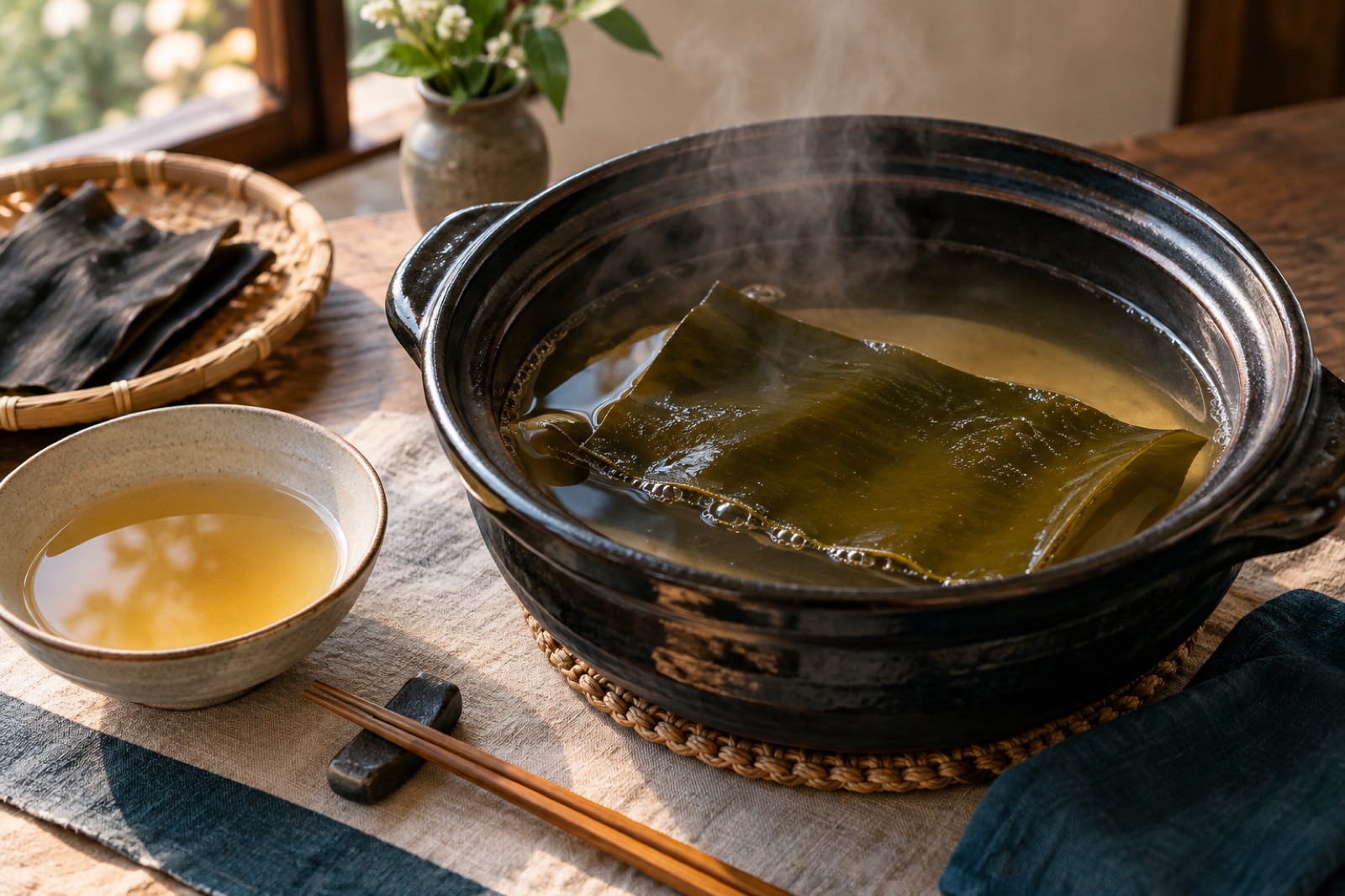
You don't need an elaborate ichiban dashi here. The dressing wants a clean, moderately strong kombu stock: 10 g kombu to 1 litre of cold water, steeped overnight in the fridge or warmed gently to 60°C for an hour and strained. If you keep a kombu jar going for cooking anyway — many readers tell us they do, after setting up the pantry from our seaweed pantry starter kit — this is its second job. The stock keeps four days refrigerated, so make the dressing within a day or two of brewing.
Why not just use soy sauce as the umami base? You can, and the variation below does. But dashi-built dressing is lighter, its kelp character legible rather than buried under soy's fermented darkness.
Buying is legitimate: good Japanese grocers stock it in the refrigerated section, a creamy white paste in tubs or pouches. Check the label — you want rice koji, salt, water, and nothing else.
Making it is a five-minute job with a ten-day wait:
That's the whole technique. The koji does the work; your job is a daily stir and honest patience.
Makes about 250 ml — a week's worth for a two-person kitchen.
Ingredients
Method
The ratio to remember: 5 parts dashi : 1.5 parts vinegar : 1 part oil, plus a small fistful of seasoning. Scale it down for a single salad (3 tbsp dashi, 2 tsp vinegar, 1 tsp oil, pinches of the rest) or up to bottle volume.
Three variations:
Shio koji is roughly 13–15% salt by weight and works by contact and time. Two uses, one jar.
The rule of thumb: 10% of the ingredient's weight in shio koji. A 200 g fish fillet gets 20 g — about a heaped tablespoon, smeared over all surfaces. Timing depends on the protein:
Raw shio koji has a slightly raw, grainy character. Two fixes: blend it smooth, or temper it with acid and oil.
Shio koji dressing base: blend 3 tbsp shio koji with 2 tbsp rice vinegar, 1 tbsp water, 1 tbsp neutral oil and a little black pepper until creamy. It tastes like a lighter miso dressing with a sweeter, more fragrant nose. It holds on bitter leaves — endive, radicchio, young mustard greens — better than anything else I make.
Variations:
One caution that applies to everything here: kelp stocks and dressings carry iodine along with their flavour, and our seaweed nutrition guide covers how to think about total intake. Dressings are used by the tablespoon, so they're a modest contributor — but if you eat seaweed at every meal, variety across species is the sensible habit.
You can, and honestly most home Japanese kitchens sometimes do. Choose a kombu-based powder rather than bonito-based if you want the kelp character and a vegetarian dressing, and dissolve it slightly stronger than packet directions — dressing dilutes perception of flavour once it hits leaves and oil. Fresh-brewed dashi is more fragrant and lets you control salt; powder is faster. The sauce will still beat any bottled dressing.
Almost certainly not. Liquid separation — a clear layer over the grains — is normal, especially in the first days and after long fridge rest. Stir it back in. Failures announce themselves by smell (sour, alcoholic in a bad way, cheesy) or by surface discolouration, not by innocent separation.
It is salty — salt is part of its preservation system — but it seasons more efficiently than table salt because umami compounds make saltiness taste bigger. In practice, food seasoned with shio koji typically ends up with less total sodium than the same dish aggressively salted at the table, and you should treat it as the dish's entire seasoning: never salt on top of a shio koji marinade.
Yes, with one check. Kombu dashi and shio koji are both fully plant-based. The only animal product lurking anywhere in this guide is the optional buttermilk variation and any fish examples — the sauces themselves are vegan. If you buy shio koji, scan the label once: some commercial versions add bonito extract.
Cucumber. Slice half a cucumber, toss with a flat teaspoon of shio koji, wait 30 minutes, eat. The cucumber will be sweeter, more savoury and somehow more itself than salt alone could make it. That's the enzymes at work, and it's the whole argument for keeping a jar.
A deep, technique-first guide to kombu dashi: glutamate science, exact temperatures, ichiban and niban infusions, and how to fix every common mistake.
Sofia Andersson ·
Kombu is the original umami. How glutamate works on the tongue, why temperature decides your dashi's flavour, and how to season with the sea.
Sofia Andersson ·
Make wakame seaweed salad the proper way: rehydrate, blanch to jade green, dress with sesame and rice vinegar. Recipe, technique and sourcing.
Sofia Andersson ·