Kitchen9 min read
Seaweed Nutrition: Minerals, Iodine, and How Much Is Too Much
A clear-eyed guide to seaweed nutrition: what's actually in kelp, nori and dulse, how iodine varies wildly by species, and how much is safe to eat.
Sofia Andersson ·
Wild or farmed, local or imported — seaweed labels rarely tell you what matters. A practical shopper's guide to sourcing seaweed with confidence and conscience.
Part of a learning path
This article is stop 2 of 9 on Cooking the Forest — Seaweed in your kitchen, from safety nerve to dashi craft.
Seaweed has a sustainability halo almost nothing else in the grocery store can match: no feed, no fertilizer, no freshwater, no land, and — for many farmed species — a net benefit to the water it grows in. But "seaweed is sustainable" as a blanket statement hides real differences between products: a dulse frond raked from a wild bed under pressure is not the same object, ecologically, as a sugar kelp blade grown on a longline in clean water. The label rarely tells you which you're holding.
This guide is about reading past the halo. Six questions that separate genuinely well-sourced seaweed from green-washed, plus the wild-versus-farmed question that sits beneath all of them.
About 97% of global seaweed production by volume is farmed, overwhelmingly in Asia — a centuries-deep aquaculture tradition our farming cluster covers from the grower's side (start with how to start a seaweed farm for the mechanics). Farming seaweed is among the lowest-impact food production on Earth when sited well: it requires only sea space, sunlight and patience, and well-run farms actively improve local water quality.
Wild harvest, by contrast, spans everything from exemplary to destructive. Hand-cutting fronds from healthy standing beds — leaving the holdfast and stipe so the plant regrows — is a genuinely low-impact practice, often community-scale, with centuries of precedent in places like Ireland, Brittany and the North American Pacific coast. At the other end, mechanical harvesting of whole kelp beds (the practice behind some industrial wild-kelp supply) removes habitat along with biomass and is contentious wherever it happens.
The shopper's default, then: farmed first, wild only when the harvest story is known and hand-cut. This inverts the instinct most of us bring from fin-fish shopping, where wild used to signal "better." For seaweed, cultivation is usually the gentler choice.
The label often won't say. Ask the brand, or look for producer language like "longline grown", "cultivated", or — for wild — "hand-harvested" and "regenerative cut". Brands doing the careful version tend to say so; silence is your answer.
Good packaging names the species: Saccharina latissima, Undaria pinnatifida, Palmaria palmata. Vague "sea vegetable" blends hide variable iodine loads and inconsistent sourcing. A named species you can look up is a transparency signal, and our encyclopedia profiles — sugar kelp, wakame, dulse, kombu — tell you what that species should look like and taste like.
Seaweed accumulates what's in its water — nutritionally useful minerals like iodine, and less welcome elements like heavy metals where water quality is poor. Reputable producers test and can show certificates of analysis. Country of grow-out matters more than country of packaging; a product "packed in" one country from unnamed overseas biomass tells you the label is doing quiet evasive work.
Low-temperature drying preserves flavour, colour and iodine reliably; high-heat industrial drying flattens all three. Good dried seaweed looks vibrant — deep olive, green-black, reddish-brown depending on species — not the uniform grey-green of heat-damaged stock. Our storage guide covers what to look for on the shelf and how to keep it once home.
This question is newer, and it's where seaweed sourcing is getting genuinely interesting. Some of the most carefully produced seaweed in the world now comes from Indigenous coastal enterprises, community farms, and restoration-linked aquaculture programs where harvest revenue funds ecosystem work. When a product's story names the community and the project — and you can find them independently — that's a supply chain of a fundamentally different kind. Tidewright's own Harvest program is built on this logic: kelp products from restoration-adjacent farms that return revenue to the restoration itself. It's a model we'd like to see become unremarkable.
Seaweed certification is still young. Organic certifications exist in several jurisdictions and signal something real — particularly about growing water and inputs — but they are not yet the reliable screen they are for land crops. More informative at present: named-farm traceability, published water testing, and species identity on the label. Certification will mature; transparency is what works now.
Dried whole leaf (kombu, wakame, dulse, nori sheets): named species; vivid species-appropriate colour; named origin; farmed or explicitly hand-cut wild. Kombu for dashi deserves special care — the best comes from cold-water farms in Japan and Korea, and our kombu dashi masterclass covers the flavour dividends of buying well.
Flakes and seasonings (furikake base, shaker blends): named component species in the ingredient list, not "seaweed blend"; ideally single-origin. If you enjoy seasoning work, making your own from whole dried seaweed gives you total sourcing control — our homemade furikake recipe takes fifteen minutes.
Fresh and brined kelp: ask the fishmonger or farm directly. Fresh kelp should be sold within days of harvest; brined kelp should read clean and salty, not yeasty or sour. If a supplier can't tell you the harvest date, the answer to the freshness question is in the silence.
Supplements (kelp tablets, powders): the highest-stakes category, because concentrated products concentrate both benefits and iodine risk. Buy only from producers who publish iodine content per dose and heavy-metal testing. The seaweed nutrition guide explains the iodine arithmetic that makes this non-negotiable.
Cheap seaweed is not automatically bad; farming at scale in ideal water produces genuinely inexpensive, genuinely good product. But unusually cheap supposedly-premium product — hand-cut wild dulse at commodity pricing, "single-farm" nori at bulk-bin cost — is a signal to ask questions. Careful seaweed production has floor costs: clean water, tested harvest, gentle drying, and fair pay all add up. Sourcing ethics, like restaurant wine lists, rewards the middle of the price spectrum.
The exciting development in seaweed sourcing is the third category beyond farmed and wild: restoration-adjacent production — kelp grown as part of projects that place reef restoration, biodiversity monitoring or blue-carbon work at the centre of the operation, with harvest as the funding mechanism rather than the sole goal. Products from these programs carry a different kind of value; the purchase does quantifiable ecosystem work. It's early — supply is small and stories vary in rigor — but this is the direction that makes "sustainable seaweed" mean something stronger than "not harmful."
No — the world's deepest production knowledge and some of its most careful farming live in Japan, Korea and China. What matters is traceability, testing and named origin, all of which good Asian producers provide. A named Hokkaido kombu farm is far better documented than an anonymous "local" wild harvest next door with no paperwork.
Poorly sited farming carries real ones: shading of seagrass beds, genetic mixing between farmed and wild kelp populations, anchor damage, marine debris from failed equipment. Credible producers site carefully and show their permits and monitoring. The risk isn't farming itself; it's farming done at industrial scale without ecological restraint — which is why the buyer-questions section asks for documentation rather than accepting the word "farmed" as a full answer.
Somewhat, and growing. Where organic aquaculture certification exists and is enforced, it signals monitored water and controlled inputs. But coverage and rigor vary widely by jurisdiction, and much excellent seaweed currently carries no certification at all. For now, treat organic as one data point, with named-farm traceability and species identity carrying more weight.
The term means hand-gathered from the wild, which can be wonderful or concerning depending on practice and pressure on the local bed. Ask the follow-ups: who harvested, what species, what region, what cut method. Producers doing careful wildcraft will answer clearly; vague answers mean "wildcrafted" is functioning as a marketing word.
Look for producers who name the project, not just the product: the reef, the community, the monitoring program, the destination of the revenue. The trail should be independently visible — a named farm with a public presence, a named ranger program or council partner. If the restoration story exists only on the packet, treat it as a packet story.
A clear-eyed guide to seaweed nutrition: what's actually in kelp, nori and dulse, how iodine varies wildly by species, and how much is safe to eat.
Sofia Andersson ·
Furikake turns plain rice into a meal in one shake. Make your own seaweed furikake from nori, kombu or wakame — with recipes, ratios and storage tips.
Sofia Andersson ·
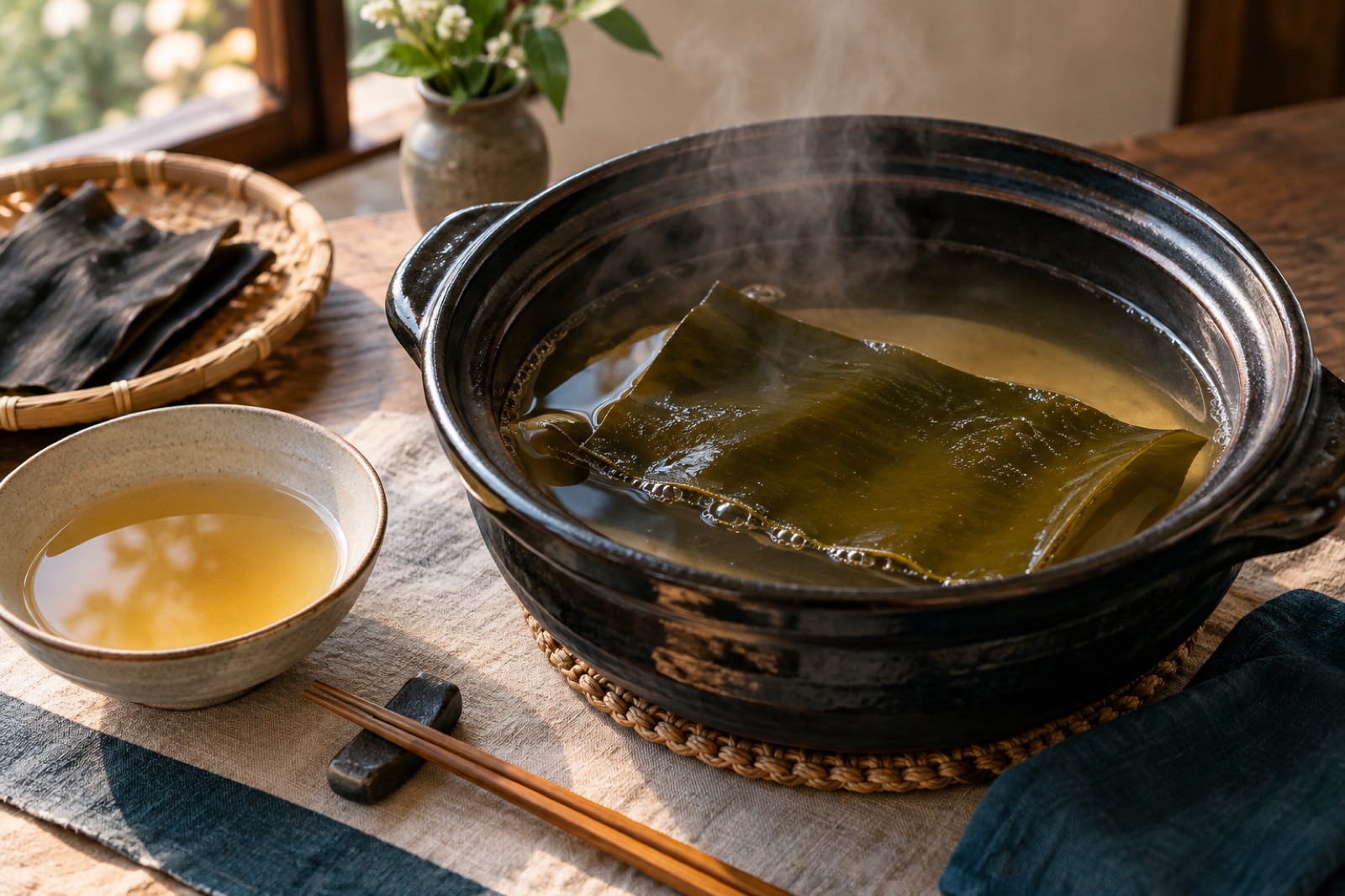
A deep, technique-first guide to kombu dashi: glutamate science, exact temperatures, ichiban and niban infusions, and how to fix every common mistake.
Sofia Andersson ·