Kitchen7 min read
Preparing Fresh Kelp: From Slippery Blade to Dinner-Ready
Fresh kelp is easier than it looks. How to clean, blanch, cut and store fresh kelp — plus the trick that turns it emerald green and tender.
Sofia Andersson ·
Fresh bull kelp is one of the great undervalued ingredients of cold-water coasts. How to prep stipe and blade, and the techniques that make them shine.
Most people meet bull kelp in a pickle jar. That's a shame, because Nereocystis luetkeana fresh from cold water is a genuinely versatile cook's ingredient — crisp-tender stipe, silky blade, a mild saline depth that sits somewhere between cucumber and green bean. This guide covers how to get it, how to prep it, and how to actually cook it beyond the brine. If you're starting entirely fresh with kelp, the universal prep rules in preparing fresh kelp apply here too.
Bull kelp is an annual, reaching full length in summer on Pacific coasts from California to Alaska. Fresh supply comes from three sources:
What to avoid: anything from polluted urban shores, anything with slime film, and any pressure on live kelp beds. Fresh bull kelp should smell briny-clean, feel firm and snap rather than tear.
A fresh bull kelp plant gives a cook three textures:
Keep parts separate when prepping; their cooking times differ by minutes, and the cook who treats a bull kelp like a single vegetable gets an uneven dish.
Fresh bull kelp wants a working protocol more than a recipe:
Prepared this way, bull kelp keeps a day or two refrigerated, submerged in cold water or wrapped damp. For longer storage, see storing seaweed.
Blanched blade ribbons with rice vinegar, sesame oil and a whisper of ginger is as good as kelp salads get. Stipe rounds, pickled ten minutes in vinegar-ish water rather than days in brine, make a cleaner quick pickle than the preserved kind — though if you want the longer preservation method, stipe rounds are the canonical cut.
The blanch-shock, then a light sauce: ponzu-and-citrus, miso-sesame, or a kelp proper vinaigrette. Texture matters here: the blade holds dressing in its folds but refuses to go slimy, unlike more deliquescent seaweeds.
Stipe strips take high heat brilliantly. Garlic and chilli first, then the stipe, two minutes of tossing, a splash of soy or fish sauce at the end. The pieces stay snapping-crisp, the way water chestnut does — the secret ingredient for people who think they've never liked seaweed.
Cut blanched blade into long fine strips, re-blanch briefly in broth, and serve as noodle-style — colder, crunchier than commercial kelp noodles, and tasting of the sea instead of the factory. A restorative hot bowl or a cold sesame-dressed tangle both work.
Thickened stipe rounds, or blade folded into small squares, roast at high heat into chips or savoury garnish. Spritzed with oil and salted, ten to twelve minutes at 220°C, they crisp at the edges and concentrate in the middle — a finish for fish, grain bowls or eggs.
Monday's blade salad with the Sunday roast. Tuesday's stipe rounds in the lunch bowl. Wednesday's quick-pickled stipe with oysters. Thursday's blade noodles in miso soup. Friday's-roast stipe chips on the side of grilled fish. Once a fresh bull kelp is prepped at the weekend, it keeps distributing itself through meals with remarkably little ceremony — which is, after all, what great coastal ingredients do.
Yes. Bull kelp is a traditional food along its entire range and is considered safe from clean, unpolluted sites. Harvest only from licensed or permitted locations, and use the same common sense that applies to any wild foraged food.
Yes, it's edible but fibrous and chewy in mature plants. Young bulbs are tender enough for quick pickles; older bulbs earn their keep simmered for stock, then strained out.
Prepped and refrigerated submerged in cold water, two to three days. For longer keeping, blanch then freeze in bags, or dry and grind for seasoning.
Both. Farmed supply is consistent in size and availability; fresh wild harvest within a legal season has the freshest flavour of all. In either case, choose firm, clean-smelling fronds and skip any with slime or bleached patches.
Broadly yes — the mineral profile, alginate-rich fibre and moderate iodine of a classic brown kelp. Nutrient specifics differ season to season; for nutritional planning use the general rules in seaweed nutrition.
Fresh kelp is easier than it looks. How to clean, blanch, cut and store fresh kelp — plus the trick that turns it emerald green and tender.
Sofia Andersson ·
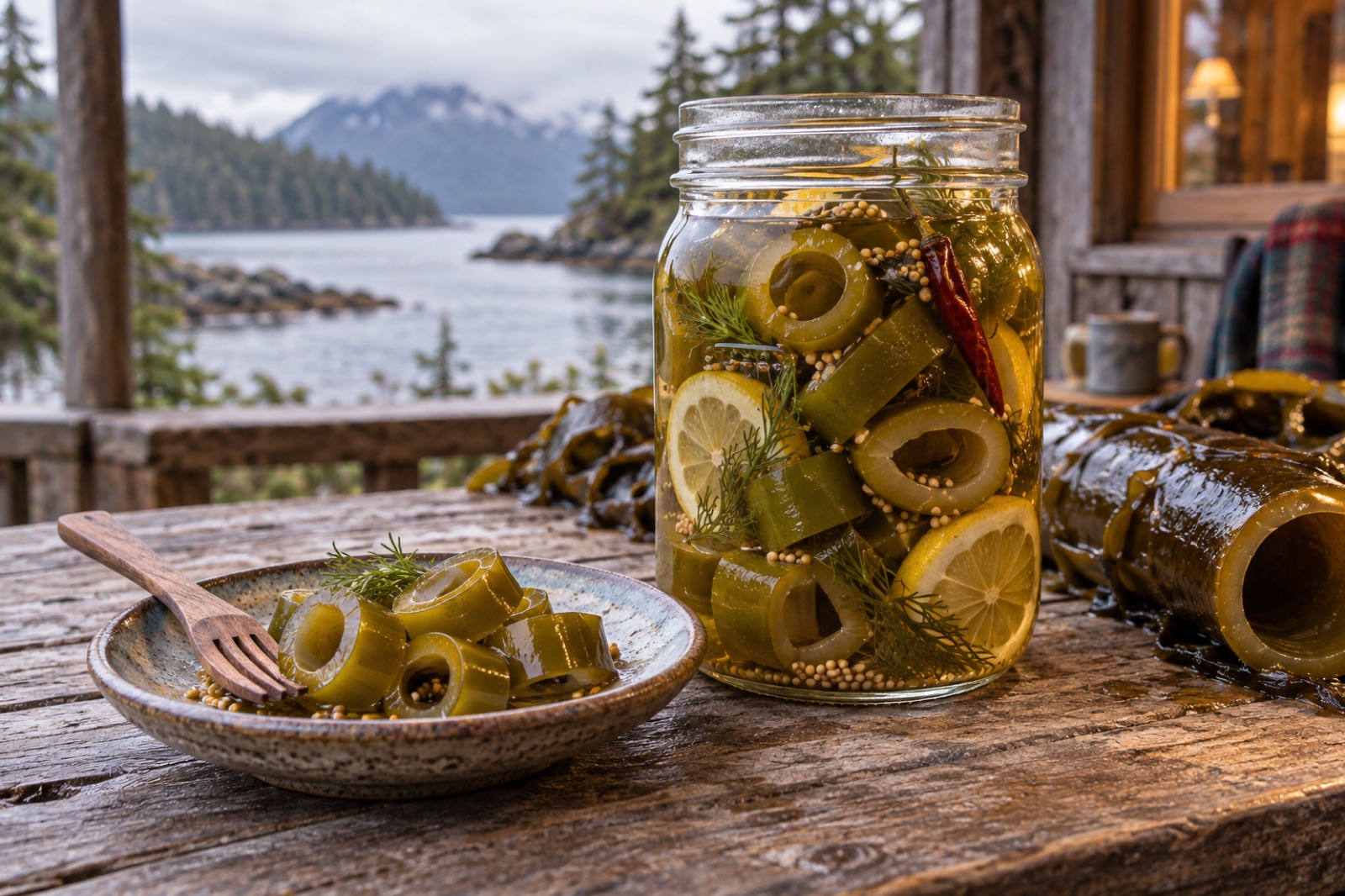
Bull kelp pickles turn the hollow stipes and bulbs of Nereocystis into crunchy, garlicky rings. Full recipe, brine ratios, troubleshooting and sourcing advice.
Sofia Andersson ·
A complete guide to foraging seaweed responsibly: harvest technique, legal basics, species ID, water quality, and the rules that keep the forest standing.
Sofia Andersson ·