Kitchen9 min read
Pickled Kelp Stems: Crunch from the Forest Floor
Kelp stipes make one of the ocean's great pickles — snappy, briny, endlessly useful. A complete guide to pickling kelp stems, from quick fridge method to fermented.
Sofia Andersson ·
Bull kelp pickles turn the hollow stipes and bulbs of Nereocystis into crunchy, garlicky rings. Full recipe, brine ratios, troubleshooting and sourcing advice.
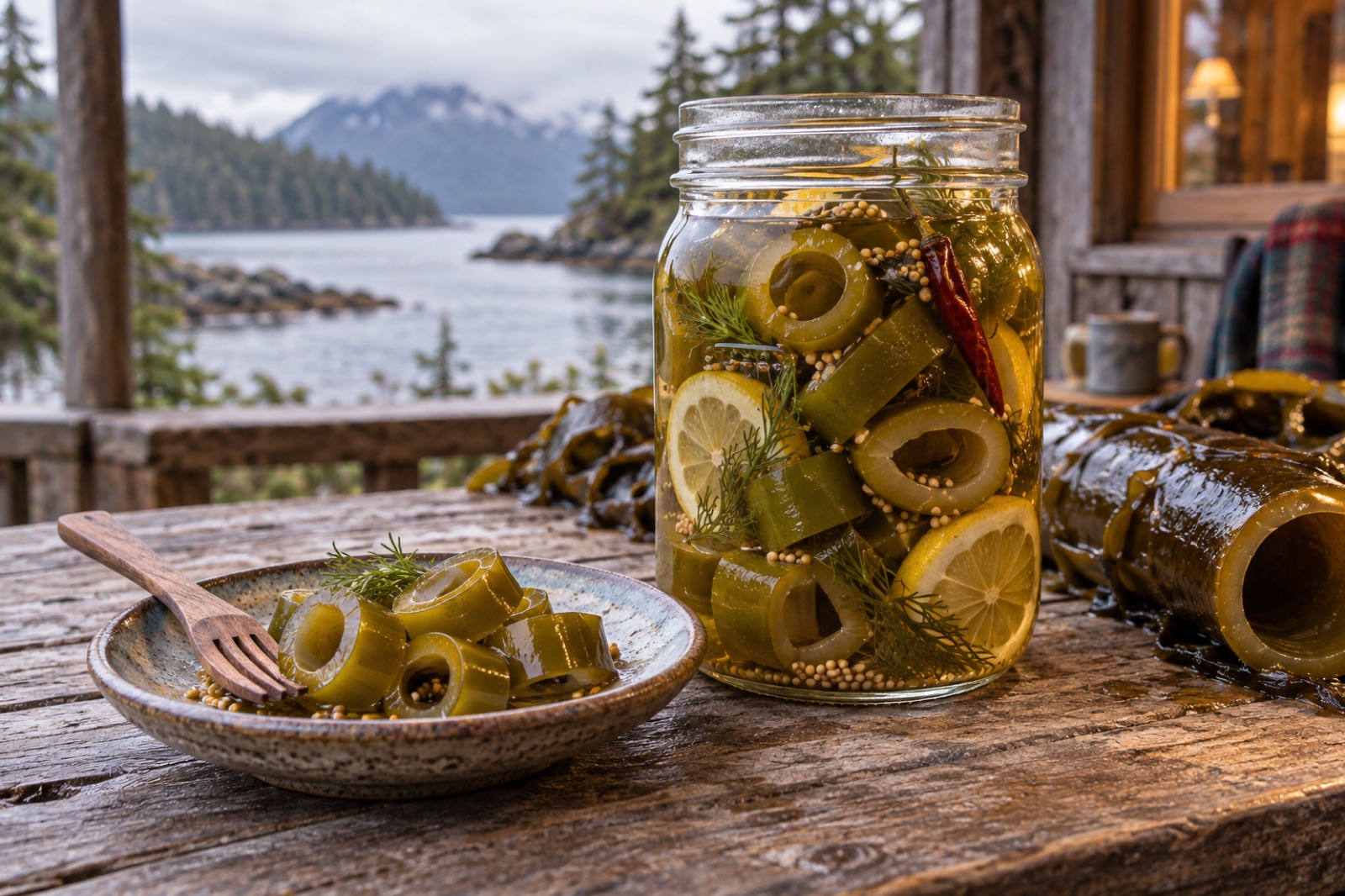
Ask anyone who has spent time in south-east Alaska about kelp, and within minutes someone will mention pickles. Bull kelp pickles — "sea pickles," in local shorthand — are what happens when you slice the hollow stipe of Nereocystis luetkeana into rings, drop them into a spiced vinegar brine, and wait a few days. What you get is startling the first time: a pickle with the snap of a good gherkin, a deeper savouriness than any cucumber manages, and a colour that holds a vivid olive-green for months.
The tradition runs deep along the coast from Puget Sound up through the Inside Passage, where Tlingit, Haida and other coastal First Nations have harvested bull kelp for food and tools for a very long time, and where settler communities adopted the pickle jar enthusiastically. This article walks you through the whole thing: what part of the plant you actually pickle, how to source kelp legally and well, a master brine you can riff on forever, and the fixes for every way the batch can go sideways.
A bull kelp is a study in extreme architecture — a single blade-streamed stipe that can grow 20 metres in one season, crowned by a hollow, gas-filled bulb twice the size of your fist. Our bull kelp species profile covers the biology; here is what matters at the cutting board:
One note on expectations: because the bulb is hollow, your finished jar will look loosely packed even when full. That's normal — you're pickling rings of a tube, not solid vegetable.
You have three honest routes, in order of ease:
Buy it. A growing number of small Alaskan, British Columbian and Washington-state kelp farms and wild-harvest operations sell blanched or fresh bull kelp stipes and bulbs, often already trimmed. Frozen works perfectly — the freeze-thaw actually helps the brine penetrate. Our guide to buying seaweed sustainably explains what a good supplier looks like and the questions worth asking.
Harvest beachcast. Cast-up bull kelp after storms is legal to gather in many jurisdictions and is the traditional source. Take only kelp that is still glossy and firm — if it's dull, limp or smells of rot, leave it to the beach flies, where it belongs in the food web. Never cut living kelp from its holdfast; the rules and the reasons are in our seaweed foraging guide.
Grow or buy through a farm box. Kombu and sugar kelp won't give you hollow bulbs — those are bull kelp's party trick — but don't let absence stop you: the brine below is superb on any firm stipe, and our pickled kelp stems recipe is written for the farmed species.
Makes two 500 ml jars. Scale freely — the brine ratios matter, not the batch size.
The kelp:
Prep:
The brine (fills two jars snugly):
Aromatics per jar:
Method:
The brine above sits at roughly a 60:40 water-to-vinegar ratio with about 4% salt and 5% sugar by weight — a bright, shelf-ish flavour that's safely tart for refrigerator storage. Three rules keep your improvisations safe:
If you want a live, sour pickle instead of a vinegary one, go the lacto-fermented route — 2% salt brine, no vinegar, two to four weeks on the counter — which we walk through step by step in fermenting seaweed.
Soft, floppy rings. Almost always over-blanching. Bull kelp wants 60–90 seconds, no more. Old, beach-weary kelp also pickles soft — firmness at the start is everything.
Slimy brine. You packed the rings with skin on or skipped the blanch. Alginate on the outer skin leaches into brine. Safe to eat, unpleasant to look at; peel properly next time.
Pale, khaki colour. The blanch water was too cool, or you shocked too slowly. Bright green is a temperature game — violent boil in, rolling ice out.
Bitter edge. Skin left on, or bulbs harvested very late in the season. Balance with a touch more sugar and a few extra days in brine; time rounds bitterness off.
Cloudy brine with no fizz or sourness. Fine in a vinegar pickle — spices shed sediment. Cloudiness plus gas and sourness means you made an accidental ferment; keep refrigerated and eat promptly.
Anywhere a pickle lives: beside smoked fish, in potato salad, chopped into tartare sauce, on a burger, on a cheese board next to something washed-rind, or straight from the jar standing in front of the open fridge — the canonical serving position. Chopped fine, they make a relish that outclasses the jarred green stuff by an embarrassing margin.
At Tidewright, our Harvest kitchens test-drive recipes like this on kelp from restoration-adjacent farms — turning a restoration crop into something a fish shack can plate is, in miniature, the whole business model. The pickles keep ending up on the staff meal table faster than we can jar them, which we take as the market research working.
Yes. Any firm kelp stipe pickles well — kombu, sugar kelp and winged kelp stipes all take the same brine. You lose the hollow "ring" shape and a little of the snap, but the flavour carries. If your supply is blade-only, pickle the thick midrib strips and dry the rest.
Don't pressure- or water-bath can them at home at all. Kelp is a low-acid vegetable without a published tested home-canning process. Refrigerator pickles, eaten within a few months, are the safe and honestly better-tasting route.
Usually age or light. Store jars at the back of the fridge, and eat within the window. A batch that started khaki was blanched too cool or too briefly — colour is set in the first two minutes of cooking.
Bull kelp is a moderate-iodine species compared with kombu, and blanching plus discarding the blanch water removes a meaningful share. A few rings a day sits comfortably within normal intake for most people; our seaweed nutrition guide has the numbers and the caveats for thyroid conditions.
Look for Alaskan and British Columbian kelp producers selling blanched, frozen stipes and bulbs online — it ships frozen well. Several small brands also sell finished sea pickles in jars, which is a good way to calibrate your target flavour before making your own.
Kelp stipes make one of the ocean's great pickles — snappy, briny, endlessly useful. A complete guide to pickling kelp stems, from quick fridge method to fermented.
Sofia Andersson ·
Seaweed storage done right keeps flavour vivid and nutrition intact. How to store dried, fresh, frozen and fermented seaweed — plus how to rehydrate properly.
Sofia Andersson ·
A complete guide to foraging seaweed responsibly: harvest technique, legal basics, species ID, water quality, and the rules that keep the forest standing.
Sofia Andersson ·