Kitchen9 min read
Seaweed Nutrition: Minerals, Iodine, and How Much Is Too Much
A clear-eyed guide to seaweed nutrition: what's actually in kelp, nori and dulse, how iodine varies wildly by species, and how much is safe to eat.
Sofia Andersson ·
Seaweed iodine varies wildly by species — kombu can hold 100x nori's load. Safe serving sizes, prep methods that cut iodine, and who should be careful.
Part of a learning path
This article is stop 3 of 9 on Cooking the Forest — Seaweed in your kitchen, from safety nerve to dashi craft.
Seaweed is one of the most nutritious foods you can put on a plate — and also one of the few where "a little more" can genuinely become "too much." The reason is iodine, a mineral your thyroid needs to function but tolerates only within a fairly narrow window. Seaweed concentrates iodine from seawater so efficiently that the difference between species isn't a rounding error: a single gram of dried kombu can deliver a hundred times the iodine in a gram of nori. Over the years of cooking professionally with seaweed, I've settled on a simple rule — seaweed is a daily food in small, species-aware doses, and kombu is the one you treat with respect. This guide gives you the numbers, the practical serving rules and the kitchen tricks that let you enjoy seaweed safely for life.
Iodine is the raw material for thyroid hormones, which regulate metabolism, growth and brain development. Too little iodine causes goitre and hypothyroidism; it remains one of the most common nutrient deficiencies worldwide, which is why table salt is iodised in many countries. Too much iodine, sustained over weeks, can also disrupt thyroid function — paradoxically triggering either an overactive or an underactive thyroid, particularly in people with pre-existing thyroid conditions, and in fetuses and infants, whose thyroids are exquisitely sensitive.
For orientation, the commonly cited reference values: adults need roughly 150 micrograms (µg) of iodine per day (more in pregnancy — around 220–250 µg), and most health authorities set a tolerable upper limit for adults somewhere in the range of 600–1,100 µg per day. Occasional excursions above that aren't a crisis in a healthy person — thyroid regulation has buffer — but regularly eating very iodine-dense seaweed is how people get into trouble, and documented cases exist of thyroid problems from daily kombu-heavy diets and "kelp supplements."
The complication is that seaweed iodine content is not just high — it is wildly variable, differing by species, growing region, season, water temperature and processing. Published analyses of the same species can differ tenfold. So the honest approach is not precision but margins: choose species and portions with enough headroom that even a high-iodine batch keeps you comfortable.
Think of culinary seaweeds in three bands.
These are the habits I cook and teach by:
Good news for kombu lovers: iodine in seaweed is water-soluble, and the kitchen can move a lot of it.
Note what doesn't help much: drying, roasting and toasting leave iodine largely intact. It's a water problem with a water solution.
For everyone else: the historical record of Japan and Korea, where seaweed graces the table daily, is reassuring — the traditional pattern is small amounts of low- and moderate-iodine species, with kombu used as a stock-maker rather than a main course. Imitate the pattern, not just the ingredients. If you want the broader picture of what those daily grams give you in return — minerals, fibre, and more — our seaweed nutrition guide covers the balance sheet, and the rest of the kitchen section shows how to cook it.
For a healthy adult, several sheets daily is comfortably within safe iodine limits — nori is the lightest common seaweed, and even a generous sushi habit rarely approaches the upper range. It's the one seaweed you can enjoy without arithmetic.
Prepared traditionally — a short steep with the kombu removed before boiling — yes: the extraction is brief and the strip leaves the pot. What you'd avoid is simmering large pieces of kombu for hours and eating the softened kelp itself daily, or doing both dashi and kelp supplements on the same day.
Heat alone doesn't destroy iodine, but because it's water-soluble, soaking or boiling and discarding the water removes a large fraction — commonly over half, sometimes far more. Roasting or toasting, by contrast, leaves iodine essentially untouched.
Generally they're a bad way: kelp supplements are the most consistently implicated products in seaweed-related iodine excess, precisely because they concentrate the highest-iodine species into a daily pill with variable, often unstated dose. If you need supplemental iodine, a measured-dose product your clinician approves is safer and more predictable.
Symptoms of chronic excess mimic thyroid disorders in both directions — fatigue, weight change, neck swelling, palpitations — so symptoms alone can't diagnose. If you eat high-iodine seaweed or kelp products regularly and feel off, tell your doctor exactly what and how much you eat; a straightforward thyroid panel and a urinary iodine test answer the question properly.
A clear-eyed guide to seaweed nutrition: what's actually in kelp, nori and dulse, how iodine varies wildly by species, and how much is safe to eat.
Sofia Andersson ·
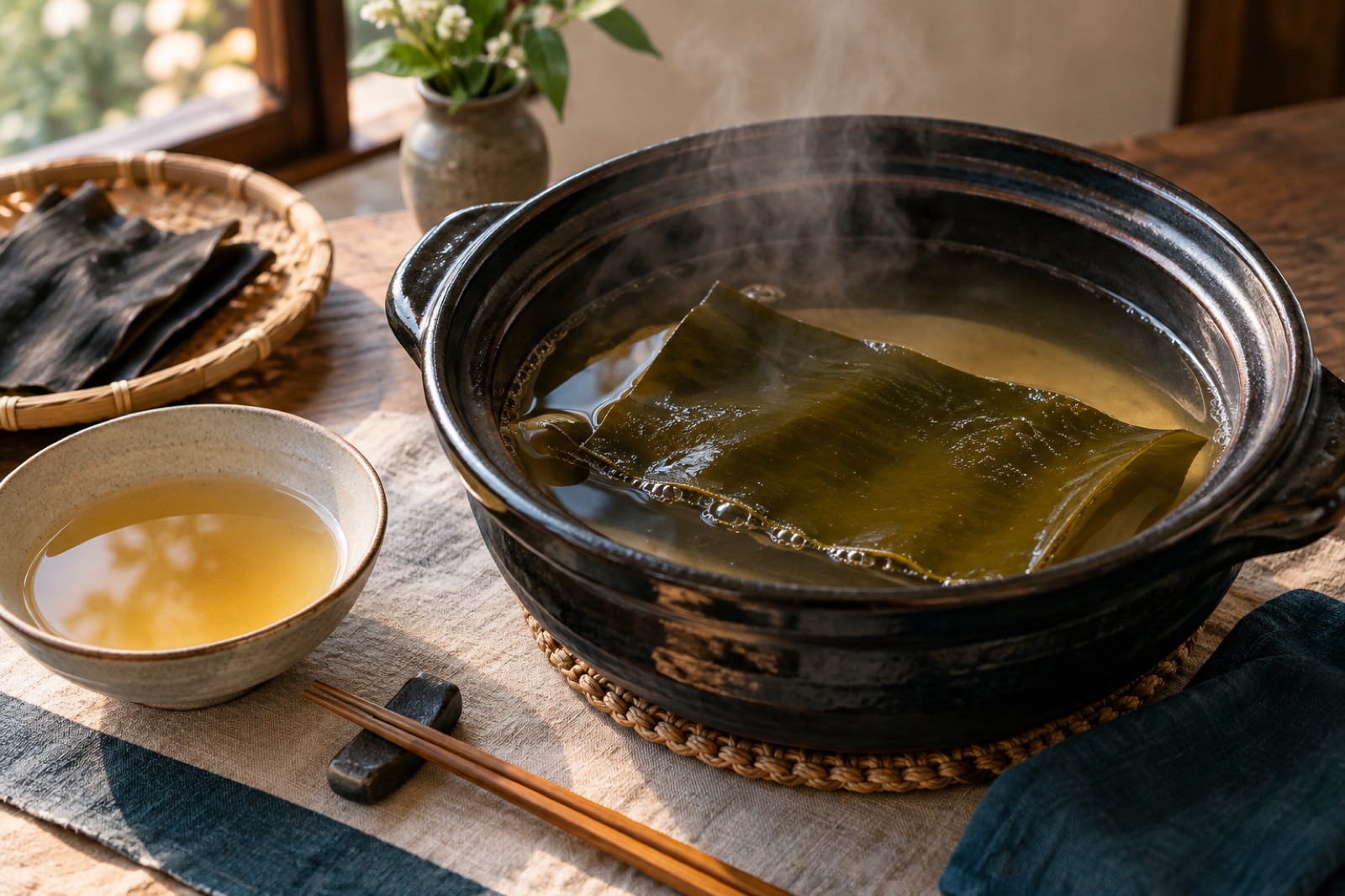
A deep, technique-first guide to kombu dashi: glutamate science, exact temperatures, ichiban and niban infusions, and how to fix every common mistake.
Sofia Andersson ·
Kelp noodles are the crunchy, glass-clear, low-carb noodle made from seaweed. Learn what they're made of, how they taste, and the best ways to cook them.
Sofia Andersson ·