Encyclopedia9 min read
Sugar Kelp (Saccharina latissima): Species Profile
Sugar kelp is the sweet-tasting cold-water kelp that farmers love. Explore its biology, range, life cycle and why it anchors a new wave of ocean farming.
Dr. Theo Nakamura ·
Kelp noodles are the crunchy, glass-clear, low-carb noodle made from seaweed. Learn what they're made of, how they taste, and the best ways to cook them.
Kelp noodles are one of the strangest and most useful items in the seaweed pantry: clear, glassy strands that look like rice vermicelli, crunch like a fresh pickle, and contain almost no digestible carbohydrate. They confuse nearly everyone the first time — are they pasta? Are they raw? Do you cook them? This guide answers all of it: what kelp noodles actually are, what they taste like, how to soften them, and the dishes where they genuinely shine.
Despite the name, most packaged kelp noodles are not extruded sheets of kelp. They're typically made from sodium alginate — a natural fiber extracted from brown seaweeds such as kelp — mixed with water and set into noodle-shaped strands. The result is a noodle that is essentially structured seaweed fiber suspended in water.
That distinction matters for expectations:
Compare that with genuinely kelp-based foods like kombu, which is eaten as the kelp frond itself, or sugar kelp, a farmed species increasingly sold blanched for salads and slaws.
Because they're mostly water and algin fiber, kelp noodles are extremely light:
What they don't give you is protein, fat or meaningful energy. A bowl of kelp noodles with sauce is a starter, not a dinner — build the meal around them with tofu, eggs, fish, nuts or plenty of vegetables.
Straight from the package, kelp noodles are firm, springy and distinctly crunchy — almost squeaky. Some people love that raw crunch in salads. Most people want them softer, closer to a glass noodle. Three reliable methods:
Rinse the noodles well under running water (they're packed in liquid and benefit from a thorough rinse). Toss with the juice of half a lemon or a tablespoon of vinegar and a pinch of salt. Massage with your hands for 2–3 minutes, then leave to sit for 10–15 minutes. Rinse again. The acid gently breaks down the alginate's structure, softening the noodles from bouncy-crisp to pleasantly chewy.
Dissolve a tablespoon of baking soda in a bowl of warm water, soak the rinsed noodles for 10–15 minutes, then rinse very thoroughly (any residue tastes soapy). This produces the softest, most glass-noodle-like texture — the right choice for stir-fries and warm dishes.
Drop rinsed noodles directly into a simmering sauce or broth for 3–5 minutes. They soften as they absorb flavor. This works beautifully in kombu dashi-based broths, where the noodles pick up the stock's umami.
Cold sesame noodle salad. The gateway dish. Soften noodles with the acid method, then toss with sesame oil, soy sauce, rice vinegar, a little honey, shredded carrot, cucumber, spring onion and toasted sesame seeds. Chill for 20 minutes.
Kelp noodle "japchae." A low-carb riff on the Korean glass-noodle classic: soften noodles with the baking-soda bath, then stir-fry briefly with sesame oil, garlic, spinach, mushrooms, julienned vegetables and a soy-sesame sauce.
Noodle soup. Add softened noodles to hot miso soup or dashi broth in the last minute — they add texture and body without starch clouding the broth.
Green curry noodle bowl. Simmer noodles gently in Thai green curry with coconut milk, tofu and vegetables for the last 3–4 minutes. The mild sauce clings surprisingly well.
Crunchy slaw. Skip softening entirely: use raw noodles as you would shredded cabbage, in a slaw with lime, chili, fish sauce or a peanut dressing. Their squeakiness reads as freshness here.
You'll find kelp noodles in the refrigerated section of health-food shops and Asian grocers, or shelf-stable in pouches online. Green-tinted versions contain some whole kelp; clear ones are pure alginate — flavor differences are minimal.
Kelp noodles are a seaweed product with an unusually light footprint: kelp aquaculture requires no freshwater, fertilizer, pesticides or arable land, and farmed kelp actively improves local water quality by absorbing dissolved nutrients. If you're exploring seaweed beyond sushi nori, noodles are an easy on-ramp — and dishes like these are part of why seaweed farming is one of the fastest-growing corners of aquaculture. At Tidewright, our Harvest program works with restoration-adjacent farms to bring kelp foods like these to market while funding wild forest restoration.
Barely. A faint marine note straight from the pouch disappears after rinsing and dressing. The final dish tastes like whatever sauce you use — which is precisely their strength.
Yes to both. They're not cooked in production, contain no grains, and suit raw, vegan, gluten-free, keto and paleo diets equally.
Unlikely. The alginate extraction process leaves most of the iodine behind, so kelp noodles are far lower in iodine than whole kombu or wakame. Normal servings are fine for most people; if you have a thyroid condition, check with your doctor as you would with any seaweed product.
Kelp noodles never become soft like wheat pasta, no matter how long you cook them — heat alone doesn't break down alginate the way acid or alkaline soaking does. If you want a softer bite, use the baking-soda bath before cooking.
Shirataki are made from konjac yam fiber (glucomannan) rather than seaweed. Both are clear, near-zero-carb and chewy, but shirataki are softer and need a dry-fry step to lose their packing-liquid odor, while kelp noodles are crunchier and simply need rinsing and optional softening. They're largely interchangeable in salads and soups.
Sugar kelp is the sweet-tasting cold-water kelp that farmers love. Explore its biology, range, life cycle and why it anchors a new wave of ocean farming.
Dr. Theo Nakamura ·
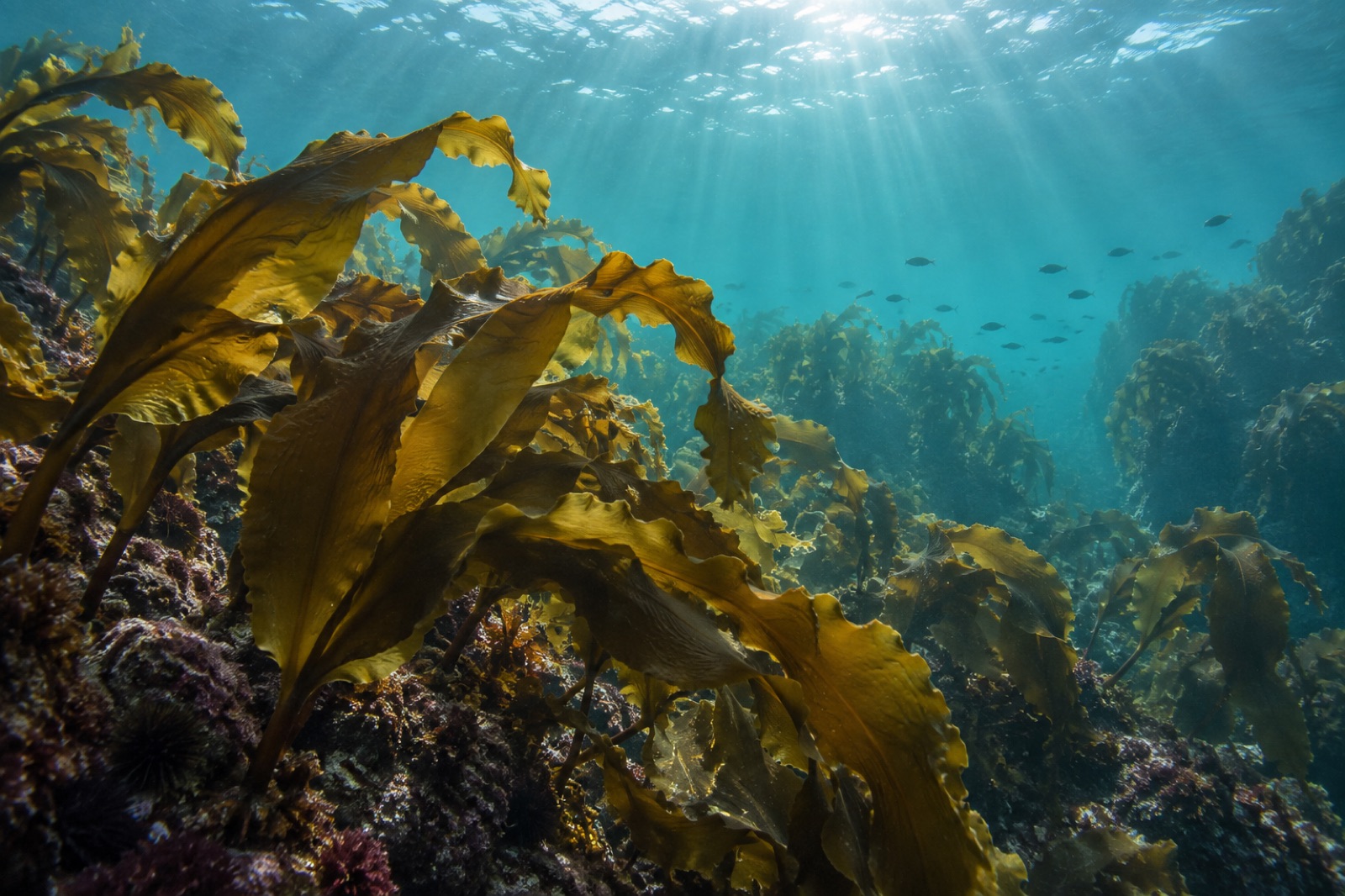
Kombu is the kelp behind dashi and the backbone of the world's seaweed farms. Learn its biology, life cycle, Hokkaido roots and future in a warming sea.
Dr. Theo Nakamura ·
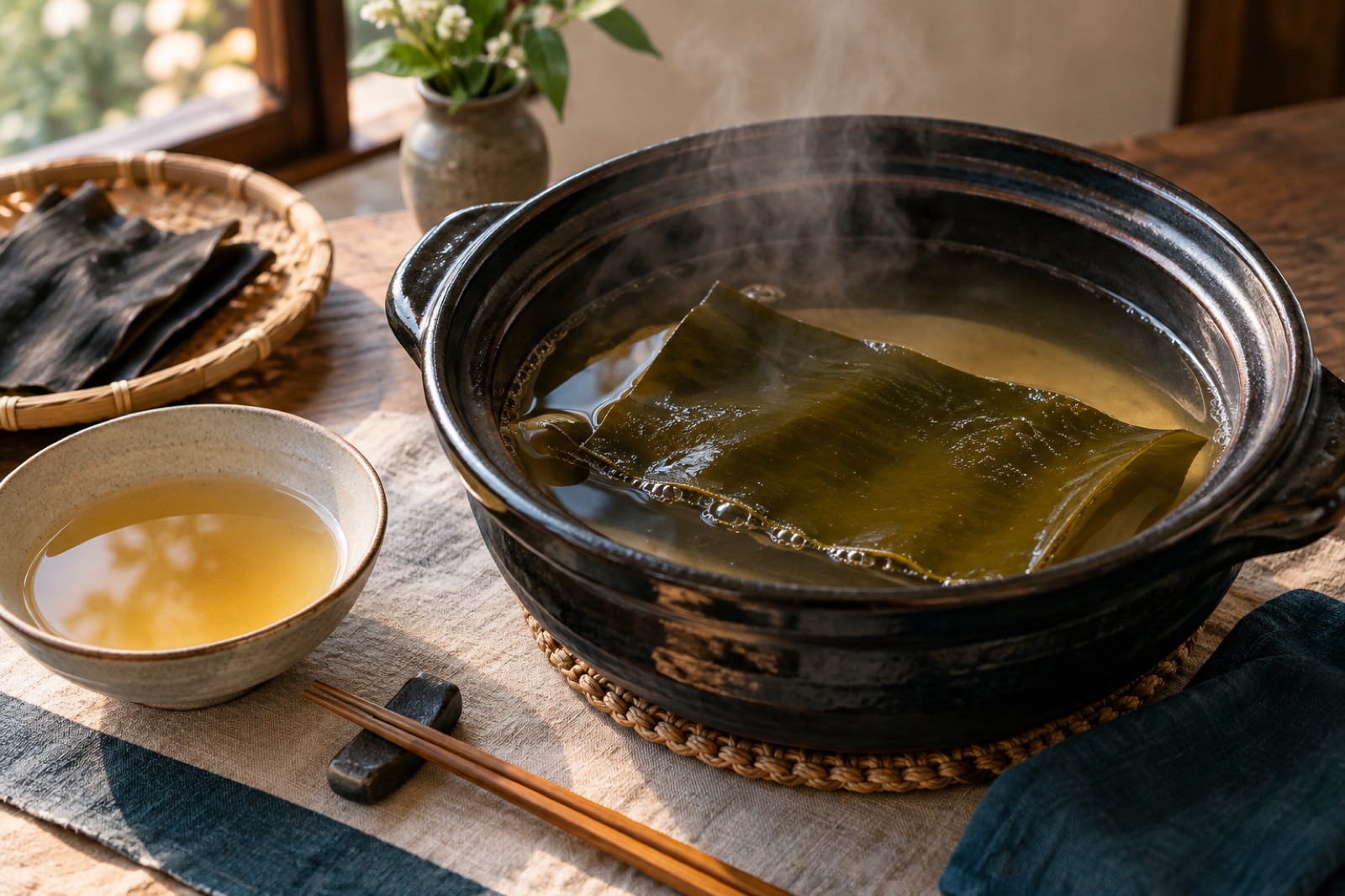
A deep, technique-first guide to kombu dashi: glutamate science, exact temperatures, ichiban and niban infusions, and how to fix every common mistake.
Sofia Andersson ·