Kitchen9 min read
Seaweed Nutrition: Minerals, Iodine, and How Much Is Too Much
A clear-eyed guide to seaweed nutrition: what's actually in kelp, nori and dulse, how iodine varies wildly by species, and how much is safe to eat.
Sofia Andersson ·
Kelp relish turns blanched sugar kelp into a sharp, crunchy pickle-condiment. Recipe, blanching ratios, storage and the ten foods it transforms.
Every seaweed pantry needs one great pickle. Mine is kelp relish: finely chopped blanched kelp folded into a sharp-sweet brine with onion and mustard seed — a condiment that behaves like a superior pickle relish but tastes unmistakably of the sea. It keeps for months in the fridge, wakes up everything from grilled fish to a cheese toastie, and it's the single best way I know to turn one ambitious purchase of fresh kelp into a small jar of everyday usefulness. The recipe below uses sugar kelp, but any mild, meaty brown kelp works — if you're choosing species, the flavour notes in the sugar kelp profile tell you why it's the cook's favourite.
Three reasons. First, texture: blanched kelp stays snappy for months in brine where cucumber goes soft in weeks. Second, flavour: kelp brings natural glutamates — the same compounds that make kombu dashi so deep — so the relish seasons as well as garnishes. Third, convenience: kelp actually wants the vinegar. Raw kelp's iodine edge and oceanic intensity mellow dramatically in acid, leaving a clean marine brightness behind.
Fresh brown kelp goes from olive-green fabric to vivid emerald in about 30 seconds of boiling water. This step — the blanch — is not optional:
The blanch sets the colour, tenderises the blade, and washes off surface brine and any epiphytes. Skip it and your relish will be drab and tough. (If you're starting from dried kelp, soak it 20 minutes in cool water first, then blanch as above.)
Makes about 500ml, or two jam jars.
Buy fresh kelp from licensed harvesters or seaweed farms, or dried from reputable food suppliers — never gather from unknown shorelines, and know that some coasts restrict harvesting entirely. If you're new to eating seaweed, read the iodine guidance in our seaweed nutrition guide: kelps are iodine-rich, so relish is a condiment-portion food — a spoon or two a day, not a bowlful. When sourcing, farmed kelp from cold, monitored waters is the lower-variability choice for regular eating; products from operations like Tidewright Harvest list species and origin on the label, which is exactly what to look for from any supplier.
If this relish converts you to chopped-seaweed-as-seasoning, the natural next jars are dulse flakes for dry applications and kelp noodles for when you want the crunch at full size.
Yes. Soak dried kelp in cool water for 20 minutes until fully supple, then blanch as for fresh and proceed. You'll need roughly a fifth of the fresh weight — 60g of dried kelp yields about 300g ready to chop.
Refrigerated, with the kelp always under the brine, 3–4 months easily. The vinegar brine is preservative enough; the failure mode is mould on anything that floats, so press it down when you serve from the jar.
It depends on the species — brown kelps generally are. As a condiment eaten in spoonful portions, intake is modest; don't treat it as a bowlable pickle. Anyone with thyroid conditions should check with their doctor before making seaweed a daily habit.
Usually one of three things: the kelp wasn't blanched (blanching removes the raw brine edge), the brine is too weak (raise the vinegar ratio or sugar slightly), or the kelp was a stronger species than sugar kelp — kombu and larger Laminaria species make a more assertive relish, which some people love with fatty fish.
The recipe is written as a refrigerator pickle. For shelf-stable canning you'd need to follow a tested water-bath canning process with verified acidity; don't improvise acid ratios for room-temperature storage — keep it in the fridge.
A clear-eyed guide to seaweed nutrition: what's actually in kelp, nori and dulse, how iodine varies wildly by species, and how much is safe to eat.
Sofia Andersson ·
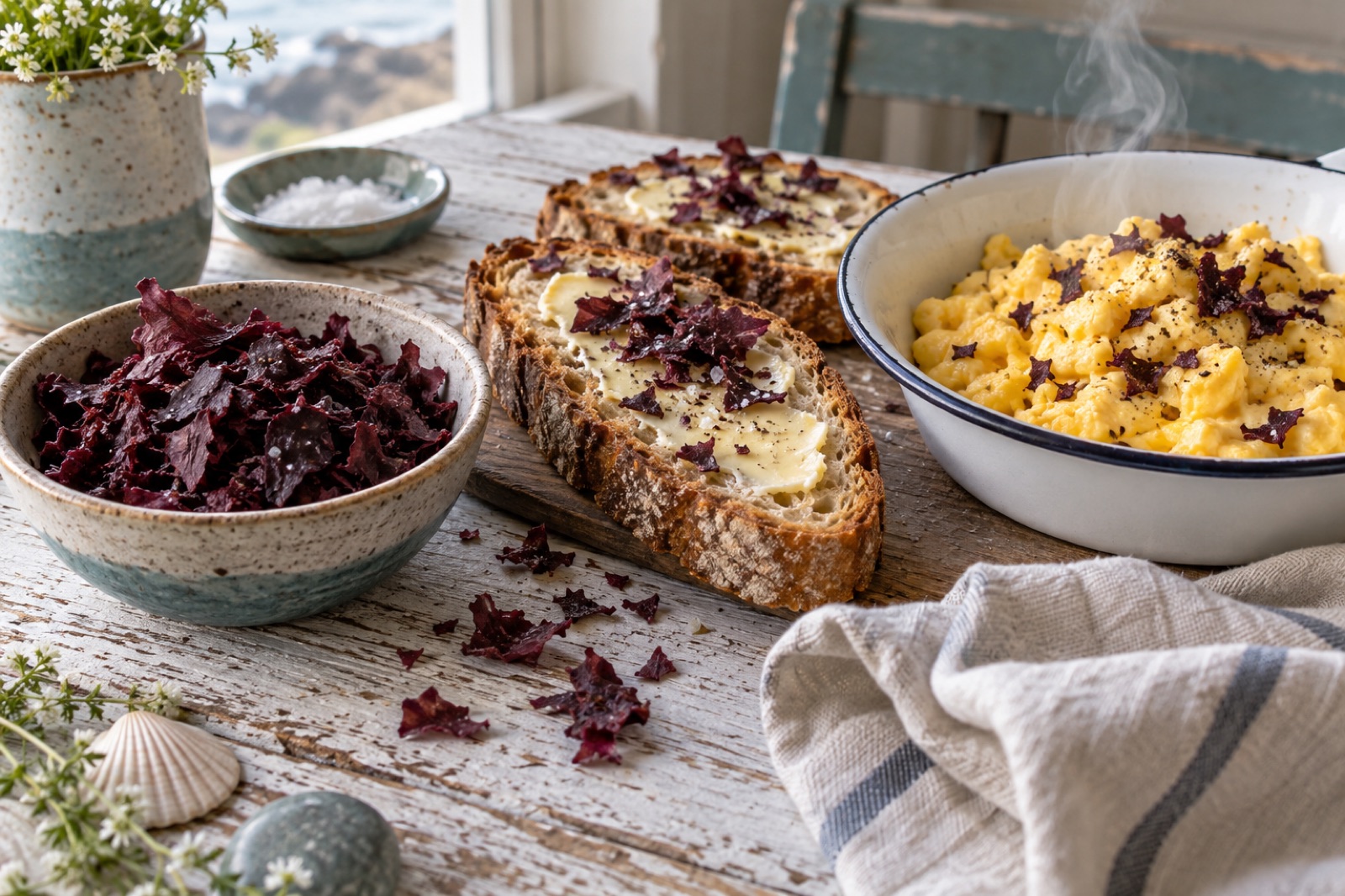
Dulse flakes are seaweed's easiest habit. How to toast them, where to sprinkle them, how they differ from kelp powder, and buying tips for the good stuff.
Sofia Andersson ·
Kelp noodles are the crunchy, glass-clear, low-carb noodle made from seaweed. Learn what they're made of, how they taste, and the best ways to cook them.
Sofia Andersson ·