Kitchen11 min read
Kombu Dashi Masterclass: The Broth That Built a Cuisine
A deep, technique-first guide to kombu dashi: glutamate science, exact temperatures, ichiban and niban infusions, and how to fix every common mistake.
Sofia Andersson ·
Ramen-shop eggs at home: soft-boiled eggs steeped overnight in a kombu-infused shoyu marinade — timings by doneness, marinade reuse rules and serving ideas.
The egg that sits halved on a bowl of ramen — white gone amber, yolk held at a jamminess that seems engineered — is ajitsuke tamago, and it is one of the best low-effort, high-return preparations in all of home cooking. Boil eggs, mix a marinade, wait overnight. That's the entire project. The version here leans on kombu in the marinade, not just as a Japanese nod but because it solves a real problem: plain soy marinades cure the egg white into something rubbery if you leave them too long, while a dashi-and-kombu base seasons more gently and more deeply. If you've made kombu dashi even once, you already own the skill.
Classic shoyu egg recipes are soy sauce, mirin and water or sake. Adding kombu — either as a strip steeped warm in the marinade or as a proper ichiban-dashi base — changes two things:
The marinade is also the start of a small economy: after it comes off the eggs, it seasons rice, glazes tofu, and — with the spent kombu — points directly at a batch of kombu tsukudani. Nothing in this recipe is single-use.
Boil from fridge-cold eggs lowered into fully boiling water — the thermal shock firms the white around the yolk and, practically, makes peeling far more reliable. Then it's purely a timer exercise:
As soon as the timer rings, eggs go straight into an ice bath for at least ten minutes. A warm egg in marinade keeps cooking inside its own shell and ruins your careful timing. Peel underwater or under a running tap, working the spoon of water between shell and white from the wide end where the air cell sits.
The other small professional habit: older eggs peel better than fresh ones. If your carton is very new, use it for frying and keep the week-end eggs for this.
For six eggs, in a snug container or zip-top bag:
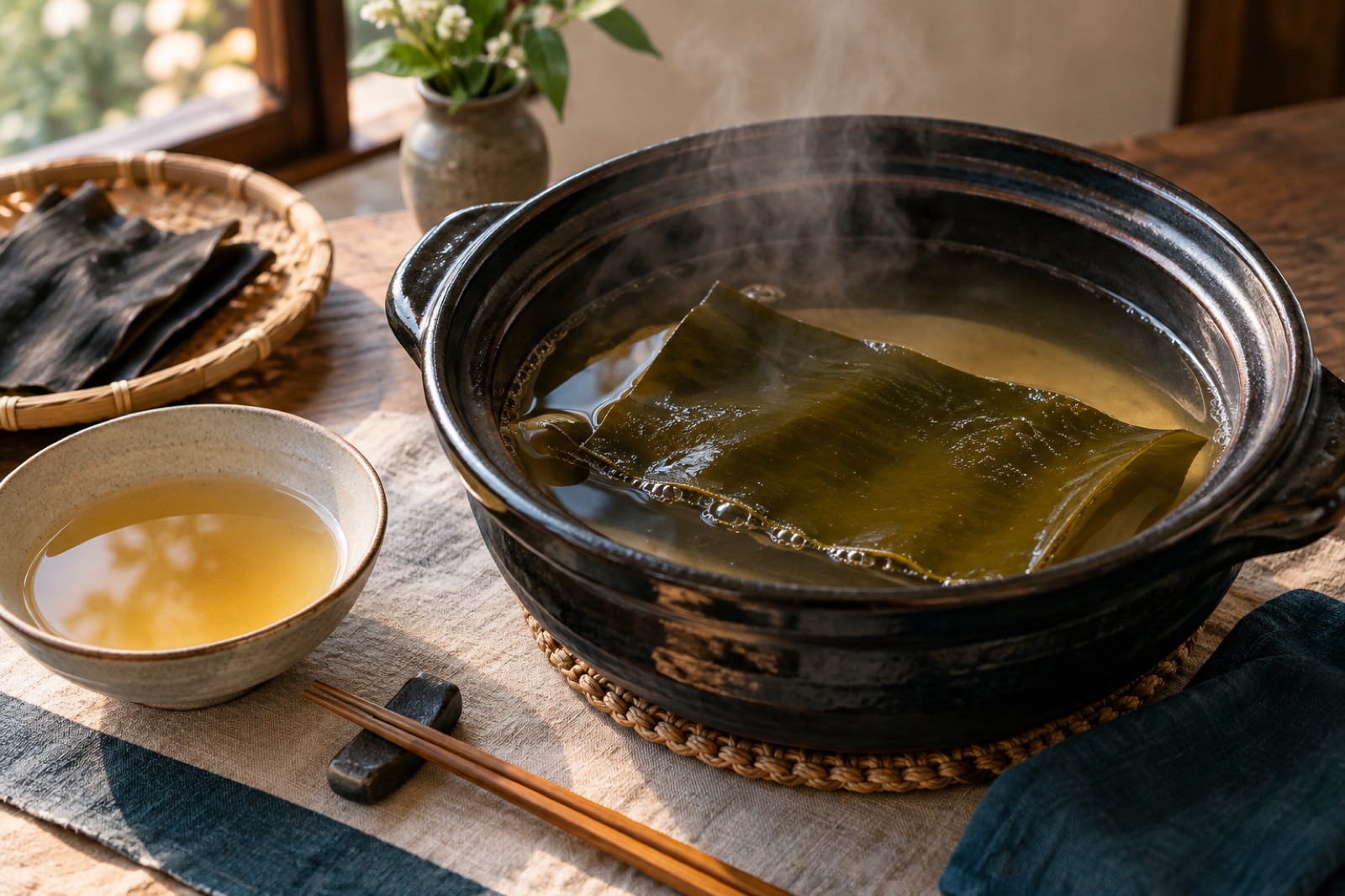
If using a kombu strip rather than dashi: warm the soy, mirin and water with the strip to just below a simmer, hold ten minutes, cool completely. Kombu should never be boiled hard — high heat pulls bitter, slimy compounds from it, the same principle behind gentle dashi-making.
Submerge peeled eggs fully (a wad of paper towel floated on top keeps floaters under), refrigerate, and steep:
The marinade leaves the eggs as a seasoned, kombu-laced shoyu — too good to pour away, handled sensibly:
The steeped kombu strip is now one of the best ingredients in the kitchen that nobody buys: slice it into threads and simmer into tsukudani with soy and a little sugar, and you've turned one flavouring step into a jarred rice condiment.
Ramen is the egg's home, but not its limit. Halve over a hot rice bowl with a drizzle of the marinade; slice onto avocado toast; quarter into a potato salad where the cured white eats like seasoning; lay a whole egg on a tray of cold noodles with sesame. Chopped into fried rice in the last minute, the amber coins season every grain they touch. One batch on Sunday quietly upgrades a week of lunches — which is, in the end, the whole argument for the recipe.
Overcure. A strong, undiluted soy marinade left beyond 24 hours draws water from the white and tightens its proteins. The kombu-dashi dilution in this recipe widens the safe window — but the fix is the clock, not the salt: pull eggs at your target time and store them out of the marinade afterward.
Yes with a dilute marinade like this one; no with a strong one. Molten six-minute eggs are best steeped only four to six hours, since their whites are barely set and take on cure quickly.
It contributes sweetness and a gloss note, but the eggs work without it: add an extra teaspoon of sugar to the dashi-soy base instead. Hon-mirin (true brewed mirin) tastes rounder than the "mirin-style" seasonings, which are mostly glucose and salt — check the label.
Drained from the marinade and refrigerated in a box, about three days — though their texture is best in the first two. Keep them cold and treat them as you would any boiled egg.
You can steep marinade with second-use kombu, but expect a thinner result; most of the glutamate left the kelp in the dashi. Better to use one fresh strip in the marinade and send the dashi kombu to tsukudani, where its softened texture is the point.
A deep, technique-first guide to kombu dashi: glutamate science, exact temperatures, ichiban and niban infusions, and how to fix every common mistake.
Sofia Andersson ·
Kombu is the original umami. How glutamate works on the tongue, why temperature decides your dashi's flavour, and how to season with the sea.
Sofia Andersson ·
Tsukudani turns the kombu left in your dashi pot into a glossy, sweet-savoury relish for rice. Recipes, ratios, storage and why nothing leaves the kitchen.
Sofia Andersson ·