Kitchen11 min read
Kombu Dashi Masterclass: The Broth That Built a Cuisine
A deep, technique-first guide to kombu dashi: glutamate science, exact temperatures, ichiban and niban infusions, and how to fix every common mistake.
Sofia Andersson ·
How to make vegetarian dashi from kombu and dried shiitake: cold-brew and hot methods, the glutamate-guanylate synergy, and what to cook with it.
Dashi is the clear golden stock at the base of Japanese cooking — miso soup, noodle broths, simmered vegetables, the seasoned omelettes and dipping sauces that make the cuisine taste the way it does. Classic dashi pairs kombu kelp with katsuobushi (smoked, fermented skipjack tuna shavings). The vegetarian version — kombu with dried shiitake — is not a compromise. It is an older tradition: shōjin dashi, the stock of Buddhist temple kitchens, where kombu, shiitake and sometimes dried daikon and soybeans have produced deep, precise broths for centuries. It also happens to be one of the best demonstrations in all of cooking of how umami actually works.
Umami is the savoury taste triggered primarily by glutamate. Kombu is the richest natural source of free glutamate yet identified — which is why kombu dashi alone can make a bland soup profound. Dried shiitake, meanwhile, are loaded with a different compound: guanylate, a nucleotide. And here is the piece of food science every cook should know: glutamate and nucleotides like guanylate (and inosinate, the one in fish and meat) don't merely add together — they multiply. On the tongue, their combination lights up umami perception far beyond what either achieves alone; classical studies put the synergy at several-fold. That's why kombu-and-shiitake tastes rounder and deeper than the sum of a kelp broth and a mushroom broth, and why dashi in general is such a perfect little system. The wider chemistry is covered in our piece on the science of seaweed umami.
One more effect matters practically: drying shiitake concentrates and transforms their flavour compounds, which is why the recipe insists on dried mushrooms, not fresh. Fresh shiitake broth is pleasant. Dried shiitake broth is dashi.
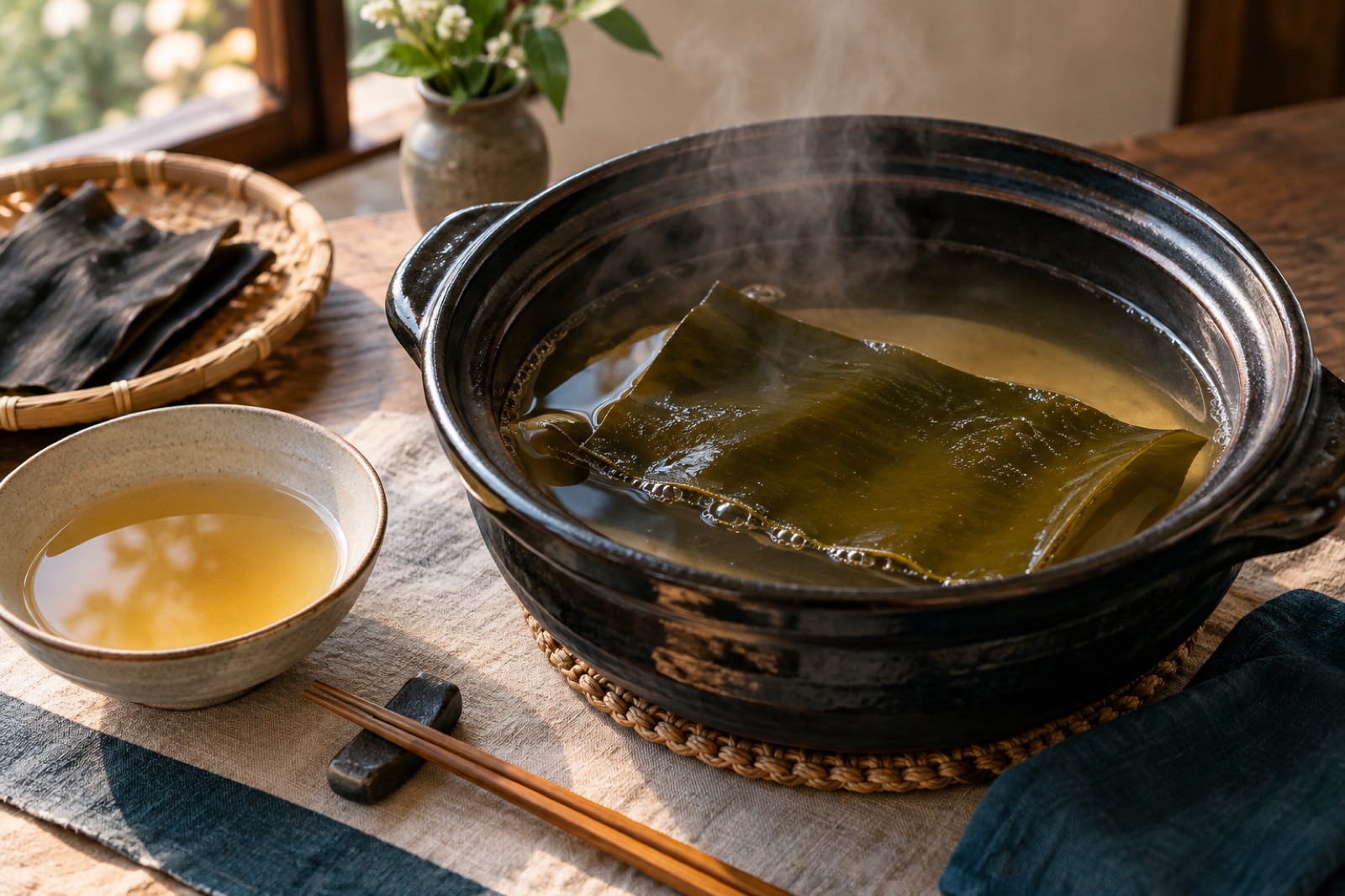
Cold extraction is the gentlest method and produces the clearest, most elegant dashi — kombu's glutamates dissolve readily in cool water, while the bitterness and sliminess that heat can coax out stay locked in the leaf.
The spent kombu is a bonus, not waste: slice it into strips for tsukudani (simmered in soy and mirin, it keeps for weeks) or chop it into rice. The shiitake caps, now rehydrated, can be sliced and simmered into the soup you're making.
When tonight's soup decides in real time:
Serious temples run a two-stage process — cold-soak the shiitake overnight separately, then combine with hot kombu dashi — and if you have the foresight, the layered result is genuinely better. But method 2 as written makes a dashi better than most restaurant stocks.
Kombu: look for thick, dark, unbroken leaves — ma-kombu and rishiri-kombu are the classic dashi grades — from a Japanese or Korean grocer or a reputable coastal harvester. Stored airtight in a cool, dry cupboard, it keeps for years. Our sustainable buying guide has more on what responsible kelp sourcing looks like.
Dried shiitake: thick, cracked-capped "flower" mushrooms are the premium grade, but any whole dried shiitake work; avoid presliced, which steeps thinner. Keep them airtight and dry — ambient humidity is their enemy.
Storage: a jar of cold-brew dashi in the fridge turns ten dinners into ten-minute dinners over the course of a week. It also freezes with no loss that any cook has ever detected; ice-cube trays make tidy single-serving portions.
Once the base is routine, shōjin tradition offers gentle upgrades worth exploring: a segment of dried daikon radish adds earthy sweetness; a handful of dried soybeans (soaked overnight) gives the stock a rounder body for ramen-adjacent uses; a strip of dried persimmon peel lights up the top notes. Add one element at a time and taste — dashi rewards small experiments, because it is essentially tea: leaves, water, time, temperature.
Different, not lesser. Katsuobushi brings inosinate — another nucleotide — and a smoky depth; kombu-shiitake is cleaner, forest-and-sea rather than sea-and-smoke. For miso soup, vegetable simmering and vegan cooking, the shiitake version is ideal and often preferred even by cooks who eat fish.
Boiling extracts mucilaginous compounds and bitterness from the leaf's surface, clouding the stock and dulling its clean flavour. Pull it at the first shimmer of small bubbles and the dashi stays clear and sweet.
Yes — a second, weaker steep (niban-dashi style) is fine for simmering vegetables, and as noted, the spent kombu makes excellent tsukudani and the rehydrated shiitake belong in the soup itself.
Three to four days refrigerated in a sealed jar, several months frozen. Flavour is brightest in the first two days; freezing loses remarkably little.
Dashi extracts relatively little iodine compared with eating kombu whole, and standard culinary use is not an iodine concern for most people. Kombu is potent eaten as a vegetable though, and the details of sensible amounts are in our iodine safety guide.
A deep, technique-first guide to kombu dashi: glutamate science, exact temperatures, ichiban and niban infusions, and how to fix every common mistake.
Sofia Andersson ·
Kombu led chemists to discover umami in 1908. How glutamate, ribonucleotides and salt work together — and how to use seaweed umami in everyday cooking.
Sofia Andersson ·
Build a fully vegan Japanese pantry around dashi: what to stock, a homemade instant dashi powder, label traps to avoid, and a week of plant-based broth cooking.
Sofia Andersson ·