Kitchen6 min read
Vegetarian Dashi: Kombu, Shiitake and the Science of Umami Broth
How to make vegetarian dashi from kombu and dried shiitake: cold-brew and hot methods, the glutamate-guanylate synergy, and what to cook with it.
Sofia Andersson ·
Build a fully vegan Japanese pantry around dashi: what to stock, a homemade instant dashi powder, label traps to avoid, and a week of plant-based broth cooking.
The two biggest obstacles to cooking Japanese food as a vegan are not tofu techniques or egg-free batters. They are stock and labels. Dashi — the quick clear broth that underpins miso soup, noodle broths, simmered dishes and dipping sauces — is conventionally made with katsuobushi, shaved smoked skipjack tuna, and it hides in everything from instant soups to bottled noodle sauce to the seasoned nori on the shelf. The good news is that a fully plant-based dashi practice is neither new nor second-rate: Buddhist temple kitchens have run on it for centuries, and a small shelf of dried goods plus one jar in the fridge covers nearly the whole cuisine. This is the pantry-level guide — what to stock, how to cheat when there's no time, where the fish hides, and how a week of cooking looks once the system is running. For the core two-method dashi technique itself, our vegetarian dashi guide is the companion piece.
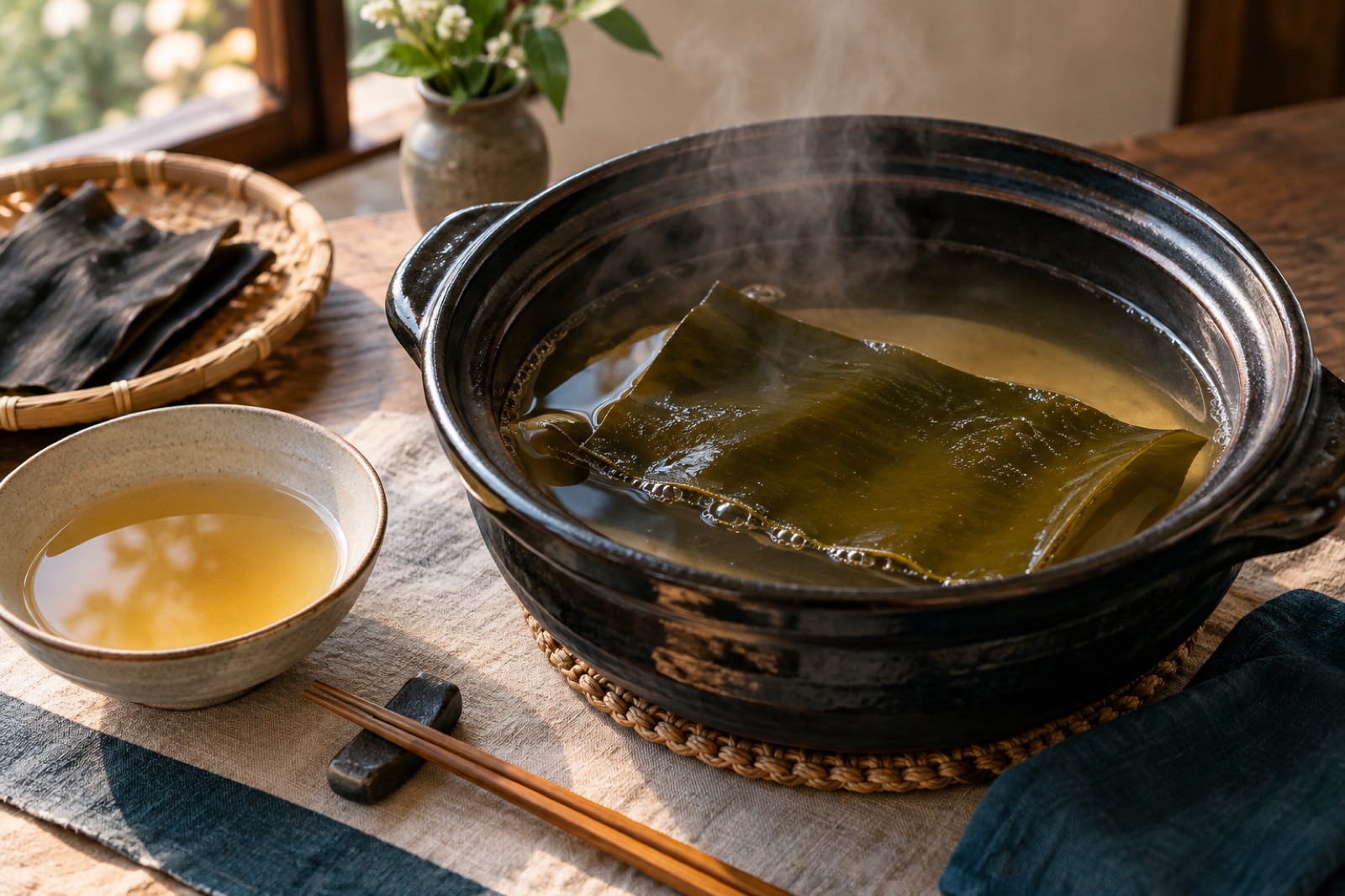
The foundation. Dried kombu (Saccharina japonica) is the richest natural source of free glutamate, the amino acid that makes broth taste like more than water. Buy thick, dark, unbroken leaves — ma-kombu or rishiri if your shop grades it — and never wash off the pale surface dusting, which is crystallised flavour. One packet lasts months and turns water into stock in minutes. Korean dashima is the same animal with slight grading differences; our dashima pantry guide covers it.
Kombu's partner. Drying shiitake creates guanylate, a nucleotide that multiplies the perceived umami of kombu's glutamate several-fold — the single most useful synergy in plant-based cooking. Buy whole caps, not slices; they steep stronger and the rehydrated mushrooms are a soup ingredient in their own right.
These extend the two pillars into different broth personalities:
Miso (check the label — some blends include dashi extract), soy sauce or tamari, and mirin. With dashi, these three form tsuyu, the all-purpose seasoning liquid. Keep a bottle of homemade vegan tsuyu — dashi, soy, mirin at roughly 6:1:1 — in the fridge and half of Japanese weeknight cooking is already seasoned.
This is the unglamorous section that matters most. These products are commonly not plant-based even when the front of the pack suggests they might be:
Meanwhile, some products are quietly vegan that people assume aren't: plain dried wakame, plain toasted nori sheets, standard kombu, frozen edamame, most tofu. The miso soup seaweed guide helps on the seaweed side.
Cold-brew is effortless but requires tonight to have started yesterday. When it didn't, this powder bridges the gap:
Use: 1 teaspoon of powder per 250 ml of just-off-the-boil water, steeped 3 minutes. That's a legitimate instant dashi — real ingredients, real synergy, twelve seconds of work. It is excellent stirred directly into miso soup, ramen bowls and hotpots, and it doubles as an umami seasoning over roasted vegetables, popcorn and tofu scrambles. The powder is more assertive than steeped dashi, so start light.
The system only pays off if it changes how dinner works. Here's the rhythm I run:
Sunday night: set a 2-litre jar of cold water with 30 g kombu and 6 dried shiitake in the fridge. Overnight cold-brew keeps four days and steals no active time from anyone.
Monday: miso soup the proper way — warm dashi, miso whisked in off the boil, rehydrated wakame, tofu, scallion. Fifteen minutes, as detailed in miso soup with wakame.
Tuesday: simmered vegetables (nimono). Daikon, carrot and the soup's spent shiitake simmered in dashi with a splash of soy and mirin until the daikon turns translucent. It tastes of the vegetables, squared.
Wednesday: noodles. Dashi + tsuyu proportions as the broth for soba or udon; anything green on top; the leftover simmered daikon from Tuesday alongside.
Thursday: rice cooked in half dashi, half water — plain rice that isn't plain — with on a whim some kombu-cooked beans folded in.
Friday: the dashi jar is running low, so the remaining broth becomes a hotpot (nabemono): tofu, mushrooms, greens, noodles cooked at the table in the last of the stock, with ponzu-style soy-citrus dipping. Nothing in the week required a fish, a granule sachet or more than twenty minutes of active time.
Dashi is one branch of a bigger family. When you want a Western-facing stock for risotto, braises and soups — mixed seaweeds with vegetables, no Japanese flavor profile — our seaweed vegetable broth is the better tool. And the spent kombu from all this brewing should never hit the bin: simmered in soy and mirin it becomes tsukudani, the rice condiment from our scraps recipe. One sustainability note: choose seaweed from responsible producers — our sustainable buying guide covers the sourcing side, and it's the same principle behind Tidewright Harvest, where the seaweed crop funds the forest.
Bonito adds a little protein and B vitamins to the water, but dashi of any kind is a flavour medium rather than a nutrient source — the tofu, miso and vegetables carry the nutrition. Iodine from kombu is the one nutrient to watch, and standard dashi-strength brewing is comfortably within sensible range for most people; details in our iodine guide.
Yes. Kombu alone with dried daikon and a charred onion half gives a clean, sweet, fully mushroom-free broth. The depth is narrower without the guanylate synergy, so let it steep overnight and season a touch more generously.
About three months at full strength in an airtight jar away from light and humidity. It's still usable after that but flattens; make small batches.
Nimono — daikon simmered in kombu-shiitake dashi until translucent, finished with a drop of soy. It's the dish that proves the point that plant-based dashi isn't missing anything; the daikon tastes more like daikon than it ever did in fish stock.
If the ingredient list is genuinely just kombu/kelp extract and salt, it's a legitimate shortcut, like a stock cube. Many also contain bonito, so it comes back to the label tango. Homemade powder tastes better and costs less per pot.
How to make vegetarian dashi from kombu and dried shiitake: cold-brew and hot methods, the glutamate-guanylate synergy, and what to cook with it.
Sofia Andersson ·
A deep, technique-first guide to kombu dashi: glutamate science, exact temperatures, ichiban and niban infusions, and how to fix every common mistake.
Sofia Andersson ·
How to make genuinely good miso soup at home: dashi fundamentals, when to add wakame, the one boiling rule, and why the miso goes in off the heat.
Sofia Andersson ·