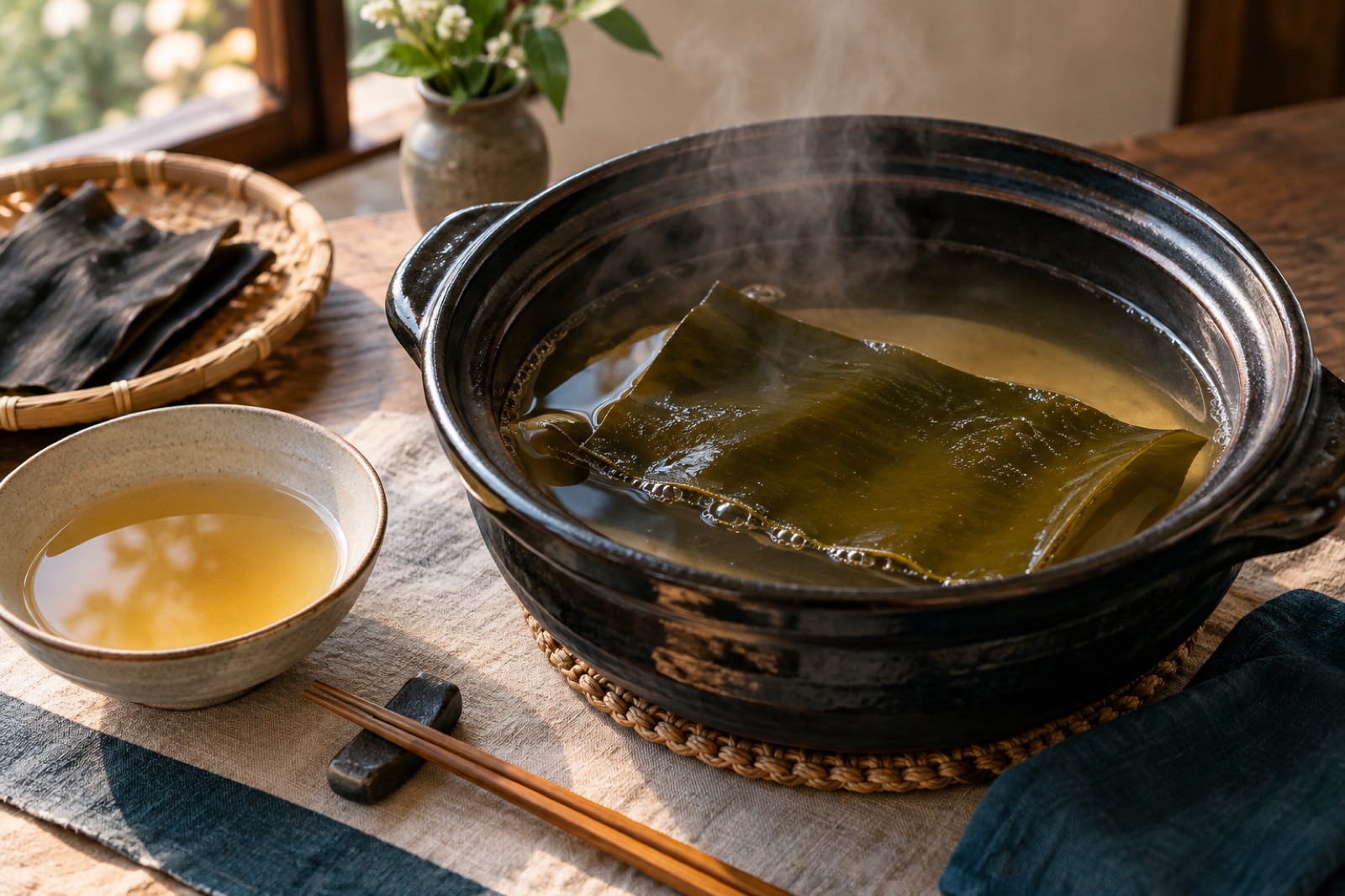
Seaweed does something awkward to drinks: it amplifies them the wrong way. The same glutamates that make a kombu dashi taste profound turn a big, oaky red wine metallic; the brine in a wakame salad makes a sweet cocktail cloy instantly. Once you understand why — umami exaggerates bitterness and tannin, salt dulls perceived sweetness — pairing stops being guesswork and becomes a small set of reliable moves. This guide lays them out: the principles first, then sake, wine, beer and the increasingly interesting zero-proof shelf, each matched to the actual seaweed dishes in this series.
You do not need a cellar or a sake set. You need acid, minerality and restraint.
The three principles
Umami loves savoury partners, hates tannin. Umami-rich food — and every seaweed dish is umami-rich — makes tannins taste harder and bitterness louder. This is the same reason red wine fights fish. The fix is drinks with their own savoury register (sake, fino sherry, gose) or with enough acidity to stay bright.
Salt wants acid. Seaweed brings salinity; acid resets the palate between bites. High-acid whites, sparkling anything, and citrus-adjacent zero-proof drinks all work for exactly this reason.
Mineral meets mineral. The most pleasing matches are echoes: a wine with a saline, stony finish next to food that actually came from the sea. Coastal white wines — from Atlantic spray zones and volcanic islands — taste like they were grown for this table, because in a sense they were.
Sake: the ancestral pairing
Sake is the default answer for a reason — Japanese cuisine built its flavour grammar on kombu and seaweed, and sake evolved alongside it. Three styles cover nearly everything:
Junmai, chilled. Full-bodied, rice-forward, umami-carrying. This is the bottle for dashi-based dishes: miso soup with wakame, kombu tsukudani, kelp-wrapped fish. The sake's own savoury character locks into the dish's glutamates rather than fighting them.
Ginjo and daiginjo, well chilled. Aromatic, polished, fruity-floral. Pour these with the lighter end: wakame and cucumber sunomono, nori snacks, sea grapes. A delicate ginjo against a heavy hijiki braise gets flattened — match weight to weight.
Kimoto and yamahai, lightly chilled or room temperature. The funky, lactic, old-method sakes with real savoury depth. These are the bottles for cooked seaweed dishes with browned notes: arame sautés, miso-glazed aubergine, seaweed tempura. A generous yamahai with nasu dengaku is one of the great sake pairings, period.
One rule: serve good sake cold for raw and vinegared dishes, closer to room temperature for simmered ones — warmth bends sake toward savoury, cold bends it toward bright.
Wine: coastal whites, sherry, and the red exception
Muscadet. The single most reliable seaweed food wine. Bone-dry, high-acid, flinty, often described as saline — it is grown within sight of the Atlantic and it shows. Muscadet with a wakame salad or raw sea vegetables is a ten-pound masterclass in pairing.
Assyrtiko, albariño, vermentino. The volcanic-Greek, Galician and Sardinian/Provençal whites respectively. All high-acid, all with a stony or sea-spray streak, all brilliant against briny food. Albariño with dulse; assyrtiko with sea spaghetti and garlic; vermentino with seaweed butter on grilled bread.
Fino and manzanilla sherry. The professional's secret weapon. Manzanilla is aged under flor yeast in coastal Sanlúcar and tastes faintly, genuinely of sea air; fino is its slightly inland sibling. Both are savoury, nutty, bone-dry and devastatingly good with fried seaweed snacks, crispy kelp chips and anything tempura-fried. This is the fuller answer to "what would a sommelier pour?"
Champagne and dry sparklers. Bubbles scrub salinity; autolytic, bready notes in traditional-method sparkling wine rhyme with nori's toasted character. Blanc de blancs with nori-wrapped anything, or with rice dishes like onigiri, is better than it has any right to be.
The red wine exception. Light, chillable, low-tannin reds — Beaujolais, frappato — can work with meaty seaweed dishes like kelp burger patties or dulse chowder, where the dish is more "bistro" than "ocean." Serve them cold. Big oaked reds remain the wrong move.
Beer and cider
Beer pairing with seaweed follows brewing logic, which makes our kelp brewing guide useful background:
Gose. Salted, tart, coriander-laced — the built-for-this style. Gose against oysters, kelp-wrapped fish, or sea grapes is an echo pairing that tightens everything.
Dry pilsner. Crisp bitterness cuts through oil — the natural partner for seaweed tempura, crispy kelp chips, fried dulse. Bitterness plus brine is a cleaning cycle for the palate.
Stout. Roast malt with umami-rich food is a safe, warming match: kelp chowder, kelp burgers, wintery braises.
Dry cider. Tannic-but-light farmhouse ciders sit between wine and beer and pair gladly with seaweed bread, butter and cheese-adjacent dishes. Choose dry over sweet, always — brine and sugar clash.
Zero-proof: the serious end of the shelf
Non-alcoholic pairing has matured, and seaweed food is where the best options shine:
Sparkling water with real minerality. Natural mineral waters with a high dissolved-solids count (the label's "TDS") have the same saline echo as coastal whites. Add a fat lemon slice for acid. It is not a consolation prize.
Cold-brewed green tea — especially the shaded Japanese grades. Gyokuro and sencha carry genuine umami themselves; served cold, their savoury-astringent character makes them perhaps the most harmonious non-alcoholic partner for dashi-based dishes, kombu-cured fish and onigiri. Sencha, steeped cool and briefly — three minutes over ice keeps bitterness in check — is the everyday version.
Kombucha, dry styles. Acidity, gentle savouriness, effervescence. Choose drier, tea-forward bottles over fruit-juice-heavy ones; think of it as the zero-proof gose.
Kelp tea and dashi-adjacent sippers. For full thematic commitment, our guides to seaweed teas and broths and seaweed drinks cover warm kombu water and savoury mocktails. A cup of warm, lightly salted kombu tea alongside rice dishes is the quietest, most Japanese option on this list.
Putting it together: a sample seaweed supper
Wakame and cucumber sunomono with well-chilled ginjo; then miso-glazed aubergine with a glass of room-temperature yamahai (or manzanilla, if the shelf is wine-side); to finish, onigiri and crispy kelp chips with cold sencha. Under an hour of cooking, three completely coherent pairings — acid against salt, savoury against savoury, warm against crisp.
Key takeaways
- Umami exaggerates tannin and bitterness — avoid big oaked reds with seaweed dishes; choose savoury or high-acid partners instead.
- Sake covers the whole table: chilled junmai for dashi dishes, ginjo for vinegared salads, funky yamahai for simmered and braised seaweed.
- Coastal whites (muscadet, albariño, assyrtiko) and fino/manzanilla sherry are the most reliable wine matches; Champagne-style sparklers scrub salinity beautifully.
- For beer: gose for raw and briny dishes, dry pilsner for fried seaweed, stout for chowders and braises.
- Zero-proof standouts: high-minerality sparkling water, cold-brewed sencha or gyokuro, dry kombucha, warm kombu tea.
FAQ
Seaweed dishes are umami- and often iron-rich, and umami heightens the perception of tannin and metallic notes. The combination reads as a tinny, bitter clash — the same mechanism behind the classic "no red wine with fish" rule. Light, low-tannin reds served cold are the narrow exception.
What single bottle should I buy for a seaweed dinner?
If one bottle must cover everything: manzanilla sherry or muscadet. Both are dry, saline-leaning and high-acid, and neither fights umami. Manzanilla is the better choice if anything is fried; muscadet if the menu leans toward salads and raw preparations.
Does the seaweed's species change the pairing?
Weight and saltiness matter more than species. Delicate wakame and sea grapes want light, cold drinks; braised kombu and hijiki-style dishes want fuller, savoury ones. High-brine dishes (pickles, tsukudani) always benefit from more acid in the glass.
Is sake always better than wine with Japanese seaweed dishes?
Not always — it's the safest match rather than the only good one. Sake's advantage is its own umami and lack of tannin; but muscadet with sunomono or Champagne with onigiri will beat a poor sake match. Match weight and saltiness first, origin second.
Any tricks for pairing when the dish mixes seaweed and chilli?
Yes: keep alcohol low and add a whisper of sweetness. High alcohol amplifies chilli heat, while full dryness can turn the combination harsh. Off-dry styles — a chilled off-dry riesling, or a lightly sweetened cold green tea — cool the heat while the acid handles the brine.