Kitchen9 min read
Kombu and Umami: The Glutamate Science of Tasty Water
Kombu is the original umami. How glutamate works on the tongue, why temperature decides your dashi's flavour, and how to season with the sea.
Sofia Andersson ·
From umami-rich kombu water to kelp tea and seaweed-washed spirits, here's how to drink the sea responsibly — infusions, temperature rules and three cocktails.
There is an easy way to tell whether a kitchen understands seaweed: look at what they drink. Broths and broth-adjacent cups have been the quiet backbone of East Asian coastal cooking for centuries, but the past decade has seen seaweed sneak into western bars and zero-proof menus too — cold-steeped kombu water in high-end kitchens, nori-washed gin behind cocktail bars, kelp-infused salts on margarita rims. The pattern is real, not a fad: seaweed brings something no other ingredient quite can, a dry, savoury, mineral depth that works in a glass the way a good vermouth does. This guide shows you how to bring the tide into the glass at home, with temperature rules, three safe infusions, and three cocktails that are worth the effort.
Fair warning up front: any drink that uses kombu needs care around heat and around iodine. The rules below handle both.
Every flavour in a drink is a question of extraction: what you want out of the plant, how fast it moves, and what unwanted guests ride along. Kombu and other kelps carry three useful payloads:
What you do not want is the gel-like alginate slime that comes out when kombu is boiled hard, or the bitterness from over-steeping green seaweeds. The infusions below are built to extract the first list and avoid the second.
Two temperatures decide most of what ends up in the glass:
This is the single best starting point and the chef's trick western kitchens quietly borrowed. Makes about a litre.
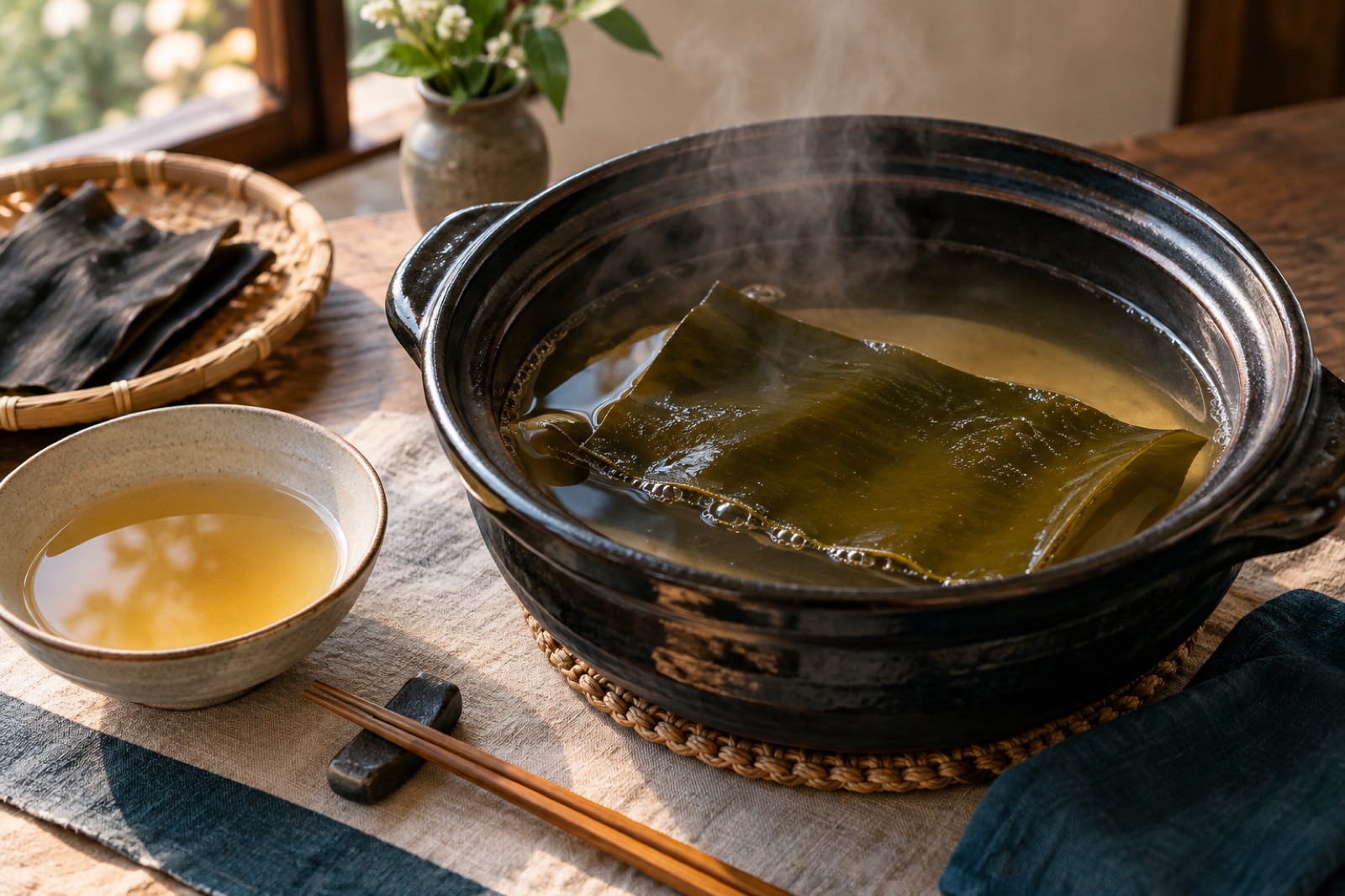
Put the kombu and water together in a jar, refrigerate for 10–14 hours, then remove the kombu (it has a second life in tsukudani or pickles — see kombu tsukudani). Keep the liquid refrigerated and use within five days.
The result is clear, faintly golden, tasting of deep, soft savouriness and sea-air minerality. Use it to replace water anywhere a drink wants a savoury backbone. Two immediate uses:
Kelp tea sounds medicinal and often is, but done lightly it is lovely — more like a savoury herbal infusion. Use roasted or toasted kelp, which brews with a warmer, almost waxy character than raw kombu.
Steep 4–5 minutes, strain. Add a slice of fresh ginger, a thyme sprig, or a squeeze of lemon. Do not exceed one cup a day at this concentration until you know your own iodine response, and if you take thyroid medication or have a thyroid condition, check with your clinician first — iodine and seaweed: how much is too much gives the underlying numbers.
For longer steeping traditions and other savoury warm sips, our sister guide seaweed teas and broths goes deeper into the warm-cup end of this world. This article lives mostly at the chilled and spirited end.
Washing is a bar technique for infusing a fat or flavour into a spirit and then removing the solids. For seaweed, it's simpler: no fat needed, just time.
Steep 45–60 minutes at room temperature, tasting at 30 minutes — you want a dry, oceanic whisper, not fish stock. Strain through a coffee filter. Keeps indefinitely at room temperature.
Steep 2–3 hours in the fridge. Kombu's glutamates translate beautifully into spirit; the finished vodka tastes like the sea smells at a distance. Strain through a coffee filter.
Mix 2 parts flaky sea salt with 1 part fine kelp powder and a pinch of crushed dried dulse or toasted nori. Use to rim any cocktail that would be improved by a windswept finish.
Stir with ice, strain into a chilled glass with a half-rim of the kelp salt. The result tastes like a very elegant seaside promise.
Build over ice in a tall glass. The nori plays beautifully with bitter tonic and citrus oils.
Stir with ice, strain into a tall glass over ice, kelp-salt rim. The kombu water and kelp powder give the drink a savouriness most bar versions only hint at.
Not every tide drink wants spirit. Two here stand up on their own:
Use food-grade, culinary seaweed only — the same kombu sheets, nori, kelp powder and dulse you would cook with. Avoid anything not labelled for food use, and skip harvested dulse that wasn't meant for the plate. Our shopper's guide to buying seaweed sustainably covers certification and origin. Farmed kelp is usually the greener choice here too — our work at Tidewright Harvest supports restoration-adjacent kelp farms so that more of what you pour comes from a thriving cultivated crop and less from wild forests.
Cold-steeped kombu water, drunk occasionally as one glass, is a modest iodine source — gentler than hot-brewed kombu tea and far gentler than eating the sheet. Daily large servings are a different matter. The specifics, including safe ranges and what stewing does compared to cold-steeping, are in our iodine and seaweed guide.
Do not rinse. The white surface powder on dried kombu is mannitol and glutamates — flavour, not dirt. A quick wipe with a barely damp cloth is all you need before steeping.
Yes. A sheet cold-steeped once still has most of its structure; simmer it gently for tsukudani, pickle it, or dry-toast and crumble into furikake. Boiling for stocks is where the flavour really gets exhausted.
Indefinitely at room temperature once strained, like any spirit. The flavour is at its best within three months; after that it softens but never spoils.
Dulse toasts beautifully as a rim garnish or crumbled into a Bloody Mary; wakame makes a delicate warm infusion but is too gentle for spirit washing; Irish moss is a thickener (as in Irish stout clarifying traditions) rather than a flavour infusion. Start with kombu and nori — they carry the best flavour into a liquid.
Kombu is the original umami. How glutamate works on the tongue, why temperature decides your dashi's flavour, and how to season with the sea.
Sofia Andersson ·
Kombu cha, kelp broths and seaweed sipping cups: recipes, extraction science, iodine limits and which species belong in a mug and which don't.
Sofia Andersson ·
A deep, technique-first guide to kombu dashi: glutamate science, exact temperatures, ichiban and niban infusions, and how to fix every common mistake.
Sofia Andersson ·