Kitchen11 min read
Kombu Dashi Masterclass: The Broth That Built a Cuisine
A deep, technique-first guide to kombu dashi: glutamate science, exact temperatures, ichiban and niban infusions, and how to fix every common mistake.
Sofia Andersson ·
Kombu cha, kelp broths and seaweed sipping cups: recipes, extraction science, iodine limits and which species belong in a mug and which don't.
There's a cup on my kitchen counter almost every cold morning: warm, pale gold, faintly savoury, smelling of the shore in the best way. It's a kombu sipping broth, and it sits somewhere between tea and soup — a hot drink that happens to be made from a kelp forest. Seaweed teas and broths are having a quiet moment in cafés and home kitchens, and they deserve it, provided you understand two things first: how extraction changes with heat, and how much iodine you're actually drinking.
This guide gives you four reliable recipes — a Japanese-style kombu cha, a kelp sipping broth, a roasted seaweed "tea" the way settlements on cold coasts have made them for centuries, and a spicy restorative broth — plus the safety numbers that matter and the species to choose (and avoid). Think of it as the drinkable companion to our five-minute kombu dashi.
People call anything steeped in hot water a tea, but seaweed drinks fall into two distinct families, and they behave differently.
Kombu cha and similar steepings are true teas in the practical sense: small quantities of toasted or powdered seaweed in just-off-the-boil water, steeped briefly, drunk like green tea. The flavour is light, saline, toasty. Extraction is fast and shallow.
Sipping broths are miniature stocks: a piece of raw or lightly toasted kombu steeped longer or simmered gently, often with ginger, shiitake, or aromatics. Extraction is deeper, the flavour fuller, and the nutrient pull — especially iodine — substantially larger. When in doubt, treat a sipping broth like food and a seaweed tea like a beverage.
This distinction matters most for iodine, so let's deal with that before the recipes.
Iodine is the one seaweed compound where "healthy" flips to "harmful" with quantity, and heat-based water extraction is extremely efficient at pulling it into your cup. Dried kombu can carry on the order of 1,000–3,000 micrograms of iodine per gram. Compare that with the roughly 150 micrograms per day that most adults need, and tolerable upper limits around 1,100 micrograms, and you can see the maths: a big mug of strongly extracted kombu broth can exceed the entire day's ceiling.
Three rules keep you safely in the pleasure zone:
The Japanese convenience classic, rebuilt properly. This is a steeped tea, not a simmered broth, so flavour is light and iodine extraction modest.
For one mug:
The shred versus powder choice changes the drink: shreds give a clean, sweet, subtly oceanic tea; powder gives a stronger, more saturated stock-like cup. Powder is efficient but far easier to overdo, so start low.
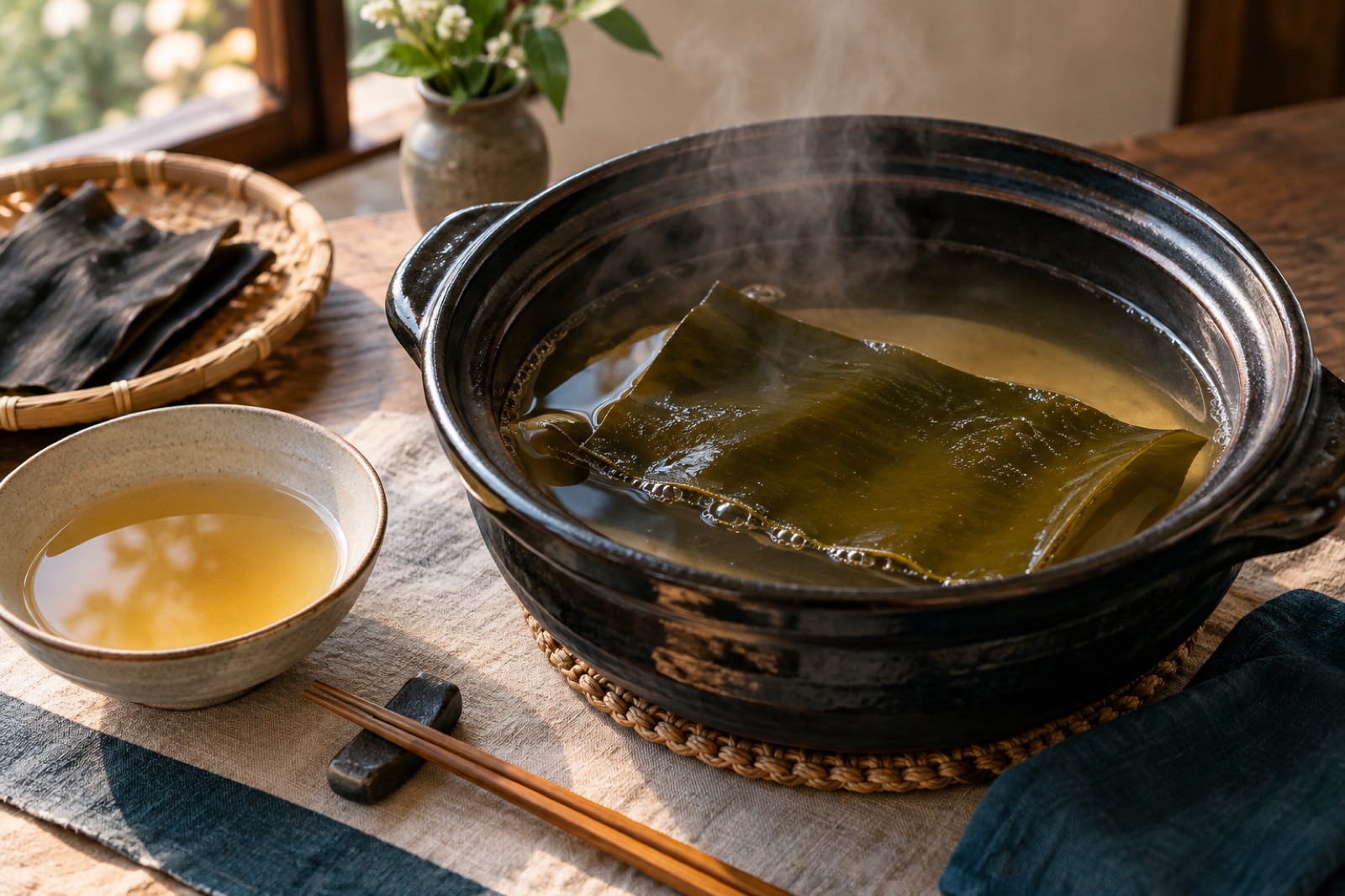
This is the cup on my counter. A small piece of kombu steeping gently, not boiling, with ginger and a slice of dried mushroom for the glutamate–guanylate synergy that makes everything taste finished.
For two mugs:
The shiitake does the heavy lifting here, multiplying the savouriness of the kombu without any animal products. Cold extraction works beautifully too: soak everything overnight in the fridge, pour, and warm gently. The flavour is cleaner and more vinous.
Along cold Atlantic and Pacific coasts, people have long toasted laver, dulse, or other thin seaweeds over fire and steeped them in hot water — a practical drink where fresh greens were scarce. The roasting step matters: it drives off raw marine notes and leaves a smoky, nutty cup.
For one or two mugs:
This is the lowest-iodine option of the set, because nori and dulse begin with a fraction of kombu's iodine and toasting pulls nothing extra into solution. It's the one to choose if you want a second daily cup.
Think of this as a seaweed-based alternative to ginger-and-chilli tea, built on a lighter kelp. Sugar kelp and wakame shine here because their flavour is gentler than kombu's and their iodine load lower.
For two mugs:
The heat and acidity cut any raw marine edge and make the broth feel medicinal in the nicest way.
Good in a mug: kombu (strongest, respect the dose), sugar kelp, wakame, oarweed in small amounts, and toasted nori, laver, and dulse for low-iodine sipping.
Poor choices for drinks: hijiki (best limited anyway due to naturally higher inorganic arsenic), and anything you haven't positively identified, or harvested from polluted water. Our edible seaweeds field guide profiles the safe, tasty species and how to tell them apart.
If you're sipping a kelp broth as a daily ritual, the supply chain matters as much as the recipe. Wild-harvested kelp from clean, fast-moving cold water tends to be richer and more complex in flavour; farmed kelp — such as the Tidewright Harvest longlines growing along restored coasts — offers traceability and consistent iodine testing batch to batch. Either way, look for sellers who publish iodine content per gram. A broth habit is only as good as its numbers.
One light cup a day — a small steep of kombu or a toasted nori tea — is fine for most healthy adults. Stronger broths are best treated as occasional, because daily deep extraction of kombu can push iodine intake above recommended limits. If you have a thyroid condition, are pregnant, or are feeding children, check with a clinician first.
No. Kombu cha is a Japanese seaweed tea made from steeped kelp. Kombucha is a fermented tea made from sweetened black or green tea — the similar names are a coincidence of transliteration.
Nori, laver, and dulse sit at the low end, especially when toasted and steeped briefly. Wakame and sugar kelp are moderate; kombu is at the high end and should be dosed smallest.
Yes — a second steep of the same piece gives a thinner, sweeter cup with less iodine. It's a good way to extend a serving, and afterwards the spent kelp can be cooked into rice, beans, or a stir-fry.
You can, though it divides opinion. Whisk a small amount of kombu or dulse powder into warmed oat milk with a pinch of salt for a creamy, ocean-forward drink. Keep the powder to a quarter teaspoon per cup, and treat it as a once-in-a-while experiment rather than a daily habit.
Filed under
A deep, technique-first guide to kombu dashi: glutamate science, exact temperatures, ichiban and niban infusions, and how to fix every common mistake.
Sofia Andersson ·
Seaweed iodine varies wildly by species — kombu can hold 100x nori's load. Safe serving sizes, prep methods that cut iodine, and who should be careful.
Sofia Andersson ·
A clear-eyed guide to seaweed nutrition: what's actually in kelp, nori and dulse, how iodine varies wildly by species, and how much is safe to eat.
Sofia Andersson ·