Kitchen9 min read
Seaweed Nutrition: Minerals, Iodine, and How Much Is Too Much
A clear-eyed guide to seaweed nutrition: what's actually in kelp, nori and dulse, how iodine varies wildly by species, and how much is safe to eat.
Sofia Andersson ·
Learn the main culinary seaweeds — kombu, wakame, nori, dulse and more — what each tastes like, how to buy it, and which pot or pan it belongs in.
Part of a learning path
This article is stop 1 of 9 on Cooking the Forest — Seaweed in your kitchen, from safety nerve to dashi craft.
Open a well-stocked Japanese pantry, a Breton fishmonger's cold case, or a Maine health-food co-op, and you will find the same thing in different costumes: sea vegetables. Seaweeds are vegetables the way tomatoes are — not botanically, but culinarily. They are eaten as greens, broths, seasonings and snacks, and each species has a distinct flavour, texture and job in the kitchen. This guide is a cook's map of the main edible seaweeds: what they taste like, how to buy them well, and what to cook first.
If you want the nutrition deep-dive, our seaweed nutrition guide covers minerals, fibre and the iodine question in detail. Here, we cook.
Chefs group seaweeds by use more than by colour:
A final orientation note: almost all culinary seaweed is sold dried or salted, because seaweed is 80–90% water. Drying is not a lesser format; it is the traditional format, and it concentrates umami.
Kombu (Saccharina japonica and its relatives) is a thick-ribbed kelp grown on longlines in Hokkaido, Korea and northern China. It is the single most important seaweed in Japanese cooking because it is the richest natural source of free glutamate — the molecule at the heart of umami. You don't eat kombu so much as interrogate it: a slow steep in water yields dashi, the clear golden stock behind miso soup, ramen broth and simmered dishes.
Taste: clean marine savour, faint natural sweetness from surface mannitol (never wash that white dust off). Buy: look for wide, thick, dark blades in sealed packets; it keeps for years. First cook: five-minute dashi — a 10 g piece in a litre of water, heated to a bare shimmer, then removed.
Wakame (Undaria pinnatifida) is the green in miso soup and the base of the classic sesame seaweed salad. Sold dried in shreds, it swells to eight or nine times its size in five minutes of cold water, turning from black threads to supple, jade-green ribbons. A brief blanch sets the colour brilliantly.
Taste: mild, sweet-sea, slippery-crisp — the most approachable texture of any seaweed. Buy: cut dried wakame for salads, whole fronds if you like stem crunch. Sodium-check salted "stem wakame." First cook: our wakame salad with sesame dressing — the restaurant dish, honestly made at home.
Nori is a red alga (Pyropia and Porphyra species) farmed in sheltered bays across Japan, Korea and China, then washed, chopped, sheeted and dried like paper. Heat it — a few seconds over a flame or in a dry pan — and its flavour transforms from mild and marine to nutty and almost meaty. That toasting reaction is why sushi nori, sheet nori (yaki-nori) and seasoned snack nori all taste different from the raw sheet.
Taste: roasted, savoury, faintly smoky; flaked nori (aonori is a related species) perfumes everything it touches. Buy: dark, even, unbroken sheets; store airtight with the desiccant packet, because crisp nori is everything. First cook: toast a sheet until it shifts from black to deep green and shatters, then crumble it over buttered rice or soft eggs.
Dulse (Palmaria palmata) is the North Atlantic's great edible red alga, hand-harvested for centuries around Ireland, Iceland and the Canadian Maritimes. Chewed raw it is salty and leathery; pan-fried in a slick of oil it crisps, browns and picks up an uncanny savoury depth that generations of cookbook writers have compared — with some poetic licence — to bacon. We put that comparison through its paces in cooking with dulse.
Taste: mineral, briny, with real Maillard depth when fried; the flakes are a natural seasoning for potatoes, eggs and fish. Buy: whole-leaf dulse for frying, flakes for the salt cellar. First cook: the DLT — dulse, lettuce, tomato, good bread, mayo.
Sugar kelp (Saccharina latissima) is the kelp of the cold Northern Hemisphere, now farmed widely from Maine to Norway. Blanched for a minute, its ribbons turn a startling bright green and lose their mucilaginous slip — at which point sugar kelp becomes a genuine vegetable: sliced into noodle-width strands for salads, turned into kelp pesto, or layered into gratins. Young blade edges are sweet-tasting (hence the name, from surface mannitol again); older, thicker midribs want longer cooking.
Taste: mild green-vegetable flavour with a long savoury finish when blanched. Buy: fresh-frozen blanched kelp from seaweed farms is excellent; dried works too but rehydrates chewier. First cook: blanch, slice, and dress with sesame oil, rice vinegar and soy as you would blanched spinach.
If you want to learn six seaweeds in a week without buying a cookbook:
Nori. You already know it from sushi, it toasts in seconds, and its flavour is the gentlest. After that, wakame — it rehydrates in five minutes and tastes like a mild, silky salad green.
Not inherently. Farmed kelps grow in months on longlines in clean, tested water, and responsible farms seed their stock from local genetics and monitor water quality. Good harvest matters more than the wild/farmed label; choose producers who test and trace either way.
Yes, where regulations allow — and it is deeply enjoyable. Take only upper blades (leave the holdfast and stipe to regrow), harvest from clean open-coast water away from marinas and outfalls, and learn two or three unmistakable species before expanding. Check local rules first; some coasts require licences or restrict harvest to protect recovering kelp forests.
Good seaweed tastes of the sea the way a good oyster does — clean and briny, not fishy. A fishy note usually means old, damp-stored or poorly dried product. Fresh dried seaweed should smell like a clean beach wind.
Years, if airtight and dry. Kombu actively matures with age. Nori is the exception: it is best within a few months of opening because crispness fades, though it stays safe much longer.
A clear-eyed guide to seaweed nutrition: what's actually in kelp, nori and dulse, how iodine varies wildly by species, and how much is safe to eat.
Sofia Andersson ·
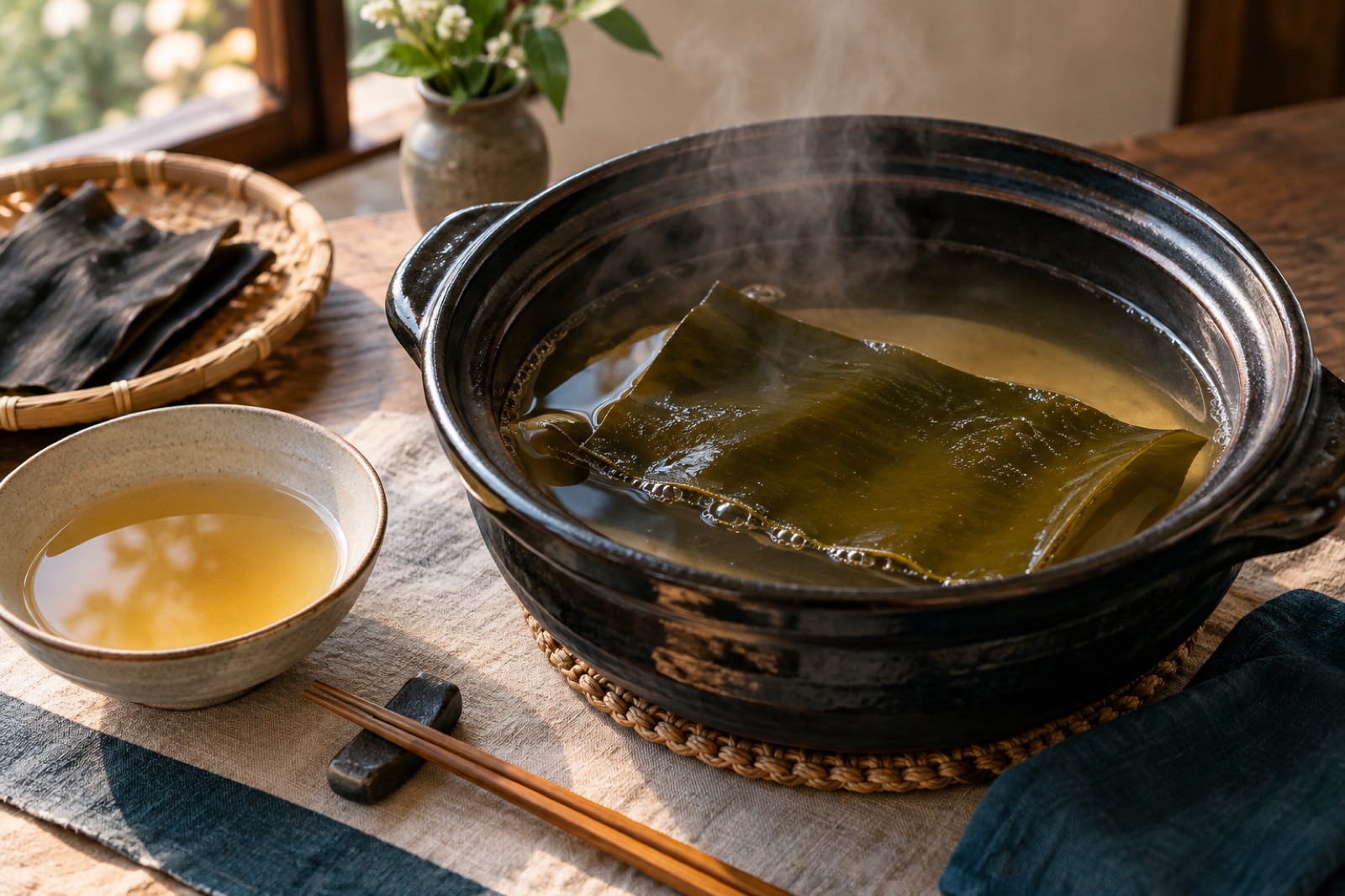
A deep, technique-first guide to kombu dashi: glutamate science, exact temperatures, ichiban and niban infusions, and how to fix every common mistake.
Sofia Andersson ·
How to cook dulse — the North Atlantic red seaweed that fries up smoky and crisp. Pan-frying, flakes, the DLT sandwich, and buying and storage tips.
Sofia Andersson ·