Kitchen9 min read
Miso Soup with Wakame: The Fifteen-Minute Classic Done Right
How to make genuinely good miso soup at home: dashi fundamentals, when to add wakame, the one boiling rule, and why the miso goes in off the heat.
Sofia Andersson ·
Cut wakame is the default for miso soup, but kombu, nori, sea lettuce and other seaweeds all have roles. Ratios, timing rules and what to skip.
The short answer: dried cut wakame is the standard seaweed in miso soup — silky, mild, and rehydrated in the time it takes to set out bowls. Kombu plays a different role: it builds the dashi stock underneath the soup and almost never appears in the bowl itself. Beyond those two, at least four other seaweeds make excellent miso soup, each bringing a different texture. Here's how to choose, how much to use, and which tempting candidates to leave out.
If you want the finished dish rather than the ingredient logic, our miso soup with wakame recipe walks the fifteen-minute classic from start to finish.
Open any Japanese pantry and you'll find a small bag of kiri-wakame — dark, desiccated curls that look unimpressive and perform brilliantly. Dropped into hot soup, cut wakame rehydrates in three to five minutes, expanding roughly ten-fold, into tender green ribbons with a silky surface and a gentle, sweet-green flavour that never fights the miso.
Three things make it the default:
The portion most cooks overshoot: dried wakame is measured in single teaspoons, not handfuls. About one rounded teaspoon of cut wakame per bowl (roughly 1–2 grams dry, giving 15–25 grams rehydrated) is the sweet spot. A spoonful looks stingy until you watch it unfurl.
Wakame comes in forms that behave differently enough to matter at the pot.
The plant behind all of this, Undaria pinnatifida, has a fascinating double life as both prized crop and world-travelling invader — the wakame species profile tells that story.
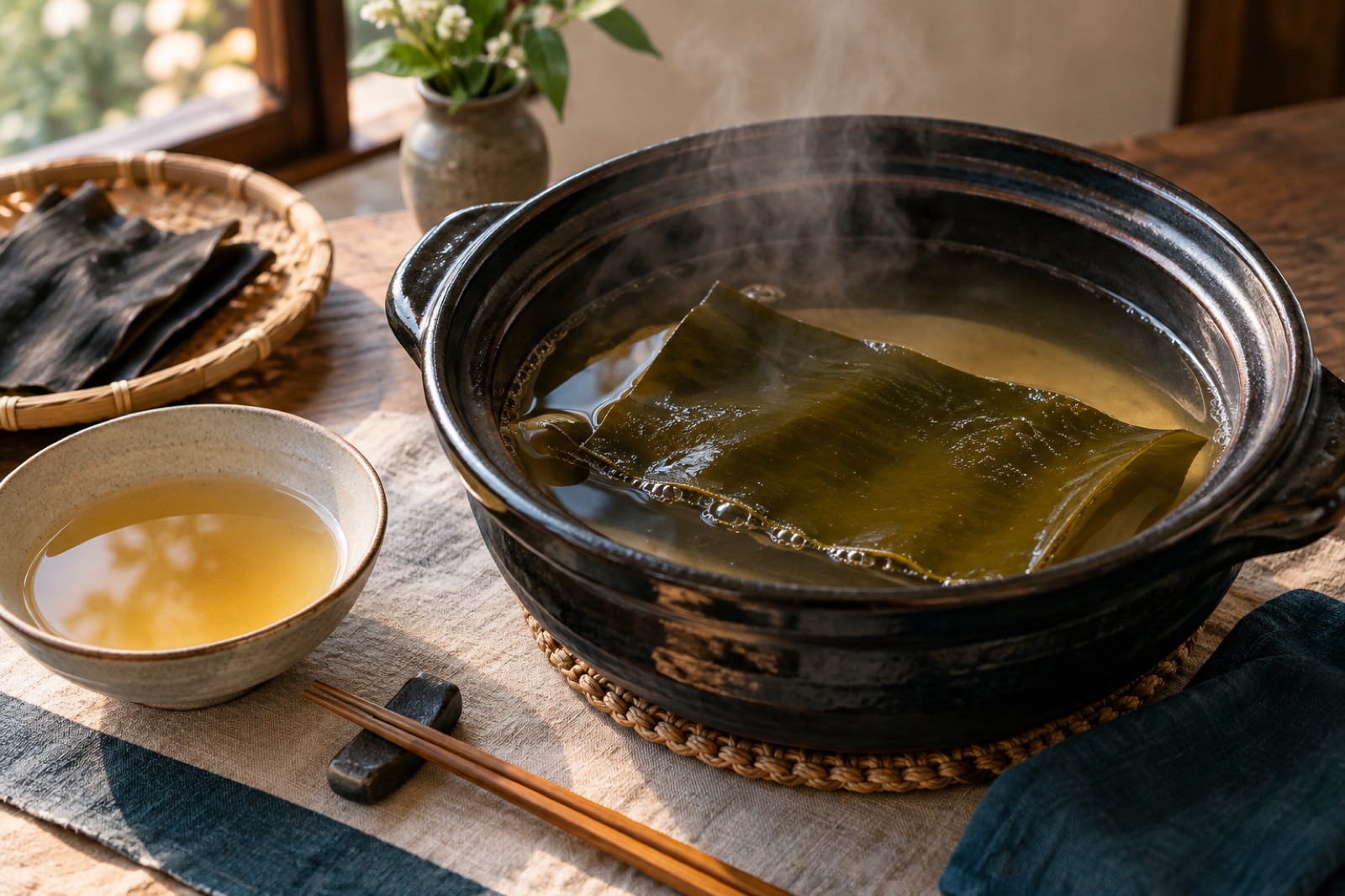
If wakame is in the bowl, kombu is under it. Nearly every Japanese soup begins with dashi, and gently steeped kombu — alone or with shaved bonito — provides its glutamate-rich base. That quiet depth is what makes restaurant miso soup taste like more than salted paste water.
The important distinction for shoppers: the kombu builds the stock and then leaves. A ten-gram square steeped per litre of water (never boiled hard — bitterness lives over 80°C) is lifted out before the miso goes in. Our five-minute kombu dashi recipe has the exact method, including the cold-brew overnight shortcut.
Spent dashi kombu isn't waste — slice it thin and simmer it with soy and mirin for tsukudani — but it doesn't belong chewy and whole in a miso bowl.
Nori. Tear a toasted sheet into wide shards and float them on the finished bowl. They soften in a minute, contributing pure roasted aroma. Many Japanese diners grew up on nori miso soup; it's arguably co-default. Per bowl: a quarter to a half sheet, added by the eater, not the cook, so it doesn't drown.
Aosa (sea lettuce). Delicate, vividly green, faintly sulphur-sweet in the best way. A small pinch per bowl, added off heat — it rehydrates almost instantly and overcooks into mush if boiled. We cook with its close relatives constantly; see our sea lettuce recipe collection for the flavour register.
Arame. Feathery black strands, mild and slightly sweet. The one that needs forethought: soak ten minutes, drain, then simmer two to three minutes in the dashi before the miso goes in — it never gets truly silky, and that's its charm. A teaspoon dried per bowl.
Akamoku and other gluey browns. Japanese sticky seaweeds (akamoku, gagome kombu) turn broth lightly viscous and deeply savoury. A small pinch per bowl, fully dissolved, is a tonic; a heavy hand produces slime. Start low.
Tororo kombu. Kombu shaved into wisps that dissolve in hot liquid, leaving body and kelp flavour without any chewy pieces. The neatest trick in the category: instant kombu presence in a bowl where no dashi was made.
Earthy, mineral, assertive — hijiki simmered into miso soup in small amounts (a half-teaspoon dried per bowl, pre-soaked) has old culinary precedent. But hijiki accumulates inorganic arsenic at levels that have led food safety agencies in several countries to advise against eating it, and soaking reduces rather than eliminates the issue. We cover the evidence and the practical rules in heavy metals in seaweed. Our position in the test kitchen: there are too many good alternatives to bother.
Miso soup has one immovable law: miso never boils. Boiling drives off its aromatic volatiles and dulls fermented complexity into flat salt. The seaweed schedule follows from that rule:
Follow that order and every seaweed in this guide lands at its best texture without any extra work.
For miso-soup duty, buy small bags of cut wakame from a Japanese or Korean grocer, or from traceable seaweed suppliers who document origin and batch testing. Dried seaweed keeps for a year in an airtight container away from light and humidity; once the bag opens, decant to a jar, because cut wakame rehydrates from kitchen steam alone and turns leathery at the edges.
Yes — fresh wakame is excellent in miso soup and needs no rehydration. Rinse it, slice it, and add it in the last minute of cooking off the heat. Use roughly three times the dried quantity by weight, accounting for the water it already holds.
Either it boiled, or it sat in the hot pot too long before serving. Wakame holds its bright green for only a few minutes in hot liquid; heat and time push it toward olive grey. It still tastes fine. For the vivid restaurant colour, add wakame bowl by bowl — a pinch into each serving bowl, hot soup ladled over.
No — different species, different jobs. Wakame (Undaria pinnatifida) is a tender blade eaten in the bowl; kombu (Saccharina japonica) is a thick kelp used to build stock. Our wakame vs kombu vs nori comparison maps all three side by side.
Effectively none at these quantities. A teaspoon of dried wakame contributes single-digit calories while adding minerals and the satisfaction of a proper bowl — one reason miso soup is such a useful daily habit.
How to make genuinely good miso soup at home: dashi fundamentals, when to add wakame, the one boiling rule, and why the miso goes in off the heat.
Sofia Andersson ·
A deep, technique-first guide to kombu dashi: glutamate science, exact temperatures, ichiban and niban infusions, and how to fix every common mistake.
Sofia Andersson ·
Sea lettuce (Ulva) is the most underrated edible seaweed. How to buy, wash and cook it — salads, soups, aonori seasoning and a seaweed sourdough.
Sofia Andersson ·