Kitchen6 min read
Wakame Salad: Restaurant Technique at Home
Make wakame seaweed salad the proper way: rehydrate, blanch to jade green, dress with sesame and rice vinegar. Recipe, technique and sourcing.
Sofia Andersson ·
How to make miyeokguk, the Korean seaweed soup eaten to honour mothers and birthdays — with the culture, technique and common mistakes explained.
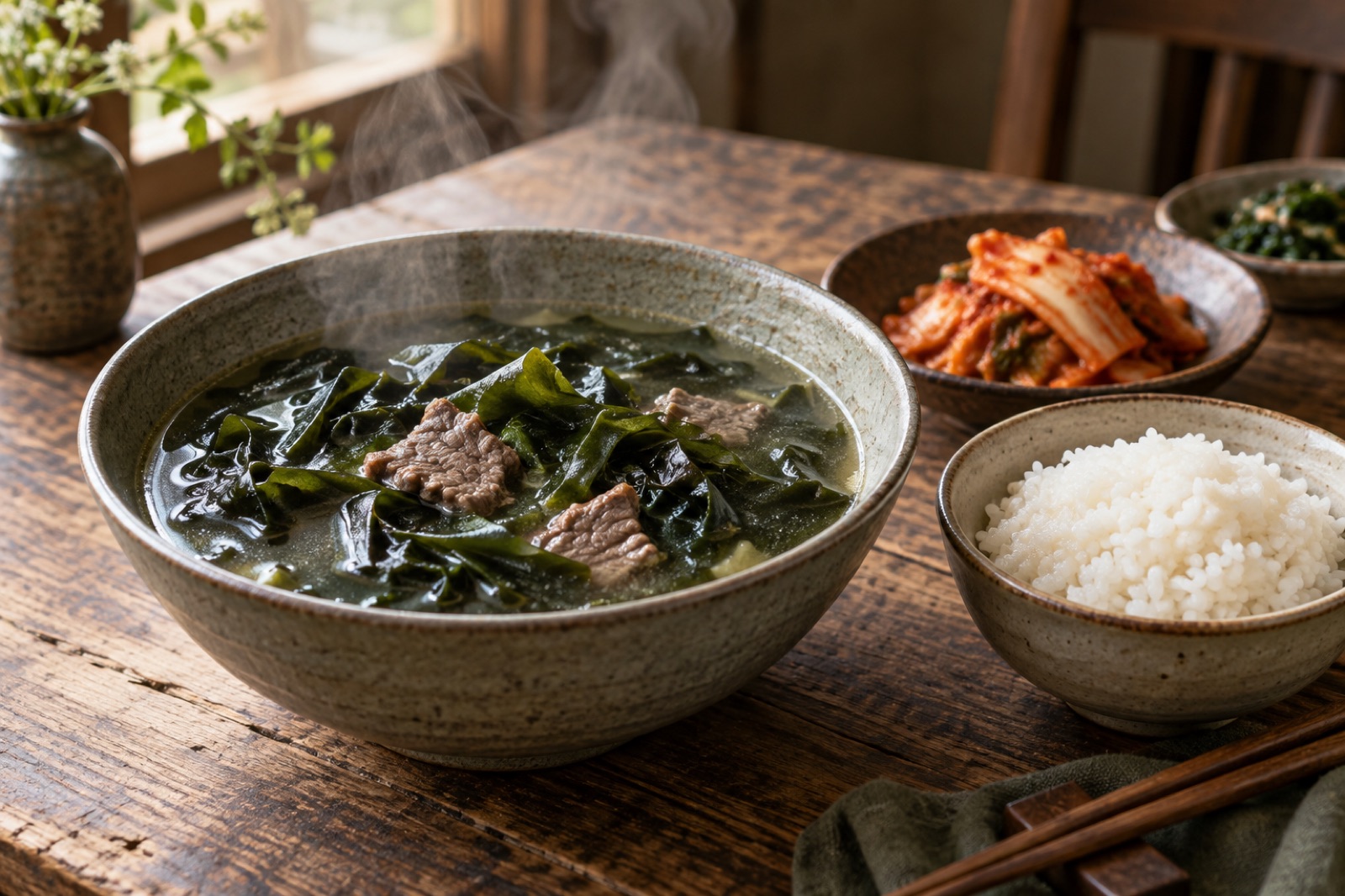
In Korea, the first thing a new mother eats after giving birth is not cake or champagne — it is soup. Specifically miyeokguk, a clear, gently beef-scented broth full of silky brown seaweed. Mothers eat it daily for weeks while recovering, and so, every birthday for the rest of your life, you eat miyeokguk as a way of honouring your mother — the meal she ate after bringing you into the world. The custom runs deep enough that students traditionally dodge the soup on exam days: an old superstition holds that the slippery seaweed will make them "slip" on the test.
Cooking a dish this loaded with meaning deserves a little respect and a little knowledge — both of which, happily, also make it taste better.
Miyeok is Undaria pinnatifida, the same species sold elsewhere as wakame. In its dried form it looks impossibly dark and shrivelled — like compressed tea leaves — then unfurls fifteen-fold in water within minutes into glossy, deep-green ribbons with a ruffled central rib. Buy bags labelled "dried seaweed for soup" (the cut pieces) rather than the whole leathery blades, which include thicker stems best blanched and seasoned as a side dish.
Two things matter when buying: look for harvested-in-clean-waters labelling, and buy smaller bags more often — our guide to storing seaweed explains why dried seaweeds lose their perfume to humidity. The same seaweed, served cold with vinegar dressing, becomes the side dish miyeok-muchim, a cousin of the wakame salad most people meet first in Japanese restaurants.
The single step that separates memorable miyeokguk from watery ones: the soaked seaweed is stir-fried in toasted sesame oil before any liquid goes in. This coats the fronds in aromatic fat, drives off raw sea flavours and — because the soup then simmers without a fiercely agitating boil — keeps the broth clear and the texture silky.
Serve with steamed rice and kimchi. Traditionally rice goes right in the bowl.
Replace the beef with thick-sliced king oyster or shiitake mushrooms, sautéed the same way, and use a light kombu dashi as the liquid. A teaspoon of doenjang (fermented soybean paste) dissolved at the end deepens the broth beautifully. The sesame-oil fry step matters even more here — it is where the depth comes from.
Miyeokguk belongs to the postpartum tradition of sanhujori — the weeks of rest and warming foods observed after childbirth. Seaweed species hold calcium, iron (from the broth's beef) and gentle fibre, and the hot liquid itself is the point in a tradition that favours warm, easy digestion. One historical wrinkle charming in its own right: some Korean historians trace the custom to observations of whales eating seaweed after calving — a story repeated so often it has become folk fact, whether or not any early cook actually watched a whale.
The birthday meal, then, is gratitude made edible. If you cook miyeokguk for someone's birthday, say so when you serve it. The dish carries its meaning well.
Yes for frozen (thaw, rinse, proceed); fresh is rare outside coastal markets but works if blanched 30 seconds first to set the colour. Dried is the classic form and stores best — and its intensity survives slow simmering better.
Both. The soup is hydrating, warm, and carries protein, iron and minerals; the seaweed itself is a good source of iodine, calcium and fibre in modest amounts. What it is not is magic — and for daily eating, keep overall seaweed intake varied as our seaweed nutrition guide explains.
Usually one of three things: the seaweed went in unfried, the broth needed more simmering time with the beef, or the soy sauce went in too early and the soup was under-salted at the end. Taste after the full simmer and adjust then.
Other brown kelps (such as dasima/kombu kelp) belong in stockpots, not the bowl — they stay too tough and thick. Stick with miyeok/wakame for the eating; kombu is for flavouring the broth.
A year or more in a tightly sealed bag, cool and dark. If it fades to greyish-brown or smells dusty, replace it — the colour and aroma should stay deep green-black.
Make wakame seaweed salad the proper way: rehydrate, blanch to jade green, dress with sesame and rice vinegar. Recipe, technique and sourcing.
Sofia Andersson ·
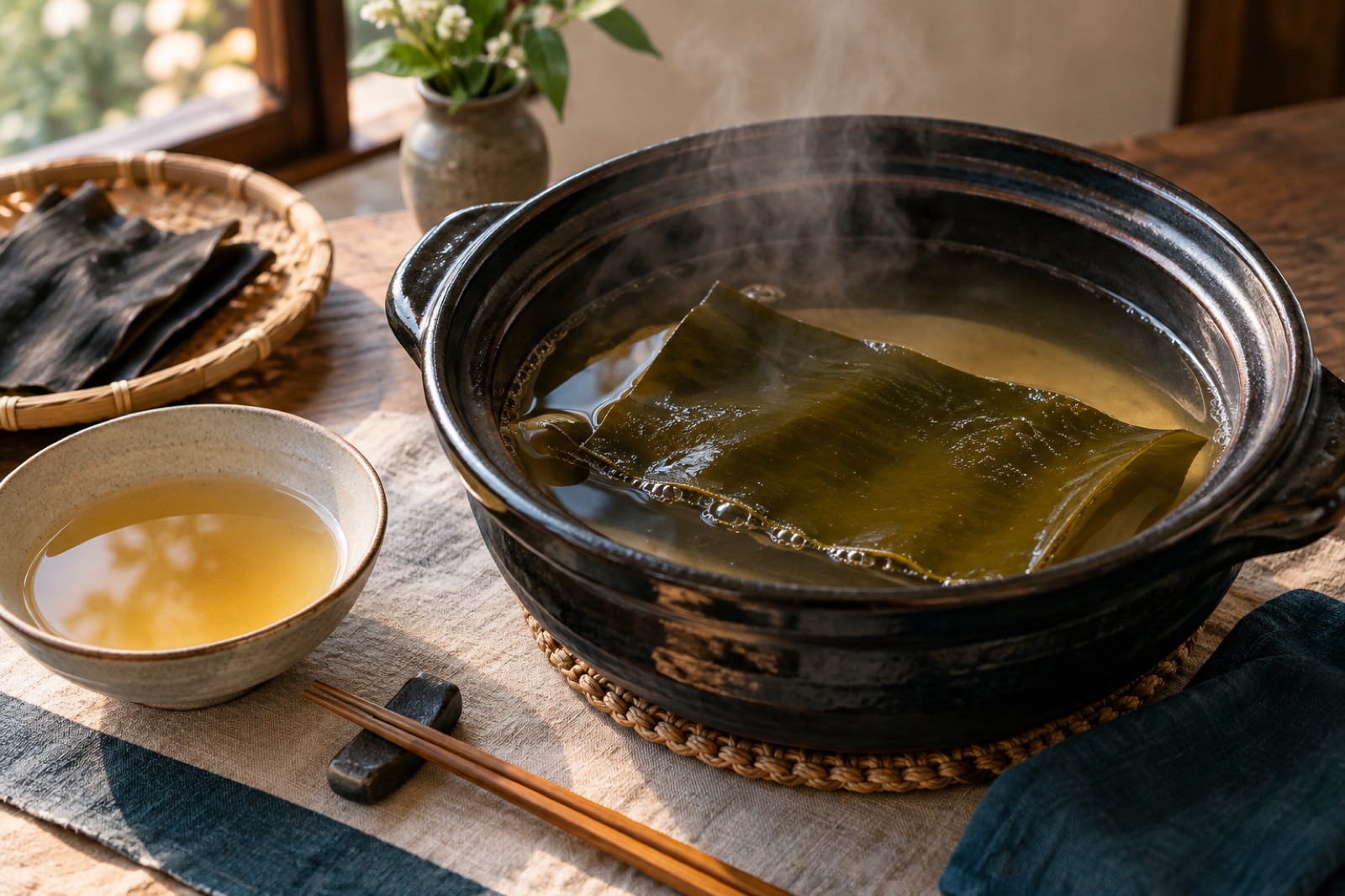
A deep, technique-first guide to kombu dashi: glutamate science, exact temperatures, ichiban and niban infusions, and how to fix every common mistake.
Sofia Andersson ·
A clear-eyed guide to seaweed nutrition: what's actually in kelp, nori and dulse, how iodine varies wildly by species, and how much is safe to eat.
Sofia Andersson ·