Kitchen11 min read
Kombu Dashi Masterclass: The Broth That Built a Cuisine
A deep, technique-first guide to kombu dashi: glutamate science, exact temperatures, ichiban and niban infusions, and how to fix every common mistake.
Sofia Andersson ·
Niban dashi is the second extraction from spent kombu and katsuobushi — milder, deeper, and made for miso soup and simmered dishes. How to brew and use it.
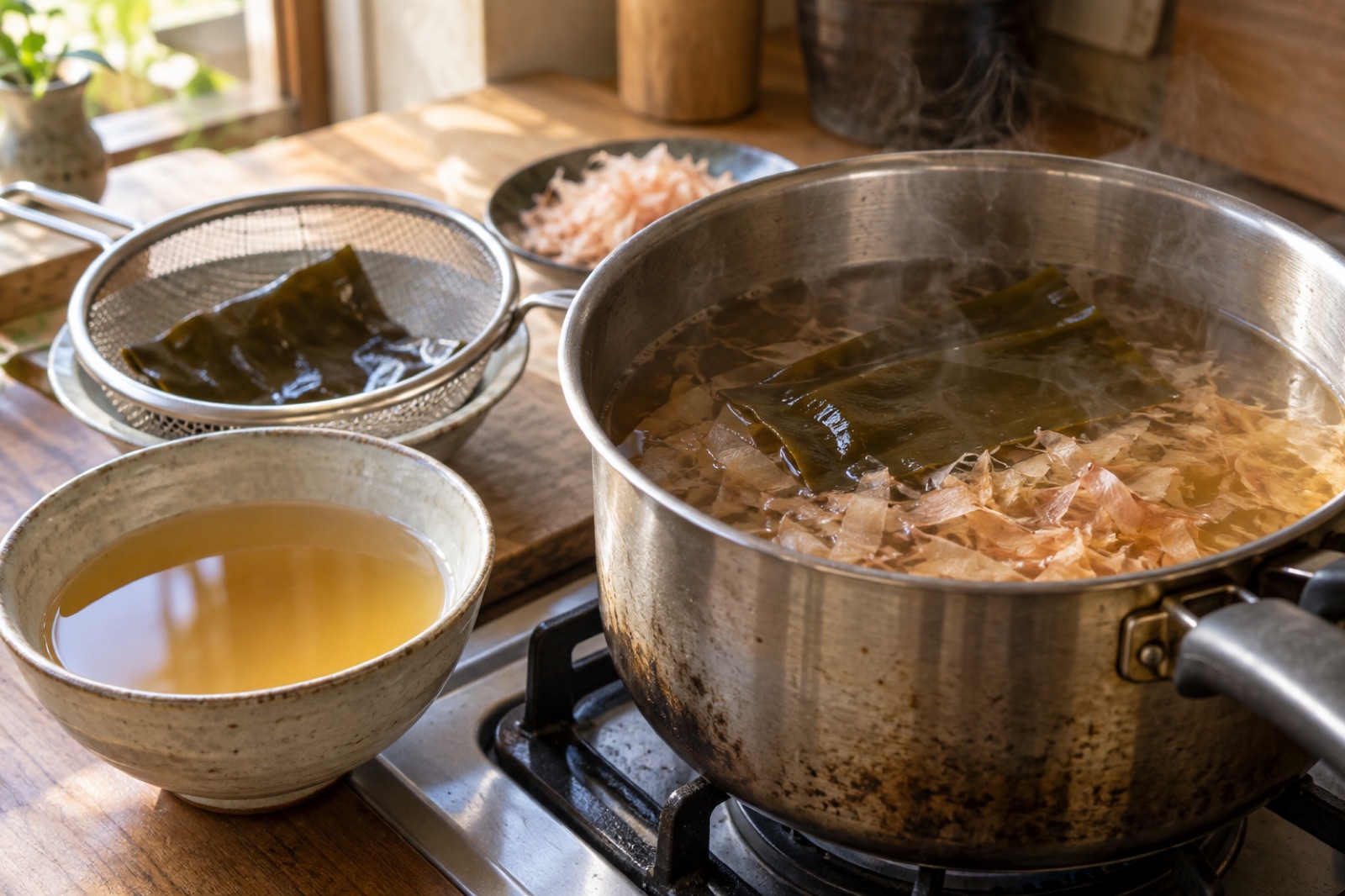
In a Japanese kitchen, nothing as generous as a sheet of kombu gets used once. The elegant, crystal-clear stock you make first — ichiban dashi, the "first brew" — goes to the dishes where broth is nearly naked: clear soups, delicate dipping sauces, the custard of chawanmushi. Then the same kombu and katsuobushi go back into the pot for a second, longer, rougher simmer. What comes out is niban dashi — "second brew" — and it is quietly the most useful stock in the building.
If you've been throwing your dashi ingredients away after one use, this article is your correction. Niban dashi is milder in aroma but rounder in body, made for the hundred daily dishes where dashi plays a supporting role: miso soup, simmered vegetables, noodle broths, rice. It takes ten minutes of mostly unattended simmering, costs nothing you haven't already spent, and halves the cost of every future pot of soup. Our five-minute kombu dashi method covers the first extraction; here is everything that comes after.
Dashi's umami comes from two main actors: glutamate from kombu, and inosinate from katsuobushi (smoked, dried, fermented skipjack tuna). These compounds don't leave their homes at the same speed or in the same way. In a careful first brew — kombu steeped cool, brought up slowly, katsuobushi barely kissed with heat for a minute or two — the pot receives the most volatile, aromatic fraction: bright, clean, intensely savoury, with a shimmer of smoke and sea.
But the kombu still holds plenty: deeper glutamate, soluble fibres, a gentle natural sweetness. The katsuobushi flakes, having surrendered their perfume, still carry inosinate and amino acids locked deeper in the tissue. A second extraction — longer, hotter, allowed to actually boil — pulls out this remainder. The result is a dashi that is less fragrant but fuller: slightly cloudier, faintly more bitter-edged if you push it, and with a body that stands up to miso paste, soy sauce and long simmering.
Think of it like olive oil: ichiban is the finishing pour; niban is the bottle you cook with.
You need only the spent ingredients from a pot of ichiban dashi — the kombu sheet and the strained katsuobushi — plus fresh water.
Taste it. Niban dashi should be savoury and a little blunt — a stock, not a tea. If it tastes like hot water, simmer longer next time, or use less water.
Kombu-only dashi seconds beautifully. Steep your kombu for the first brew as usual, then simmer the same sheet 10 minutes for a deeper, silkier niban — it's superb in vegetable soups and bean pots. Shiitake-kombu dashi also gives a hearty second extraction; our vegetarian dashi guide covers the plant-only versions in full.
The rule of thumb: anywhere dashi is seasoned, simmered or combined, niban is not merely acceptable — it's the correct, traditional choice.
This is niban dashi's home address. Miso paste is loud — salty, funky, assertive — and the fine aromatics of ichiban dashi would be spent on it. Everyday miso soup in Japanese home cooking is built on second extraction — or on one rough-and-ready combined brew where everything simmers together from the start. Our miso soup method works beautifully with niban.
Root vegetables, pumpkin, eggplant, bamboo shoots, dried shiitake, fish cakes: the whole family of nimono — ingredients simmered in dashi with soy, sake and mirin until seasoned through — runs on niban dashi. The stock simmers, reduces, absorbs; delicacy would vanish anyway, but body survives the reduction. Daikon simmered in niban dashi until translucent is one of the great cheap pleasures of Japanese cooking.
Noodle broths. A niban base, seasoned with soy and mirin into kaeshi-style broth, makes an entirely respectable udon or soba soup for a weeknight.
Rice and grains. A splash of niban dashi in the rice cooker — or a full substitution like our takikomi gohan — gives rice a background savouriness that reads as "something's different here" rather than "seaweed."
Chawanmushi and tamagoyaki, in home versions, happily use niban; restaurants may insist on ichiban for the clarity. Ramen and soups generally: any brothy dish built from multiple strong elements is niban territory.
Even a twice-used kombu sheet isn't done. Traditional kitchens finish the whole chain:
One sheet of kelp, properly used, gives you a litre of clear stock, a litre of soup stock, a jar of condiment and a sprinkle for days of rice. That is the whole ethos of dashi in a single sentence: an ingredient this full deserves to be emptied completely.
Second dashi keeps about as well as first: three to four days refrigerated in a sealed bottle, or up to a month frozen — freeze it in ice-cube trays or flat small bags so you can drop a block straight into a pot. Because niban carries more extracted solids, it's slightly more perishable than ichiban; if it smells sour or looks ropy, it's done. Many cooks make ichiban and niban on the same morning every few days and simply live between batches.
No — it's a different instrument. High-end kitchens prize ichiban for clear soups because delicacy is the dish there. But a great miso soup, a pot of simmered pumpkin, a breakfast tamagoyaki: these are built on second stock throughout Japanese home cooking, and have been for centuries.
Yes, and many busy home cooks do exactly that: kombu and katsuobushi simmered together 10–20 minutes in one pot. You lose the option of a crystal-clear stock for special dishes, but gain a workhorse dashi for everything else in one step.
Twice in the pot is the standard; a third extraction is usually too faint to bother with. But the sheet itself keeps giving: after two brews it still makes excellent tsukudani, pickles or a simmering addition for beans.
Extremely well, as a stealth stock. Use it to cook beans (with a nod to the kombu-and-beans tradition), as the liquid in a vegetable soup, or to deglaze a pan for grains. It reads as savoury depth, not as "fish" or "seaweed."
Two likely culprits: the kombu was boiled hard and long in the first brew (releasing bitter compounds early, leaving the second rough), or you simmered the second brew past 20 minutes. Keep ichiban below boiling, keep niban at a lively but timed simmer, and bitterness stays away.
A deep, technique-first guide to kombu dashi: glutamate science, exact temperatures, ichiban and niban infusions, and how to fix every common mistake.
Sofia Andersson ·
Tsukudani turns the kombu left in your dashi pot into a glossy, sweet-savoury relish for rice. Recipes, ratios, storage and why nothing leaves the kitchen.
Sofia Andersson ·
How to make genuinely good miso soup at home: dashi fundamentals, when to add wakame, the one boiling rule, and why the miso goes in off the heat.
Sofia Andersson ·