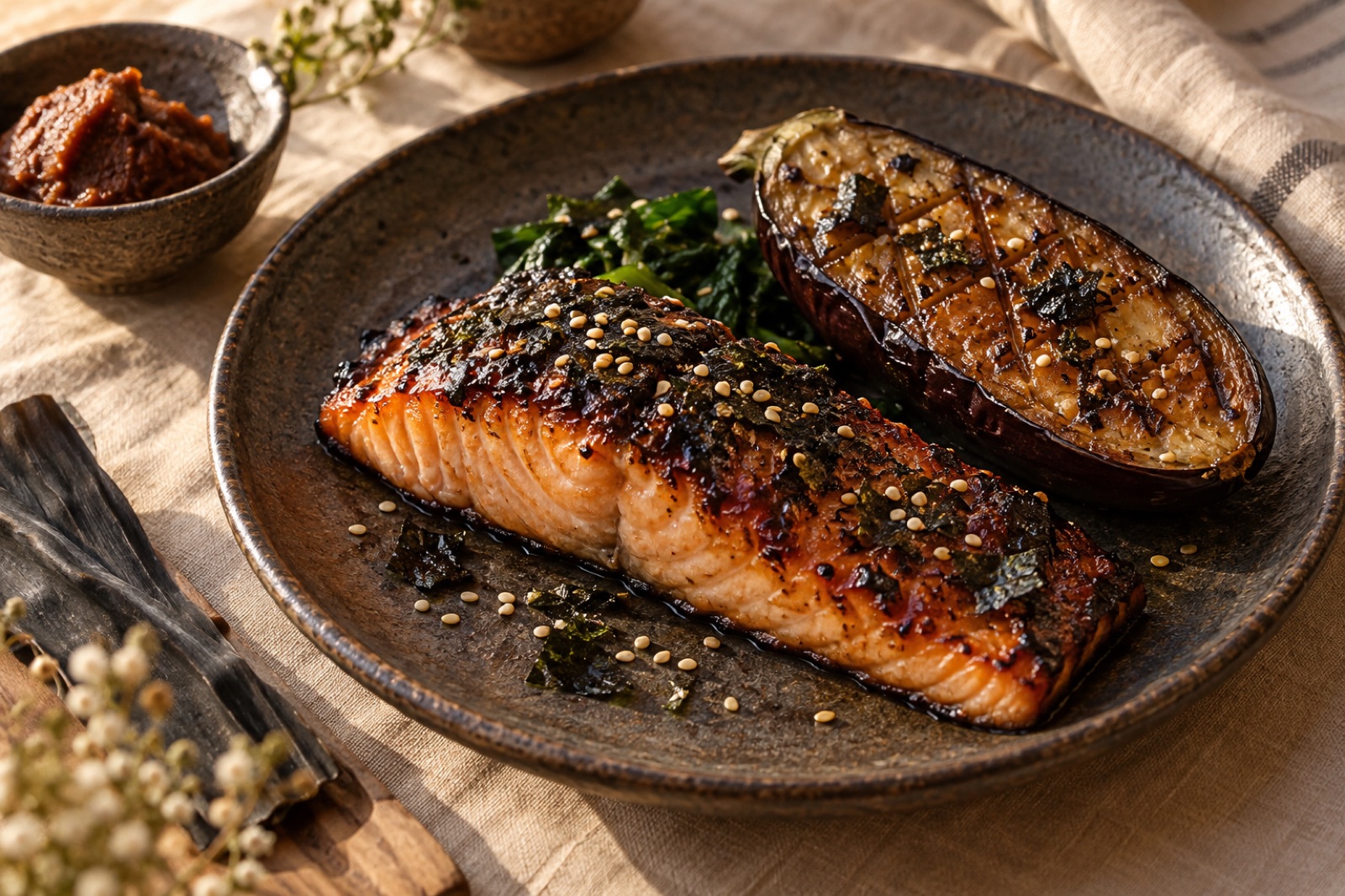
Here is the most useful thing I know about cooking seaweed quickly: blend it into miso and put it under a grill. Miso and seaweed are the two deepest umami wells in the pantry — one fermented, one oceanic — and they were effectively made for each other, because each's glutamates amplify the other's inosinates and guanylates when all three land on the same piece of fish. Mixed into a paste with a little sweetness and spread thin under high heat, they become a glaze that bronzes, blisters and tastes like a restaurant dish. This is a fifteen-minute technique, and it works on salmon and aubergine and tofu and corn with almost no adjustment.
Below: the base recipes, the ratios worth memorising, the broiling technique that makes it work (glaze at the end, always), and a rundown of what to put it on.
Why miso and seaweed work together
Miso is cooked soybeans fermented with koji — a paste dense with free glutamate from protein breakdown. Kelps like kombu carry glutamate too (it is why kombu dashi tastes like more than water), while nori and other red seaweeds bring a different profile: glutamate plus a briny, almost roasted character that deepens dramatically under dry heat. Layer them and the savouriness compounds rather than doubles — the classic demonstration of umami synergy that drives dishes like miso soup with wakame, where the broth tastes bigger than anything in the pot.
A glaze is that synergy, concentrated and fixed to a surface with heat.
Base recipe one: kombu-miso glaze
This is the all-round glaze: dark, savoury, faintly smoky from the kombu.
- 4 tablespoons miso (red aka miso for maximum depth; white shiro miso for a gentler version)
- 1 tablespoon very finely powdered kombu, or 2 tablespoons finely minced soaked kombu
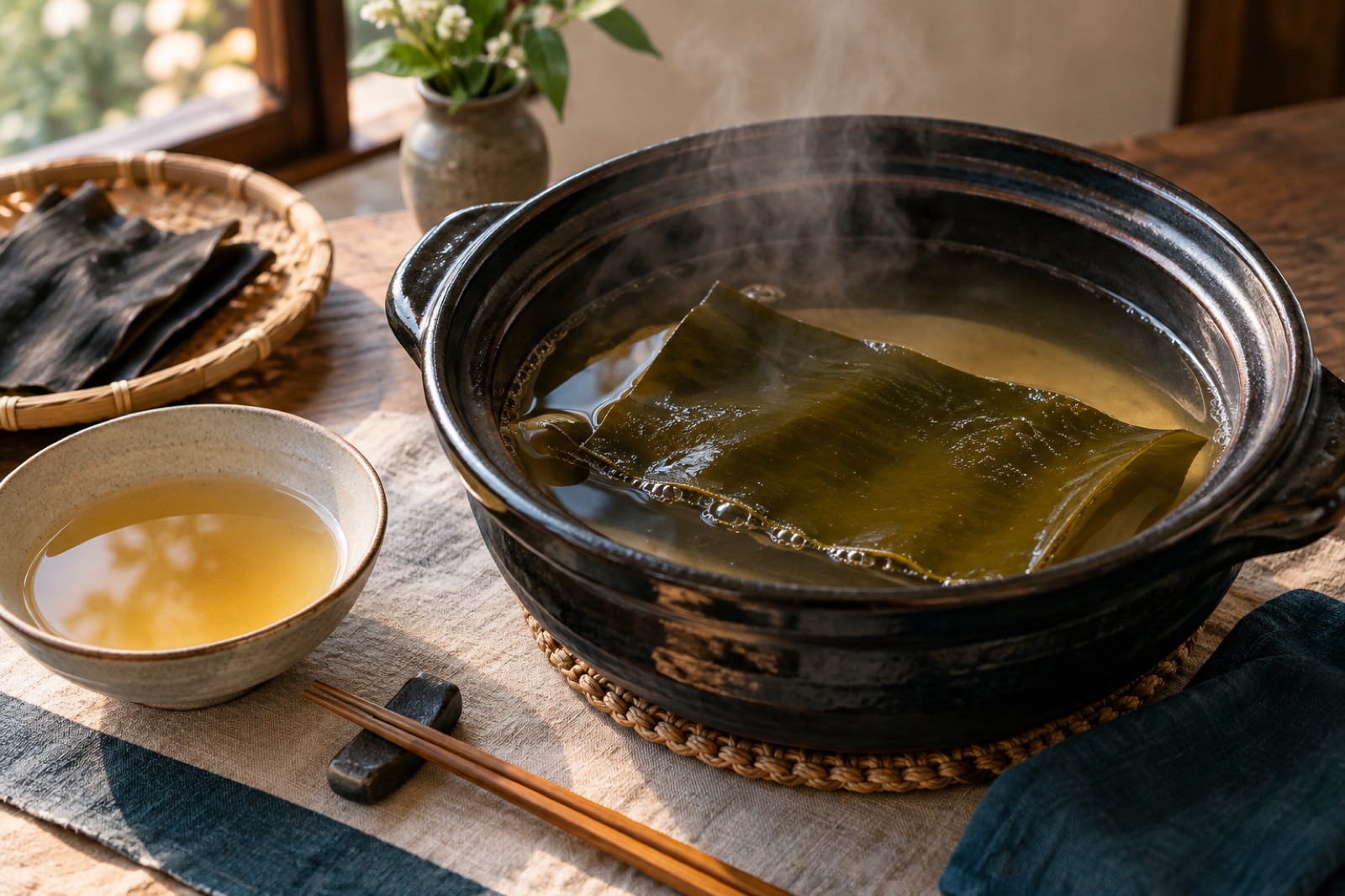
For the powder: grind dried kombu in a clean spice grinder or mortar, then sieve. Two minutes of work and the powder keeps in a jar for months — this is, incidentally, the single best use for your dashi kombu odds and ends once they have dried again on the counter.
For the minced version: use kombu that has already been soaked or simmered for dashi. Squeeze it dry, mince it as finely as patience allows, and expect a glaze with a pleasing rustle of texture — less elegant, more interesting.
- 1 tablespoon mirin (or 2 teaspoons sugar dissolved in 1 tablespoon sake or water)
- Optional: 1 teaspoon grated ginger, or a small splash of sesame oil
Stir to a spreadable paste. This glazes two fish fillets, a whole aubergine split down the middle, or a block of tofu.
Base recipe two: nori-miso glaze
Where the kombu glaze is deep, the nori glaze is bright and briny — better on delicate white fish and spring vegetables.
- 4 tablespoons white miso
- 2 sheets toasted nori, crumbled and ground to a coarse powder (see our nori toasting guide — toast counts double here, since raw nori under the grill can scorch before it blooms)
- 1 tablespoon mirin, 1 teaspoon rice vinegar
- Optional: a pinch of shichimi togarashi or finely grated yuzu or lemon zest
The vinegar is the difference from the kombu version: nori-miso wants a small acid lift to stop it reading flat. Grind the nori in a spice grinder or crumble it mercilessly by hand; a few small flecks are fine and look handsome after grilling.
The broiling technique that matters
Miso is mostly protein and sugar, which means it moves from mahogany to acrid in about ninety seconds. Everything in this technique exists around that fact:
- Cook the food underneath first, mostly. Fish fillets should be two-thirds done — bake at 200 °C, or pan-sear the flesh side and flip. Aubergine should be roasted until tender. Tofu should be pressed and lightly browned. The glaze is a finish, not the cooking method.
- Spread the glaze thin. Three to four millimetres. Thick glaze chars on top while staying raw and harsh underneath; thin glaze caramelises all the way through.
- Get it close to the heat. Rack in the top third, food 8–10 cm from a fully preheated grill element.
- Watch it. Two to four minutes, depending on your grill. Pull when the surface is blistered and deep gold with a few dark freckles — "deep gold" is the tension to manage: pale means flat, black means bitter.
- Rest three minutes. The glaze sets; the fish's juices redistribute. This is when you scatter spring onions or sesame.
For aubergine, score the cut face in a crosshatch first — the glaze fills the cuts. For corn, boil the cobs first, then glaze and grill, turning once. For tofu, press it for twenty minutes so the surface can actually take the glaze rather than weeping under it.
What to glaze, ranked by effort
Fish fillets — salmon, black cod, mackerel. The canonical use. Oilier fish stand up to the strongest glaze (red miso-kombu); lean white fish want the nori version with its lighter hand. Skin off or skin scored. This is also a superb finish for fish that has been kombu-cured beforehand — a double-seaweed treatment that sounds excessive and tastes inevitable.
Aubergine (nasu dengaku). The Japanese classic and arguably the best thing on this list. Halve, score, roast cut-side down twenty minutes, flip, glaze, grill.
Tofu. Extra-firm, pressed, lightly seared, glazed. The one dish to serve a tofu sceptic.
Corn on the cob. Boiled, glazed, grilled till freckled, finished with butter. Sweet corn plus nori-miso is the combination people ask about afterwards.
Root vegetables. Thick wedges of parboiled sweet potato or parsnip, glazed and grilled. A winter side dish that outperforms its ingredient cost.
Portobello mushrooms. Grill gill-side down five minutes, flip, glaze, two more minutes.
Troubleshooting and variations
The glaze splits or weeps. Too much mirin, or the tofu wasn't pressed. Fix by adding another spoonful of miso; press the tofu longer.
It tastes harshly salty. Red miso varies hugely between brands. Taste the glaze raw — it should be assertive but pleasant. Temper with a teaspoon of sugar or a knob of butter stirred in.
No grill available. A very hot frying pan works: glaze the cooked side of the fish, lay it glaze-side up under no extra heat, and use a kitchen blowtorch, or simply accept a softer broil-less version with the glaze folded through warm.
Keep it in the fridge. Mixed glaze keeps a week refrigerated, and this is the real argument for making double batches: it turns plain grilled chicken thighs, a bowl of rice, or last night's vegetables into dinner in the time it takes to reheat them. Thinned with warm dashi, a spoonful becomes instant miso soup's richer cousin.
Key takeaways
- Miso plus seaweed is a genuine umami synergy — fermented glutamate meets oceanic glutamate — and a two-ingredient glaze is its fastest expression.
- Kombu-miso glaze: red miso plus powdered or minced kombu plus mirin — deep and dark; nori-miso glaze: white miso plus ground toasted nori with a touch of vinegar — bright and briny.
- Cook the food nearly through first, spread glaze 3–4 mm thin, grill 8–10 cm from the element, and pull at deep gold — miso goes from caramelised to acrid fast.
- Best targets: salmon and black cod, aubergine (nasu dengaku), pressed tofu, corn, sweet potato wedges, portobello mushrooms.
- Glaze keeps a week in the fridge — a standing reason to make double.
FAQ
Which miso should I buy for glazes?
Red (aka) miso gives the deepest, most savoury glaze and is the better choice for fish and aubergine; white (shiro) miso is sweeter and gentler, better for tofu and delicate vegetables. Awase (blended) miso splits the difference. Any of them works; saltiness varies by brand, so taste first.
Can I use nori flakes or furikake instead of grinding nori sheets?
Yes for nori flakes — grind or crumble them the same way. Furikake is workable in a pinch but it's blended with sesame, sugar and often salt, so reduce the mirin and choose unseasoned variants if you can. Toasted sheets ground fresh give the cleanest flavour.
Is the powdered kombu in the glaze safe to eat raw?
Yes — the glaze cooks under the grill, and kombu powder is simply dried kelp. As with all brown seaweeds, moderation is the sensible pattern because of iodine: the teaspoon-or-less of kombu powder in a serving of glazed fish is well within normal daily intake.
Can I make the glaze without mirin or sake?
Yes — dissolve two teaspoons of sugar in a tablespoon of water per recipe. You lose a little gloss and the sake's aromatic note, but the glaze browns and tastes nearly the same. A tiny splash of rice vinegar in the nori version helps.
Why does my glaze burn before the fish is hot?
Either the glaze went on cold fish (cook the fillet first, glaze at the end), the rack is too close to the element, or the layer is too thick. If you want a warm-centre fish with a blistered top, rest the cooked fillet at room temperature five minutes before glazing and grilling briefly — the carryover heat does the work.