Kitchen9 min read
Storing Seaweed: Dried, Fresh, Frozen and Fermented
Seaweed storage done right keeps flavour vivid and nutrition intact. How to store dried, fresh, frozen and fermented seaweed — plus how to rehydrate properly.
Sofia Andersson ·
Dried seaweed expands five to ten times and each species wants a different soak. Times, water ratios and the mistakes that turn wakame slimy — one guide.
The single most common seaweed-kitchen failure is a bowl of pale, slimy wakame where a salad was supposed to be. The ingredient wasn't bad; the soak was. Dried seaweed is concentrated ocean — a tablespoon of dried wakame becomes a full bowl of fronds, a postcard of kombu becomes a litre of stock — and rehydration is the moment where you either unlock it or wreck it.
The good news: the rules are few, they differ by species, and once you know them they never change. This guide gives you the times, ratios and temperatures for every common dried seaweed, plus the three mistakes behind nearly every disappointing result. For storage and shelf life of the dried product itself, see our seaweed storage guide; this article starts where that one ends — at the moment the seaweed meets water.
Dried seaweed rehydrates by absorbing water back into tissue that was engineered by the tide to flex, not to soak. Two variables control what you get back:
Water temperature. Cold water returns seaweed gently; hot water forces it. For leafy species — wakame especially — hot water cooks the surface faster than the interior hydrates, rupturing the cell structure that keeps the frond supple-crisp. The result is slime and dull colour. Cold water, more patience, better texture. The only species in this guide that ever wants heat is hijiki, and even it starts cold.
Time versus expansion. Every seaweed has a plateau: the point where it has taken back all the water it will take. Past the plateau, nothing improves — you're only leaching flavour, minerals and soluble umami into water you're about to pour away. Wakame plateaus at 8–10 minutes. Soaking it for an hour doesn't make it bigger; it makes it blander.
Wakame is the expansion champion of the pantry. Dried wakame expands six to ten times its dry weight and roughly twelve times its dry volume. This is the number behind most wakame disasters — cooks treat it like salad greens and end up with a pot full.
The method: cold water, generous bowl, 5–10 minutes. The fronds unfurl from dark-green ribbons into wide, tender leaves with a visible central rib. Pull them apart once at the five-minute mark so water reaches the folded hearts.
The ratios: for a miso soup serving four, you want one level tablespoon (about 3 g) of cut dried wakame. For our wakame salad as a side for two, two tablespoons is generous. Write the ratio on the jar; nobody eyeballs this correctly the first three times.
After the soak: drain, squeeze gently, and trim out the thick central rib of the larger leaves if your texture preference is delicate — the rib is edible but chewier. Blanched briefly (20 seconds in boiling water, then ice water), rehydrated wakame turns a brilliant green and firms up; this is the restaurant trick behind a vivid sunomono.
The mistake: hot water. It produces slippery, grey-olive wakame that tastes of the soak water you threw away.
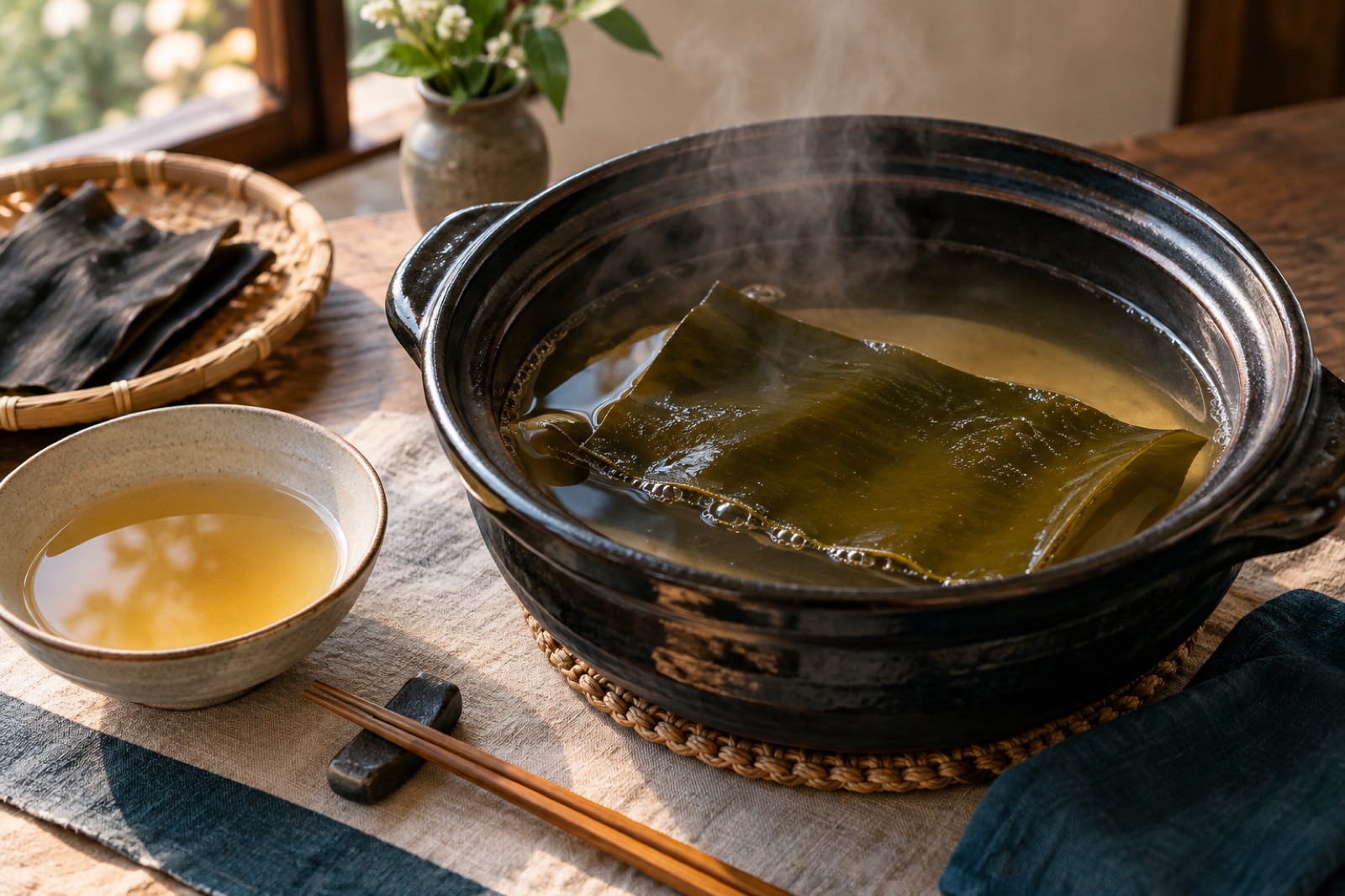
Kombu breaks the pattern, and treating it like wakame wastes the entire point of the ingredient. Kombu's surface carries the free glutamates that make dashi the most umami-dense stock in world cuisine. Rehydrating kombu in a bowl and discarding the water is pouring the flavour down the sink.
Instead, do this: wipe the sheet once with a barely-damp cloth to remove any surface grit — never hold it under the tap, and never scrub off the whitish surface bloom (that's mannitol, a natural sugar alcohol, and it's part of the flavour). Then put the kombu directly into the water you intend to turn into stock.
The full technique, including the delicate second pressing, is in our kombu dashi masterclass. And the spent kombu is not waste — slice it for kombu tsukudani or simmer it with beans, where its enzymes genuinely reduce cooking time (the science of that is in kombu and beans).
Dulse is the exception that proves how different the red seaweeds are. It's tender-dried rather than hard-dried, and a great deal of dulse is never rehydrated at all — eaten as a chewy snack straight from the bag, or pan-toasted into the bacon-of-the-sea treatment.
When you do want it plump — for salads, chowders, sandwiches — a cold soak of 5–10 minutes is the whole of it. Dulse barely expands (perhaps 1.5×), will not turn slimy, and forgives an extra quarter hour in the bowl.
One caution: dulse's soak water turns a deep, pretty ruby and pulls real flavour with it. Soak in just enough water to cover, and if you're making chowder, add the soak water to the pot — our dulse chowder recipe assumes you do.
Nori is the anti-rehydration seaweed. Its entire culinary identity — the crisp sheet, the layered flavour — depends on being dry. It does not get soaked; it gets toasted (ten seconds a side over a flame or a dry pan, covered in toasting nori), or it gets wrapped around rice, which rehydrates it exactly as much as it should be: from the inside, by steam.
The only legitimate "rehydration" of nori is deliberate softening — laying a sheet over hot rice for onigirazu, or crumbling it into broth at the table where it melts in seconds. If a recipe asks you to soak nori, what it actually wants is flaked nori stirred into something wet. Use the soak time: zero minutes.
Arame (the fine black threads): cold water, 10–15 minutes. Doubles in volume. Drain, and it's ready for its classic treatment — a quick sauté with carrot and a sweet-soy glaze. Full safety and cooking notes for both black string seaweeds are in our arame and hijiki pantry guide.
Hijiki deserves special mention for two reasons. It wants the longest soak of anything here — 20–30 minutes in cold water followed by a 10-minute simmer before it goes into any dish — because it's a sturdy, branching seaweed that softens in stages. And it's the one species where the arsenic conversation matters: food-safety agencies in several countries advise limiting hijiki because it accumulates inorganic arsenic. Enjoyed occasionally and in traditional small portions it sits comfortably in most diets; read the honest version in our hijiki guide.
Sea lettuce (ulva): cold water, 5 minutes flat. It re-expands into bright green tissue-paper leaves. Squeeze hard — it holds water like a sponge and will dilute a dressing.
Dried sea spaghetti and wakame stems: 15–20 minutes cold, or 10 minutes warm, then cooked as their recipes direct — these are blade-and-stem seaweeds with sturdier structure, and a little warm water is tolerated because they get cooked afterwards anyway.
A cold soak followed by a fresh-water rinse removes a meaningful share of surface salt — useful for salt-packed or brined product. It does roughly the same for surface-carried debris. What it doesn't significantly change is the seaweed's intrinsic mineral content; iodine in kombu, for instance, is largely bound into the tissue, and soaking does not de-iodine it.
That cuts both ways. If you're watching iodine intake — a genuinely sensible thing to watch with kelps — the lever is species choice and portion size, not soak time. Our iodine and seaweed guide lays out the numbers by species; the short version is that kombu-class kelps are in a different iodine league from wakame, nori and dulse.
| Seaweed | Water | Time | Expansion | Don't |
|---|---|---|---|---|
| Wakame | Cold | 5–10 min | 6–10× | Hot water, long soaks |
| Kombu | Cold → stock pot | 4 hr cold-brew, or 20–30 min steeping | ~2× | Rinsing, boiling, discarding soak water |
| Dulse | Cold | 5–10 min (or skip) | ~1.5× | Wasting the soak water |
| Nori | Never | — | — | Soaking, ever |
| Arame | Cold | 10–15 min | ~2× | The hijiki swap (they need different prep) |
| Hijiki | Cold, then simmer | 20–30 min + 10 min cook | ~3× | Daily large portions |
| Sea lettuce | Cold | 5 min | ~3× | Forgetting to squeeze |
Almost certainly hot water, or a soak far past the 10-minute plateau. Wakame's surface structure breaks down under heat before the interior hydrates, releasing the mucilage that makes it slippery. Re-soak a fresh batch in cold water for 8 minutes and compare — the difference is stark and immediate.
Yes, with limits. Drained, gently squeezed rehydrated wakame keeps 2 days refrigerated in a sealed container; a brief boil-and-ice-bath blanch before storing firms the texture and brightens the colour. Beyond two days it drifts toward soft and fishy. Kombu dashi, by contrast, keeps 4–5 days refrigerated and freezes well.
It depends on the species. Kombu soak water is the recipe — never discard it. Dulse soak water carries real flavour and belongs in the chowder. Wakame, arame and hijiki soak water is mostly leached salt and trim; pour it off without guilt.
For leafy seaweeds in soups and salads, 3–5 g dried (one heaped teaspoon to one tablespoon) per person is the working range — that rehydrates to 30–50 g, a full handful. Kombu for dashi: 10 g per litre. If you're new to a species and tracking iodine, start at the low end; the seaweed nutrition guide has the per-species mineral picture.
No — that's just wakame anatomy. The rib is the stipe remnant and stays firmer than the blade no matter how long you soak. Either trim it out with scissors (the restaurant approach) or slice it thinly crosswise so it eats pleasantly. In a brothy soup like miso soup with wakame, small pieces make the rib a non-issue.
Seaweed storage done right keeps flavour vivid and nutrition intact. How to store dried, fresh, frozen and fermented seaweed — plus how to rehydrate properly.
Sofia Andersson ·
A deep, technique-first guide to kombu dashi: glutamate science, exact temperatures, ichiban and niban infusions, and how to fix every common mistake.
Sofia Andersson ·
Make wakame seaweed salad the proper way: rehydrate, blanch to jade green, dress with sesame and rice vinegar. Recipe, technique and sourcing.
Sofia Andersson ·