Few seaweeds market themselves as well as sea spaghetti. Himanthalia elongata — a brown alga of the wave-battered Atlantic shores of Europe — grows in long, strap-like thongs that, once cooked, genuinely behave like a strand of rustic pasta: chewy, mild, gently marine. Spanish and French coastal kitchens have cooked it for generations, and the rest of us are catching on. This guide covers what it is, how to prep it from dried or fresh, and five ways to cook it tonight.
What sea spaghetti actually is
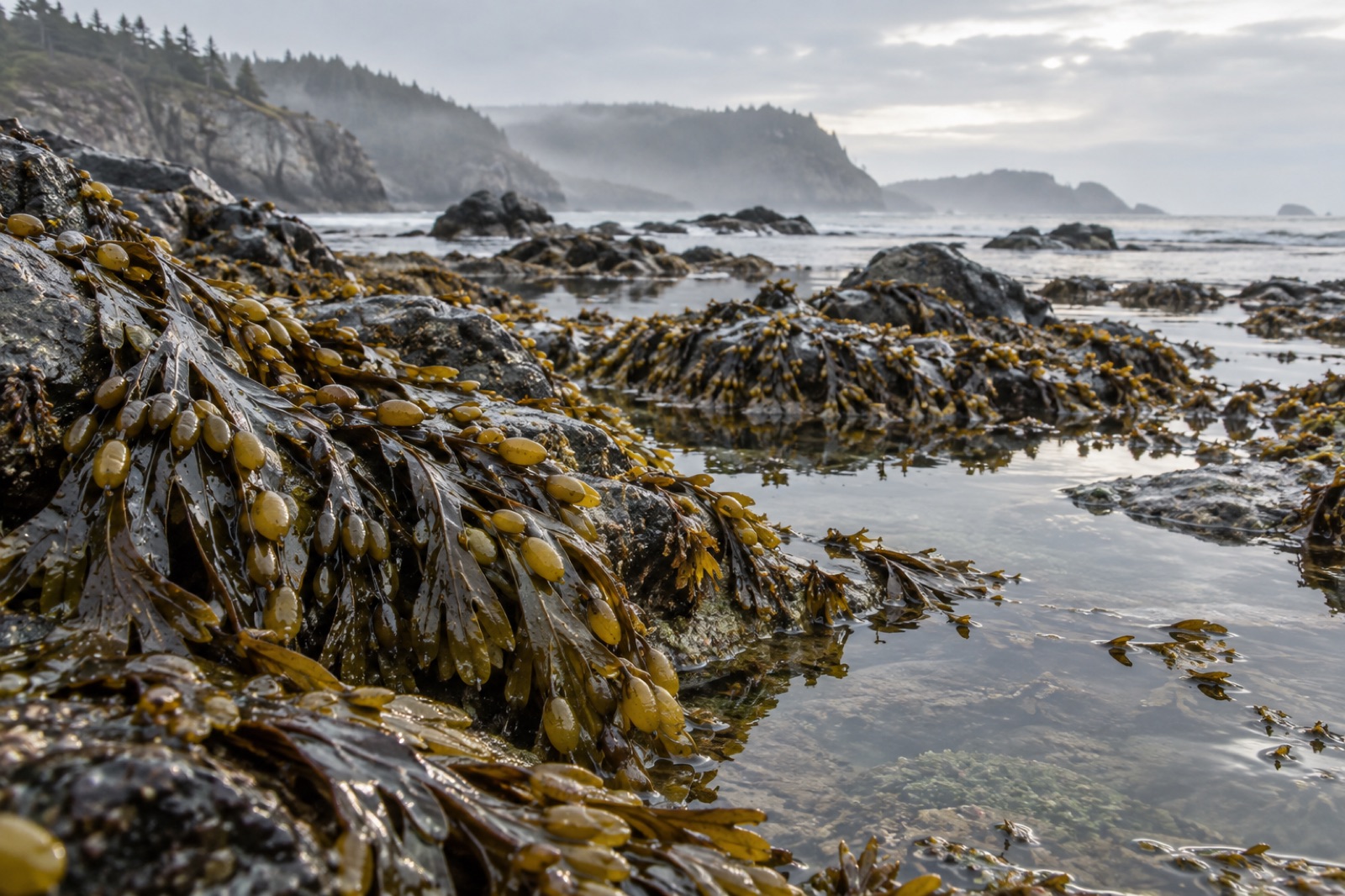
Sea spaghetti belongs to the brown algae, a cousin of the kelps we celebrate on this site — though it grows in the low intertidal rather than forming subtidal forests. Each plant produces a small button-like base in its first year, then sends up paired straps that can reach two to three metres in its second. It thrives exactly where waves are fiercest along the rocky coasts of Ireland, Brittany, Galicia and Portugal.
In the kitchen, it has two winning qualities: a texture with real bite that survives simmering, and a flavour milder than most seaweeds — green, faintly sweet, gently briny, with none of the intense oceanic punch of nori. That mildness is why it works where other seaweeds would overwhelm.
Prepping sea spaghetti
You'll most often buy it dried. Two routes:
Soak, then cook. Cover dried strands in plenty of cold water for 15–20 minutes — they expand impressively, so use a big bowl. Drain, then simmer in fresh water 10–15 minutes until tender but still pleasantly chewy, like proper al dente pasta.
Straight into the pot. Skip soaking and simmer dried strands directly for 20–25 minutes. The broth takes on flavour; the texture lands slightly firmer.
Fresh sea spaghetti, where you can get it, needs only a rinse and 5–8 minutes of boiling — the same blanching logic we use for fresh kelp in our fresh kelp preparation guide. Either way, save the cooking water: it's a light, savoury broth worth cooking rice or grains in.
Five ways to cook it
1. Sea spaghetti aglio e olio
The dish the plant was born for. Gently warm sliced garlic and chilli in good olive oil until the garlic is blond, toss in cooked sea spaghetti with a splash of its cooking water, finish with lemon zest and parsley. The strands carry oil and garlic exactly as pasta does — and bring their own seasoning.
2. With clams and white wine
Steam clams in white wine and garlic; add cooked sea spaghetti for the last two minutes so it drinks the clam liquor; finish with butter and parsley. This is the coastal-European grand version — serve with bread and no regrets.
3. Cold sesame sea-spaghetti salad
Chill cooked strands, then dress with sesame oil, rice vinegar, soy, grated ginger and toasted sesame seeds. Add julienned cucumber and carrot. It holds up for a day in the fridge, making it a genuinely good lunch-box salad — unlike most pasta salads, the strands don't go soft.
4. Sea spaghetti frittata
Chop cooked strands into 3 cm lengths, fold through beaten eggs with spring onion and a little grated cheese, and set gently in an oiled pan. The seaweed keeps its chew inside the egg and adds a savour through every slice. Excellent cold, in wedges.
5. Pesto-boosted sea spaghetti
Blitz a handful of cooked strands into your favourite pesto — or use our kelp pesto recipe outright — and toss through the remaining hot strands. Seaweed on seaweed sounds excessive; in practice the bright basil, garlic and oil bind the marine notes into something rounded and green.
A sixth, lazy option: straight into soup
Because cooked sea spaghetti holds its texture through long simmering, it is one of the few "noodles" you can add to a brothy soup at the start rather than the end. Drop soaked strands into a miso-forward vegetable soup or a light fish broth and let them cook along with everything else; by serving time they are silky, saturated with the broth, and the soup has gained a subtle marine depth. It is the lowest-effort entry point for a cautious household.
Sea spaghetti on the nutrition ledger
Like most brown seaweeds, sea spaghetti brings dietary fibre, a useful spread of minerals including calcium and magnesium, and moderate iodine — worth noting if you already eat a lot of kelp in other forms. It is naturally low in fat and carries a little calcium in genuinely useful amounts. As with any seaweed, variety and culinary-scale portions are the sensible pattern; our seaweed nutrition guide and iodine explainer have the fuller numbers. For most households, a couple of sea-spaghetti dinners a week sits comfortably inside any sensible range.
Buying well
Sea spaghetti reaches most shops dried, in cellophane packs from Atlantic European producers; some suppliers offer it salted or fresh in season. The usual sourcing rules apply: look for producers harvesting from clean, tested waters and cutting rather than ripping plants, so the button base survives to regrow. Our guide to buying seaweed sustainably has the full checklist, and our edible seaweeds field guide places sea spaghetti among its culinary cousins.
Key takeaways
- Sea spaghetti (Himanthalia elongata) is a mild, chewy Atlantic brown seaweed that cooks like rustic pasta.
- Dried strands need a 15–20 minute soak plus 10–15 minutes of simmering; fresh strands cook in 5–8 minutes.
- Save the savoury cooking water for grains and broths.
- It excels with garlic and oil, clams, sesame dressings, eggs and pesto.
- Buy from producers who cut rather than rip, and harvest from tested waters.
FAQ
Does sea spaghetti taste like actual spaghetti?
The texture comes remarkably close — chewy strands that hold a sauce. The flavour is its own: mild, green and gently oceanic. Most first-timers are surprised by how un-"fishy" it is.
Where can I buy it?
Specialty food shops, online seaweed merchants and fishmongers along Atlantic European coasts. Dried packs are the most common and keep for a year in a cupboard.
Is sea spaghetti the same as kelp noodles?
No. Packaged kelp noodles are a processed product made from kelp extract formed into strands — neutral and crunchy. Sea spaghetti is a whole seaweed with real bite and its own gentle flavour. Both are excellent; they're different ingredients.
Can I forage it myself?
In parts of Europe where foraging is permitted, yes — cut strands high above the base, take sparingly, and only from clean water. Check local rules first; some coasts restrict hand-harvesting to protect beds.