Kitchen9 min read
Iodine and Seaweed: How Much Is Too Much?
Seaweed iodine varies wildly by species — kombu can hold 100x nori's load. Safe serving sizes, prep methods that cut iodine, and who should be careful.
Sofia Andersson ·
Species-by-species iodine ranges, weekly portion math, and the prep tricks (soaking, boiling, dashi steeping) that keep sea vegetables a safe daily habit.
The short, honest answer to "how much seaweed is sensible?" is this: most seaweeds can be eaten daily in normal culinary portions, but the brown kelps — especially kombu — need portion discipline. A sheet of nori a day is nothing. A full bowl of kombu stew every day could genuinely disturb your thyroid. Between those poles lies a manageable middle, and this guide maps it: what the iodine numbers actually look like per species, how to turn them into weekly portions you can remember, and the simple kitchen steps that quietly strip iodine out before it ever reaches your plate.
If you want the safety ceiling framed as "how much is too much," our companion piece, Iodine and Seaweed: How Much Is Too Much?, goes deep on upper limits and risk groups. This one is the working cook's version: ranges, portions and prep.
Before any table, a warning. Seaweed doesn't read spreadsheets. Iodine content in the same species can vary tenfold or more depending on where it grew, the season, water temperature, the frond's age, and how it was dried or stored. Two packs of kombu from different coasts can behave like different ingredients.
So treat every number below as a typical range from published analyses, not a label guarantee. The strategy that follows — portion rules with comfortable margins — is designed to work even when your particular bag sits at the high end of its range. That margin-thinking is the whole game.
The reference points worth memorising:
Think in three bands. These are ballpark ranges per gram of dried seaweed.
Sensible rule: kelp is a flavouring and stock ingredient, dosed in strips and grams — not a side vegetable.
Sensible rule: fine in standard recipe amounts, several times a week.
Sensible rule: daily use in normal amounts is fine for almost everyone.
Here is the arithmetic that makes the ladder usable. Suppose your kombu sits in the middle of its range at 2,000 µg/g. Then:
A practical weekly template for a seaweed-loving household:
For a fuller nutritional picture beyond iodine — minerals, fibre, the label-reading traps — see Seaweed Nutrition: Minerals, Iodine, and How Much Is Too Much.
Iodine is water-soluble and heat-mobile, which means ordinary cooking reduces it — sometimes dramatically:
If you love a kelp-heavy dish and want to keep it in regular rotation, blanch first, discard the water, and you've bought yourself real margin.
Most healthy adults can use the template above without overthinking it. Get tailored advice from a clinician or dietitian if you:
None of this is an argument against seaweed. It's an argument for species literacy: the difference between kombu and nori is not a nuance, it's two or three orders of magnitude, and once you see the ladder, sensible eating is easy.
Yes, for essentially everyone. A standard nori sheet weighs about 3 grams and typically carries well under 150 µg of iodine — often far less. You could eat several daily without approaching upper limits. Nori is the model "everyday seaweed."
Dried kombu and other brown kelps, especially in powder or supplement form. A few grams eaten daily can deliver multiple thousands of micrograms. Keep kelp to stock-strip duty most days, and blanch or soak it when you plan to eat the frond itself.
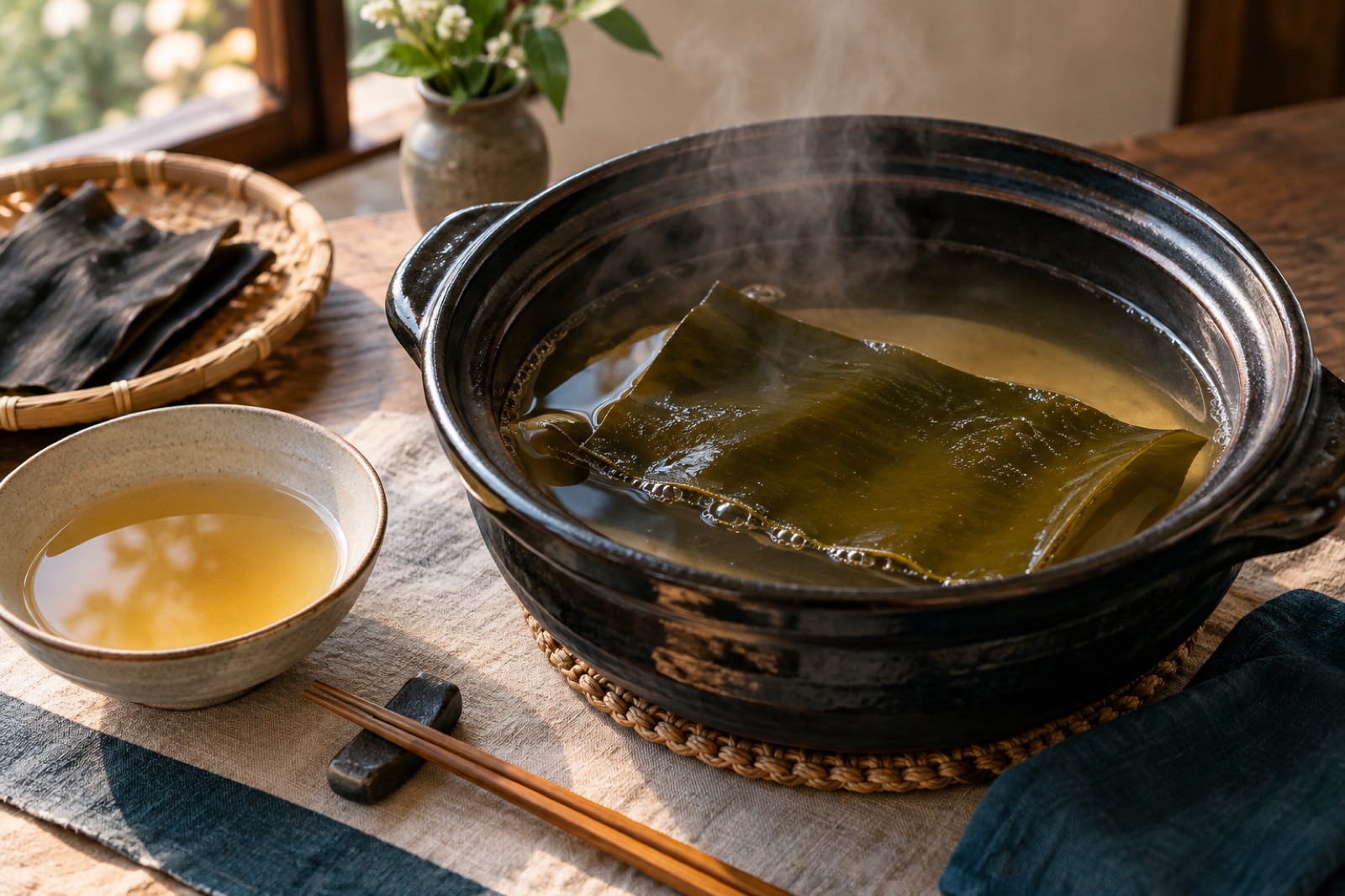
Meaningfully, yes. Iodine leaches into soak and cooking water — overnight cold soaks and 10–15 minute boils can remove large fractions. Discard the water. Short, gentle dashi steeping pulls out umami glutamates faster than iodine, which is why dashi is a safe daily tradition.
Not necessarily — but individualise. Many people with thyroid conditions can eat low-iodine seaweeds (nori, dulse) in normal amounts and simply limit kombu. Because treatment and sensitivity vary, set your personal limits with your clinician rather than a website.
Only with caution. Supplements are the most common route to accidental iodine excess because a small serving concentrates many grams of kelp and label assays are not always accurate. If you want iodine from seaweed, culinary portions of varied species are a more forgiving vehicle with margins built in.
Seaweed iodine varies wildly by species — kombu can hold 100x nori's load. Safe serving sizes, prep methods that cut iodine, and who should be careful.
Sofia Andersson ·
A clear-eyed guide to seaweed nutrition: what's actually in kelp, nori and dulse, how iodine varies wildly by species, and how much is safe to eat.
Sofia Andersson ·
A deep, technique-first guide to kombu dashi: glutamate science, exact temperatures, ichiban and niban infusions, and how to fix every common mistake.
Sofia Andersson ·