Kitchen11 min read
Kombu Dashi Masterclass: The Broth That Built a Cuisine
A deep, technique-first guide to kombu dashi: glutamate science, exact temperatures, ichiban and niban infusions, and how to fix every common mistake.
Sofia Andersson ·
A savoury vegetable broth built on kombu and dried shiitake — deep, clean, and versatile enough for soups, grains, braises and sauces.
A good vegetable broth is the hardest kind of stock to get right. Meat stocks build depth almost automatically; vegetable stocks have to be coaxed there. Most homemade versions taste like boiled onion skins — fine in a pinch, flat everywhere else. The fix that changes everything is humble and has been understood in coastal kitchens for centuries: a piece of dried kombu and a handful of dried mushrooms. Together they supply the two main kinds of savouriness — glutamate and guanylate — and suddenly your pot tastes like it simmered for a day instead of an hour.
What follows is the broth I use as a default in everything from risotto to noodle soup. It takes about an hour, mostly unattended, keeps for a week, and freezes beautifully. If you have made Japanese dashi before (see our Kombu Dashi Masterclass), you will recognise the bones of the technique — this is dashi's Western cousin, built for heartier cooking.
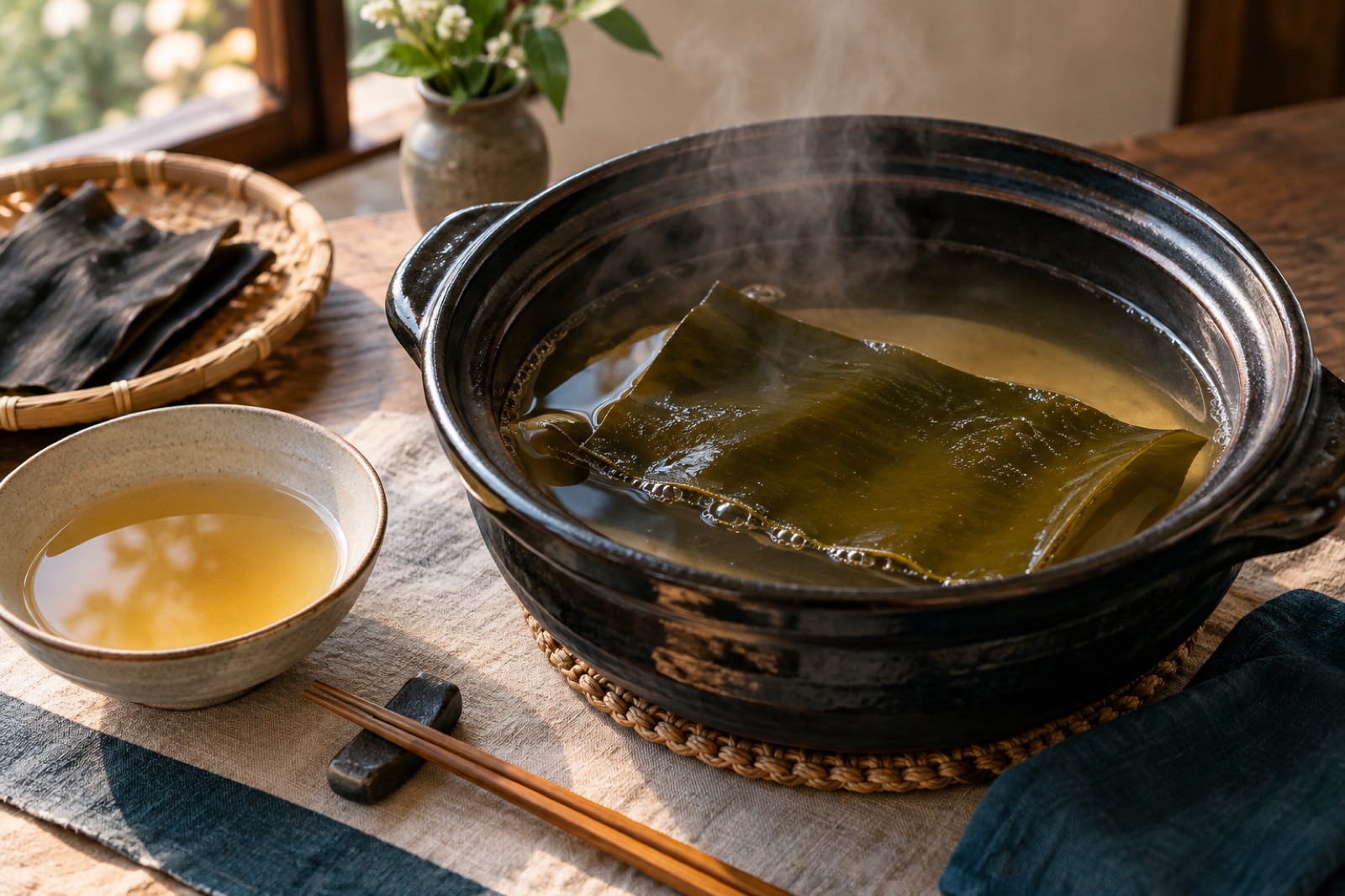
Kombu — dried giant kelp — is among the richest natural sources of free glutamate, the amino acid behind the taste we call umami. When a strip of kombu steeps in water below a simmer, it releases that glutamate along with minerals and a gentle sea-mineral character that reads as "depth" rather than "fishy." The key is temperature control: keep the water under a hard boil and you get a clear, clean stock; let it boil violently and the kombu turns the pot slimy and bitter.
Dried shiitake mushrooms supply a different compound, guanylate, and the two compounds amplify each other far beyond what either achieves alone. This synergistic effect is the quiet engine of East Asian vegetarian temple cooking, and it is completely at home in a Western-style broth pot. For more on what dried seaweed contributes nutritionally, see our seaweed nutrition guide.
Optional boosters: a knob of ginger for Asian-leaning uses; a strip of lemon peel for Mediterranean ones; a spoonful of miso stirred in at the end (never boiled) for instant substance.
The order matters. Seaweed extracts best in cool water; vegetables need heat.
The steeped strip is spent for stock but not for eating. Slice it thin and add to a stir-fry, chop it into fried rice, or simmer it in a little soy and mirin for tsukudani — a savoury condiment that keeps a week in the fridge. Our guide to storing seaweed covers how to keep both the dried strips and cooked leftovers.
Grains with backbone. Cook rice, farro or barley in half broth, half water. The umami carries through the whole pot in a way salted water never manages.
A fast noodle soup. Warm a cup per bowl, season with soy and a drop of toasted sesame oil, pour over cooked noodles, wilt in greens. Ten minutes, start to finish. If you keep seaweed noodles on hand, our kelp noodles guide has preparation tips.
Deglazing and pan sauces. Use it in place of wine or stock to deglaze after searing mushrooms or tofu; reduce by two-thirds and finish with seaweed butter for a sauce that tastes like a restaurant secret.
Braising liquid. White beans or lentils braised in this broth with a bay leaf become dinner with nothing but good bread alongside.
Double everything except the water, reduce the finished broth by half, and freeze in ice-cube trays. Two cubes stirred into a pot of hot water give you usable stock in seconds — a homemade answer to stock cubes, without the salt bomb.
Yes — every ingredient is plant or seaweed based. It is one of the best all-round vegan dashi alternatives for Western cooking, closer in body to a chicken-stock substitute than clear dashi, which is lighter and more delicate (and worth learning separately; see our kombu dashi recipe).
Dried kombu or any dried kelp labelled for cooking. Avoid very thick "knot" kombu for quick stocks — it takes longer to extract. Buy from suppliers who test for contaminants and harvest from clean waters; our guide to buying seaweed sustainably explains what to look for on the label.
Yes. The broth is still clearly better than a plain vegetable stock with kombu alone. If you skip them, consider adding a small tomato or a piece of dried porcini — both add glutamate-rich depth.
For 2.5 litres of water, 10–15 g is the sweet spot; double it and the broth turns noticeably marine. Because kombu is rich in iodine, treat concentrated seaweed stocks as a cooking ingredient rather than a daily sippy-broth — our article on iodine and seaweed gives sensible upper limits.
The steeped shiitake are lovely sliced into the soups or stir-fries you make with the broth. Squeeze them dry first so they brown rather than steam.
A deep, technique-first guide to kombu dashi: glutamate science, exact temperatures, ichiban and niban infusions, and how to fix every common mistake.
Sofia Andersson ·
A clear-eyed guide to seaweed nutrition: what's actually in kelp, nori and dulse, how iodine varies wildly by species, and how much is safe to eat.
Sofia Andersson ·
Seaweed storage done right keeps flavour vivid and nutrition intact. How to store dried, fresh, frozen and fermented seaweed — plus how to rehydrate properly.
Sofia Andersson ·