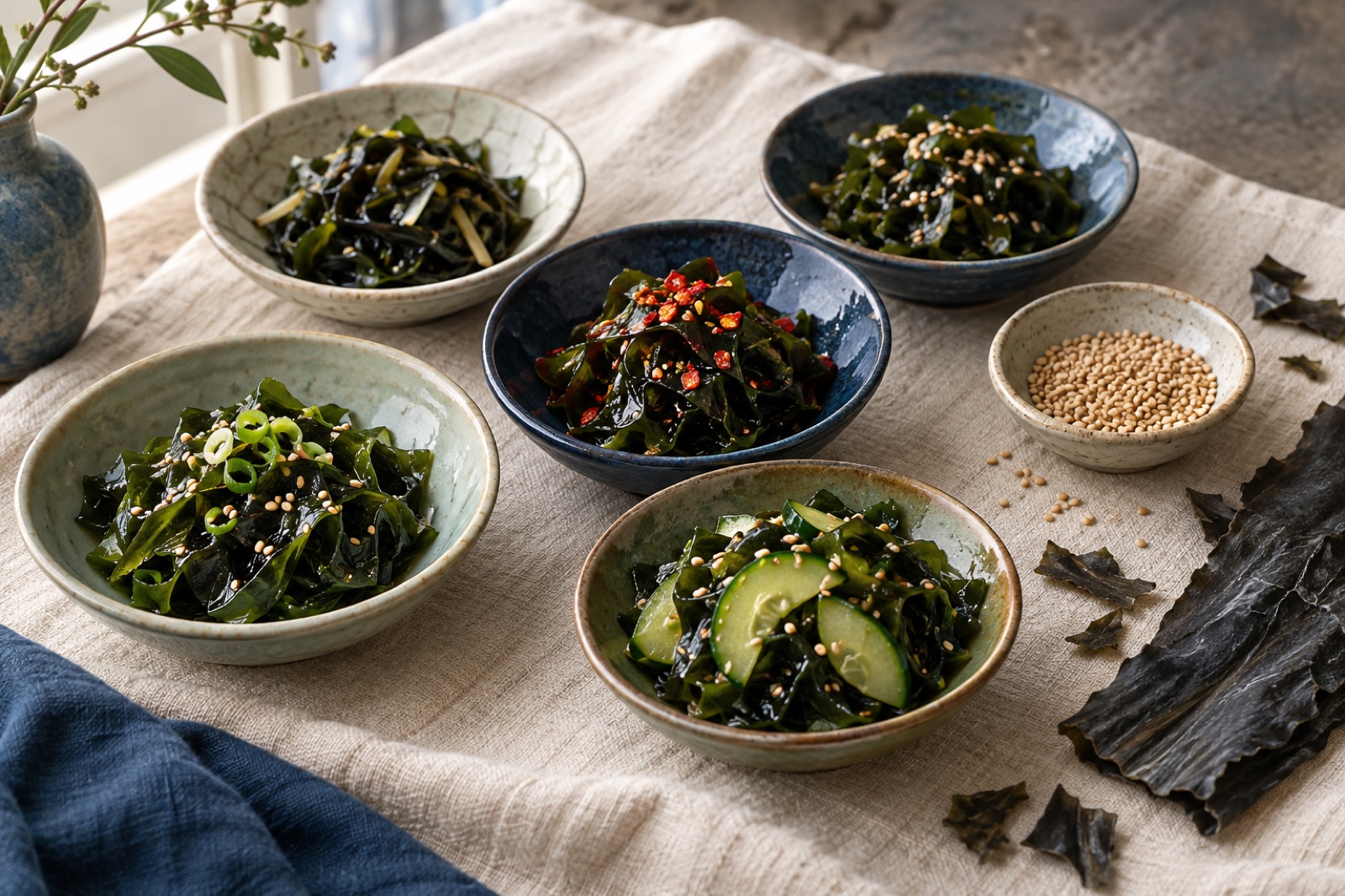
There comes a point with wakame and cucumber sunomono — usually around the fifth time you make it — when the recipe stops being a recipe and becomes a habit. Your hands know how much vinegar the dressing wants. You salt the cucumber while the kettle runs. The salad appears beside dinner without being asked, the way rice does.
That point is where this article begins. Our five-minute wakame and cucumber sunomono covers the base recipe step by step; this is the piece for after that — the ratio worth memorising so you never measure again, the bit of plant science that makes salting work, the seasonal and protein variations that turn two ingredients into a year of different salads, and how to scale the whole idea up from side dish to dinner. If what you actually want tonight is the richer, sesame-dressed style of seaweed salad, head to our restaurant-style wakame salad instead — this article stays in sunomono's bright, vinegared lane and goes deep.
The ratio worth memorising
Sunomono dressing has three active ingredients — vinegar, sugar, soy — and the whole craft is in their proportion. The classic starting ratio, by volume:
6 : 2 : 1 — six parts rice vinegar, two parts sugar, one part soy sauce.
In practice that's 3 tablespoons vinegar, 1 tablespoon sugar, 1½ teaspoons soy for a salad of one cucumber and a handful of rehydrated wakame — enough dressing to coat generously with a spoonful left pooling, which is correct. Sunomono should sit in a shallow puddle of its dressing; it drinks as it chills.
Two adjustments to internalise:
- Sweeter for summer, sharper for winter. In hot weather the palate wants gentler acidity, so go 6 : 2.5 : 1. Cold months shove the sugar back down to 6 : 1.5 : 1.
- Scale the soy last. Saltiness is the easiest axis to overshoot, especially if your wakame came salted. Dress first, taste, then decide if it wants the full measure of soy.
Once the ratio lives in your hands, a sunomono is genuinely a five-minute dish — and five minutes is about what this salad deserves. Overthinking it is the main way it goes wrong.
Why you salt the cucumber (and how long)
The salted-cucumber step reads like fussiness in the base recipe, but it's applied plant physiology, and skipping it is the difference between a crisp salad and a watery one.
Cucumber cells are bags of water held in place by turgor pressure. When you salt slices and wait, osmosis pulls some of that water out through the cell walls; the slices slump slightly, tighten, and become dense and glassy instead of spongy. Two things improve: texture (the crunch goes from watery to snappy) and flavour concentration (the dressing isn't competing with cucumber juice and doesn't get diluted every minute the salad stands).
The details that matter:
- Fine salt, 10–15 minutes. About half a teaspoon of fine sea salt per large cucumber, tossed through the slices in a bowl. Coarse salt works but draws less evenly.
- Slice thin — 2–3 mm. Thicker slices need longer salting and still weep; thinner slices go floppy. The half-moon or diagonal cut mostly changes how the slices fork; thickness is the real variable.
- Squeeze — gently, then firmly. After salting, take the slices in your hands and press out the released water over the sink. This is the moment most home cooks underdo. Don't rinse unless you over-salted; the seasoning is doing work.
- Rest the dressed salad 5–10 minutes before serving. Sunomono eaten the second it's mixed is sharp and separate; given a few minutes, the cucumber relaxes into the dressing and the whole thing coheres. Longer than half an hour, and the acid starts to cook the cucumber into softness — dress late, not early.
Handling the wakame like someone who's done it a hundred times
Dried cut wakame expands eight to twelve times — the single biggest beginner error is soaking what looks like a reasonable amount and ending up with a bowl of forest. For one large cucumber: 10 g dried, roughly a small handful.
The method that produces restaurant texture:
- Soak in cold water, 5–8 minutes. Cold water keeps the blade snappy; hot water is faster but pushes the wakame toward slipperiness — fine for miso soup, less ideal here.
- Check the thickest piece. Wakame is done when the blade is fully supple with no crisp core; thick rib pieces need a minute more than the lacy edges.
- Blitz-blanch only if your wakame smells strongly marine. Ten seconds in boiling water, then straight into cold. Good farmed wakame from clean water — the kind our sustainable buying guide helps you find — rarely needs it.
- Squeeze hard, then cut. Wring the soaked wakame like a cloth, then cut into two-bite pieces. Wakame left in long fronds is awkward to eat with chopsticks and longer fronds trap dressing unevenly.
The variations: one salad, twelve months
Sunomono is a chassis. Once the dressing ratio and the salting technique are habits, the two named ingredients become suggestions. A seasonal tour:
Spring — takenoko and wakame. The classic pairing of mountain and sea: blanched bamboo shoot and just-harvested young wakame, dressed plainly. The two ingredients arrive in Japanese spring within weeks of each other and taste like it. Sanshō leaf or a whisper of fresh ginger on top if you can find it.
Early summer — octopus (tako-su). Blanched octopus leg, sliced thin on the bias, with cucumber and wakame. Octopus sunomono is a standard of izakaya menus and arguably the best version of the genre: the octopus brings chew, the dressing brightness. Use cooked octopus from a fishmonger; home-poaching octopus well is its own project.
High summer — tomato and myōga. Ripe tomato wedges, shredded myōga ginger, wakame, cucumber. The tomato bleeds into the dressing and turns it pink and sweeter — use a little less sugar. This version converts tomato-salad loyalists.
Autumn — mushrooms. Briefly sautéed or blanched shimeji or maitake, cooled, then dressed. Mushrooms love vinegar the way they love butter; this one eats almost meaty.
Winter — crab and mitsuba. Real crab if an occasion calls for it, good crab sticks if it doesn't; mitsuba or watercress for pepper. Winter sunomono is traditionally the sharpest-dressed — hold the sugar back.
Any time — the extras worth knowing: a small handful of cooked somen turns sunomono into a light lunch; a spoonful of ponzu swapped for the plain soy makes it citrus-forward; toasted sesame seeds are never wrong; a tiny grate of fresh ginger makes the whole bowl colder-tasting somehow, in a good way.
Scaling up: sunomono as a main
The single complaint about sunomono as a genre is that it's always a side — three bites and gone. Scaling it into dinner without breaking its character takes two moves:
Move one: volume without heaviness. Double the vegetables and add a neutral, slurpy element — cooked somen or glass noodles (harusame), chilled and folded through. Both drink the dressing and make the bowl substantial while keeping it cold and bright.
Move two: a serious protein. Octopus as above; chilled poached chicken breast torn over the top; sashimi-grade fish sliced and laid over (turning it into something adjacent to a vinegared poke); or a jammy egg. Keep the protein plainly cooked — the dressing does the seasoning — and keep everything cold. A hot protein on sunomono reads as a mistake; a cold one reads as intention.
A full bowl of somen-sunomono with octopus, cucumber and wakame, eaten outside in August, is one of the best hot-weather dinners I know, and it costs less than most sandwiches.
Troubleshooting: the four ways it goes wrong
- Watery by the second helping. The cucumber wasn't squeezed hard enough, or the wakame wasn't wrung. Water is the enemy; be brutal.
- Puckeringly sharp. Too much vinegar for your palate, or cheap harsh vinegar. Add sugar a half-teaspoon at a time, and note your vinegar: seasoned rice vinegar already contains sugar and salt and will double-sweeten the recipe.
- Flabby cucumber. Either salted too long before dressing, or dressed and left standing past the half-hour mark. Sunomono doesn't meal-prep; it lives for tonight.
- Fishy-smelling wakame. Smell, not taste, is the warn-out flag. Blitz-blanch next time, and store dried wakame sealed and away from light — it goes stale in open air within months.
Key takeaways
- Memorise the sunomono ratio — 6 parts rice vinegar : 2 parts sugar : 1 part soy — and adjust sweetness by season; the whole dish then takes five minutes.
- Salting cucumber is osmosis in service of crunch: 10–15 minutes, then a firm squeeze, and dress the salad no more than half an hour before eating.
- Use far less dried wakame than looks reasonable — 10 g per large cucumber — soak cold, squeeze hard, cut into two-bite pieces.
- The base dish is a chassis: octopus in summer, bamboo in spring, mushrooms in autumn, crab in winter; noodles and a cold protein scale it into a main course.
- Almost every failure traces back to water (unsqueezed vegetables) or time (dressed too early).
FAQ
Can I make sunomono the night before?
Not really — the vinegar will soften the cucumber and drain the crunch, and the wakame will lend the dressing a swampier edge. Prep instead: salt and squeeze the cucumber, soak and wring the wakame, mix the dressing, and keep the three elements separate in the fridge. Assembly takes ninety seconds.
Which vinegar if I can't find rice vinegar?
Dilute apple cider vinegar with a third water for a close-enough acidity and a fruitier note; add a pinch more sugar. Distilled white vinegar works at half strength but tastes one-dimensional — it's the emergency option. Mild wine vinegars (white or champagne) are a respectable substitute.
Is wakame and cucumber salad healthy?
Yes, in the boring good ways: it's mostly water-rich vegetables and seaweed, so it's light; wakame contributes fibre, minerals like magnesium and iodine, and the fucoxanthin pigment researched for metabolic effects — early science, interesting, not a treatment. The one number to watch is the dressing's salt and sugar if you eat it daily; our seaweed nutrition guide covers iodine amounts by species if you're keeping score.
Can I use fresh wakame instead of dried?
Absolutely, and it's a pleasure if you can get it: blanch fresh wakame 20–30 seconds until it flashes bright green, chill, squeeze, and proceed. Fresh wakame is saltier and livelier than rehydrated — taste before adding the full soy measure. Salted wet-pack wakame works too, but rinse it thoroughly and expect to cut both the soy and the cucumber's salting time.
What's the difference between this and the sesame seaweed salad at sushi counters?
Almost everything except the wakame. The takeaway-counter salad is a heavier, sesame-oil-and-chilli-marinated preparation, often made from multiple seaweeds and agar strands, dressed long in advance. Delicious — we have a guide to making it properly — but a different dish. Sunomono is lighter, sharper, and belongs to the Japanese home table rather than the sushi display case.