Kitchen11 min read
Kombu Dashi Masterclass: The Broth That Built a Cuisine
A deep, technique-first guide to kombu dashi: glutamate science, exact temperatures, ichiban and niban infusions, and how to fix every common mistake.
Sofia Andersson ·
Vegan dashi from kombu and dried shiitake delivers deep, clean umami without fish. Ratios, soaking times, steeping temperatures and how to use it everywhere.
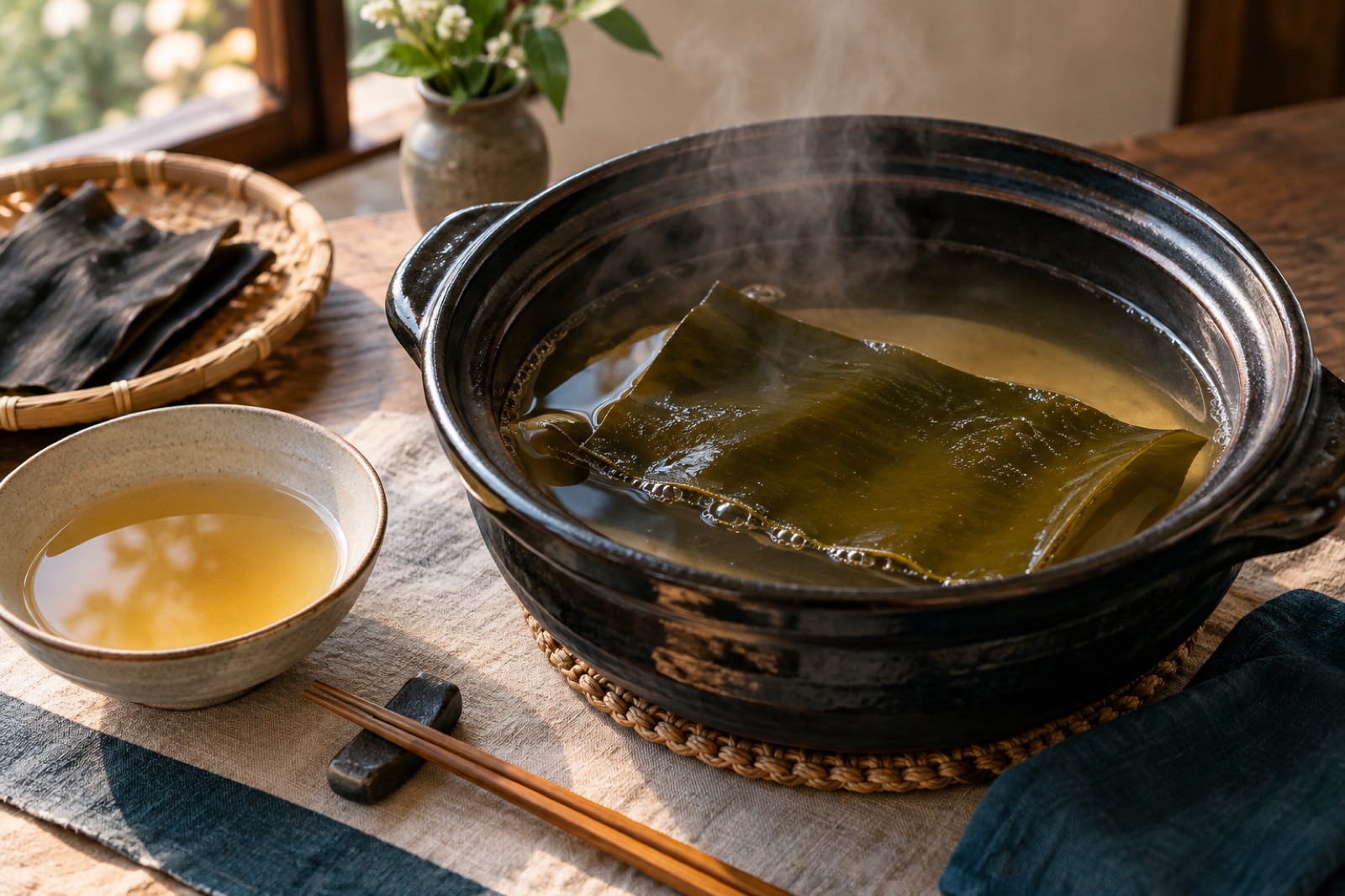
Dashi is the quiet engine of Japanese cooking: a barely-there broth that makes everything it touches taste more like itself. The classic version leans on katsuobushi — shaved smoked skipjack — but the finest-tuned dashi in my kitchen contains no fish at all. Kombu and dried shiitake, steeped to temperature discipline, produce a broth that is light, deeply savoury and astonishingly clean: the stock I reach for when I want vegetables, tofu, noodles or a clear soup to stand in full focus. If you already make classic kombu dashi, this is the plant-based sibling — same grammar, different vocabulary.
Umami synergy is the science here. Kombu is rich in glutamate, the foundational savoury compound; dried shiitake carry guanylate, a different savoury nucleotide. Served side by side the two don't merely add up — they multiply, each amplifying the perception of the other, which is why this pairing has anchored Japanese temple cooking (shōjin ryōri) for centuries. Fish-based dashi works on the same principle, substituting inosinate from the katsuobushi for the shiitake's guanylate. None of this requires your faith: one sip of the finished broth next to plain hot water is the whole argument.
Makes about 1 litre.
Either route, the dashi keeps 3–4 days refrigerated, and freezes beautifully in ice-cube trays for single-serving miso emergencies.
The spent kombu and shiitake are a pantry bonus, not waste:
Nearly every dashi mistake is a temperature mistake:
Buy kombu labelled for cooking — look for dried, dark, thick pieces with a healthy pale bloom on the surface. Hokkaido kombu is the benchmark, and the species notes in the kombu profile explain the ma-kombu/rishiri/rausu differences if you want to go deep. One balance note from our seaweed nutrition guide: steeping kombu delivers flavour and some minerals, but because the kombu comes out of the pot, a bowl of dashi is a far more modest iodine source than eating the kelp itself — one of the pleasures of dashi is that it's umami you can use daily.
Genuinely traditional. Shōjin ryōri — Japanese Buddhist temple cuisine — has made kombu-and-shiitake dashi for centuries as its foundational stock. The all-vegetable version isn't a substitute; it's a lineage.
You'll get broth, but not good dashi: boiled kombu turns bitter and slick. If you're short on time, the 30-minute soak plus gentle warm steep produces about 85% of the overnight version's quality.
Three to four days refrigerated in a sealed container; indefinitely in the freezer as cubes. It loses aromatic brightness — not safety — in the fridge, so day-one dashi for clear soups, day-three dashi for simmering pots.
Yes — niban dashi. Simmer the spent ingredients in fresh water for 5–10 minutes (this is the one moment where simmering kombu is correct, since you want a rustic cooking stock). Use second dashi for simmered dishes, not clear soups.
Any true dashi kombu (ma, rishiri, rausu or hidaka varieties of Saccharina japonica) makes fine vegan dashi; the subtleties — sweetness, clarity, depth — matter most in clear broths. For miso soup and simmering pots, whatever good kombu you can source will do beautifully.
A deep, technique-first guide to kombu dashi: glutamate science, exact temperatures, ichiban and niban infusions, and how to fix every common mistake.
Sofia Andersson ·
A clear-eyed guide to seaweed nutrition: what's actually in kelp, nori and dulse, how iodine varies wildly by species, and how much is safe to eat.
Sofia Andersson ·
Adapt kobujime — the Japanese kombu-curing technique — to vegetables: which vegetables work, timings by density, and how kelp firms and seasons produce.
Sofia Andersson ·