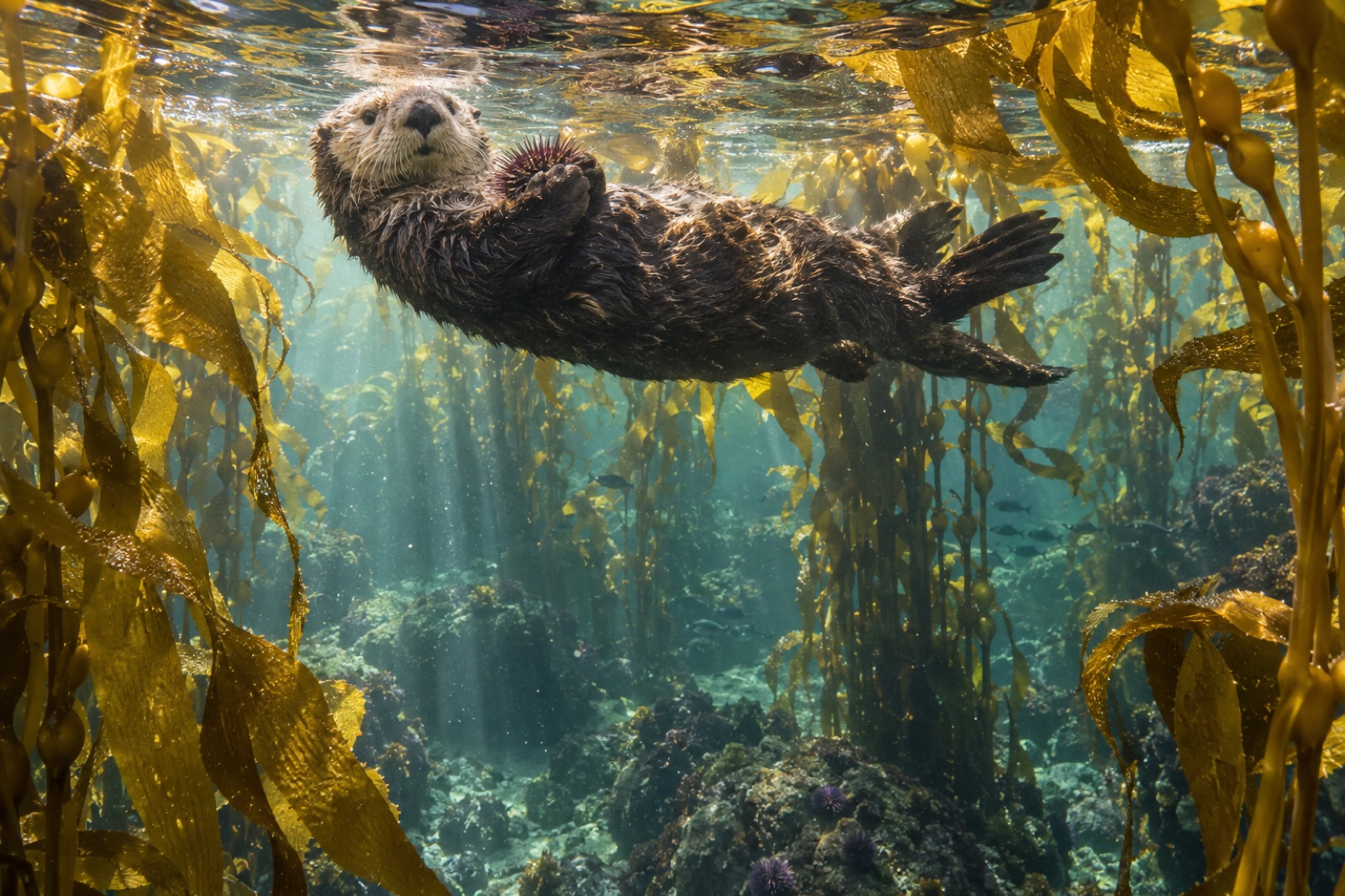
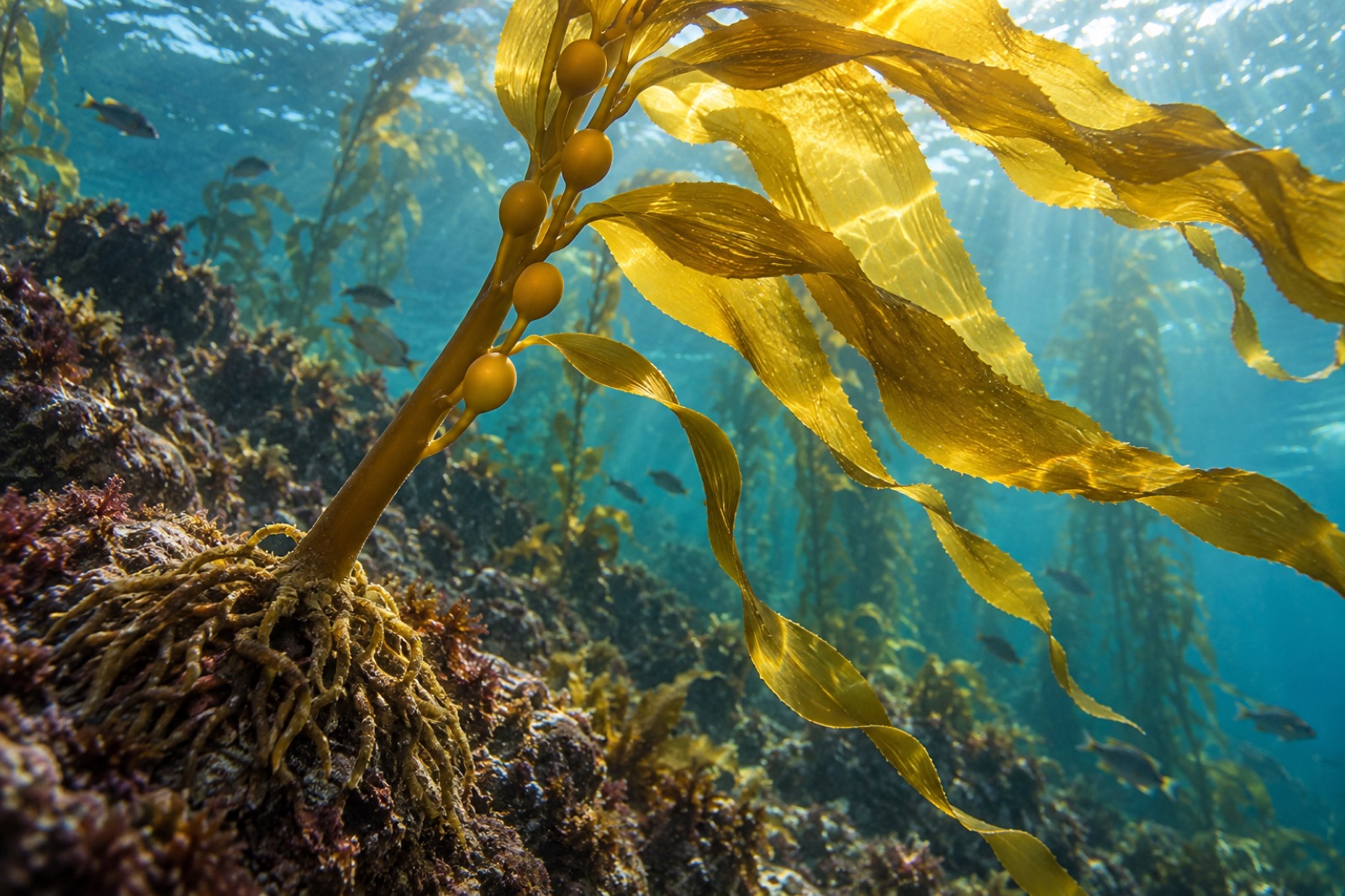
Monterey Bay is the easiest place on Earth to understand why kelp forests matter. A deep submarine canyon funnels cold, nutrient-rich water to within metres of the shore; giant kelp responds by building a golden canopy you can see from the footpath on Cannery Row, and a recovering sea otter population grazes the urchins that would otherwise mow it down. You can snorkel over the whole story at San Carlos Beach before breakfast. This guide covers the geography, the wildlife, the seasons and the access points — whether you're planning a dive trip or just want to know what you're looking at from the wharf.
The canyon that feeds a forest
Almost everything about Monterey's ecology traces back to the Monterey Submarine Canyon, a chasm that cuts into the bay and approaches to within 100 metres of the beach at Moss Landing, reaching depths comparable to the Grand Canyon. Its presence has two profound effects.
First, it makes the bay a natural upwelling amplifier. During spring and early summer, northwesterly winds drive surface water offshore and pull cold, nutrient-laden deep water up over the continental shelf — the engine that powers northern California's productivity. The canyon walls steer that deep water further inshore than it would otherwise travel, delivering nitrates almost to the surf zone.
Second, it concentrates wildlife. The canyon supports squid spawning aggregations, anchovy schools and the whale migrations that make Monterey one of the world's most reliable whale-watching coasts. Kelp is the visible beneficiary of the same nutrient plumbing: along the Monterey Peninsula, giant kelp forms nearshore bands of canopy that have been mapped, on and off, for decades — some beds are genuinely persistent, while others expand dramatically after strong upwelling summers.
Southern Monterey Bay, around Carmel, also grows bull kelp on exposed rocky points — the annual species that builds a single long stipe and a buoyant, whip-lashed bulb. Our bull kelp species profile explains why its boom-and-bust lifecycle makes it a useful signal of ocean conditions.
Why the kelp stays — mostly
Kelp forests are defined by a three-way negotiation between kelp, sea urchins and urchin predators. Monterey is the world's most famous demonstration of the third term. Southern sea otters, whose entire Californian remnant population was thought extinct until a small raft was found off Big Sur in 1938, have reoccupied the bay. They eat purple sea urchins efficiently enough that urchins here stay small, hungry and hidden in crevices — and the kelp canopy holds.
That is not the pattern everywhere on this coast. North of San Francisco, where otters are absent, the 2014–2016 marine heatwaves coincided with the crash of the sunflower sea star (an urchin predator devastated by wasting disease), and purple urchin barrens swallowed most of the region's bull kelp beds. Monterey's forest weathered those same warm years far better. The lesson conservationists draw from the contrast: a forest with its full predator guild is measurably more buffered against heat. Kelp restoration at scale — the work at the heart of Tidewright's platform — increasingly treats predator recovery and reseeding as one problem, not two.
What lives in the forest
The canopy itself is only the beginning. A mature Monterey kelp bed stacks habitats vertically, light dimming from golden green at the surface to amber-brown shade at the holdfasts:
- In the canopy: schools of juvenile rockfish and senoritas, kelp perch hanging vertically among blades, sea otters wrapped in surface fronds to keep from drifting.
- Mid-water: blue rockfish schools, harbour seals, the occasional enormous ocean sunfish in late summer, and huge seasonal jellies drifting through clearings.
- On the bottom: gopher rockfish on the rock, painted greenling, lingcod guarding eggs in winter, decorator crabs wearing costumes of kelp, and — in deeper, darker crevices — giant Pacific octopus.
- The urchin cast: purple urchins in every crevice, red urchins on deeper structure, and the brilliant red and blue of hidden abalone remnants, a memory of a fishery closed since the 1990s.
Seasons: when to visit the kelp
Monterey is a year-round kelp destination, but the seasons genuinely change what you see:
- Spring (March–May): the upwelling season. Cold water (often 10–12 °C), peak nutrients, fast kelp growth, but wind and swell at their roughest. Shore diving favours morning windows.
- Summer (June–August): fog season on shore, warmest air, plankton blooms that can drop visibility. Canopy at its thickest.
- Autumn (September–November): the local secret. Winds relax, swell is smallest, water is warmest (14–16 °C, occasionally warmer), and visibility peaks — often 10–20 metres. If you can only come once, come in October.
- Winter (December–February): northwesterly and southerly storm swells can strip canopy back, but between storms, clear cold water and spawning squid draw divers and photographers.
Access points for divers and kayakers
- San Carlos Beach (the Breakwater), Monterey: the world's most forgiving kelp dive. Walk in, follow the pipeline, and you're under canopy in three metres of water, deepening to 20 on the outside of the wall. Ideal first cold-water ocean dive; thick otter traffic.
- Cannery Row / McAbee Beach, Monterey: kelp shallows under the old sardine canneries — historical atmosphere included. Best for snorkellers and photographers who want the canopy-and-buildings shot.
- The Whaler's Cove, Point Lobos State Natural Reserve: the crown jewel. A protected cove inside one of America's first marine reserves, with granite walls, dense kelp and famously tame harbour seals. Entry numbers are capped; reserve a dive slot well in advance.
- Lover's Point, Pacific Grove: easy entry, reliable canopy in season, sea otters, and kayak rentals on the beach — the standard first-timer kayak destination.
- Carmel River State Beach & Monastery Beach, Carmel: beautiful, deeper, and unforgiving — Monastery has real surf and a steep drop-off. For competent, experienced divers only.
Sea kayaking the canopy edge from Pacific Grove to Fisherman's Wharf is arguably the best non-diving experience: otters at arm's length, canopy fronds tapping the hull, and no boat traffic inside the kelp.
Reading the bay's future
Monterey is not a museum. Its kelp face genuinely dynamism — winter storms prune it, upwelling fattens it, marine heatwaves (notably 2014–2016) genuinely thinned parts of the canopy, and eelgrass restoration in Elkhorn Slough has given its otters a second foothold inland. Watching the bay's canopy maps over successive years is one of the cleanest ways to see what climate variability does to nearshore forests. Tidewright's monitoring work on other coasts — mapping canopy change with satellites, drones and divers — draws directly on the method Monterey's researchers and sanctuary staff helped pioneer. For the deeper dive into why heat is the forest's main modern threat, see our explainer on marine heatwaves.
Key takeaways
- Monterey's submarine canyon pushes upwelled nutrients almost to the beach, feeding some of California's most reliable giant kelp canopy.
- A recovered sea otter population keeps purple urchins suppressed — the clearest demonstration anywhere of the predator–urchin–kelp cascade.
- Autumn (September–November) offers the warmest water, calmest seas and best visibility; spring is for nutrients and growth, winter for storms and squid.
- San Carlos Beach is the ideal first kelp dive; Point Lobos Whaler's Cove is the reserve-capped crown jewel; kayakers should launch at Lover's Point.
- The bay is a living climate laboratory — its canopy still responds visibly to heatwaves, storms and upwelling regimes.
FAQ
Can you snorkel the Monterey kelp forest?
Yes. San Carlos Beach and Lover's Point both put snorkellers over real canopy within minutes of shore. A 7 mm wetsuit is strongly recommended year-round — the water rarely exceeds 16 °C. Go on a calm morning, stay inside the breakwater or point, and watch for boat traffic outside the kelp.
What is the water temperature in Monterey Bay?
Typically 10–12 °C in spring during upwelling, rising to 14–16 °C in autumn, occasionally warmer in strong summer calm periods. Serious divers use drysuits or thick wetsuits with hoods and gloves.
When did the sea otters come back to Monterey?
Sea otters were never fully extirpated here — a small remnant raft was rediscovered off Big Sur in 1938 — but recovery into Monterey Bay gathered pace from the 1960s onward as the population grew and spread north. Today the bay hosts one of the densest otter concentrations on the California coast.
Are there great white sharks in Monterey Bay?
Yes — the bay and its mouths host juvenile white sharks seasonally, drawn by warm shallows and abundant rays and fish. Attacks on divers inside the kelp are exceedingly rare, but divers should follow local guidance, avoid seal colonies at dawn and dusk, and treat Monterey as the wild ocean it is.
Is Point Lobos the only marine reserve in the bay?
No. Monterey Bay National Marine Sanctuary overlays the whole bay, and within it sits a network of State Marine Reserves and Conservation Areas — Point Lobos, Carmel Pinnacles, Asilomar, Portuguese Ledge and others — with varying fishing rules. Check the California Department of Fish and Wildlife's MPA maps before harvesting anything.