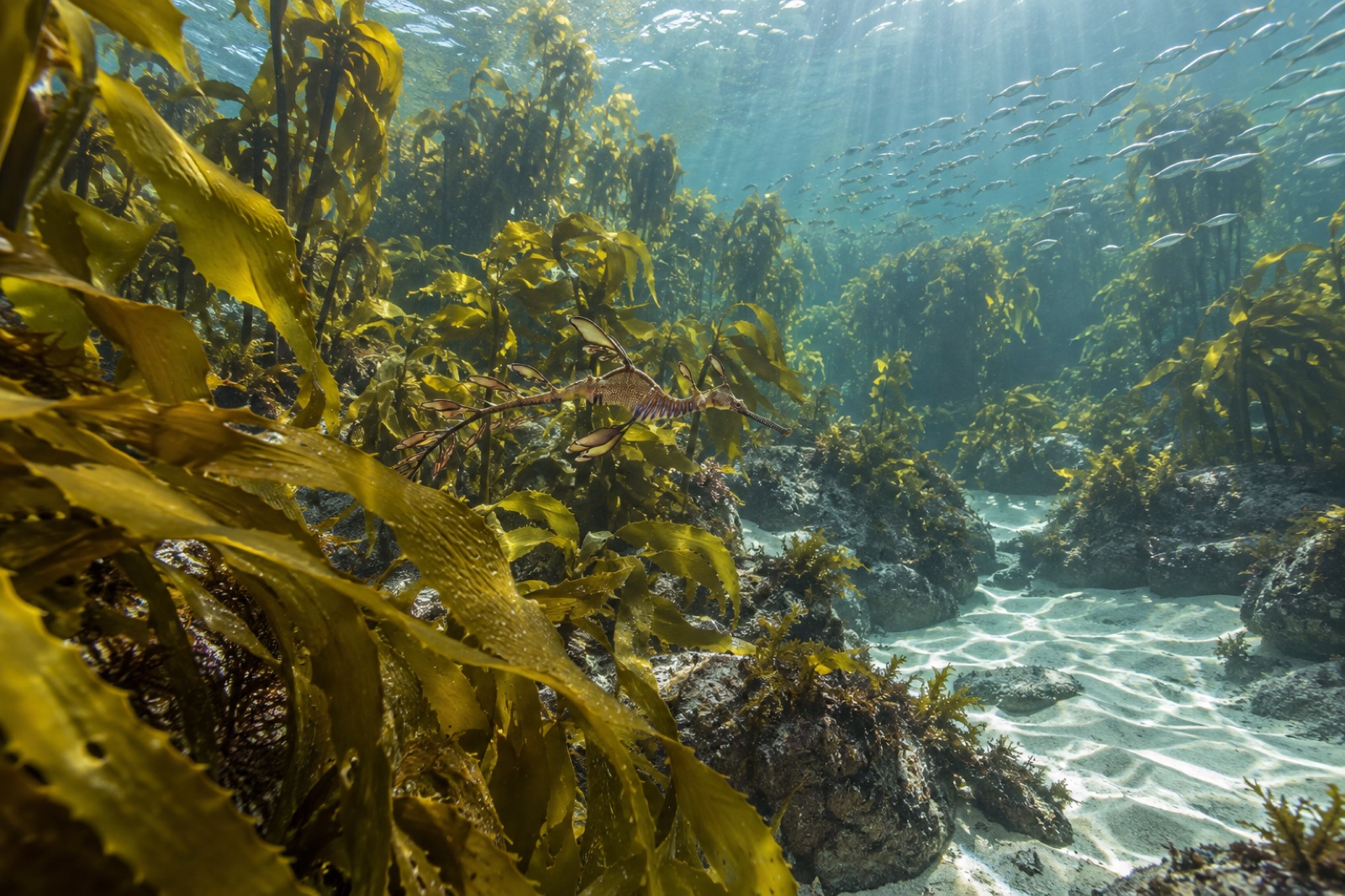
An hour's drive from Melbourne's CBD, the Mornington Peninsula ends in one of the most concentrated stretches of temperate reef in Australia: a narrow, fast, white-water entrance called The Rip, behind it the broad, shallow bowl of Port Phillip Bay, and oceanward a chain of wild surf-backed beaches where southern bull kelp thrashes in the swell. Nowhere in the country can you dive a pier holding weedy seadragons for breakfast and drift past 90-metre canyon walls for lunch. This is Melbourne's kelp, and it deserves better fame.
Getting your bearings
The peninsula points northwest like a thumbs-down, separating Port Phillip from Bass Strait. Its underwater appeal splits into three very different habitats:
- Inside the bay — shallow, sheltered, pier-studded: shore diving and snorkelling over seagrass, sponge gardens and sand-flat reef, with the famous dragon piers at Portsea and Flinders.
- The Heads themselves — the 2.8-kilometre gap between Point Nepean and Point Lonsdale, where tidal inflow funnels up to six knots of flow through a deep canyon lined with sponge gardens, wall reef and some of the most storied drift diving in Australia.
- The ocean "back beaches" — the Bass Strait coast from Cape Schanck past Gunnamatta to Point Nepean: golden kelp and bull kelp on rocky intertidal ledges, boisterous swell, and shore snorkelling reserved for calm days and strong swimmers.
Most of the Heads region sits inside the Port Phillip Heads Marine National Park, declared in 2002 alongside Victoria's marine national park system — the reason its sponge walls still look like a museum diorama rather than a scallop dredge's past.
The Rip: diving the Heads
Port Phillip is 1,930 square kilometres of shallow bay exchanging water with Bass Strait through one narrow door. Every tide moves a colossal volume — on big springs, tidal flow through the Heads can hit six knots, enough to fill the canyon with white-water standing waves and to rule out diving entirely.
Divers therefore work the tide. On the slack — the brief lull at the top or bottom of the tide — charter boats from Queenscliff, Sorrento, Portsea and Rosebud drop divers onto:
- Lonsdale Wall — a steep wall of sponge gardens, kelp and fish inside the Heads, drifted slowly along its length.
- Nepean Wall — the quieter, south-side wall off Point Nepean, draped in kelp and finger sponges.
- Pope's Eye — a semi-circular artificial reef: an incomplete fort foundation now crowded with kelp, fish and resting Australasian gannets; shallow enough to snorkel in settled conditions.
- The drift dive through the canyon itself — the legendary run it's only safe to make with a local operator and exacting tide timing: one of the Great Southern Reef's genuine bucket-list dives.
Three rules locals will repeat until you believe them: dive the Heads only with deep local knowledge, never enter the shipping lane (this is a working commercial channel, one of Melbourne's great ports), and do not improvise the tide.
The dragon piers
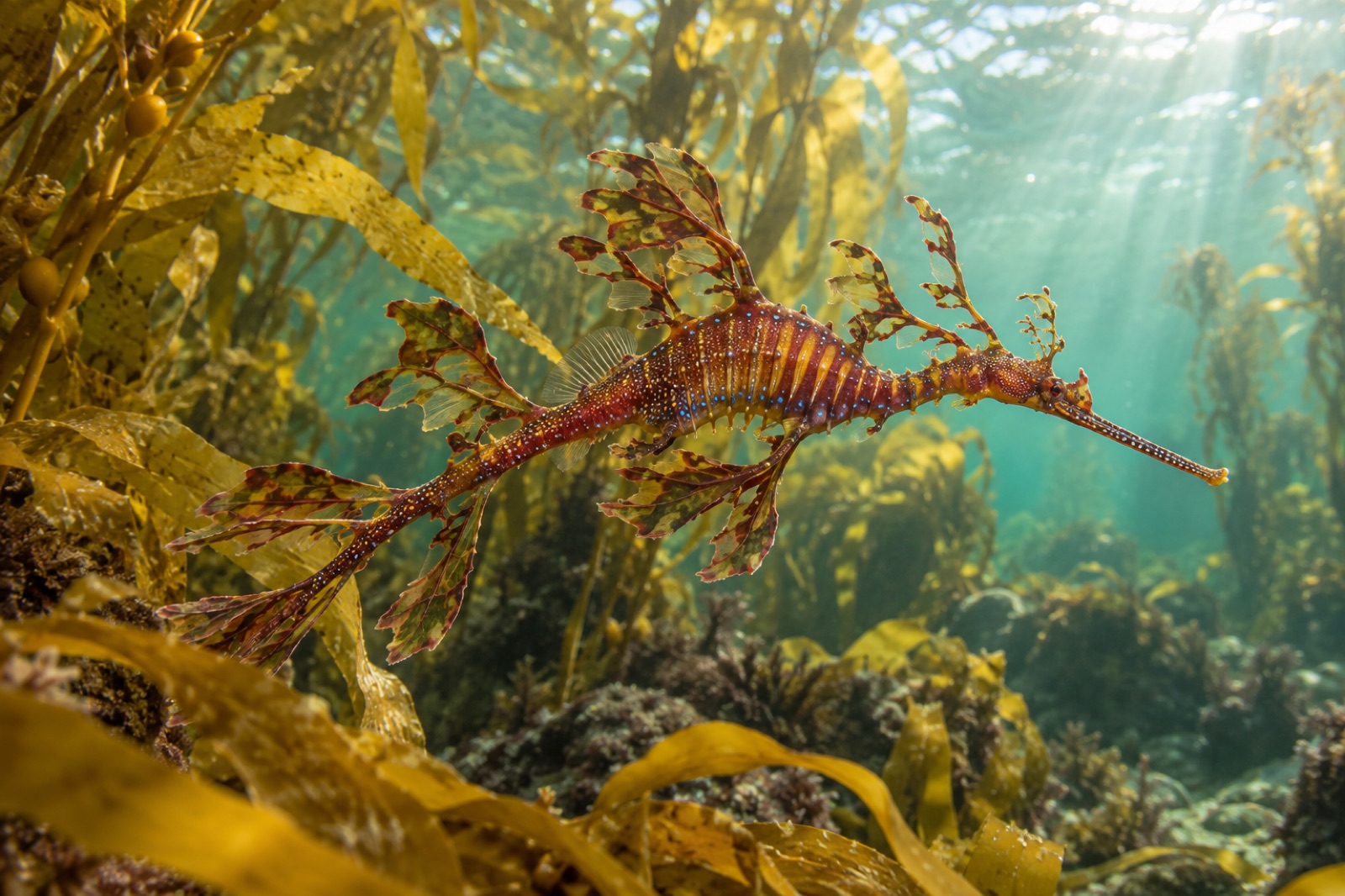
If The Rip is the peninsula's drama, the piers are its charm. Portsea Pier, inside the Heads on the bay side, holds one of Australia's most reliable populations of weedy seadragons — males carrying ruby-crusted tails of eggs through the shallows in spring and summer. Flinders Pier, around the corner on the Western Port side, may be even more reliable: a 200-metre timber pier where dragons drift among the piles at depths shallow enough for confident snorkellers.
Around the dragons, pier life stacks up like a nature documentary:
- Seahorses (Hippocampus species) gripping weed and rope.
- Globefish, blennies and head-shield slugs along the sandy margins.
- Sponge gardens, ascidian mats and kelp fringes on the piles themselves — every piling a vertical reef.
Blairgowrie Marina and Rye Pier add variation: muck-diving treasure hunts through sand skates, banjo sharks, fiddler rays and the region's octopus, while Sorrento's front-beach snorkel trail is an easy first taste of the bay for the merely curious. In late winter, big Australian giant cuttlefish drift into the bay's southern reaches to breed, flashing dark reds through the gloom.
Snorkellers' etiquette and safety
Dragons are protected wildlife — hover over them, never touch, and never herd one for a photo. Keep fins off the bottom, slow your finning down, and give pier ladders a wide berth: boats use them constantly. If you're new to cold water, start with our snorkelling safety guide and aim for slack tide; the piers are benign until wind and tide combine. Water runs from about 10 °C in winter to 20 °C in late summer, and on summer days a flush of cold water pushed through the Heads can drop shallow temperatures several degrees in an afternoon. Take it seriously, and carry a warm layer.
The back beaches
Cross the ridge to the Bass Strait coast and the peninsula becomes a different place: swell-thrashed black rock, booming blowholes and kelp. At Bridgewater Bay near Blairgowrie and Point Nepean's outer ledges, golden kelp and southern bull kelp grip the reef flat among Port Jackson sharks, bullseyes and rock cod. A few hundred metres offshore the water has a darker, colder edge — this is unprotected ocean, and even confident freedivers pick their days. In return you get that thing city dwellers rarely get: kelp country in its wild register, a 90-minute drive from four million people.
This wild side is very much part of the Great Southern Reef — the vast temperate-reef system that arcs from Western Australia around Tasmania into New South Wales, most of it overlooked; the peninsula's back beaches are the reef come to the suburbs.
Why these reefs matter — and what recovery looks like
Port Phillip's reefs sit under some of the heaviest urban pressure of any kelp coast: a major shipping channel, four million people, decades of port development. And yet the dragon piers endure. The marine national parks declared in 2002 protected the Heads' sponge gardens and kelp; divers now self-organise to count dragons; and Melbourne's dive clubs function as an informal force of citizen scientists reporting seadragon sightings into long-term datasets — a model of community reef-keeping that Tidewright's (fictional) Reef Partners program often cites when arguing for urban-coast monitoring programs.
Planning your visit
- Base: Sorrento or Portsea for the Heads and dragon piers; Rye or Blairgowrie for the bay-side shore sites.
- Charters: book a boat out of Queenscliff, Sorrento or Rosebud for any dive in the Heads; ask about the operator's tide policy before you commit.
- Gear: 5–7 mm wetsuit year-round; drysuit season is long here. Hoods and gloves from May through November.
- Timing: dragons are present year-round, with males carrying eggs most commonly in late spring and summer; the clearest, calmest days are typically late summer and autumn.
- Respect the shipping lane: parts of the bay and the entire canyon approach are a working port channel. Follow marine-park rules and operator instructions.
Key takeaways
- The Mornington Peninsula fronts three distinct habitats in one small area: pier-studded Port Phillip, the tidal canyon of The Rip, and wild Bass Strait back beaches.
- Portsea and Flinders piers hold some of Australia's most reliable weedy seadragon populations; males carry eggs in spring–summer.
- The Heads' wall and drift dives are done only on the slack, and only with local operators — six-knot tidal flows and a commercial shipping lane say so.
- The region sits within the Port Phillip Heads Marine National Park, gazetted in 2002 with Victoria's marine park system.
- Ocean-side back beaches hold golden kelp and southern bull kelp — wild kelp country 90 minutes from Melbourne's CBD.
FAQ
Where can I see weedy seadragons near Melbourne?
Portsea Pier (inside the bay near Point Nepean) and Flinders Pier (on the Western Port side) are the two most reliable sites in Australia. Snorkellers can often see dragons from the surface in calm conditions; look along pile lines and over the weed edges, slowly.
Can you snorkel at the dragon piers?
Yes. Flinders and Portsea piers are shallow enough for confident snorkellers on calm days with little tidal flow. Never touch the dragons, keep off the bottom, and be aware of boat traffic around pier ladders.
Is diving The Rip dangerous?
It can be. Tidal flow through Port Phillip Heads can reach six knots on big tides, and the area includes a major commercial shipping channel. Divers work the brief slack water with experienced charter operators from Queenscliff, Sorrento, Portsea or Rosebud, and adhere strictly to their tide planning.
What is the water temperature in Port Phillip?
Roughly 10 °C in winter to about 20 °C in late summer. Shallow water can drop several degrees in hours on summer days when cold water is pushed in through the Heads; bring a warm underlayer even when the air is hot.
What's the marine park status of the Heads?
The Port Phillip Heads Marine National Park was gazetted in 2002 as part of Victoria's marine national park system, protecting Lonsdale and Nepean walls, Pope's Eye and surrounding reef. Fishing is not permitted in the marine national park; check current park boundaries before boating or foraging.