Encyclopedia9 min read
Cystoseira: The Mediterranean's Lost Canopy Forests
Cystoseira and kin built the Mediterranean's underwater forests for millennia. Why these canopy algae are retreating, and what it takes to bring them back.
Dr. Mara Ellison ·
Croatia's island-chained coast grows the Mediterranean's great brown algal canopies on drowned karst — clear water, coralligenous reefs and forests now measured in fragments.
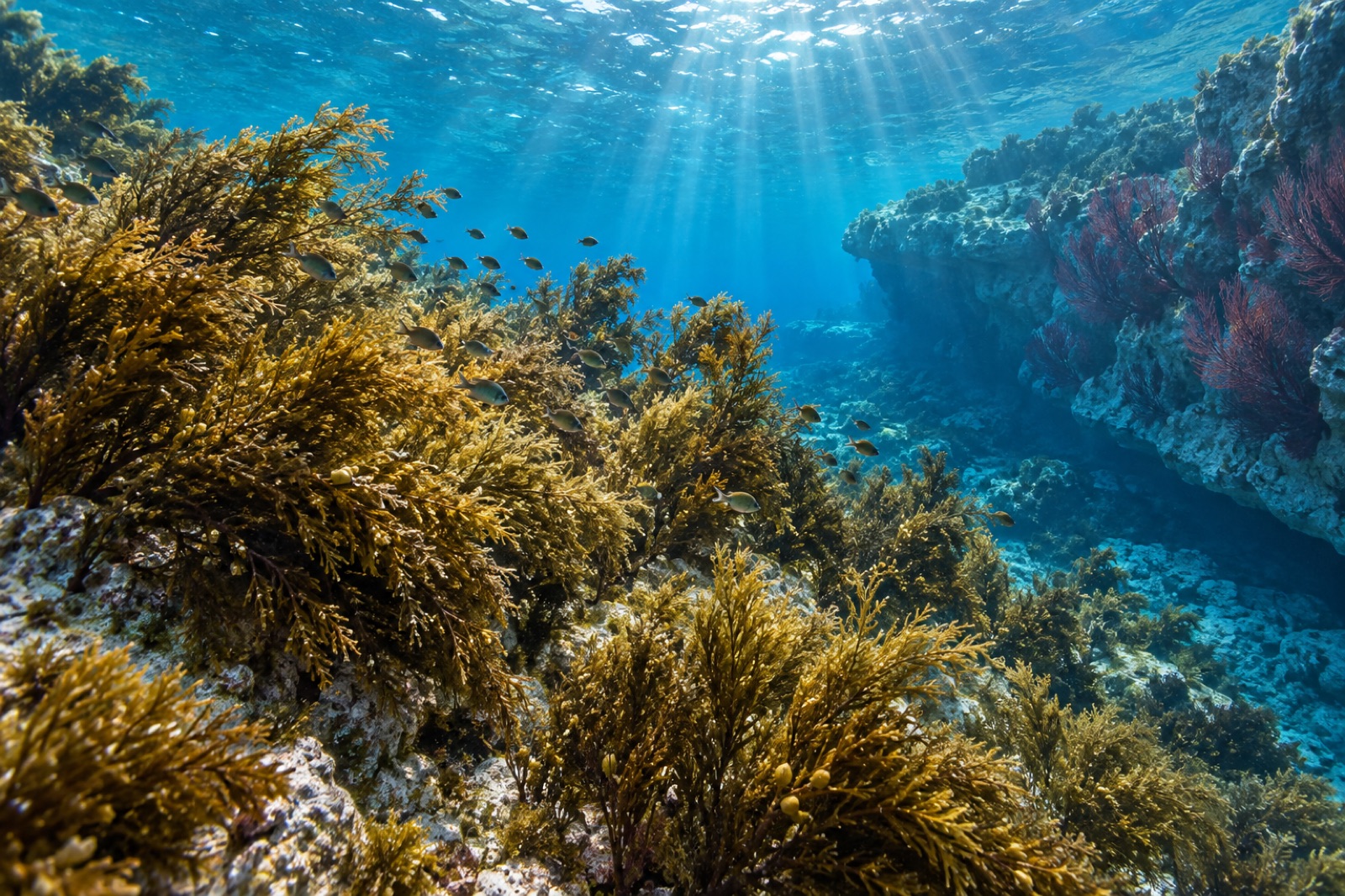
The Dalmatian coast looks, from the ferry deck, like a geology lesson that got out of hand: a thousand limestone islands strung parallel to the mainland, white rock running straight into water so clear the boats seem to float on light. Underneath, that same karst makes one of the Mediterranean's most distinctive underwater landscapes — and once grew one of its greatest forests. Not true kelps, which never quite made it through Gibraltar, but their ecological equals: the Cystoseira canopies, belts of large brown algae that structure the shallow Adriatic the way kelp structures a cold Pacific coast. This is a guide to the karst coast, its canopy, and what a Mediterranean forest loses when the heat arrives.
Everything biological here starts with limestone. The Dinaric karst — the same dissolving terrain that holds the region's caves and disappearing rivers — was drowned by rising post-glacial seas, and the islands are simply the last unsubmerged ridges of a folded mountain belt. Karst coasts behave unusually:
The Dalmatian canopy belongs to the fucoid brown algae — the Cystoseira group (now split by taxonomists into several genera, among them Ericaria and Gongolaria, a renaming we untangle in our Cystoseira species profile). Ecologically they fill the kelp niche: bushy, branched, air-bladed canopies over shaded understory, with the same cascading effects — nursery habitat for juvenile fish, grazing economies for sea urchins, architecture for the small crustaceans that everything else eats. A good Dalmatian Cystoseira bed is to a Mediterranean reef what a Laminaria forest is to Brittany: the habitat from which the rest follows.
Beneath them lies the Adriatic's second forest: the coralligenous — a reef built not by corals alone but by calcifying red algae growing with sponges, bryozoans and gorgonians into towering encrusted formations, one of the Mediterranean's most diverse habitats per square metre. And seaward, on any pocket of sediment, the seagrass Posidonia oceanica makes its slow meadows, a habitat we pit against the kelp model in kelp vs seagrass. Kelp, coralligenous, Posidonia; rock, carbonate reef, sand — the Dalmatian coast lays the Mediterranean's three great underwater architectures side by side.
Two winds write the coast's calendar. The jugo — the south-easterly — brings warm humid weather, swell and rain on shore. The bora — the famous cold north-easterly that can drop off the Velebit mountains at gale strength with no warning — brings the winter churn that oxygenates and cools the entire Adriatic basin: severe bora winters drive formation of dense northern Adriatic water that sinks and flows south, ventilating even the deeps of the southern basin, one of the Mediterranean's great natural breathing cycles. Divers learn: jugo seas linger days, bora arrives in hours and kills a week's plans, but the forest needs its bora winters like a terrestrial woodland needs rain.
The Adriatic is warming faster than the global ocean average, and the canopies are the thermometer. Cystoseira forests across the Mediterranean have contracted over decades under the combined press of heatwave summers, coastal development and overgrazing where fish and other urchin predators are scarce — ours are among the best-documented losses, with mass-mortality events hitting gorgonian forests in hot years and algal canopies thinning island by island. The mechanism — oceanic fevers, prolonged anomalies, what they do to slow-growing species — is set out in marine heatwaves 101.
Add to this the arrivals: tropical-affinity algae moving in through Suez-route and warming-range corridors, a process we track in how marine invasions spread; mucilage events in the nutrient-rich northern basin; and the simple human facts of a coast that is one of Europe's fastest-growing tourism economies, with anchor scars and development footprints accumulating on habitat that grows at centimetre-per-decade pace. The Cystoseira belts that remain are, increasingly, fragments on the hardest-to-reach outer islands and inside the parks.
Dalmatia has assets most degraded coasts lack: surviving source forests, water still oligotrophic and clear, part of the archipelago under active protection, and centuries of seafaring culture that reads conditions with precision. The parks — Kornati, Mljet, the nature parks — are testing grounds for the Mediterranean's core questions: how tightly must anchorages be managed to let a seagrass meadow recover? Can re-established no-take coverage rebuild the fish community that keeps urchins in balance? These are the same architecture questions that drive marine protected area science everywhere, asked here against living karst.
For Tidewright, Cystoseira canopies pose our discipline's hardest test — perennial, slow, ancient, and declining exactly where the sea is warmest. The direct tools that work for fast kelps mostly don't transfer; what transfers, from our work with kelp hatcheries at Holdfast, is the principle: locally sourced, climate-matched stock, put back onto cleaned habitat, monitored for decades rather than seasons.
Not true kelps (Laminaria-group species largely stop at the Atlantic side of Gibraltar), but the Cystoseira group of large brown algae fills the same ecological role — canopy, understory, nursery habitat — in the clear, warm Mediterranean. "Algal forests" is the term of art; they are the Adriatic's kelp equivalent, as our Cystoseira profile explains.
Karst limestone produces almost no silt, the outer islands receive little river runoff, and the Adriatic is naturally low in nutrients — plankton stays sparse and light penetrates deep. That clarity is what allows coralligenous reefs to build well below swimming depth.
A Mediterranean reef built at depth by calcifying red algae together with sponges, gorgonians and bryozoans — slowly accreted rock that hosts extraordinary species density. It is light-dependent, centuries old in places, and highly vulnerable to anchoring, warming and sediment.
Yes — the Adriatic and wider Mediterranean have experienced repeated severe summer marine heatwaves, triggering mass mortalities in gorgonians and accelerating the loss of Cystoseira canopies. The background science is in marine heatwaves 101.
Vis for deep coralligenous walls and history both, Kornati for sheer limestone reef exposure, Lastovo for a quieter, protected archipelago feel. All benefit from the same traveller's discipline: moor, don't anchor, and leave the urchins and the canopy attached.
Cystoseira and kin built the Mediterranean's underwater forests for millennia. Why these canopy algae are retreating, and what it takes to bring them back.
Dr. Mara Ellison ·
Marine heatwaves are weeks of anomalously hot ocean that can deforest entire coastlines. Here's the science behind them and what restoration can do.
Dr. Lena Fischer ·
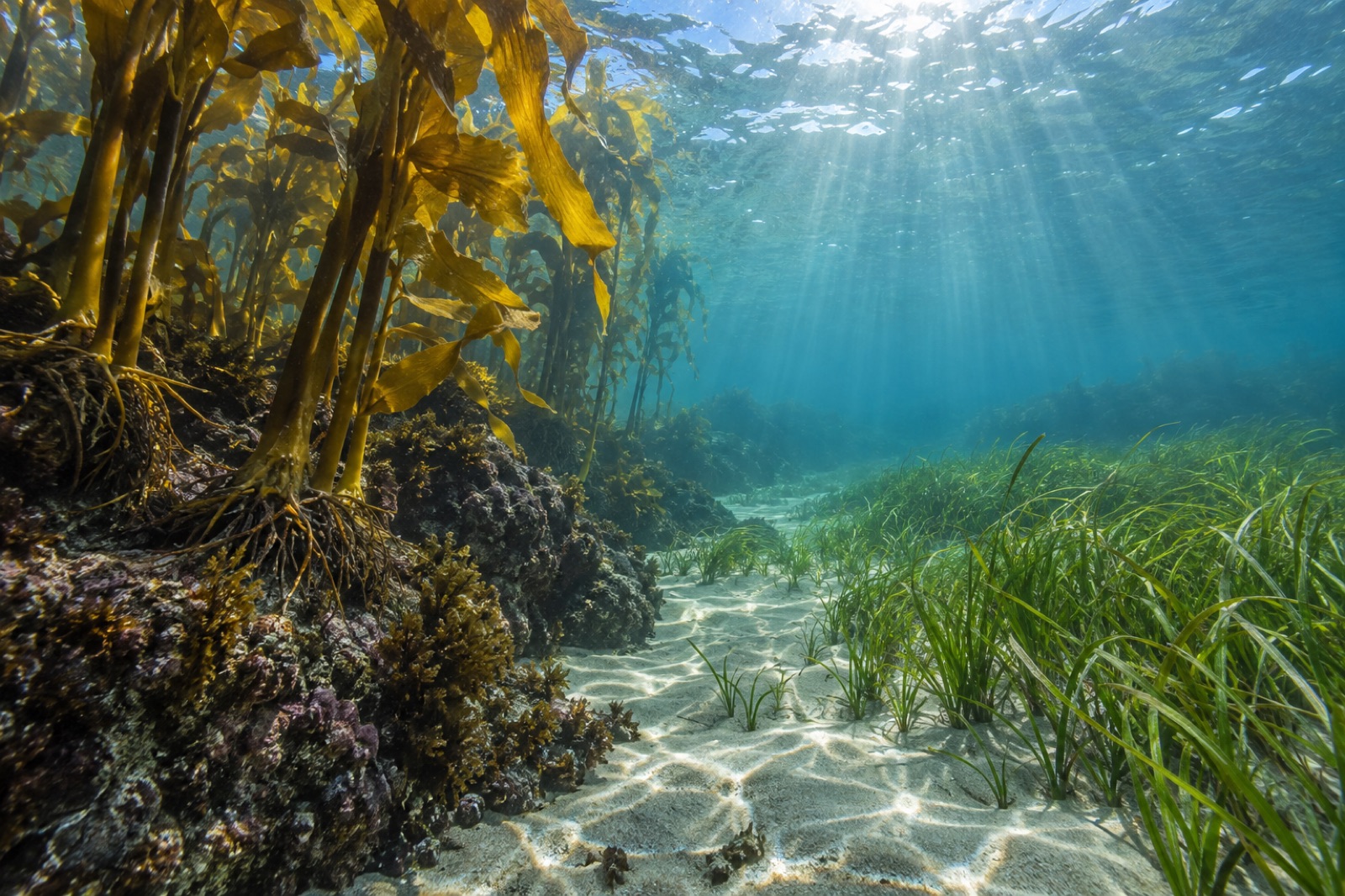
Kelp is an alga; seagrass is a flowering plant. How the ocean's two great habitats differ in biology, range, carbon storage and the ways we restore them.
Dr. Theo Nakamura ·