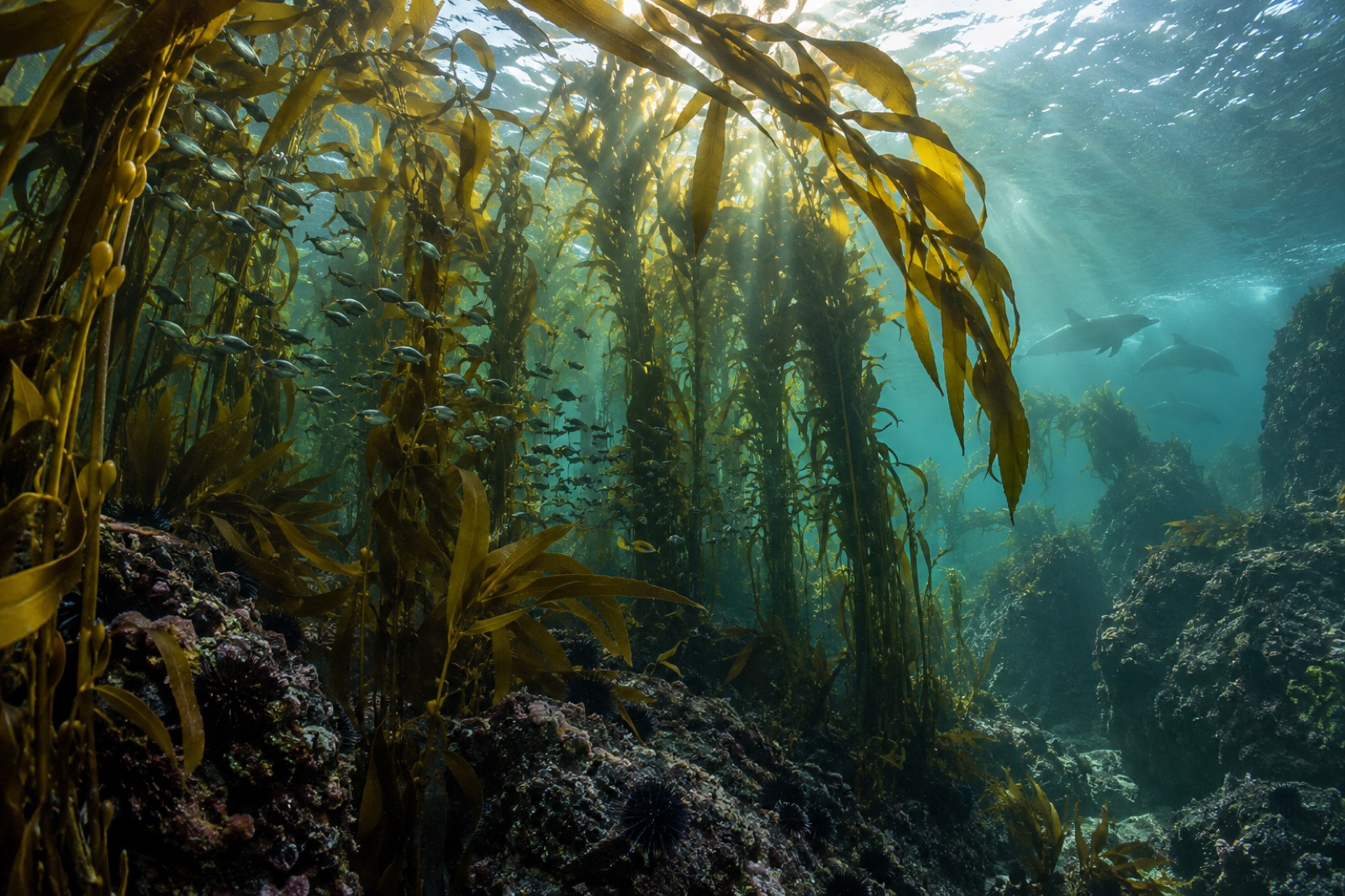
Eight hundred kilometres east of Christchurch, where the Roaring Forties have nothing between them and the Chathams but open ocean, a scatter of islands lifts out of one of the most productive patches of temperate sea on Earth. The Chatham Islands — Rēkohu in the Moriori language, Wharekauri in te reo Māori — are New Zealand's far shore: a few hundred residents, a famous crayfish fleet, some of conservation's greatest comeback stories, and coasts armoured in bull kelp that thrashes in the swell like something alive, because of course it is.
Getting your bearings
Two islands are inhabited — Chatham (the main island, with the settlement of Waitangi and a large shallow lagoon, Te Whanga) and nearby Pitt. Scheduled flights run from Auckland, Wellington and Christchurch, around two hours depending on origin; the islands run their own time zone, forty-five minutes ahead of New Zealand, which tells you something about how they regard the mainland.
Although the islands aren't tropical — pack jerseys — the latitude softens them, and the climate is famously misty, windy and mild, smeared with cloud and sudden shafts of sun. Renting a vehicle and staying with locals in small lodges is the norm; there are no big resorts, which is the point.
The sea that makes them
The islands sit atop the Chatham Rise, a vast submerged plateau where warm subtropical water pushing down from the north slides into cold subantarctic water riding up from the south. That meeting — a boundary layer where two oceans shake hands — is one of the great natural productivity engines of the hemisphere. Plankton blooms; baitfish boil; seabirds, seals, tuna and everything hungry gathers at the edge of the current seam.
For the islands this means abundance and its consequences. Fishing — famously southern rock lobster, blue cod and pāua — is the backbone of the economy, and the wharves of Waitangi and Flower Pot Bay anchor the working rhythm of the place. A single beach walk tells the same story in other words: pāua and kina shells by the kilogram, enormous fish frames drying on shed roofs.
Bull kelp country
Everywhere the swell pounds, and especially on the south and west coasts, the intertidal and shallow subtidal are wrapped in southern bull kelp (Durvillaea species) — the great rubbery, honeycombed kelps of the Southern Ocean. They are astonishing plants: anchored to bare rock in the most violent intertidal habitat on Earth, with fronds like bullwhips and bodies full of air-honeycomb that keeps them buoyant when every reasonable plant would be ashore in ribbons. Our southern bull kelp species profile digs into the biology — including the kelp's remarkable talent for rafting across entire oceans with whole invertebrate communities aboard.
Southeast swells thundering up from Antarctica have kept everything here honest, and the wave-exposed rocky shore communities — grazing pāua, kina, molluscs and small rockfishes within the kelp — are what intact looks like. For the same reason, beachcombing after storms is a contact sport: enormous kelp rafts, miscellaneous lost fishing buoys from half the Pacific, and occasionally marine mammals coming ashore onto Chathams' wild beaches.
Moriori heritage
The Chathams were settled by the Moriori — a Polynesian people who developed a distinctive culture of peace, with warfare renounced as a cultural principle — centuries before later Māori and then European arrivals. That history is beautiful and painful, and it is increasingly told, on the islands, first-hand: carved dendroglyphs on kōpi trees (a rare art form where figures were incised into living bark), marae visits, museum collections devoted to Moriori taonga, and a renaissance of language and identity. For a visitor, this human story is as much the reason to come as the wildlife: there are few places where an island's identity is so entangled with its seas, and where stewardship of both is so directly practiced.
The birds on the edge of the world
The Chathams hold some of the most improbable bird stories in conservation. The black robin — pulled back from a total world population of five birds in 1980, largely through the extraordinary work of ranger Don Merton and a single fertile female known ever since as Old Blue — is a byword for what conservation can pull off on an island. The Chatham albatross breeds on a single rock stack; the once-presumed-extinct taiko (magenta petrel) was rediscovered on the main island in the twentieth century after more than a century unrecorded, and now survives through intensive predator control. Endemic shore plovers, oystercatchers and parrots fill out the life list of any birder patient enough.
Being a good guest on the islands
- Book everything ahead. Accommodation and vehicle hire are small-scale; the aeroplane will not wait if you haven't organised a bed.
- Buy local and ask. Kaimoana — seafood — is the island gift; crayfish in season and blue cod are the classics, and what you pay stays in Waitangi.
- Respect private land and wāhi tapu. Much of the prime walking crosses farms and culturally significant sites — seek permission as locals direct.
- Weather rules. Flights and boats move with the Roaring Forties; build slippage into any onward itinerary.
The wider neighbourhood of far-southern kelp
For travellers hooked on remote kelp coasts, the Chathams live in excellent company: Stewart Island / Rakiura lies under New Zealand's southern end; the Otago coast is closer to where the flights leave from; and far across the Southern Ocean the Falkland Islands run the same bull-kelp economy of birds, seals and spray. Together they sketch what the temperate south does when you give it rock and let it alone.
Key takeaways
- The Chatham Islands lie ~800 km east of New Zealand's South Island, on the Chatham Rise — a subtropical/subantarctic water boundary that powers extraordinary marine productivity.
- Southern bull kelp armours the wave-lashed coasts; the kelp borders fishing grounds famous for crayfish, blue cod and pāua.
- Moriori heritage — dendroglyphs, taonga and living language renaissance — is the islands' human spine.
- The black robin recovery and the rediscovered taiko are global conservation milestones.
- Travel small, book everything ahead, and pack for weather that arrives at speed.
FAQ
How do I get to the Chatham Islands?
Scheduled flights run from Auckland, Wellington and Christchurch on the islands' own airline to the airstrip on Chatham's west side, roughly a two-hour ride depending on routing and weather. Accommodation, rental vehicles and tour guides should be locked in before booking the flight — the infrastructure is charmingly small.
Can non-birders enjoy the islands?
Enormously. Crayfish and cod, empty surf beaches, basalt columns, wildflower-dense 'megaherb' meadows, Moriori heritage and kelp-armoured coastline compose one of the most distinctive slow-travel destinations in the Pacific. Birders get a bonus; they don't hold a monopoly.
Is there diving or snorkelling?
The Chathams have no dive industry to speak of — this is expedition-style coast, with cold Southern Ocean water, serious swell and no rescue infrastructure nearby. Confident snorkellers with full cold-water gear can dip sheltered spots in settled weather, but respect the power of the water fully; the kelp forests here are better admired from the shore, in most sea states.
When is the best time to visit?
Summer and early autumn (November–April) bring the most settled weather, the megaherb flowering and warmest conditions, though islands this remote have no guaranteed season. Crayfish seasons, seabird breeding and storm-watching each have their fans — come in any month prepared for four seasons in a day, and you won't be disappointed.