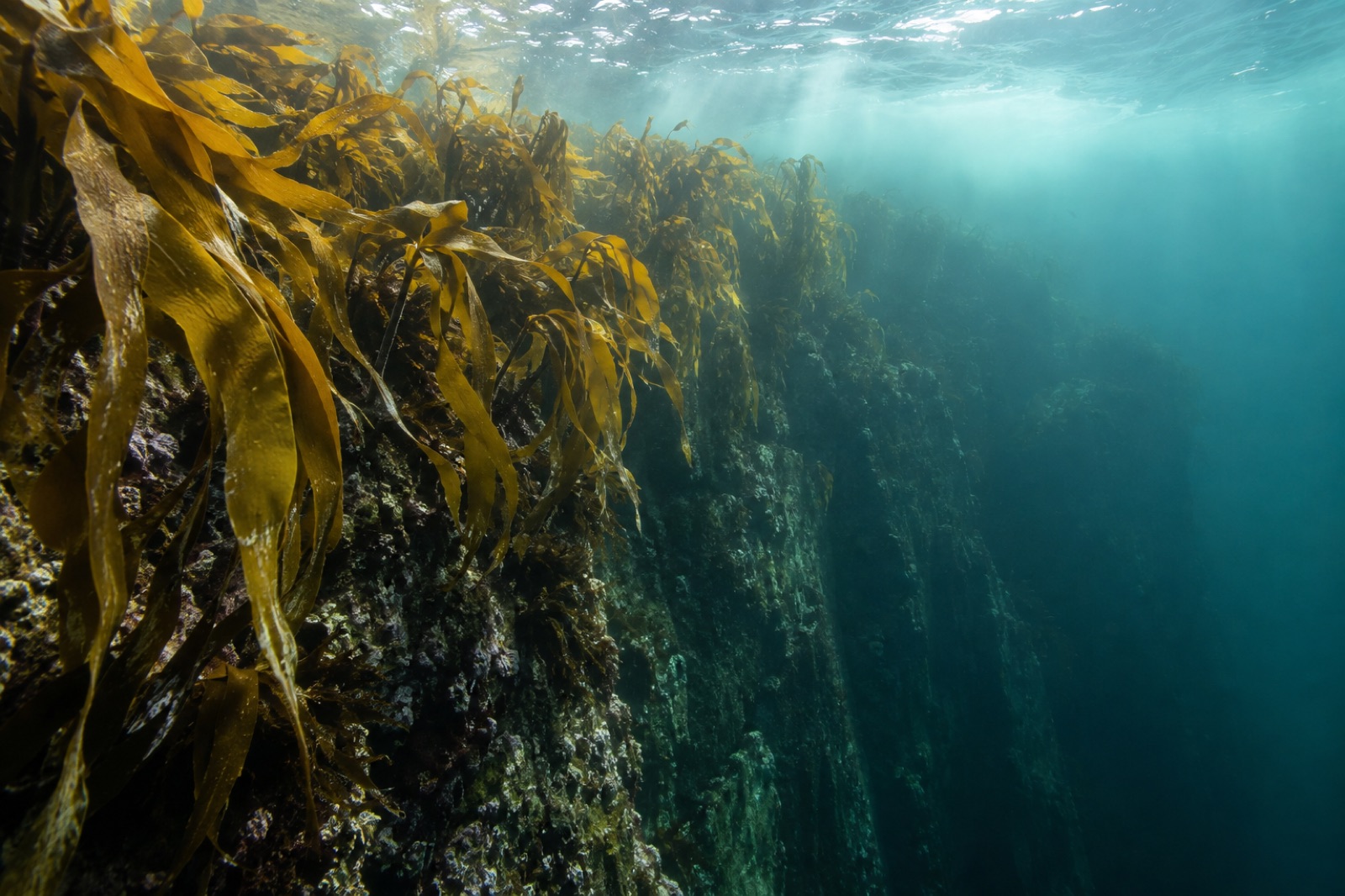
The west coast of Scotland doesn't really end at the sea. It leaks into it — in long, mountain-walled fingers called sea lochs. Loch Sunart, Loch Carron, Loch Laxford, Loch Fyne, Loch Sween: over a hundred of them, collectively the calmest considerable body of kelp-friendly water in the British Isles, and a different world from the surf-blasted outer coast just a few miles away.
If our west coast guide is about the open Atlantic and the Hebrides, this one is about what happens inside — where the tide squeezes through narrows, where kelp grows in cathedral silence, and where a snorkeller in 10 °C water can float an arm's length above a maerl bed older than the road they drove in on.
What makes a sea loch
Sea lochs are Scotland's answer to fjords — glacially carved valleys, drowned as the ice left and the sea returned. The architecture is consistent and it explains everything about the ecology inside. A loch typically has:
- A sill near the mouth — a submerged rock ridge left by the glacier. Sills shallow the entrance, constrain circulation and create the tidal rapids for which some lochs are famous.
- A deep basin landward of the sill, often far deeper than the water outside.
- A freshwater layer, thinner in summer, thicker after Highland rain, sliding seaward over the salt water below.
- Shelter, the defining gift: behind the headlands, the Atlantic swell dies, and the kelp forest becomes something it can never be on the open coast — still, deep-lobed, and old.
The mechanics of fjord-like systems apply here at a smaller, gentler scale: stratification, restricted flushing, big seasonal swings in the surface water. The kelp reads all of it.
The kelp of sheltered water
Open-coast Scotland grows the classic storm kelp — oarweed and dabberlocks bent into the surf zone. Inside the lochs the cast changes:
Sugar kelp (Saccharina latissima) takes over the subtidal, growing in long, slack-undulating fronds over rock and mooring chains alike, in depths down to the limit of the light. In a clear loch it forms actual forest: a canopy at four to ten metres, dim green light beneath, fish holding station in the frond shadow.
Oarweed still stands on the low-shore rock, but in deep lochs it gains a giant relative — the long-stiped Laminaria-type kelps forming dense beds where shelter lets them grow tall rather than tough.
Furbelows (Saccorhiza polyschides), the bulbous, fast-growing annual that looks like a sea palm crossed with a cabbage, explodes in loch shallows each spring, a kelp that can put on metres of growth in a season.
And beneath the canopy, the lochs hold some of Britain's most significant maerl beds — living pavements of pink, slow-growing coralline algae — plus horse mussel reefs, sea loch anemones the size of dinner plates, and beds of fireworks anemones in the deep, silted basins. For kelp ecology the maerl matters doubly: it is itself habitat, and the settlement surface of choice for young kelp sporophytes.
The narrows: where lochs bare their teeth
The stillness ends at the sills. Where a loch mouth narrows, the tide turns from a rise and fall into a river. The example every British diver knows is the Falls of Lora at the mouth of Loch Etive near Oban: on a big spring ebb, the loch drains over its sill in standing waves and whirlpools worthy of the name "falls," and six hours later the sea comes back in up them.
These rapids are not hazards to the kelp; they are half the reason for it. The squeezed, fast-moving water flushes the loch, keeps the basins oxygenated, and gardens the sill itself into one of the richest dive sites in Britain — softened at slack into kelp-lined rock carpeted in soft corals and dead man's fingers, patrolled by pollack and wrasse. Other lochs with minor narrows offer the same pattern at gentler scale: a kelp-lined rapid where the channel pinches, quiet forest either side.
Anyone with a kayak, paddleboard or sense should treat sill rapids with the same respect given to Saltstraumen in miniature: the water is fast, the windows are short, and the Falls of Lora in particular is a genuine sea-feature to be viewed from the Connel Bridge or taken on with serious local knowledge.
The lochs to know
Loch Sunart (Ardnamurchan). Long, deep and largely undeveloped, Sunart is the classic wild sea loch: oakwoods to the shore, otters along the kelp edge, and sheltered anchorage-water whose reef communities include some of Scotland's finest flameshell beds adjacent to the kelp. Its narrows at the entrance make the inner loch benign snorkelling on most days.
Loch Carron (Wester Ross). The maerl loch — a place where conservation battles over scallop dredging produced a marine protected area and a regeneration story. We run a whole dive guide for Loch Carron; in brief: kelp gardens over rock terraces, maerl of national importance, and a living demonstration that protection works.
Loch Laxford and the far northwest lochs. Sutherland's lochs — Laxford, Inchard, Eriboll — offer the drama of nearly arctic-north scenery with kelp that greets you metres from the road. Laxford's narrows give a tidal-race snorkel option on the right tide; the inner basins are silent.
Loch Fyne and the Clyde sea lochs. The long arm of Loch Fyne reaches almost into the industrial lowlands while keeping water clear enough for kelp walls within sight of the road. It is the most accessible sheltered kelp in Scotland, and the upper loch's sheltered forest is a gentle introduction.
Loch Sween and the lochs of Argyll's coast. Sween carries National Scenic Area status, maerl beds, and the added comprehension that comes from anchoring beneath a 12th-century castle over a sugar kelp forest.
Water, weather and timing for visitors
Sea loch conditions work to a different calendar from the outer coast:
- Water temperature: the layer cake matters. Surface water can reach 13–15 °C in late summer; below the thermocline, 8–10 °C is the year-round truth. Plan the exposure suit for the bottom, not the surface.
- Visibility: loch vis is plankton- and rain-dependent; pick dry weather and mid-tide, and spring-to-early-summer for the clearest water before the bloom arrives. Winter can offer astonishing clarity.
- The sea breeze: lochs tame the Atlantic swell entirely, but afternoon sea breeze still ruffles the surface. Morning is your friend everywhere on the west coast.
- The sill rule: any loch with "Falls," "Rapids" or a tight narrows on the chart is slack-water territory only, and only with local timing.
Shore access is the great gift of the lochs: road runs beside water for miles on most of them, and a mask, suit and short walk is frequently the entire logistics of reaching a sheltered kelp forest.
Why the lochs matter to kelp restoration
Lochs are the natural control room for what sea temperature stability gives a kelp forest: shelter below the wave base, current protection without stagnation, freshwater moderation at the surface. The nursery knowledge at the heart of modern kelp restoration — matched genetics, seeded line outplanting, staged hardening — is essentially an attempt to give young kelp the conditions a good loch provides by default. The analogy is direct enough that much of the early Scottish growing trials of seeded line were located in sea lochs, and the sheltered kelp of Sunart or Fyne remains the visual reference for what we want to help re-establish on damaged open coasts.
Put plainly: if you want to understand what a kelp forest needs to feel safe, swim in a sea loch. And then go and look at what the storm coast does without one.
Key takeaways
- Sea lochs are Scotland's drowned glacial valleys; sills, deep basins, surface freshwater and shelter define the ecology.
- Inside the lochs the kelp cast changes to sugar kelp-dominated forests, furbelows among them, over maerl beds and horse mussel reefs.
- Loch-mouth narrows create tidal rapids (the Falls of Lora most famously) that flush the lochs and double as world-class slack-water dive sites.
- Shore access is outstanding, water needs proper exposure protection, and mornings beat afternoons everywhere on the west coast.
FAQ
What's the difference between a sea loch and a fjord?
Functionally nothing — a sea loch is simply what a fjord is called in Scotland. The same glacial carving, the same sills and deep basins, the same ecological structure. Our fjord explainer covers the mechanics; the lochs apply them at Scottish scale.
Where's the easiest sheltered kelp snorkelling?
Loch Fyne's accessible shoreline is the most reachable for most visitors; Loch Carron combines sheltered water with outstanding reef communities and our dedicated site guide. In the far northwest, Loch Laxford's inner basins are steps from the road. All demand an immersion suit — the warmth of the surface is a courtesy, not a promise.
Are the Falls of Lora dangerous?
Yes, and worth the reputation. On big tides the ebb forms standing waves and whirlpools that take kayaks seriously; snorkelling the adjacent kelp requires precise slack-water timing and local guidance. From the Connel Bridge, at full flow, they are one of the best free shows on the west coast.
What makes maerl so special?
Maerl is a living, free-lying coralline algae that builds three-dimensional pink pavement over decades, and it matters as habitat and as settlement surface for young kelp. It grows so slowly it cannot withstand trawling or dredging — which is why the protected beds in places like Loch Carron are conservation priorities.
Do otters use the sea lochs?
Extensively. Sea loch shorelines with kelp-skirted rock and freshwater burns to wash their fur are prime otter habitat, and the lochs' day-active otters are among the most watchable in Britain. Dawn along any quiet Sunart or Laxford shore is as good a place as the islands for a sighting.