Blue Carbon8 min read
Blue Carbon Standards and Methodologies: A Buyer's Map
A plain-language map of the standards, methodologies and registries behind blue carbon credits — and the questions every buyer should ask before signing.
Priya Raman ·
What the ICVCM's Core Carbon Principles are, how the CCP label works, and what it does — and doesn't — tell buyers of blue carbon credits.
If you spend any time around the voluntary carbon market, you will eventually hear someone say a credit is "CCP-labelled" — or worse, that it is "almost CCP-labelled." The Core Carbon Principles have become the market's most visible attempt to answer its most persistent question: how do you tell a good carbon credit from a bad one? For ocean and coastal blue carbon projects, where science moves fast and methodologies are still maturing, the answer matters enormously.
This explainer covers what the CCPs are, who wrote them, how the label is awarded, and — just as important — what the label does not tell you. If you want the wider market map first, start with our Voluntary Carbon Market 101; this article zooms in on the quality rubric itself.
The voluntary carbon market grew quickly and unevenly. Through the 2010s and early 2020s, investigations into low-quality offsets — forestry projects that over-counted baselines, renewable-energy credits with no real additionality — eroded buyer trust and pushed prices for undifferentiated credits toward the floor. Different registries, methodologies and sellers all claimed "high quality" with no shared definition of the term.
The Integrity Council for the Voluntary Carbon Market (ICVCM) was set up to supply that definition. An independent governance body that grew out of a private-sector taskforce launched in 2021, the ICVCM published its Core Carbon Principles and an accompanying Assessment Framework in 2023. The idea is deliberately simple: define what integrity means at the level of a principle, then assess carbon-crediting programs and their methodologies against it. Credits issued under approved combinations may carry a CCP label. Think of it as a standards floor: not a ranking of the best credits, but a bright line below which a credit should not trade as "high integrity."
The CCPs are grouped into three families: governance, emissions impact, and sustainable development. In plain language:
The label operates at two levels. First, the ICVCM assesses crediting programs themselves — the registries and standards bodies — for governance quality. Second, it assesses methodology categories within those programs: for example, landfill gas capture, certain ozone-depleting substance destruction, or particular forestry approach families. When both a program and the relevant methodology category are approved, new credits issued under that methodology can carry the label.
Two details are worth keeping straight. The assessment happens at the category level, not project by project — the label tells you the rules were sound, not that every individual project applying them executed flawlessly. And assessment is rolling: categories are evaluated in batches, older framework versions get superseded, and a category approved under an early framework may need reassessment as criteria tighten. Always check which framework version a label was awarded under.
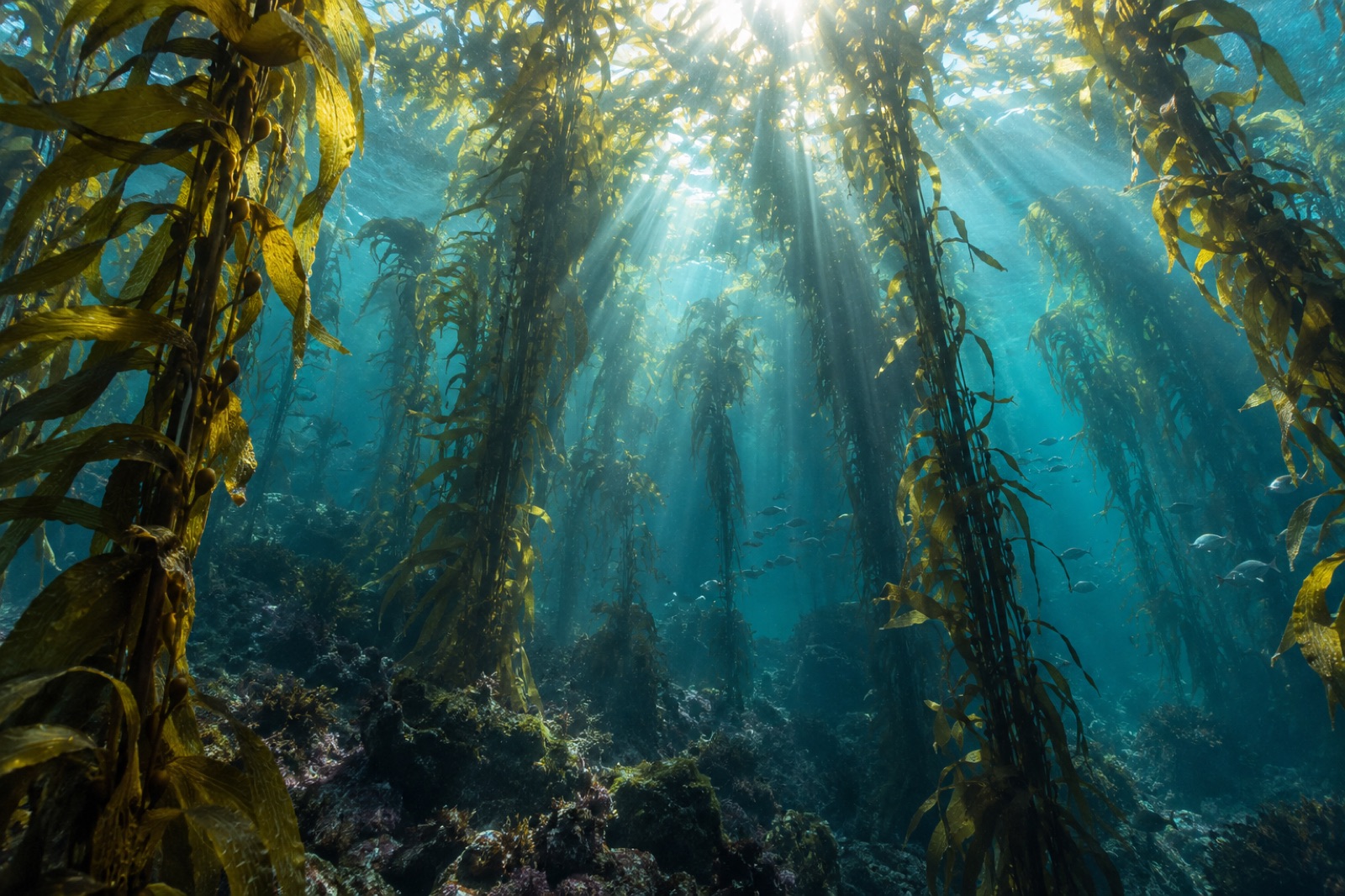
Blue carbon — mangroves, seagrasses, salt marshes, and (with open scientific questions) kelp — sits squarely in the market's high-scrutiny zone. The ecosystems store genuinely ancient carbon in sediments, but the measurement challenges are real: variable sedimentation rates, complex baselines, hard reversibility questions. That makes quality screens like the CCPs more important for ocean credits, not less. Several dynamics matter for ocean projects specifically:
This is where sophisticated buyers earn their keep. The CCP label is a threshold, not a ranking: two labelled credits can differ greatly in vintage, price, co-benefits, jurisdictional politics and reversal risk. It does not certify biodiversity outcomes, community benefit share, or the quality of a seller's contracts. Nor does it address corporate claims — what you are allowed to say in your sustainability report after retiring a credit is a separate conversation being driven by initiatives on the claims side of the market.
Finally, assessment lag is real. New and genuinely innovative methodologies — the kind emerging around sediment carbon and open-ocean pathways — may be excellent yet unlabelled simply because they have not been through the queue. Absence of a label is disqualifying for conservative buyers, but it is not proof of low quality. Presence of one is necessary, not sufficient.
Tidewright is a fictional company, but the posture below reflects what serious ocean project developers are converging on. Within our fictional Canopy Ledger platform (product overview), all carbon and biodiversity credit methodologies are designed against the CCPs as a floor: public monitoring data, third-party verification, buffer-pool accounting for reversals, and consent-first agreements on sea country. Our (equally illustrative) published method statements live alongside the numbers on the impact methodology page, because we believe the strongest implementation of principle 3 — transparency — is showing the working. Buyers weighing ocean credits today should apply the same checklist from our buyer's guide: label first, then baseline, buffer, benefits and proof.
No. The ICVCM is a voluntary governance body, and the CCP label is a market signal, not regulation. Its influence comes from adoption: buyers, exchanges and financiers increasingly make labelled credits a condition of purchase, which gives the framework de facto market power without any legal force.
It guarantees that the program and methodology category underpinning the credit passed an integrity screen — a real and valuable filter. Individual project execution, however, still varies. Due diligence on baselines, monitoring reports and reversals remains the buyer's job; the label narrows the field rather than finishing the analysis.
They answer different questions at different levels. The Oxford Principles address claims-side strategy — how a company should build its offsetting portfolio over time toward net zero. ICROA accredits offsetting service providers. The CCPs define credit quality. A well-run buyer usually works with all three lenses simultaneously.
Assessment is rolling and category-specific, so the answer changes over time; always check the ICVCM's current approved-category list before relying on a label claim. Coastal blue carbon methodologies are under close scrutiny because of their measurement complexity, and macroalgae pathways remain scientifically contested — treat any kelp credit's quality claim as a question of evidence first, labelling second.
Our explainer on the blue carbon project cycle walks through feasibility, design, validation, monitoring, verification and issuance — with the CCP tests mapped onto each stage. It is the practical companion to this article.
Filed under
A plain-language map of the standards, methodologies and registries behind blue carbon credits — and the questions every buyer should ask before signing.
Priya Raman ·
The voluntary carbon market turns verified emissions cuts into tradable credits. How it is governed, what went wrong, and where ocean carbon fits.
Priya Raman ·
Blue carbon credits can fund real coastal restoration — or expensive stories. A practical due-diligence checklist for corporate buyers before they sign.
Priya Raman ·