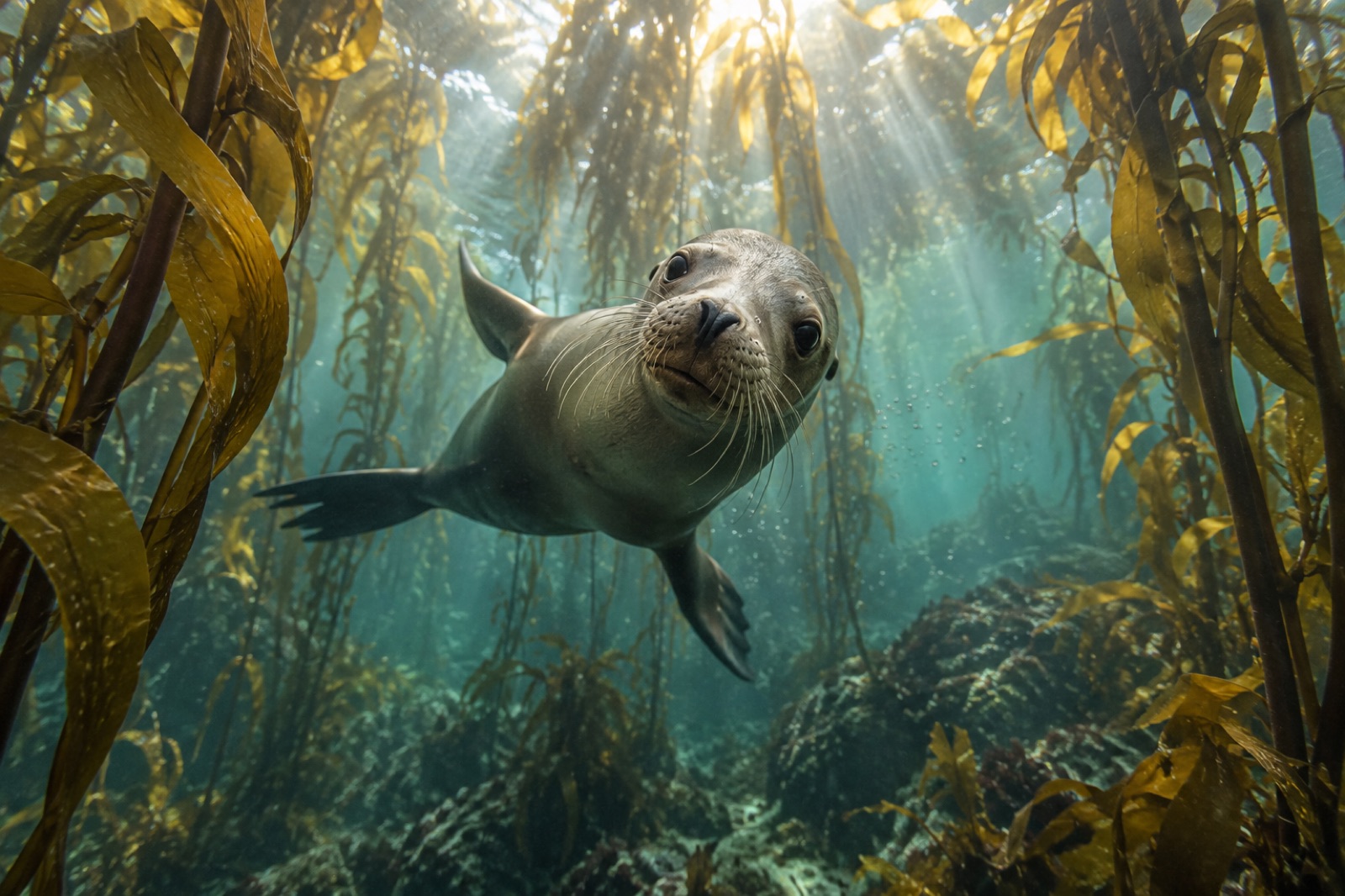
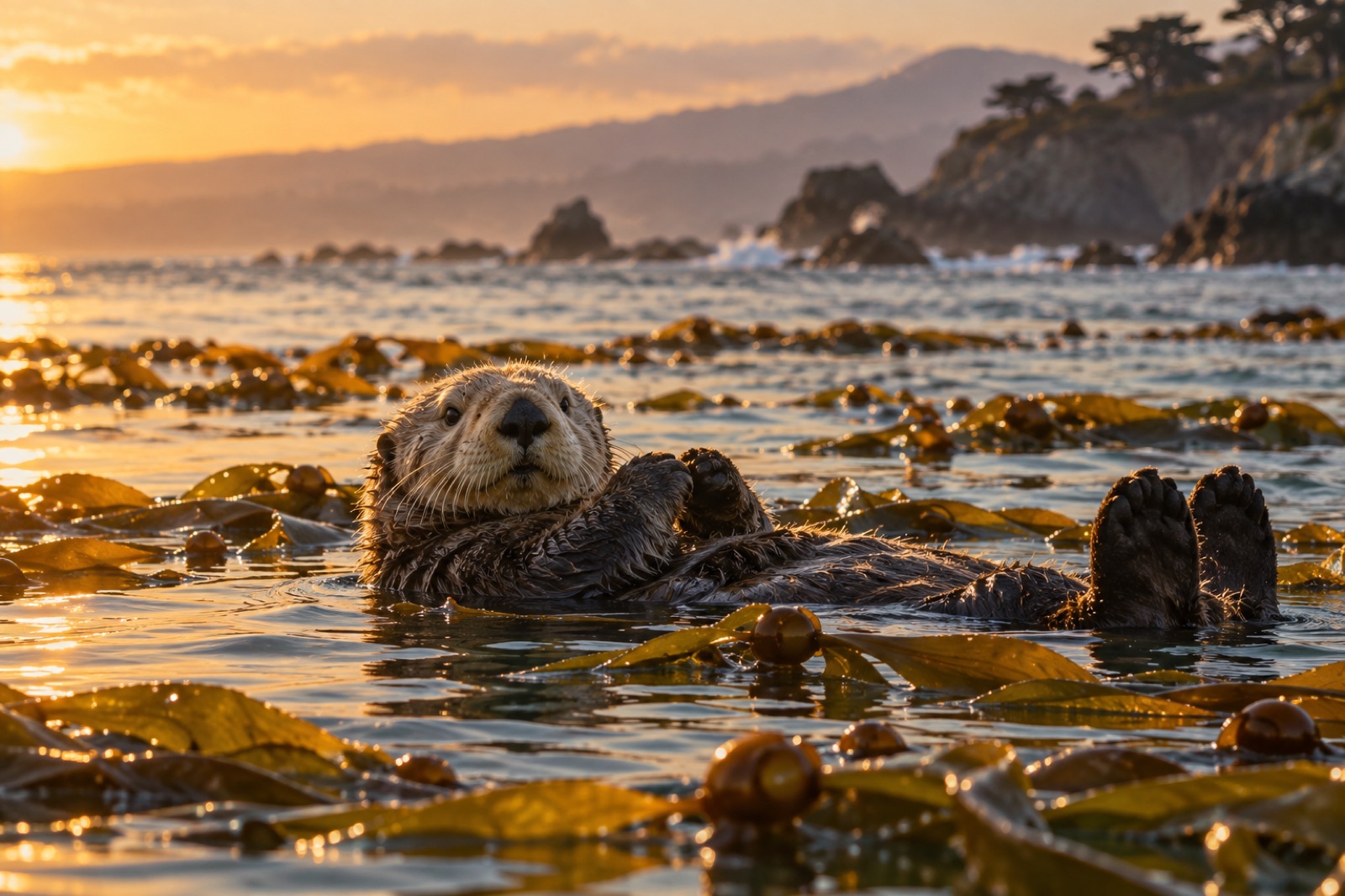
Floating ten metres off a kelp coast when a sea lion rolls beneath you — close enough to count its whiskers, looking at you with enormous, unbothered eyes — is one of the great wildlife moments cold water offers. The trick is that the encounter has to be their idea. Pinnipeds (seals, sea lions and fur seals) are fast, curious, apex-capable wild animals, and virtually every coast with good snorkelling also has rules and good manners about how close you may get. This guide covers the whole arc: choosing an ethical operator or site, reading the animals before you're in the water, behaving once you're there, and handling the surprisingly common case of an animal that approaches you.
Seals vs sea lions: know which one you're meeting
The difference matters for how the encounter will feel. Eared seals — sea lions and fur seals — have visible ear flaps, long front flippers they row like oars, and a habit of hauling out in loud, jostling colonies. In the water they are gymnasts: fast, aerobatic, prone to buzz you in loops for inspection. True seals, like the harbour seal and gray seal, have no external ears, stubby front flippers, and move with a caterpillar-like haul on land. In the water they tend to be quieter and more deliberate — a harbour seal that chooses to approach will often hang vertically in a kelp frond, spying on you with eyes like black glass.
If you're on the US West Coast you'll mostly meet California sea lions and harbour seals; in southern Australia and New Zealand, fur seals; in Alaska, the occasional Steller. Each coast's animals have their own temperament and their own local rules, so read up before you travel.
The legal baseline — and why distance rules exist
In most countries, marine mammals are protected by law. In the US, the Marine Mammal Protection Act prohibits harassment — feeding, touching, chasing or disturbing animals — and guidance asks you to stay at least 50 yards (about 45 metres) away on the surface unless the animal approaches you first. Many other countries have similar separation distances: typically 20–30 metres in the water, more near haul-outs. These aren't bureaucratic fuss; animals that are disturbed repeatedly from haul-outs burn energy they need for nursing pups and thermoregulation, and animals habituated to human food learn to beg, beggars learn to bite, and bitten people end wildlife encounters for everyone.
The broad rule everywhere, whether it's written into law or just customary: the animal controls the encounter. If it moves away, you weren't allowed. If it comes back, enjoy the gift.
Reading the beach before you get in
Before you even gear up, look at the coast. A rocky point crowded with sea lions at low tide is a haul-out — a place they rest and nurse. Snorkelling right beside it almost always means approaching too close, and it also puts you in the conversation between a dozen lactating mothers and their defending neighbours. Snorkel in coves well away from the colony instead; animals that come to you there are free agents.
Watch the water from the shore for ten minutes. Look for the distinct pattern of a surfacing seal — a head that rises, holds and sinks with that deliberate vertical dunk, very different from the arcing dive of a bird. Note where they are logging, where they are swimming with purpose, and where a cluster of ringed ripples marks a group milling around one spot (that last is often a resting raft — keep your distance).
In the water: the ethics of approach
Once you're snorkelling, the rules are simple and mostly mirror what you'd want if a stranger twice your size floated into your living room. It helps to think in terms of what the animal sees.
Never chase
Curious sea lions play a looping game: they approach you for an inspection, then drift off to feed. The moment you fin after them, the game's over; you're a pursuer now. Sit still, look at something else interesting, and wait. It is astonishing how often they return to the diver who ignored them.
Let them control the vertical axis
Don't dive down directly at a seal on a kelp bed — a shadow from above reads as a stooping predator. Drop to a ride depth a few metres above and off to the side. If the animal rises to meet you at your level, that's invitation, answered.
Keep your hands to yourself
A passing sea lion sometimes offers a whisker-touch, and it's genuinely tempting. Don't touch. Seals carry bacteria in their mouths and on their skin that can cause serious, slow-healing infections (the classic "seal finger" of fisherfolk lore); and a habituated seal that learns hands mean fun will eventually learn hands mean food too.
Stay calm around pups
If a pup approaches, it almost always means one of two things: it's a bold, weaned juvenile being hilarious; or it's a hungry lost youngster hoping you're its mother. The first is a blessing; enjoy it without touching. The second is an emergency unfolding slowly — if a gaunt pup hails you desperately, leave the water and report it to a wildlife rescue line rather than trying to help directly.
The safety picture
Seals are not usually dangerous — wild seal bites are rare — but they are wild predators with strong jaws and sharp teeth, and occurrences do happen. The consistent pattern in bite reports is food habituation (animals fed by people) plus touching, cornering, or separating an animal from its group or its pup. None of those are mistakes made by patient, floating snorkellers. Keep some distance, don't swim between a mother and a pup, read the body language: a sea lion that stops its playful circles, faces you head-on and barks underwater or opens its mouth is telling you to back off. Listen.
Picking an ethical guided trip
On many coasts, the best seal swims are run by operators with permits that include wildlife-viewing conditions. Ask how they handle the approach (a good operator drifts quietly and lets animals close the gap), what distances they enforce, and how many guests enter the water at once — six or fewer per guide is a good sign. The same questions you'd ask for any wildlife trip, covered in our guide to choosing a responsible dive operator, apply here with extra weight.
And remember the rest of the forest. While you're entranced by whiskers, you're floating over kelp habitat; the same fin-kick etiquette from kelp wildlife ethics applies under you as beside you.
Key takeaways
- The animal controls the encounter — never chase, touch, or cut off an exit route.
- Stay clear of haul-outs and pupping colonies; enter the water well away from resting groups.
- Wild-bite risk is low but real, and almost always follows touch or food habituation; hands off.
- Sea lions are the aerobatic extroverts; harbour seals the quiet vertical spies — read the difference from shore.
- A desperate, gaunt pup is a rescue situation: exit the water and call wildlife responders, don't intervene.
FAQ
How close is too close when snorkelling with seals?
If the animal changes what it's doing because of you — stops resting, moves away, orients to watch and track you — you're too close, whatever the metre count. Legal minimums on many coasts are 20–45 metres on the surface; treat those as starting points, not goals.
What do I do if a sea lion approaches me?
Stay still, keep hands in, enjoy it. Most encounters are an inspection loop lasting seconds; bold juveniles may play longer. Don't grab, don't chase when they drift off — they usually come back to the snorkeller who didn't follow.
Are seals dangerous in the water?
Rarely. They are powerful predators and bites do occur, but almost always involve feeding, touching, or people getting between mothers and pups. Calm, non-touching snorkellers who respect signals (barking, tooth displays, head-on facing) are very low-risk.
Is it OK to swim near a seal colony?
No. Haul-outs and rookeries are resting and nursing habitat; approaching them — on land or water — disturbs animals that need that rest. Snorkel coves away from the colony and let mobile animals visit you.
What's the best time of year for seal snorkelling?
Outside pupping season, generally — that keeps you out of the most sensitive period. On the US West Coast, late summer through autumn is famous for playful weaned juveniles; your local coast's calendar differs, so check with operators and park authorities before planning.